Everest panorama Trekking
| Trip code | ATT-EPT |
| Package name | Everest panorama Trekking |
| Duration | 7 |
| Max. elevation | 3890 m |
| Level | Easy |
| Transportation | All inclusive |
| Accomodation | Tourist-class hotel in Kathmandu- best Guest house on the trek |
| Starts at | Kathmandu |
| Ends at | Kathmandu |
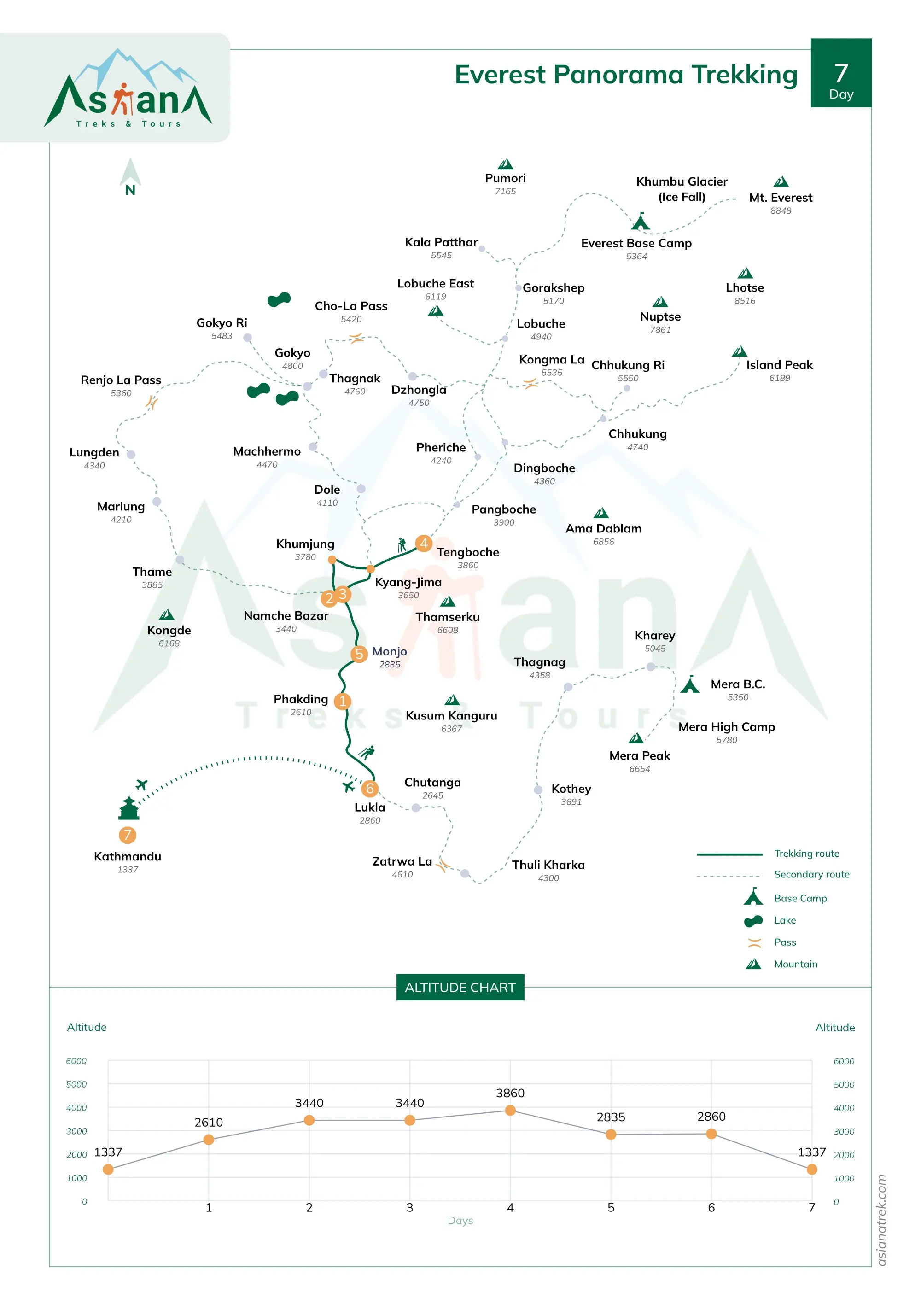
| Trip route | Kathmandu- Lukla- Namche -Everest view Hotel for Everest view - Khumjung- khunde , Tangboche, Manjoo, and bak to same way to Lukla and Kathmandu |
| Cost | USD 1,277 per person |
Highlights
- Enjoy the scenic flight towards Lukla with a different Himalayas panorama.
- Walk through rhododendrons, Mepal, junipers, pine trees, prayer flags, and Buddhist shrines.
- Discover the unique culture, lifestyle, and hospitality of the Sherpa people.
- Walk up to the Everest View Hotel and capture stunning Mt. Everest and many iconic mountain Peaks.
- Visit the Tenzing-Hillary School, Khunde Hospital, and the Green Khumjung Village.
- Enjoy a serene walk and capture views of mountains like Everest, Ama Dablam, and Lhotse.
- Visit Tengboche and Khumjung Monastery with stunning views of the region's mountains.
- Soak in the Wonderful mountain views, including Everest, Lhotse, Ama Dablam, etc.
- Explore a renowned Sherpa museum gallery, Hillary Park, and a town on the planet.
Overview
The Everest Panorama Trek, also called the Everest Short Trek or the Everest View Trek, is an ideal trek for those with limited time who want to reach Everest Base Camp. Starting from the bustling capital, Kathmandu, a UNESCO World Heritage city rich in culture, the trek takes you through culturally vibrant mountain settlements, the Sagarmatha National Park, also a UNESCO World Heritage Site, and the well-known Sherpa inhabitants of Nepal's Khumbu region. Enjoy a thrilling flight to Lukla with panoramic views of the mountains. In just a week, you will witness breathtaking Himalayan scenery and experience the beauty of the Everest region.
Also known as the Everest Panorama Trek or Everest View Trek, this journey offers a glimpse of Mount Everest, the rooftop of the world, in just five days. You can reach Namche Bazaar or the spiritual site of Tengboche for mesmerising, jaw-dropping views of Many Himalayan Peaks, including Mt Everest. Everest Short Trek is the best destination for trekking lovers of all ages and groups worldwide. This trek is a lifetime memory for trekking lovers.
Preparing for the Everest Panorama Trek:
Preparing for the Everest Panorama Trek requires thoughtful planning and cultural sensitivity. Asiana Treks and Tours supports you every step of the way, but preparation is key. Ensure all your passports, visas, and travel insurance are valid. Pack layers, trekking shoes, and sun protection for changing weather. Stay physically fit by walking or hiking beforehand to elevate your heart rate and improve your cardiovascular endurance. Respect local culture by dressing modestly and greeting with “Namaste.” Carry passport-sized photos and personal medication. Staying hydrated, eating cautiously, and keeping a flexible mindset will make your experience in Nepal safer and more enjoyable.
Preparing for the Everest Panorama Trek in Bullet points:
- Understand the trek difficulty before booking.
- Start fitness training 6–8 weeks before the trek.
- Pack light but carry essential trekking gear.
- Carry valid trekking permits and travel insurance.
- Acclimatise properly to avoid altitude sickness.
- Stay hydrated and eat balanced meals.
- Prepare mentally for long walking days and varying terrain.
Everest Panorama Trek itinerary:
Asiana Treks and Tours has the perfect Everest Panorama or Everest Short Trek itinerary. Travellers who desire to explore Nepal with easy and moderate physical fitness. You'll discover the best places for breathtaking views from the city to the countryside. Experience the contrast of cold nights at Tengboche to a stunning view of the mountain wall, an unforgettable lifetime journey.
Everest Panorama trek summary Table:
| Day and Place | Altitude ( M/F | Distance In Km /Miles/ Duration In Hours |
| 01: Kathmandu – Lukla – Phakding | 2,610 m / 8,561 ft | 6–7 km / 3–4 miles/ 3–4 Hrs |
| 02: Phakding – Namche Bazaar | 3,440 m / 11,286 ft | 10–12 km / 6–7.5 miles/ 6-7 Hrs |
| 03: Namche to Namche acclimatisation | 3,880 m / 12,729 ft | 3–4 km / 1.8–2.5 miles/ 3–4 Hrs |
| 04: Namche to Tangboche | 3,867m / 12,687 ft. | 10 Km/ 6.2 Miles/ 5-6 Hrs |
| 05: Tangboche to Manjo | 2,835 m/ 9,301 ft | 9 to 11 km/5.6 to 6.8 miles/ 5-6 Hrs |
| 06: Monjo – Lukla | 2,860m / 9,383 ft. | 12 km / 7.5 miles/ 5 Hours |
| 07: Lukla – Kathmandu (Flight) | 1,337m / 4,386 ft. | 134-138 km/ 83.3 to 86 miles/ 35 min flight |
Everest Panorama Trekking Distance:
The Everest Panorama Trek is an ideal short, scenic Himalayan journey for people with limited time. It is designed for beginners, families, and travellers seeking easy-to-moderate adventure. This trek distance covers approximately 49 km (33 miles) over 5 to 9 days, depending on the Itinerary, making it one of the most accessible routes in the Everest region. Every day involves 4 to 7 hours of walking, allowing gradual and uphill acclimatisation and a comfortable pace. The trail passes through scenic Sherpa villages and mountain people, lush pine and oak forests, suspension bridges decorated with prayer flags, and cultural sites, monasteries, Mani walls, and mantra-printed Mani walls, offering close-up views of Everest, Kusum Kangru, Ama Dablam, Thamserku, Twache, and Kongde. With manageable distances and rewarding panoramas, the Everest Panorama Trek offers world-class natural beauty and cultural exploration.
Everest Panorama Trekking route:
The Everest Panorama Trekking route showcases awe-inspiring natural beauty. Starting from Lukla, the trail gently climbs to Namche Bazaar, Khumjung, Everest View Hotel, and Tengboche, where oxygen levels decrease steadily, allowing safe, natural acclimatisation. The trek through lush valleys with terraced fields and traditional Sherpa villages crosses several suspension bridges adorned with prayer flags, Mani wall mantras painted on stone, and monasteries. Villages, the journey unfolds amidst the Himalayan foothills. Rhododendron forests bloom in spring, accompanied by cascading waterfalls and breathtaking views of Everest, Ama Dablam, Thamserku, Twache and Kongde. Traversing wildflower meadows and crossing suspension bridges over mountain streams, the landscape evolves as you ascend. Approaching the Everest View Hotel and Tengboche leads to panoramic views of towering peaks. The Trek promises unforgettable moments, whether you're a seasoned trekker or novice adventurer, offering an unparalleled journey through Earth's most breathtaking landscapes and to the top of the world.
| Day and route | Approx. Oxygen Level | Altitude Gain / Loss |
| 01, Lukla - Phakding | ~73% | Gain: 250 m / |
| 02, Phakding - Namche Bazaar | ~64% | Gain: +830 m |
| 03, Namche - Namche acclimatisation day | ~60% | Gain: +440 m |
| 04, Namche -Tangboche | -64% | Gain: 420 m / |
| 05, Tangboche - Manjoo | -72% | Gain: +80 m / |
| 06, Manjoo - Lukla | -70% | Gain: +450 m |
| 07, Lukla - Kathmandu | Normal (Sea Level Equivalent) | Gain: 0 m/loss: -1523 |
Everest Panorama Trekking price:
Our package tour ensures reliability in terms of cost, itinerary, and overall experience. The Everest Panorama trek, also known as the Everest short Trek, typically ranges from a regular US$1097 to a Luxury Package of US$3747, including the Flight to and from Kathmandu to Lukla. However, the cost always depends on group size, service level, guide and porter services, transportation preferences, and accommodation category in Kathmandu. This cost estimation is subject to the types of trekking gear and accommodation preferences. For the special price, please email us at [email protected]
Everest Panorama Trekking Height:
Everest Panorama trekking and tours start in the bustling city of Kathmandu, at an altitude of 1337 meters. From Kathmandu, take a flight to Lukla or, during peak season, from Ramechhap. You'll descend to the beautiful Manthali headquarters of Ramechhap,474 meters above sea level. If you fly from Manthali to Lukla, you'll descend through the green forest to Chheplung; finally, the Trek culminates at Everest Tengboche at a breathtaking height of 3860 m /11580 ft.
Major villages of Everest Panorama Trekking:
The major Sherpa villages along the Everest Panorama Trekking route are Lukla, Chheplung, Thado Koshi, Phakding, Taktok, Banker Manjo, Jorsalle, Namche, Khumjung, Khunde, Sanasha, Phugithanga and Tangboche. Return from the same route and follow the same path back to Lukla. These villages are significant landmarks and offer scenic beauty and accommodation options along the Annapurna Base Camp Trekking route.
Best Viewpoints Everest Panorama Trekking:
These viewpoints provide unforgettable experiences, highlighting the beauty of the Everest Panorama Trek. Everest Short Trek offers breathtaking views, showcasing stunning panoramas of the surrounding Himalayan peaks. Here are the critical views along the route:
On a clear day, board your flight to Lukla or Ramechhap, and ensure a seat on the left-hand side for a breathtaking view of countless Himalayan peaks, from the Langtang Himalayan range to the majestic Mt Everest.
Hillary Bridge: After halfway from Hillary Bridge to Namche, you will first glimpse the majestic Everest view.
Hillary Park Sagarmatha Head Headquarters: At the top of Namche, the Headquarters of Sagarmatha National Park, Hillary Park offers stunning views of Many Himalayan ranges, including Mt Everest.
Everest View Hotel: From Everest View Hotel, you can enjoy unparalleled vistas of Everest and neighbouring peaks,
Tangboche: Traverse picturesque villages, each providing unique perspectives of the towering giants en route to Everest Lotse and many other mountains.
Flora and Fauna in the Everest Panorama Trekking :
Everest Short Trekking is also in Sagarmatha National Park. It supports a wide range of flora and fauna, including pine and hemlock forests, juniper, birch, rhododendron, and scrub at lower elevations. Sagarmatha National Park is home to a diverse range of animals, including red panda, snow leopard, musk deer, Himalayan tahr, marten, Himalayan mouse hare (pika), and over 118 bird species, such as the Impeyan pheasant, snow cock, blood pheasant, and red-billed chough.
Festivals and Culture of Everest Panorama Trekking:
The Everest Panorama Trek offers a cultural immersion into Sherpa traditions. A highlight is the Dumji and Mani Rimdu Festival at Tengboche Monastery, held annually in October or November. This vibrant celebration features sacred dances and colourful ceremonies, providing insight into Sherpa culture.
Buddhism, a central pillar of Sherpa life, is beautifully woven into the fabric of the Trek. It's evident in the monasteries, prayer flags, and Mani walls that dot the route. Visitors are not just spectators but can actively participate in Buddhist rituals, fostering a deeper understanding of Sherpa spirituality and their profound connection to nature.
In their harmonious coexistence with nature, Sherpas practice sustainable living through eco-friendly methods such as using yak dung as fuel and managing waste. These practices, born out of necessity and deep respect for the environment, are a testament to the Sherpa's ingenuity and their role as responsible stewards of the land. It's a practice that inspires respect and admiration.
People and hospitality of Everest Panorama Trek:
The Sherpa people are an indigenous ethnic group in Nepal's Everest Himalaya region, specifically the Khumbu region. They are renowned for their mountaineering expertise and often guide climbers to the summit of the High Himalayas, including Mount Everest. Sherpas have a unique and genuine cultural identity influenced by Tibetan Buddhism and mountain life, blending ancient Bon rituals with their faith.
Hospitality is central to Sherpa culture. Honesty and loyalty are their manners; they welcome guests with open arms and show respect for elders.
Advantages of booking with Asiana Treks and Tours:
- Private transport for airport transfers to/from your hotel.
- Trip briefing on Facebook and online if you love to connect.
- Last-minute booking at your hotel at a suitable time after your arrival.
- Easy booking and reservation system.
- Multi-channel communication via Email, WhatsApp, Facebook, Viber, Skype; 24/7 phone communication at +977-9851076270
- Free excess luggage storage during the Trek
- Oximeters are provided to examine blood oxygen saturation at high altitudes to detect altitude sickness early
- Medical kits along the Trek and hot airbags are available in winter
- Arrange sleeping bags, duffel bags, down jackets, and walking poles if you don't have your own.
Trek Booking:
Asiana Trek and Tours is the best and most trusted trekking and tour company, authorised by the Nepal government. We require a 10% advance payment to book your trip, and you'll need to send us a copy of your passport, photos, travel insurance, and flight details as soon as you book a tour with us. You can use a bank transfer or another method, like Western Union, or pay online via our website, which is easy. The remaining trip cost can be paid upon arrival in Nepal. We offer last-minute bookings, but changes may be necessary due to factors such as bad weather.
Transportation for Everest Panorama Trekking:
Asiana Treks and Tours Organises all transportation logistics from start to finish, according to our group size and agreement, including flights between Kathmandu and Lukla and ground transportation for World Heritage site tours. Our services for all groups ensure convenient travel arrangements, whether a World Heritage tour or Flight tickets, and are tailored to the group, prioritising safety, comfort, and efficiency. We aim to provide the best and most enjoyable travel experience, meeting the highest standards of safety and comfort.
How to Trekking Start Everest Panorama Trekking:
Your Everest Short Trek begins with a warm welcome in Kathmandu. Our team member will greet you at Tribhuvan International Airport. We'll escort you to your hotel in a private vehicle, ensuring a comfortable and hassle-free start to your adventure. This will set the tone for a memorable journey.
If you miss the regular trip briefing, don't worry. We'll provide it at a convenient time before departure from Pokhara, either before a World Heritage tour the following morning or the next day. We'll then proceed to the airport, take the flight to Lukla, or drive for 4 hours to Manthali and then take the flight to Lukla.
Currency Exchange:
The Nepalese rupee is Nepali currency, and 1 USD is approximately 130 NPR. Only NPR is accepted in Nepal, so it's best to bring cash to make transactions easier. Banks and ATMs in Kathmandu provide currency exchange services, but note that most banks prefer new, crisp notes.
Our Team:
The Asiana Treks and Tours team is professional, reliable, and responsible. They are well-trained, friendly, radiant, and fluent in English. You can feel comfortable sharing anything with them. They are experts in local culture, history, vegetation, food, accommodation, weather conditions, and first aid medication. They are also environmentally conscious and respect animal rights.
However, please do not provoke them for personal gain during the trip. While you can enjoy your holiday with them, we kindly request that you do not try to change their customs, beliefs, religion, culture, or traditions.
Our staff and we are committed to making your adventure trip an unforgettable journey of a lifetime in Nepal.
Guide and Porter Arrangement for Everest Panorama Trekking:
Our company, Asiana Treks and Tours, focuses on responsible tourism in Nepal. We make sure our guides and porters are well-trained in Trekking and mountaineering. They know a lot about the areas we go to, including geography, history, customs, and culture. We train them regularly in safety, first aid, and environmental conservation. We follow guidelines to treat our porters fairly, providing them good pay, accommodation, and meals during treks. Our guides and porters are essential team members, and we appreciate their hard work. When you trek with us, you support ethical tourism in Nepal, making your trip meaningful and memorable.
Asiana Treks and Tours prioritises your safety and enjoyment. Our knowledgeable guides, reliable equipment, and safety measures ensure a great trekking experience in Nepal.
Porter, Luggage, and extra Luggage storage:
We cover the cost of porters for your Luggage, but the maximum weight limit is 12 kg per person. Each porter carries Luggage for two trekkers; please share a duffle bag with another. Our porters will carry up to 25 kg each. If you need a porter, we can arrange one. We also recommend carrying a small backpack for your valuables and important documents. You can leave extra Luggage at our office for free and at a hotel in Pokhara, Namche, etc.
Accommodation:
Accommodation during the Everest Panorama Trek varies. Along the trekking route, you'll stay in guest houses, commonly known as teahouses. These basic lodges offer rooms, dining areas, and toilets. The quality of guest houses varies, but remains affordable and convenient for trekkers. Rooms typically have twin or bunk beds and shared bathrooms, and blankets and pillows are available. Our company can offer a sleeping bag if you don't have one. You'll spend nine nights in lodges along the trekking route and three nights in a hotel in Kathmandu. Some places and lodges have attached bathrooms, while others offer simple yet clean rooms with shared facilities. We can arrange a solo trekking service if you're travelling solo. In high season and particular areas, availability may be limited for you, although we try our best. In Kathmandu or Pokhara, your hotel room will have excellent amenities, including TV, 24/7 hot water, electricity, and laundry service.
Meals during the trip:
Eating well is essential since the Everest Short Trek takes you through the Himalayas. You'll have plenty of nutritious meals in the trekking regions, although the options won't be as varied as in the cities. You'll get fifteen breakfasts, eleven lunches, and ten dinners during the Trek. The menu includes local, Asian, and Western dishes, but it gets more straightforward as you climb higher. Try popular Nepali foods like lentils, rice, curry, dumplings, noodles, Spaghetti, and many more. We highly recommend eating fresh vegetables and drinking beverages such as green tea, lemon tea, hot lemon, ginger tea, and garlic soup, especially at high altitudes. While non-vegetarian options are available during the Trek, we suggest avoiding them for hygiene reasons. It's also best to avoid dairy, cheese, alcohol, caffeine, and hot chocolate. Personal expenses such as alcoholic drinks, additional beverages, and cafe expenses aren't included in the package.
About drinking water on the Everest Panorama Trekking:
Nepal is the second country in the world in terms of water sources after Brazil. According to the Nepal government, only 27% of the population here has access to clean drinking water. You can buy mineral water in teahouses, but it is expensive; in some trekking areas, local people do not prefer plastic bottles. So, there are some safe drinking water stations where you can refill your bottle. However, we recommend carrying a Steripen, iodine drops, water purification tablets for safe drinking, and refillable water bottles for boiled or filtered water. We strongly advise against drinking from taps, wells, or rivers in trekking areas. However, in all areas of the city, Mineral water is available at a reasonable cost.
Extra Personal Expenses for The Everest Panorama Trek:
Your Trip covers most expenses during the Trek; you'll need to pay for extra accommodations and meals in Kathmandu, souvenirs, and beverages. We estimate about USD 15-25 per trekking day for miscellaneous expenses. However, personal expenses depend on your Income, habits, and style.
Toilet Facilities in Everest Panorama Trekking:
Most teahouses have Western-style flush toilets during mountain treks, especially at lower elevations. But as you go higher, you find simple squat toilets along the trails and teahouses at higher altitudes. These toilets usually have water and toilet paper, but it's a good idea to bring your own just in case. You can also use restrooms at nearby teahouses or find a private spot along the trekking routes.
Internet Connectivity During the Trek:
While trekking in Nepal's Himalayan region, it's also a good idea to connect with your family and friends. You can find internet access at teahouses and lodges, but it may cost a minimal extra fee. The signal might be weak because of the remote location. You can also get internet access using a local SIM card and data packages available at Kathmandu airport or nearby shops in Thamel and Pokhara. You'll need a passport-sized photo and a copy of your passport to get a SIM card. It's a good idea to compare prices and data packages from telecom companies like Ncell and Nepal Telecom before buying. Knowing about the teahouse connectivity. Our guide will suggest connections for you.
Electricity voltage and plugs:
However, 95 % of Nepali people have access to electricity as of May 29, 2023. Almost all popular trekking routes, teahouses, and lodges have electricity. However, some isolated and solo trekking tea houses in the jungle don't have electricity; most tea houses let travellers charge their devices for a small fee. The average electrical voltage in Nepal is 230 volts, with plug types like Type C, Type D, and Type M. Travellers should bring a suitable adapter and, if needed, a voltage converter for their electronic devices.
Communication in The Trek:
The guest houses in the trekking regions have internet access. You can buy a SIM card at Tribhuvan International Airport, Kathmandu, and Namche. However, the signal may need to be more assertive at high altitudes. Our office keeps in touch with all trekking teams via the trek guide at least once daily to ensure everything goes as planned.
Trip Extension:
Suppose you have extra days in Nepal after the Trek. In that case, we can arrange a tour, an overnight stay at Nagarkot Balthali or any other place around Kathmandu and Chitwan, a jungle safari, paragliding, rafting, canyoning, or other treks. Do not hesitate to inform us. We will create the best for you.
How difficult is the Everest Panorama Trek?
The Everest Short Trek offers a moderate yet challenging and enriching adventure. Your enjoyment of the trip will largely depend on your fitness level. We recommend building stamina at least two weeks before the Trek. Activities include jogging, running, swimming, or taking long hikes for the journey ahead.
Completing this Trek is achievable even if you're a beginner, although you must maintain a reasonable fitness level. Prior trekking experience is optional but can be advantageous. All you need is the readiness to hike steadily for 4-8 hours, navigating tricky terrain.
Suppose trekkers have pre-existing medical conditions, such as lung or heart diseases. In that case, they are advised to consult their physician before booking the Trek to ensure their safety and well-being throughout the journey.
About Trip Safety:
We highly give top priority. We provide experienced guides, first-aid kits, and necessary safety gear to ensure a safe trip. Our team monitors weather and trail conditions and takes precautions to avoid risks. Before starting the Trek, we discuss the trip to provide a clear understanding and ensure a reliable experience.
Group & Private Treks about the Everest Panorama Trek:
We organise many group and private treks simultaneously, with discounts available for larger groups. Every group will have a trekking guide and porters. Regarding larger groups, we provide an assistant guide. Our team ensures a safe and enjoyable trekking experience for all participants.
Information about solo travellers:
If you're a solo traveller, don't hesitate to get in touch with us to confirm departure dates before booking. You can tell us via call, WhatsApp, or email. We have listed upcoming departure dates for your convenience. Feel free to share the trip details with friends and family.
Notes: Please be aware that the itinerary may change due to weather or other factors, and we'll adjust it accordingly for the group's safety and enjoyment. We look forward to guiding you through the stunning landscapes of the Annapurna region and ensuring a memorable trekking experience.
Responsible Travel:
We prioritise responsible travel to minimise environmental impact and support local communities. We collaborate with organisations like the Kathmandu Environmental Education Project (KEEP) to promote eco-friendly practices in trekking regions.
Tips (Gratitude) For Everest Panorama Trek:
Graduating or tipping is appreciated in Nepali culture and reflects the quality of service provided. You decide how much to tip, but we recommend tipping as a group at the end of the trip.
End of Trek:
On the eleventh day, you'll fly back from Lukla to Kathmandu, which takes about seven hours. Alternatively, you can fly from Pokhara to Kathmandu for an extra fee. In the evening, we'll host a farewell dinner in Kathmandu.
Departure From Nepal:
On the day of your departure flight, we'll come to pick you up from your hotel and transfer you to Tribhuvan International Airport. We hope you enjoyed the Nepal trek and will consider returning for more adventures in Nepal.
Feedback:
After you complete the Everest Panorama Trek, we'll organise a farewell dinner in Kathmandu and present you with a trekking achievement certificate. After the dinner, you can provide feedback about the Trek on travel portals.
Last-Minute Booking:
If you can't book in advance, we offer last-minute bookings. Last-minute booking offers are available but may cost slightly more than regular departure dates. Those opting for last-minute bookings must pay an additional 7% of the total trip cost on our website. While we strive to make last-minute requests, we try our best to accommodate your last-minute holiday booking.
Special Note: Please remember that unforeseen circumstances, such as inclement weather or unavailable lodging, may cause the schedule to change. Your trip guide will design a fresh schedule based on the group's interests in such circumstances.
Everest Regions Trekking Blog Post List:
Asiana Treks & Tours offers an insightful blog on the Everest region, providing valuable information for trekkers. Explore stunning landscapes, local culture, and practical tips for your journey.
- Why Everest Base Camp Trek Should Be Your Next Adventure: Top Reasons
- Beginner's Guide to Everest Base Camp Trek
- Understanding the Everest Base Camp Trek’s Difficulty
- Everest Base Camp Trek: Best Seasons (March-Mid June, Sep-Nov)
- Choosing the Best Route for Everest Base Camp
- Major Facts About the Everest Base Camp Trekking Adventure
- Hiking from Gorak Shep to Kala Patthar & Everest Base Camp
- Is There an Age Limit for Everest Base Camp Trekking?
- Is Everest Base Camp Trekking Possible for Women? Absolutely!
- The Complete List of Permits and Documents for Everest Region Treks
- Meals and Accommodation in the Everest Region
- Accommodation Types in the Everest Region
- Top Everest Region Trekking Packages 2025/2026
- Annapurna Base Camp vs Everest Base Camp: The Best Trek
- Trekking Permit Requirements for Different Regions in Nepal
- The First Viewpoint to See Mount Everest
- The Beauty of Gokyo Lake with Views of Everest
- Discovering the Beauty of Gokyo Lakes with Gokyo Ri
- Why Choose Everest Three Passes Trekking in Nepal
- Why Trek Everyone is the Ultimate Guide to Everest Base Camp
- Trekking the Everest Three High Passes: Renjo La, Cho La & Kongma La
- Lukla: The Trekker's Ultimate Gateway
- Amazing Facts About Tenzing-Hillary Airport (Lukla Airport)
- Exploring Phakding: The First Step Toward Everest
- Namche Bazaar at 3,440m: A Rest Stop with a View
- Tengboche Monastery: The Heartbeat of the Khumbu
- Dingboche: The Smart Stop for Acclimatization and Stunning Views
- Lobuche: A High-Altitude Himalayan Gem – History, Culture, Geography & Trekking Highlights
- Discover Everest Dudhkoshi Cultural Trek for Beginners
- Traversing the Heart of Solu: Jiri to Sete, Junbesi & Nunthala via the Lamjura-La Pass
- Sacred Trails and Alpine Dreams: A Journey Through Pikey Peak, Dudh Kunda, and the Hidden Hamlets of Solukhumbu
- Why Choose Everest Three Passes Trekking in Nepal
- The First Successful Summit: Sir Edmund Hillary and Tenzing Norgay
- History of Mount Everest : International Everest Day
- Why Trek Everyone is the Ultimate Guide to Everest Base Camp
- FAQs for Hiking to the Roof of the World (Everest Region
Trip Preparation
Clothing
- Thermal underwear (top and bottom)
- Moisture-wicking t-shirts (long-sleeved)
- Moisture-wicking underwear
- Fleece jacket or pullover
- Insulated down or synthetic jacket
- Waterproof, windproof jacket (Gore-Tex or similar)
- Waterproof, windproof pants (Gore-Tex or similar)
- Warm beanie or hat
- Sun hat or cap
- Neck gaiter or scarf
- Trekking pants (convertible preferred)
- Waterproof trousers
Handwear
- Lightweight gloves (inner)
- Insulated gloves or mittens (outer)
Footwear
- Hiking boots (broken in and waterproof)
- Comfortable camp shoes (e.g., sneakers or sandals)
Gear
- Trekking backpack (30-40 liters) with waterproof cover
- Sleeping bag (rated for cold temperatures)
- Sleeping pad or mattress (insulated)
- Adjustable trekking poles
- Insulated water bottles or hydration bladder (2 liters capacity)
- Travel-sized toiletries
- Biodegradable soap
- Quick-dry towel
- Medications for altitude sickness, pain relief, and common ailments
- Sun protection cream, wet wipes, and hand sanitizer
Miscellaneous
- Camera and batteries
- Notebook and pen
- Earplugs (for sleeping in lodges)
- Portable solar charger
- Headlamp, power bank, and extra batteries
Trip Itinerary
Day 1 : Kathmandu – Lukla – Phakding,
Your Everest Base Camp Trek officially begins with an early morning scenic flight from Kathmandu to Lukla (2,860m) — a thrilling 35-minute journey offering breathtaking Himalayan views.
After landing at Tenzing-Hillary Airport, enjoy breakfast and prepare for your first day on the trail. The trek begins gently, descending through picturesque Sherpa villages, including Chheplung (2,660m), Thado Koshi (2,580m), and Ghat (2,530m). You'll walk alongside the sparkling Dudh Koshi River, cross suspension bridges, and admire prayer wheels and mani walls reflecting local Buddhist culture. After around four hours of easy walking, you'll reach Phakding (2,610m) — a charming riverside village with cosy tea houses — where you'll spend the night in the best guest house in Phakding.
Day 2 : Phakding – Namche
After taking breakfast at the tea house, you start the trek to astounding Sherpa town of Namche today. The walk today is mostly uphill making you cover a good distance of elevation. You will come across lots of yaks, Buddhist prayer flags, and many trekking adventurers like you and several other beautiful things. Once you arrive at Namche, you praise the charm of the town and the Himalayan view from there more. Check into a hotel and relax.
Day 3 : Acclimatization Day at Namche
After breakfast, like every day, today is acclimatisation and exploration day in Namche to adjust your body at high altitude. You are already at 3440 meters above sea level, and you need to acclimate to the high-altitude atmosphere. Thus, it is an extra day at Namche to acclimate by doing uphill side hikes to the view of Mt. Everest and other mountains for the Everest view point. After the stunning Everest viewpoint, we will explore the green Village of Khumjung, have lunch at Khumjung and explore the Khundey Hillary hospital and School. Once you return to Namche after the hike, you will also have time to explore the charming towns of Namche and Gumpa.
Day 4 : Namche – Tengboche
After breakfast in Namche Bazaar, follow the 12-day itinerary to the Everest Base Camp trek. The trail to Tengboche offers one of the most scenic sections of the Everest Base Camp Trek, featuring stunning views of Everest, Ama Dablam, Twache, and Thamserku. Leaving Namche, the Sherpa capital, the path gradually ascends to Kyangjuma (3,550m), offering mesmerising mountain panoramas. It then passes Sanasa (3,600m), the junction for Gokyo and Tengboche routes, and continues downward through Lusasa, surrounded by rhododendron, pine, birch, juniper, and fir forests.
After a steady descent to Phunki Tenga (3,250m), trekkers often stop for lunch before crossing a suspension bridge and ascending steeply to Tengboche (3,860m). The highlight is the historic Tengboche Monastery, renowned for its peaceful setting and the Mani Rimdu Festival, held in October. After exploring, descend slightly to Debuche or stay overnight for the best accommodation in Debuche. Or stay in Tengboche, surrounded by serene alpine forests and the tranquillity of the Himalayas.
Day 5 : Tengboche – Manjoo
Start your day with breathtaking morning views in Tengboche before breakfast. Begin your trek continuously through the rhododendron and pine forests, reaching Phunki Tenga. From there, take a steep uphill climb through Chhorkung and Sanasa before reaching Namche Bazaar (3,440m), the vibrant Sherpa capital and a beautiful mountain village in the Everest region.
Stop for lunch in Namche while enjoying stunning views of Kongde Peak. After lunch, continue your trek steadily through a scenic pine forest. Cross the Hillary Suspension Bridge, one of the highest and longest bridges in the region over Imjakhola, and continue trekking toward Jorsalle (2,740m). You must show your Sagarmatha National Park Permit and TIMS card upon arrival at Jorsalle. The steep trail from Tangboche to Phugitanga and from Namche to Manjo (2,835 m) can be challenging on the knees. Enjoy a well-earned rest and overnight stay in Manjoo.
Day 6 : Monjo – Lukla
After breakfast at Manjo, the trail from Manjo back to Lukla offers a beautiful journey through the forest, the Dudh Koshi valley, canyons, and traditional Sherpa settlements. As you walk descend, the route passes rich vegetation zones filled with pine, fir, juniper, rhododendron, bamboo, and broadleaf forests. Scenic views of Thamserku, Kusum Kanguru, waterfalls, and the Dudh Koshi River accompany you throughout.
Along the way, you encounter monasteries, chortens, prayer wheels, mani stones, Maniwall, and small stupas reflecting deep Buddhist culture. On the route, you could see many different kinds of Birds and wildlife. The trail also features several suspension bridges—short crossings, major high bridges, and river bridges—adding adventure to this scenic way back. Finally, a 250-meter gradual uphill hike to a memorial for Pasang Lhamu Sherpa, the first Nepali woman to climb Mt. Everest, on the way to Lukla.
Day 7 : Lukla – Kathmandu, (40 minute flight 30 minute drive)
After a hot breakfast in Lukla, take an early morning flight back to Kathmandu or Ramechhap. The flight schedules in the Himalayas depend heavily on weather conditions. During peak trekking season, flights often operate between Lukla and Ramechhap. In this case, our driver will meet you at Ramechhap Airport and transfer you to your hotel in Kathmandu, a scenic four-hour drive.
In the off-season, you can usually fly directly from Lukla to Kathmandu, where our guide will escort you to your hotel. It's wise to keep one buffer day in your itinerary in case of weather delays.
After arrival, you'll have the afternoon free to relax at your hotel or explore the city. In the evening, we'll gather for a special farewell dinner with a cultural dance to celebrate completing the Everest Panorama hike.
After a nice breakfast in Lukla, you can fly back to Kathmandu early in the morning. However, flight schedules in the Himalayas depend highly on the weather. During peak trekking season, flights often operate between Lukla and Ramechhap.
In this case, our driver will meet you at Ramechhap Airport and transfer you to your hotel in Kathmandu, a scenic four-hour drive.
In the off-season, you can usually fly directly from Lukla to Kathmandu, where our guide will escort you to your hotel.
It's wise to keep one buffer day in your itinerary in case of weather delays.
After you arrive, you'll have the rest of the day to relax at your hotel or see the city. We'll have a special farewell meal with a traditional dance in the evening to honour the end of the Everest panorama walk. The following day, we will come to your hotel, drop you off at the airport, and hope to see you again.
- 1 - 1 pax US$ 1,277
- 2 - 4 pax US$ 1,082
- 5 - 9 pax US$ 995
- 10 - above pax US$ 925
Inclusions
What is included?
- Airport picks up and transfers to hotel.
- Three nights accommodations in Kathmandu 3-star category with breakfast.
- Day sightseeing in old heritage sites with a tourist guide.
- All of the ground transportation is mentioned in the Itinerary.
- Kanchanjunga entry permit , TIMS card. and local entry tax.
- An experienced and first aid trained license holder trekking guide.
- A strong trekking porter (one porter for 2 persons) one porter carries 15 KG.
- Meals, accommodation, transportation, equipment insurance, and salary for trekking crews.
- Simple Accommodation during the trek twin or multi-sharing basis.
- Applicable government taxes (13% VAT and 10% tourism service charges)
- Nepali culture show with farewell dinner in Kathmandu.
What isn't included?
- Nepal entry visa and your Travel/Medical insurance.
- Lunch & dinner in Kathmandu and Hot shower while on trek.
- Single supplements in hotels except solo trekking service.
- All kinds of drinks, laundry,and personal trekking equipment.
- Battery Charges( Available during trek with Extra cost).
- Optional trips not specified in the itinerary.
- Tipping to guide and porter.
Complimentary