Explore an unforgettable Bird Watching Tour in Nepal with Asiana Treks and Tours, exploring the rich avian diversity across stunning landscapes. Begin in Kathmandu, then venture to Nagarjun Forest, Taudaha Wetland, and the serene Phulchoki hills for immersive birding experiences. Journey to Chitwan to discover community forests, the national park, and the tranquil Bees Hajari Taal, witnessing rare and colorful species in their natural habitats. With expert guidance, comfortable travel, and cultural insights, this 7-day adventure blends nature, wildlife, and Nepal’s scenic beauty for avid bird enthusiasts.
Bird Watching Tour in Nepal is surely a perfect chance to witness the amazing variety of bird species that call this diverse country home. Nestled between the Himalayas and the Indian plains, Nepal boasts a unique combination of climate zones and ecosystems, providing an ideal habitat for a rich array of birds. With approximately 876 recorded bird species, Nepal represents about 8% of the world’s total bird population, making it one of the world’s top birding destinations. Whether you are a professional ornithologist or an amateur enthusiast, Nepal offers an unforgettable experience with opportunities to observe birds soaring across five different climate zones—from subtropical lowlands to alpine regions.
The country’s protected areas include 12 National Parks, 1 Wildlife Reserve, 6 Conservation Areas, and numerous buffer zones that cover nearly a quarter of Nepal’s land. These conservation efforts help safeguard the natural habitats for birds and other wildlife. During this tour, you’ll explore wetlands, forests, and national parks where species such as the unique Spiny Babbler, various kingfishers, vultures, and migratory birds abound. Accompanied by expert bird-watching guides, you’ll not only observe these spectacular birds but also learn about their behaviors and ecological roles. With a camera in hand or simply your keen eyes, this tour promises to immerse you in Nepal’s vibrant avian world.
Over 876 bird species documented in Nepal
Diverse habitats from Terai wetlands to Himalayan slopes
Home to 8% of the world’s bird population
12 National Parks and extensive protected areas covering 23.39% of Nepal
Expert guides accompany every tour for enriching experience
Discover Nepal: A Birdwatcher’s Paradise
Nepal’s remarkable biodiversity and unique geography make it a dream destination for bird watchers worldwide. The country’s combination of subtropical plains, mid-hill forests, and alpine ecosystems creates habitats for a wide variety of bird species, many of which are endemic or rare. With 37 nationally endemic species and 300 regional endemic species, Nepal offers exclusive sightings that bird lovers will treasure. The wetlands of Nepal are internationally recognized, with 10 sites listed under the Ramsar Convention for their ecological significance, highlighting the importance of these habitats for resident and migratory waterbirds.
Wetlands alone cover approximately 750,000 hectares or 5% of Nepal’s total land area, hosting over 190 water bird species. These areas are also critical for various mammals, reptiles, and fish, contributing to a balanced ecosystem. From spotting the endangered gharial crocodile to watching the dazzling plumage of kingfishers and the graceful flight of vultures, Nepal’s avifauna is diverse and captivating. The bird watching tours by Asiana Treks and Tours take you to these pristine sites, including national parks, community forests, and wetlands, guided by knowledgeable local experts who ensure you don’t miss any highlight. This is your chance to experience Nepal as a true birdwatcher’s paradise.
Nepal hosts 37 national and 300 regional endemic bird species
10 internationally recognized Ramsar wetland sites
Wetlands cover 750,000 hectares, home to 190 water bird species
Rich biodiversity including rare mammals and reptiles alongside birds
Guided tours to national parks, wetlands, and community forests
Why Nepal is a Top Destination for Bird Watching
Nepal’s status as a premier bird watching destination is supported by its ecological variety, conservation efforts, and the sheer number of species present. Located at the crossroads of the Palearctic and Indo-Malayan ecozones, Nepal provides habitat to species from both regions, increasing bird diversity dramatically. The country's mountainous terrain means bird watchers can observe species adapted to vastly different altitudes and climates in a single trip—ranging from tropical species in the Terai lowlands to alpine birds high in the Himalayas.
The excellent network of protected areas helps ensure safe habitats for many threatened species, including the critically endangered vultures and the unique Spiny Babbler—the only bird endemic to Nepal. The presence of migratory birds adds further excitement, as seasonal visitors from Siberia and Central Asia rest and breed in Nepal’s wetlands. Additionally, the warmth and hospitality of local communities enhance the experience, providing cultural context to your wildlife observations. Combined with expert guides, well-organized tours, and beautiful landscapes, Nepal offers bird watchers a unique, thrilling, and educational experience unmatched in the region.
Intersection of Palearctic and Indo-Malayan ecozones
Diverse altitudinal bird habitats from tropical to alpine
Home to critically endangered species like vultures
Seasonal influx of migratory birds from Siberia and Central Asia
Strong conservation network and cultural immersion
Key Bird Species You’ll See on This Tour
During your Bird Watching Tour with Asiana Treks and Tours, you will have the opportunity to see an impressive array of bird species, some of which are rare and endemic to Nepal. The Spiny Babbler, Nepal’s only endemic bird, is a highlight for many bird watchers. In the wetlands and riverine forests of Chitwan and Koshi, you might encounter the stunning Great Hornbill, a symbol of Nepal’s rich biodiversity. Kingfishers, including the White-throated and Common Kingfisher, are abundant and provide vibrant flashes of color near water bodies.
Birds of prey like the Himalayan Griffon Vulture and the Steppe Eagle soar overhead, offering spectacular sightings. You may also see various species of pheasants, including the colorful Himalayan Monal, Nepal’s national bird, in higher altitudes. The tour also showcases migratory species such as the Bar-headed Goose and the Black-necked Crane, which arrive during winter months. With expert guides to help identify calls, plumage variations, and behaviors, your bird watching experience will be deeply informative and unforgettable.
Spiny Babbler: Nepal’s only endemic bird
Himalayan Monal: Nepal’s national bird with brilliant colors
Great Hornbill: Large and impressive bird of the forests
Kingfishers: White-throated, Common, and more near wetlands
Raptors: Himalayan Griffon Vulture, Steppe Eagle
Migratory species: Bar-headed Goose, Black-necked Crane
Best Bird Watching Spots in Nepal
Nepal offers some of the most spectacular bird watching locations in South Asia, each providing unique habitats that support diverse bird populations. Asiana Treks and Tours takes you to renowned spots such as Chitwan National Park, famous not only for its wildlife but also for its rich birdlife, including species like the Great Hornbill and the endangered Bengal Florican. The park’s dense forests, grasslands, and riverine environments create ideal conditions for spotting both resident and migratory birds.
Another highlight is the Koshi Tappu Wildlife Reserve in eastern Nepal, known for its extensive wetlands and over 485 bird species, including rare waterfowl and the elusive Sarus Crane. Phulchoki Hill near Kathmandu offers excellent views and sightings of hill and mountain birds like the colorful Himalayan Monal and various pheasants. Taudaha Lake and Nagarjun Forest are perfect for those who prefer birding close to the capital city, with a range of wetland and forest species. Each spot is carefully selected by Asiana Treks and Tours to maximize your birding success with expert guides on hand.
Chitwan National Park: Great Hornbill, Bengal Florican
Koshi Tappu Wildlife Reserve: Wetland birds, Sarus Crane
Phulchoki Hill: Himalayan Monal, mountain pheasants
Taudaha Lake & Nagarjun Forest: Wetland and forest species
Expert guides ensure optimal birding experiences
Seasonal Highlights and Migratory Birds
The seasons play a crucial role in shaping the bird watching experience in Nepal. Spring (March to May) and autumn (September to November) are the prime birding seasons, when migratory species from Siberia, Central Asia, and other regions arrive in Nepal’s wetlands and forests. During these months, you can witness spectacular flocks of migratory birds such as the Bar-headed Goose, Black-necked Crane, and various species of ducks and waders, adding to the already rich resident bird population.
Winter months bring cold-adapted species to lower altitudes, while summer often sees breeding activities and the appearance of colorful resident birds like the Spiny Babbler. The monsoon season, though less popular for bird watching due to heavy rains, provides lush green landscapes and excellent opportunities to see breeding birds in their natural habitats. Asiana Treks and Tours tailors your itinerary to the seasonal highlights, ensuring you witness the best birds Nepal has to offer during your visit.
Spring & Autumn: Peak migratory bird seasons
Migrants include Bar-headed Goose, Black-necked Crane
Winter: Cold-adapted species descend to lower altitudes
Summer: Breeding season with colorful resident birds
Monsoon: Lush habitats and breeding bird opportunities
Combine Bird Watching with Cultural Exploration
Asiana Treks and Tours offers more than just bird watching; it’s an immersive experience that blends Nepal’s rich natural heritage with its vibrant culture. Along your bird watching journey, you’ll have opportunities to visit local villages, meet indigenous communities, and explore ancient temples and historical sites. This cultural exposure adds depth to your trip, providing insight into how local people live in harmony with their environment and contribute to conservation efforts.
Visiting places like Kathmandu Valley allows you to witness traditional Newari architecture, vibrant festivals, and authentic Nepali cuisine. In the Terai region, you can experience the lifestyles of Tharu communities, known for their unique traditions and knowledge of local flora and fauna. These cultural encounters enrich your bird watching tour, making it a holistic journey that celebrates both biodiversity and cultural diversity.
Explore Kathmandu’s heritage sites and Newari culture
Visit Tharu communities in the Terai region
Learn about local conservation practices and traditions
Enjoy authentic Nepali cuisine and festivals
A balanced mix of nature and culture for a richer experience
Ideal Time to Visit for Bird Watching
Choosing the right time to visit Nepal is crucial to maximize your bird watching experience. The ideal periods are during spring (March to May) and autumn (September to November), when the weather is pleasant, and the migratory birds are present. Spring offers vibrant flora alongside active birds preparing for breeding season, while autumn showcases large flocks of migrants resting before continuing their journey.
Winter months (December to February) are also excellent for bird watchers interested in species that descend to lower elevations to escape the cold, such as the Himalayan Griffon Vulture and the White-winged Grosbeak. However, the monsoon season (June to August) is generally avoided due to heavy rains that can restrict outdoor activities. Asiana Treks and Tours helps you plan your trip to coincide with these ideal times, ensuring comfortable weather and unforgettable bird sightings.
Best months: March to May and September to November
Spring: Breeding season, blooming flora
Autumn: Peak migratory bird presence
Winter: Low-altitude species and clear skies
Avoid monsoon (June to August) for best experience
Tour Highlights and Unique Experiences
The Bird Watching Tour with Asiana Treks and Tours offers many unique experiences that set it apart from other wildlife adventures. You’ll enjoy guided excursions with expert bird watchers who help identify species and interpret behaviors, enhancing your understanding of Nepal’s avian diversity. Night birding sessions, early morning walks, and visits to remote wetlands offer opportunities to see elusive and rare species up close.
Other highlights include photographic safaris, boat rides in wetland reserves, and interactions with local communities that add cultural context to your journey. The tour also emphasizes sustainable tourism and conservation education, ensuring that your experience supports the protection of Nepal’s natural heritage. From spotting the rare Spiny Babbler to watching flocks of migratory cranes, each day is packed with memorable moments designed for bird lovers of all levels.
Expert guides and bird identification support
Night birding and early morning walks
Boat rides in wetlands and photographic safaris
Cultural interactions with local communities
Focus on conservation and sustainable tourism
Best Time to Travel to Nepal :
Nepal is a year-round destination, but the best time for the Senior People Soft Tour is during the spring (March-May) and autumn (September-November) seasons. These months offer pleasant weather, clear skies, and stunning mountain views.
Spring (March-May): Warm temperatures, blooming rhododendrons, and lush green landscapes make it an ideal season for soft tours.
Autumn (September-November): Crisp air, stable weather, and breathtaking views of the Himalayas make this the peak travel season in Nepal.
Winter (December-February): Cooler temperatures, but still enjoyable for cultural tours, especially in Kathmandu, Pokhara, and Chitwan.
Summer/Monsoon (June-August): This time is best for nature and cultural tours in places like Chitwan and Lumbini, though rain may affect mountain visibility.
We recommend spring and autumn as the most comfortable and enjoyable experiences for senior travellers.
Nepal Highlight Tour Temperatures By Season:
Nepal's weather varies by region, but here's a general temperature guide:
Spring (March-May): 15°C - 25°C (Kathmandu & Pokhara), 10°C - 20°C (hill stations)
Summer/Monsoon (June-August): 20°C - 34°C (lower regions), cooler in the hills
Autumn (September-November): 12°C - 22°C (pleasant, clear skies)
Winter (December-February): 5°C - 15°C (cold mornings/evenings, sunny days)
For higher-altitude destinations, such as Nagarkot and Bandipur, temperatures may be colder in the mornings and evenings.
Fitness and Training:
The Senior People Soft Tour is designed for comfort and ease, but light physical preparation can enhance your experience.
Walking Practice: Daily walks of 30-45 minutes help build endurance.
Stretching & Flexibility: Light yoga or stretching improves mobility.
Hydration & Nutrition: Drinking water and maintaining a healthy diet keeps energy levels high.
Breathing Exercises: Useful for higher-altitude areas like Nagarkot and Sarangkot.
Medical Consultation – Seniors should consult a doctor for travel clearance and bring necessary medications.
With moderate fitness, senior travellers can comfortably explore Nepal's beautiful landscapes, cultural sites, and natural wonders while enjoying luxury and relaxation with Asiana Treks and Tours.
Entry permit and requirements (About Visa)
To visit Nepal, you need a valid passport and a visa. You can quickly get an arrival visa at entry points or Kathmandu's Tribhuvan International Airport. However, some people need a permit before they come, so it's good to check with the nearest Nepalese embassy.
Some nationalities that don't get visas from immigration entry points in Nepal are Nigeria, Iraq, Ghana, Afghanistan, Swaziland, Zimbabwe, Somalia, Palestine, and Ethiopia.
Entry Permit and Visa Requirements
To visit Nepal, a valid passport and a visa are required. Most travellers can obtain a visa on arrival at entry points, including Tribhuvan International Airport in Kathmandu. However, some nationalities must obtain a visa in advance, so checking with the nearest Nepalese embassy is advisable.
Visa Information
Tourist Visas are available for 15 days ($30),
30 days ($50).
90 days ($125). Payment is accepted in US dollars or other major currencies.
Business Visa: Available for up to 5 years, with fees varying based on investment.
Less than 10 million NPR: $35 per month, $400 per year, or $1,000 for five years.
More than 100 million NPR: Visa is free of charge.
SAARC Countries: Citizens from SAARC nations receive a 30-day free visa.
Indian Nationals: No visa is required, but you must show a valid ID (passport or citizenship card).
Passport Validity: Must be valid for at least six months.
Travel Insurance: Highly recommended to cover medical treatment and emergency evacuation.
Entrance Fees for Heritage Sites, Temples, Stupa, Museums and Monasteries in Nepal:
Travelers exploring Nepal will find diverse heritage and cultural sites. Each has an entry fee structure based on nationality, with distinct fees for Nepali citizens, SAARC nationals, and other international visitors. Entry fees support site maintenance and allow access to Nepal's rich heritage. Below is a breakdown of entrance fees by region and site type. Entrance fee structure breakdown By City Bellowed.
Kathmandu Valley Heritage Sites Entrance cost:
Kathmandu Durbar Square: Foreign nationals - NPR 1,000; SAARC nationals - NPR 500; Nepali - Free.
National Museum, Chauni: Foreign nationals - NPR 150 (extra for cameras); Nepali students - NPR 10; other Nepali - NPR 25.
Patan Durbar Square: Foreign nationals - NPR 1,000; SAARC nationals - NPR 250; Nepali students - NPR 10.
Bhaktapur Durbar Square: Foreign nationals - US$18/NPR 1,800; SAARC nationals - NPR 500; Nepali - Free.
Swayambhu Stupa: Foreign nationals - NPR 200; SAARC nationals - NPR 50; Nepali - Free.
Boudha Stupa: Foreign nationals - NPR 400; SAARC nationals - NPR 100; Nepali - Free.
Pashupatinath Temple: Foreign nationals - NPR 1,000 per entry; SAARC nationals - NPR 1,000; Nepali and Indian visitors - Free.
Lumbini (Birthplace of Buddha)
Lumbini: Foreign nationals - NPR 700; SAARC nationals - NPR 400; Nepali - NPR 20.
Chitwan National Park:
Chitwan National Park: Foreign nationals - NPR 2,000 per day (plus 13% VAT); SAARC nationals - NPR 1,000 (plus 13% VAT); Nepali - NPR 150 (plus 13% VAT).
Elephant Breeding Camp: Foreign nationals - NPR 100; SAARC nationals - NPR 50; Nepali - NPR 25.
Pokhara Special Places and Museums:
Pokhara Mountain Museum: Foreign nationals - NPR 500; Nepali - NPR 100.
Gorkha Museum: Foreign nationals - NPR 300; Nepali - NPR 100.
Regional Museum: Foreign nationals - NPR 200; Nepali - NPR 50.
Butterfly Museum: Foreign nationals - NPR 200; Nepali - NPR 50.
Devi's Fall: Foreign nationals - NPR 100; Nepali - NPR 30.
Pumdi Shiva Temple: Approx. NPR 50 for all visitors.
Sarangkot: Foreign nationals - NPR 200; Nepali - NPR 60.
Hemja Gumba and Matepani Gumba: Entry is typically by donation.
Refugee Camp: No formal entry fee; donations are appreciated for community support.
These entrance fees contribute to preserving Nepal's cultural treasures and provide memorable and insightful experiences across the country.
Travel Insurance:
Asiana Treks and Tours recommends that our valued clients obtain travel insurance that covers adventurous activities. Although insurance is not compulsory for the Nepal Experience Tour, it will be helpful. This comprehensive Insurance coverage will help with accidents and emergency assistance and give you peace of mind on your holiday.
However, you can get this insurance online from different companies.
USA and Canada: Tugo, United Health Care, World Nomad, Blue Cross
Australia and New Zealand: Fast Cover, Allianz Australia
Singapore: Ergo, World Nomad Explore plan level 3.
Europe: Europe Assistance, Austrian Alpine Club, Allianz Europe.
India: ICICI Lombard
These are just suggestions, so the policies and what they cover might vary. It's best to contact these insurers directly to ask about what they offer before you buy anything.
Packing Checklist:
When planning a trip to Nepal, packing the right gear, including clothing, equipment, and accessories tailored to your Tour, is crucial for a successful journey. Consider renting or buying gear in Nepal to save space. Ensure your equipment is high-quality and in good condition to avoid mountain problems. Follow our suggestions to prepare your baggage correctly. Lastly, double-check the weather forecast and ensure you have all the necessary items for a safe and comfortable trip.
Nepal has a highlight tour, from cultural sightseeing in Kathmandu to thrilling adventures like trekking, rafting, paragliding, scenic Mountain Flights, jungle safaris, and peak climbing. Packing the right way ensures a comfortable and stress-free journey.
With the correct packing list, you're ready for an unforgettable adventure in Nepal holiday!
Travel Documents: Visa, travel insurance, permits, and some Photo Graphs (for trekking/climbing).
Cash & Cards: Nepalese rupees (NPR) are used for local transactions and credit/debit cards.
Backpack/Daypack: A small waterproof backpack for daily essentials.
Sunglasses & Sunscreen: Protection from intense Himalayan sun.
Camera & Power Bank: Capture stunning landscapes and stay charged.
Clothing for Different Activities:
Kathmandu Valley World Heritage Sightseeing:
Comfortable casual clothes (light and breathable).
Modest clothing for temple visits (covered shoulders & long skirts/pants).
Hat & sunglasses for sunny days.
Mount Everest Scenic Flight:
Light jacket (mornings can be chilly).
Camera with extra battery for amazing aerial views.
White Water Rafting:
Quick-dry clothes (shorts, T-shirt, swimsuit).
Waterproof bag for electronics & valuables.
Water sandals or secure footwear.
Short Hike & Short Trekking:
Lightweight trekking clothes (moisture-wicking shirts, hiking pants).
Comfortable hiking boots (well broken-in).
Rain jacket (weather can change quickly).
Reusable water bottle & snacks.
Paragliding in Pokhara:
Windproof jacket (it gets cold in the air).
Sturdy shoes (no sandals or flip-flops).
Gloves & sunglasses for comfort.
Cable Car Riding (Manakamana/Chandragiri)
Light jacket (depending on season).
Comfortable walking shoes.
Jungle Safari (Chitwan/Bardia)
Neutral-coloured clothing (avoid bright colours).
Long-sleeve shirts & pants (for insect protection).
Binoculars & insect repellent.
Peak Climbing & Extreme Adventures
Down jacket & thermal layers (for high altitudes).
Climbing gear (harness, helmet, gloves, crampons, ice axe).
Sleeping bag (rated for -10°C to -20°C).
Energy bars & hydration packs.
Extra Items for a Comfortable Trip:
Toiletries & Personal Hygiene (travel-size shampoo, wet wipes, tissues).
First Aid Kit (pain relievers, altitude, motion sickness pills).
Headlamp/Flashlight (for treks & power cuts).
Notebook & Pen (for travel notes).
Final Tips
Pack light, but bring versatile clothing suitable for different activities.
Layering is key for temperature changes.
Check the season before packing (monsoon vs. dry season).
Altitude Sickness and Acclimatisation:
Altitude sickness is a common concern for visitors in Nepal's high Himalayan region. However, you needn't worry about altitude sickness if you're below 3000 meters in Nepal Experience Tours. It's rare to experience high altitude sickness at elevations lower than 3000 meters. Hydration is a prime concern in preventing dehydration during the Tour. Drinking plenty of water throughout your Tour helps you stay hydrated, reducing the risk of altitude sickness. Booking with us ensures our guides provide the right advice and assistance during your Trek.
Typical Day on a Nepal Tour
Your Nepal tour begins around 7–8 AM, depending on the day's itinerary and travel distance. Each day brings new experiences as you explore different places, enjoy stunning landscapes, and interact with locals to learn about their culture, traditions, and way of life.
Our experienced guides will share insights about the places you visit throughout the journey. Sometimes, we reach lunchtime some day at an overnight spot, and some days, we travel longer distances to reach the overnight destination. Some days, after lunch, a short drive leads to your next stop, allowing free time to explore before nightfall; we stroll around for unique places and sunset views of the mountains, temples, and villages.
Dinner is typically served around 6–7 PM, followed by a briefing from your tour guide about the next day's plan. After dinner, you can relax, play games, or even learn Nepali words from our team for a fun cultural experience.
Safety Considerations for Nepal Tours
Nepal is a safe destination for travellers, and this Tour is suitable for all age groups—whether you're under 20, over 80, a solo traveller, a student, part of a women's group, or even a solo woman. However, this trip is specifically for seniors. The trip primarily focuses on city sightseeing and natural Himalayan views without extreme risks.
However, during the monsoon season, some areas are prone to landslides. Our skilled guides and drivers are well aware of these spots and ensure a safe and smooth journey throughout the trip.
With our well-planned itinerary and expert guidance, you can enjoy a stress-free and unforgettable Nepal tour.
Asiana Treks and Tours offers an enchanting Bird Watching Tour in Nepal, designed for nature enthusiasts and avid birders alike. Beginning in Kathmandu, the journey explores the rich avian diversity of the Kathmandu Valley, including the serene Nagarjun Forest, Taudaha Wetland, and the lush slopes of Phulchoki, where endemic and migratory species abound. Each day is thoughtfully planned to maximize sightings while providing comfortable experiences amid Nepal’s stunning landscapes.
The tour then moves to Chitwan, blending bird-watching with the unique ecosystem of the Chitwan National Park and surrounding community forests. Guests can explore wetlands, grasslands, and the tranquil Bees Hajari Taal, encountering both common and rare bird species. With expert guides, inclusive meals, and seamless transfers, Asiana Treks and Tours ensures a rewarding, immersive experience that combines Nepal’s cultural charm with its extraordinary natural heritage, a perfect escape for anyone seeking to connect deeply with birds and nature in the Himalayan heartland.
Your trip day starts today when you arrive to Tribhuvan International Airport in Kathmandu. Upon your arrival, you will be received by our representative at the airport. He will be carrying a signboard with our company’s name on it. Then you will be transferred to the tour hotel and checked in. A trip briefing will follow later today and the time will be notified to you by the representative who picks you up from the airport. We will come to meet and brief you about the trip at the fixed time. Until then just relax or explore a bit of surrounding.
Take and early morning breakfast at hotel and get ready for the first exciting day of bird watching in Nepal. We will drive to Nagarjun forest in Shivapuri National park in Kathmandu. The forest is a very good shelter for the birds like grey bushchat, black throated tit, hume’s warbler, Himalayan griffon, mountain bulbul etc. Then we move to Taudaha wetland in the south of Kathmandu which is a perfect place to observe several species of migratory and local birds.
After breakfast in the morning, we set off for a full day of bird watching tour at Phulchoki forest in the southern part of Kathmandu valley. Phulchoki is a natural habitat for 265 different species of birds including babbler, warbler, woodpecker, eagle etc. The forest also is home to several migratory birds which you can observe during the visit.
After the breakfast, check out the hotel and start the drive for the day to Chitwan. About six hours of drive takes you to the nearby town to Chitwan National Park where you will engage yourself in amazing bird watching activities.
We embark on a full day bird watching tour after breakfast. We explore the forest, national park and a wet land area during our full day bird watching trip. As we are inside the national park, we might encounter several other animals in addition to birds. Animals like one horned rhino, deer, leopard, wild boar etc. are common animals inside the park.
We take early morning breakfast and drive to Kathmandu by tourist bus. There is an option to fly back by paying an additional flight cost. The drive will take around five hours to bring us Kathmandu. Once we arrive to hotel in Kathmandu, we will have some free time to relax or explore around before we go for the farewell dinner.
You will be transferred to airport as per your flight schedule. We will pick you up from the hotel three hours prior to your flight time.
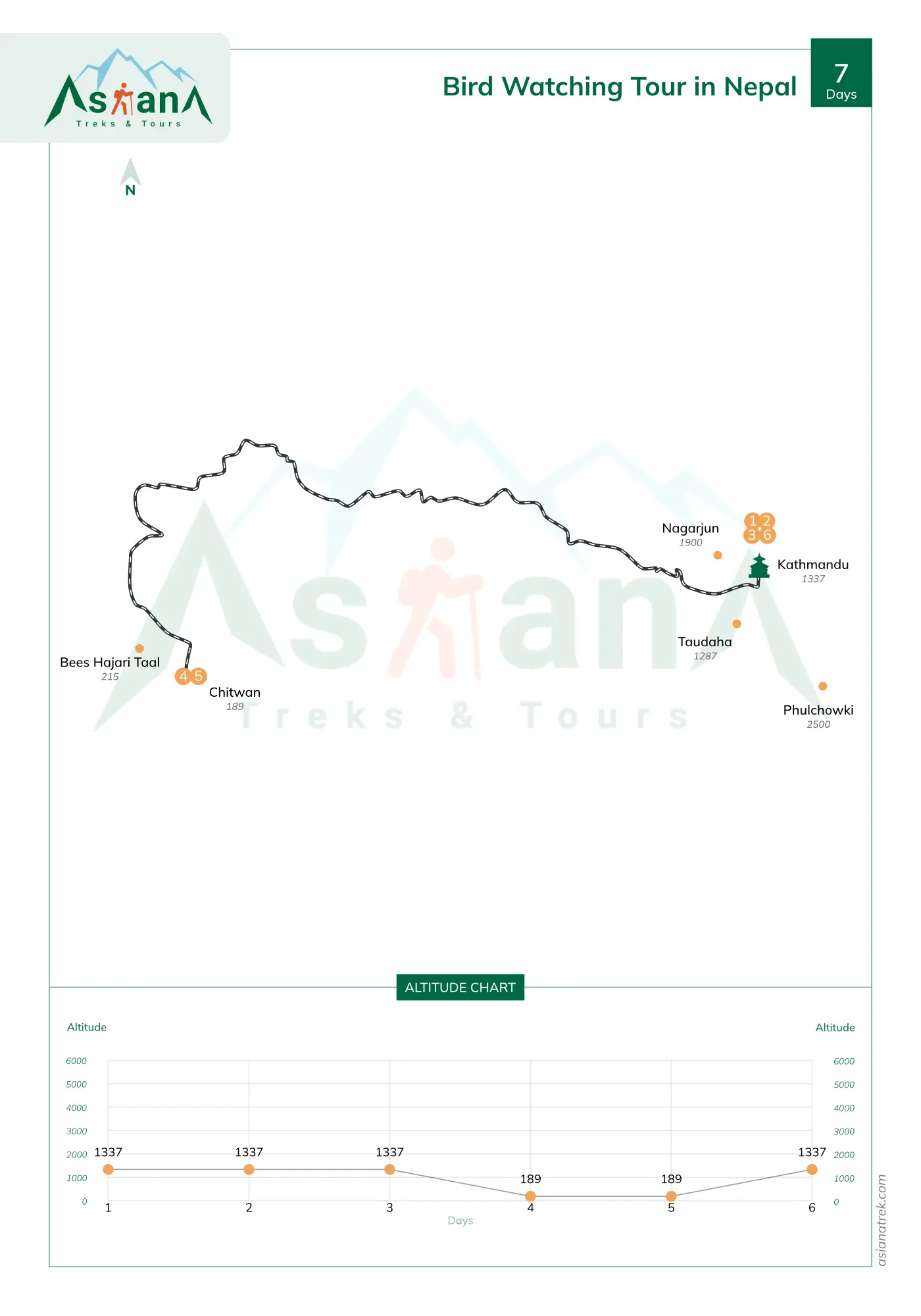
Explore the rich avian diversity of Nepal on this 7-day guided bird-watching adventure with Asiana Treks and Tours. Starting in the cultural heart of Kathmandu, you will visit serene wetlands, lush forests, and scenic hills, including Nagarjun Forest, Taudaha Wetland, and Phulchoki. The journey continues to Chitwan National Park, offering birding in community forests and wetlands, as well as opportunities to experience local culture and wildlife. Comfortable accommodations, daily meals, and expert guides make this a seamless and memorable nature-focused journey.
This itinerary balances birding excitement with cultural experiences, providing both novice and experienced birders with a safe, organized, and unforgettable Nepal adventure.
Your Start Date is the day you land in Nepal, and your End Date is when you fly home.
If the set Bird Watching Tour in Nepal group dates don’t suit your schedule, we can offer alternative dates upon request.
Clothing (layered):
Nepal is a paradise for bird watchers, boasting over 890 bird species across diverse ecological zones—from the lowland Terai to the high Himalayas. With habitats ranging from wetlands and subtropical forests to alpine meadows, it’s possible to spot globally endangered species like the Bengal Florican and Sarus Crane. Asiana Treks and Tours designs bird watching tours that cover biodiversity hotspots such as Phulchoki, Chitwan National Park, and Taudaha Lake, ensuring a rich and rewarding experience for all bird enthusiasts.
Anyone with an interest in birds or nature can join our bird watching tours. Whether you’re an amateur bird lover, professional ornithologist, or a photographer, our itineraries cater to all experience levels. Asiana Treks and Tours ensures that our guides adapt to your pace and interests. We also welcome families, solo travelers, and senior citizens, making it an inclusive adventure for all who appreciate Nepal’s incredible birdlife and natural beauty.
Phulchoki Hill, near Kathmandu, is a birding hotspot and part of the Shivapuri-Nagarjun National Park. With an elevation of 2,700 meters, it is home to over 300 bird species. On your tour with Asiana Treks and Tours, you can expect to spot birds such as the Spiny Babbler (endemic to Nepal), Cutia, Rufous-bellied Woodpecker, Himalayan Monal, and various species of sunbirds and flycatchers. Our expert guides will help identify each species and share interesting behavioral insights.
Not at all! Asiana Treks and Tours welcomes everyone, from first-time birders to experienced ornithologists. Our guides provide helpful tips on using binoculars, spotting birds by sound, and identifying species. If you’re new to bird watching, we’ll ensure a smooth and enjoyable introduction to the hobby. The beauty of our tours lies in learning as you go—so even complete beginners return home with a new passion and deeper understanding of Nepal’s avian diversity.
Most bird watching sites on our itinerary are accessible with light to moderate walking. In Kathmandu Valley, Nagarjun Forest and Phulchoki require some uphill walking, but at a gentle pace. In Chitwan, birding takes place on flat forest trails and wetland areas. Asiana Treks and Tours prioritizes safety and comfort—our tours are designed to be accessible to all age groups. If you have any mobility concerns, we can customize the pace or itinerary to suit your needs.
Our bird watching tours can be both. Asiana Treks and Tours offers fixed-date group departures for like-minded birding enthusiasts and also organizes customized private tours for individuals, couples, families, or small groups. Private tours allow for more flexibility in pace and birding preferences. Group tours offer opportunities for shared learning and camaraderie. Regardless of the option you choose, our commitment to quality and personalized attention remains the same.
Yes, Asiana Treks and Tours provides every participant with a detailed bird checklist specific to the areas visited, including Phulchoki, Taudaha, Nagarjun, and Chitwan National Park. This checklist helps you track the birds you’ve spotted and serves as a great memento of your journey. Our guides will also help you fill in species details and share identification tips throughout the trip. If you're a serious birder, feel free to bring your own notes or apps for additional tracking.
Absolutely! Asiana Treks and Tours specializes in personalized travel experiences. If you wish to extend your birding adventure, we can add days at other prime birding locations like Koshi Tappu Wildlife Reserve, Bardia National Park, or Shivapuri. Whether you want to focus on wetland species, raptors, or Himalayan birds, we can tailor an itinerary to match your interests, timeframe, and budget. Just let us know your preferences when booking.
Yes, Asiana Treks and Tours believes in responsible tourism and partners with local conservation groups and communities. We promote eco-friendly practices, support local guides, and raise awareness about bird conservation. Portions of our proceeds go to bird habitat preservation efforts. By joining our bird watching tour, you contribute to the sustainable development of local areas and the protection of Nepal’s unique avian biodiversity.
In Kathmandu and Chitwan, Wi-Fi is available at hotels and lodges. Mobile coverage is also reliable in these areas. While on forest trails or remote birding spots, the signal may be weak or unavailable, which many guests find refreshing! Asiana Treks and Tours encourages participants to use the opportunity to disconnect and immerse themselves in nature. However, in case of emergencies, our guides are equipped with phones and local contacts to assist promptly.
Yes, upon completion of the bird watching tour, Asiana Treks and Tours provides participants with a certificate of participation. It includes the tour name, dates, and highlights of your birding journey. This is a great keepsake and a wonderful addition to your travel memories. We also provide you with your bird checklist and digital photos (if taken by the guide), which serve as documentation of your adventure into Nepal’s rich avian world.
Asiana Treks and Tours offers more than just sightseeing—we deliver immersive, guided experiences led by passionate birders and naturalists. Our local expertise, small group sizes, ethical practices, and focus on conservation set us apart. We prioritize client satisfaction, environmental responsibility, and educational travel. Whether it’s your first time in Nepal or your tenth, we ensure your bird watching tour is deeply enriching and memorable. Join us to explore Nepal’s birding wonders with comfort, knowledge, and care.
For your bird watching adventure with Asiana Treks and Tours, pack light and smart. Essentials include binoculars, a camera with zoom lens, bird field guide, sturdy walking shoes, lightweight breathable clothing, a hat, sunscreen, insect repellent, a water bottle, and a small backpack. Mornings can be chilly, especially in the hills, so bring a warm jacket. For Chitwan and lowland areas, light cotton clothes are ideal. Our pre-departure briefing will include a full packing list to help you prepare.
The best time for bird watching in Nepal is during the autumn (September–November) and spring (March–May) seasons. During these months, the weather is clear, migration is in full swing, and bird activity is high. Winter (December–February) is also excellent in the lowlands, especially in Chitwan and wetlands like Taudaha, where migratory species gather. Asiana Treks and Tours schedules trips based on seasonal bird movements to give you the highest chance of rewarding sightings.
Yes, Asiana Treks and Tours provides highly experienced birding guides who are passionate about ornithology and knowledgeable about Nepal’s bird species and habitats. Our guides carry field guides, spotting scopes, and are skilled in identifying birds by both sight and sound. They are fluent in English and ensure an educational, fun, and safe birding experience. Whether you want to learn about local behavior patterns or photograph rare species, our guides will enhance every moment of your tour.
Safety is a top priority at Asiana Treks and Tours. Our guides are trained in first aid and forest safety, and we follow local park regulations strictly. In places like Chitwan National Park, a licensed naturalist and security personnel accompany all walks. We advise wearing covered shoes, using insect repellent, and remaining in groups. While wild animals may be present, encounters are rare, and our team takes all precautions to ensure a safe, enjoyable birding experience.
We provide comfortable, clean accommodations with modern amenities throughout the tour. In Kathmandu, you’ll stay at a centrally located hotel with breakfast included. In Chitwan, accommodation is in eco-lodges or resorts close to the national park, offering full board (breakfast, lunch, and dinner). These lodges are selected by Asiana Treks and Tours for their hospitality and proximity to birding sites. Rooms typically have private bathrooms, Wi-Fi, and are set in peaceful surroundings perfect for early morning bird spotting.
Meals are included as per the itinerary. In Kathmandu, breakfast is provided at your hotel. In Chitwan, you will enjoy three meals daily—breakfast, lunch, and dinner—often prepared with fresh local ingredients. Special dietary requests (vegetarian, vegan, gluten-free) can be accommodated upon request. Asiana Treks and Tours ensures you stay energized with healthy, delicious meals during your birding journey. Packed lunches may be arranged for longer birding excursions in the forest or wetland areas to maximize time in the field.
Transportation is arranged in private, comfortable, air-conditioned vehicles. For longer journeys like Kathmandu to Chitwan, we use tourist-class vehicles with adequate space for luggage and equipment. Within the birding zones, transport may include jeeps for jungle safaris or short walks through forest trails. Asiana Treks and Tours ensures safe, timely, and convenient transportation, with experienced drivers who are familiar with birding tour logistics and routes.
Booking is simple. You can visit our official website, fill out the inquiry form, or email us directly. We’ll respond with available dates, pricing, and customization options. Once confirmed, you’ll receive a detailed itinerary, packing list, and travel guidance. Payments can be made securely via bank transfer or online payment gateways. Our team is available to assist with visa advice, travel insurance, and any pre-trip questions to ensure a smooth booking experience.


 (2)
(2)  100% recommend (0)
 (0)
(0)