Experience an unforgettable Himalayan cultural journey with Asiana Treks and Tours on the Ghale Gaun Trek. Begin in Kathmandu (1,337m) with a guided heritage tour before traveling to the charming Gurung village of Ghale Gaun. Trek through beautiful landscapes to Ghan Pokhara and Khudi, enjoying warm village hospitality, traditional culture, and stunning Himalayan panoramas. This short yet rewarding trek offers authentic community experiences, scenic foothill trails, and breathtaking mountain views, perfectly blending culture, nature, and comfort before returning to Kathmandu for departure.
Ghale Gaun Trekking is a captivating journey through one of Nepal’s most scenic and culturally rich regions. Situated in the Lamjung district, Ghale Gaun is famously recognized as Asia’s model tourism village. This trek offers travelers a unique blend of stunning natural landscapes and deep cultural immersion. Nestled at around 2,100 meters altitude, Ghale Gaun is inhabited by the indigenous Gurung and Ghale communities, who warmly welcome visitors into their traditional homestays. This experience allows trekkers to explore authentic Nepalese rural life, traditional architecture, and unique cultural practices, making the trek much more than just a nature walk.
The trekking route is renowned for panoramic views of majestic Himalayan peaks such as Machhapuchhre (Fishtail), Annapurna I, Annapurna II, Annapurna IV, Lamjung Himal, Himalchuli, and Bouddha Himal. Lush forests of rhododendron, magnolia, and oak surround the trail, alongside terraced farming fields that highlight the sustainable lifestyle of the locals. Wildlife enthusiasts will appreciate the diversity of bird species and other fauna encountered during the trek. With Asiana Treks and Tours, the journey is carefully curated to provide a safe, comfortable, and enriching experience. Their experienced guides share valuable insights into the region’s natural environment, history, and customs, while providing full logistical support including accommodation, meals, and emergency care.
Ghale Gaun Trekking Itinerary
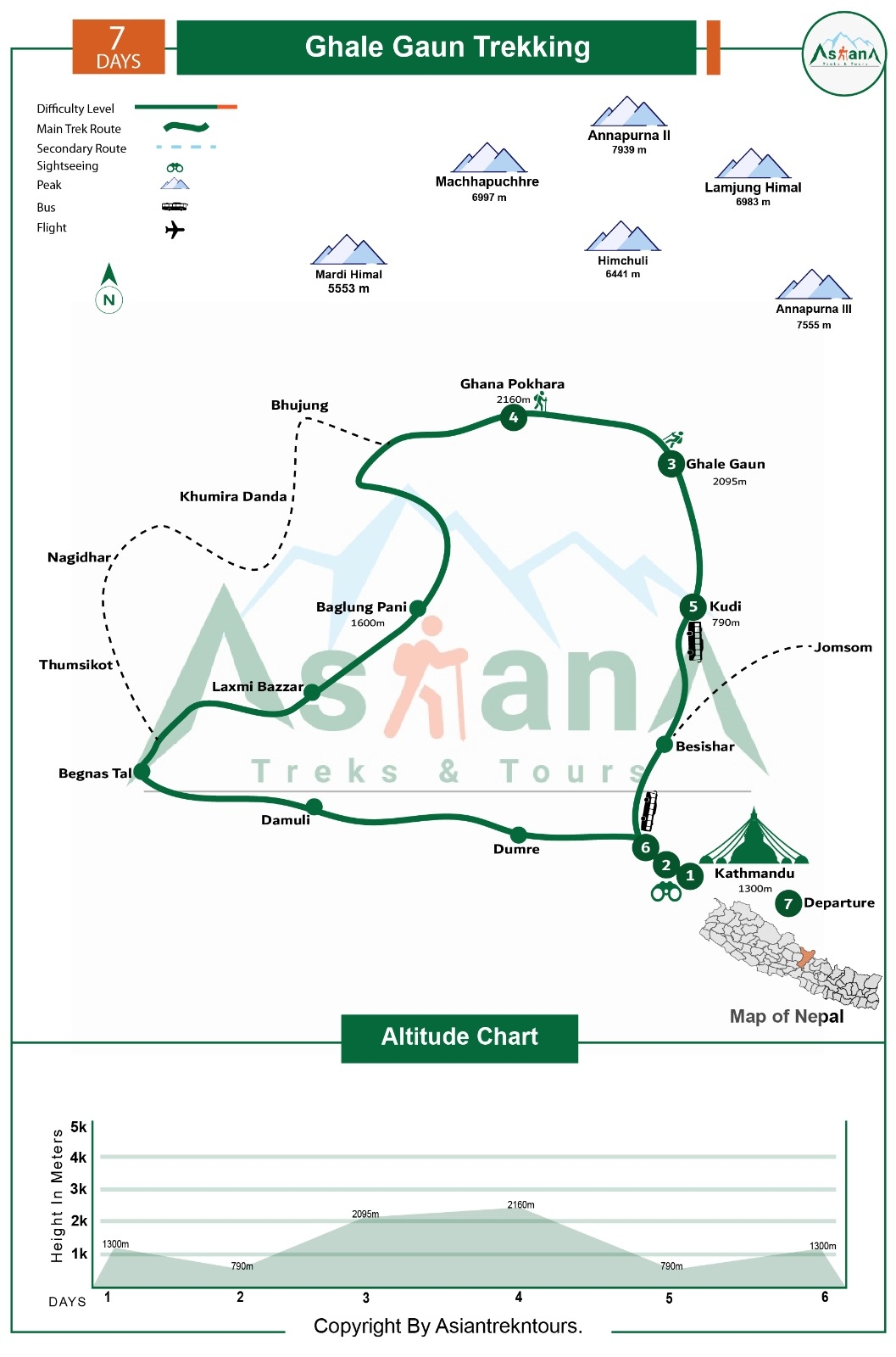
The typical Ghale Gaun trekking itinerary offered by Asiana Treks and Tours spans about 7 days, allowing trekkers to comfortably explore the area’s highlights without rushing. Starting from Kathmandu, you will travel to Ghale Gaun via scenic routes passing through hills and forests. Each day combines moderate trekking distances with opportunities to engage with local culture and enjoy the landscape.
Day 1: Arrival in Kathmandu (1337 meters), prepare for the trek.
Day 2: Heritage tour of Kathmandu, visit historic sites.
Day 3: Transfer from Kathmandu to Ghale Gaun by vehicle; begin acclimatization and cultural orientation.
Day 4: Trekking around Ghale Gaun, visiting traditional villages, interacting with locals, and enjoying mountain vistas.
Day 5: Trek from Ghale Gaun to Ghan Pokhara; explore the natural beauty and local lifestyle.
Day 6: Continue trek to Khudi, with panoramic views of the Annapurna and Dhaulagiri ranges.
Day 7: Return from Khudi to Kathmandu by vehicle.
Day 8: Departure day from Kathmandu.
Throughout the trek, Asiana Treks and Tours provide traditional homestays or guesthouses with local meals (Breakfast, Lunch, Dinner). The itinerary balances trekking with cultural exposure and relaxation, making it suitable for moderate fitness levels.
Ghale Gaun Trekking Distance and Terrain
The total trekking distance covered in the Ghale Gaun trek is approximately 70-80 kilometers over the course of the journey. The trails are a mix of dirt paths, stone staircases, and forest trails winding through terraced farmland and rural villages. Trekkers ascend gradually, with altitudes ranging from 1,300 meters in Kathmandu to around 2,100 meters at Ghale Gaun, allowing proper acclimatization.
The terrain is moderate in difficulty, suitable for trekkers with a basic level of fitness. Day-to-day walking distances range from 6 to 10 kilometers, allowing for a leisurely pace to absorb the surroundings. The elevation gain is gradual, reducing the risk of altitude sickness, and the route includes frequent stops at traditional villages to experience local culture and hospitality.
Key highlights of the trekking distance include:
Scenic mountain viewpoints showcasing the Annapurna, Machhapuchhre, and Lamjung ranges
Village-to-village trails through forests of rhododendron and oak
Visits to homestays offering insights into Gurung and Ghale lifestyles
Opportunities for birdwatching and spotting local wildlife
Ghale Gaun Trekking Cost 2026/2027
Booking your Ghale Gaun trek with Asiana Treks and Tours guarantees value for money and an unforgettable experience. The trekking cost for 2026/2027 includes:
Airport pick-up and drop-off in Kathmandu
All transportation between Kathmandu and trekking trailheads
Accommodation in traditional homestays or guesthouses throughout the trek
Full board meals (Breakfast, Lunch, Dinner) during trekking days
Professional English-speaking local guide and porter services
Necessary permits and entry fees
Trekking equipment support (if required)
Emergency medical support and insurance for guides and porters
Estimated Price Range: USD 750 - 950 per person (depending on group size, season, and customization options)
Asiana Treks and Tours emphasize safety and comfort, ensuring you receive expert guidance, quality accommodation, and authentic cultural experiences. They also recommend travelers to have travel insurance and consult a healthcare professional prior to the trek.
Summary: Why Choose Ghale Gaun Trekking with Asiana Treks and Tours?
Located in the scenic Lamjung district, Asia’s tourism model hamlet
Trek duration: 7 days, moderate difficulty, suitable for intermediate trekkers
Spectacular Himalayan views: Annapurna, Machhapuchhre, Dhaulagiri, Lamjung Himal
Cultural immersion: Stay in traditional Gurung and Ghale homestays
Rich biodiversity: Rhododendron forests, magnolias, native birds and wildlife
Full service package: Transportation, meals, accommodation, guide, porter
Emergency support and healthcare facilities ensured
Competitive cost with expert local knowledge and safety standards
Booking with Asiana Treks and Tours offers a well-organized, safe, and culturally immersive trekking experience in one of Nepal’s most beautiful and authentic rural regions.
Ghale Gaun Trekking Price Breakdown
Ghale Gaun Trekking with Asiana Treks and Tours offers excellent value, providing a comprehensive package that covers all essential trekking services. The overall price typically ranges from USD 750 to 950 per person, depending on group size, season, and optional add-ons. This price includes airport transfers in Kathmandu, transportation to and from the trekking trailheads, accommodations in traditional homestays or guesthouses, full board meals (breakfast, lunch, and dinner), and the support of experienced English-speaking local guides and porters.
The trekking fee also covers necessary permits, entry fees, and any trekking equipment rental you may require. Asiana Treks and Tours ensure all safety protocols are followed, and emergency medical support is available if needed. The cost does not usually include international flights, personal travel insurance, tips, or personal expenses such as drinks and souvenirs. Travelers should budget for these separately.
Price Breakdown Summary:
Airport pick-up and drop-off: Included
Transportation to/from trailhead: Included
Accommodation (homestays/guesthouses): Included
Full board meals (B/L/D): Included
Licensed guide and porter services: Included
Permits and entry fees: Included
Trekking equipment rental (optional): Additional
Travel insurance and tips: Not included
Booking through Asiana Treks and Tours guarantees quality service, transparent pricing, and an authentic cultural trekking experience.
Ghale Gaun Trekking Altitude Guide
The Ghale Gaun Trekking route offers a moderate altitude experience, making it suitable for trekkers with varying levels of fitness. The trek starts at Kathmandu (about 1,337 meters) and gradually ascends to Ghale Gaun, which sits around 2,100 meters above sea level. The highest points during the trek reach roughly 2,200 to 2,300 meters, which is considered moderate altitude and poses a relatively low risk of altitude sickness compared to higher Himalayan treks.
Gradual elevation gain allows for proper acclimatization, making the trek safe for most travelers, including beginners and families. The moderate altitude also means that oxygen levels remain fairly stable, minimizing discomfort and reducing symptoms like headaches or dizziness. However, trekkers are advised to stay hydrated, avoid overexertion, and communicate any symptoms of altitude sickness immediately to guides.
Altitude Guide Highlights:
Kathmandu: 1,337 meters
Ghale Gaun Village: ~2,100 meters
Highest trekking points: 2,200–2,300 meters
Moderate altitude trek, low risk of altitude sickness
Gradual ascent allows acclimatization
Suitable for beginner and intermediate trekkers
This altitude profile offers a rewarding Himalayan experience without the extreme challenges of higher elevation routes, allowing trekkers to enjoy stunning mountain views and cultural immersion comfortably.
Why Choose Ghale Gaun Trekking?
Ghale Gaun Trekking with Asiana Treks and Tours is a unique choice for those seeking a blend of breathtaking natural beauty, cultural richness, and moderate trekking difficulty. Ghale Gaun is famous as Asia’s tourism model village, offering trekkers an authentic glimpse into the lifestyle of the Gurung and Ghale communities. Staying in traditional homestays, visitors experience local hospitality, customs, and cuisine, making the journey deeply enriching beyond just the scenery.
The trek showcases spectacular Himalayan views of iconic peaks such as Annapurna, Machhapuchhre, Lamjung Himal, and Dhaulagiri. Unlike busier trekking routes, Ghale Gaun offers a more peaceful, less commercialized trail with pristine forests, terraced fields, and diverse flora and fauna. Asiana Treks and Tours provide expert guides who share insights into the region’s natural and cultural heritage, ensuring an informative and safe journey.
Reasons to Choose Ghale Gaun Trekking:
Authentic cultural experience in Asia’s tourism model village
Moderate trekking suitable for a wide range of fitness levels
Panoramic views of Annapurna, Machhapuchhre, and Dhaulagiri peaks
Peaceful, less crowded trails through lush forests and rural villages
Traditional homestay accommodation and home-cooked meals
Professional guides and support from Asiana Treks and Tours
Choosing Ghale Gaun Trekking guarantees a well-rounded Himalayan adventure with the perfect balance of nature, culture, and comfort.
Preparing for the Ghale Gaun Trekking
Preparation is key to enjoying the Ghale Gaun Trekking experience fully. Since the trek involves moderate physical exertion and moderate altitudes up to around 2,300 meters, trekkers should ensure they have a reasonable fitness level. Cardiovascular exercises like jogging, cycling, or hiking practice are highly recommended in the weeks leading up to the trek. Strengthening leg muscles and building stamina will help you manage daily trekking distances of 6–10 kilometers comfortably.
Packing smartly is equally important. Asiana Treks and Tours advise trekkers to bring layered clothing suitable for varying temperatures, sturdy trekking boots, rain gear, and sun protection such as hats and sunscreen. Since you’ll be staying in homestays, it’s good to carry personal toiletries and any medications. Also, having a quality backpack and trekking poles can ease your journey.
Preparation Checklist:
Build fitness with cardio and strength exercises
Pack layered clothing for variable weather
Wear sturdy hiking boots and bring rain gear
Carry sun protection: sunscreen, sunglasses, hat
Bring personal toiletries and basic medicines
Use trekking poles for balance and support
Get travel insurance covering trekking activities
Asiana Treks and Tours also recommend a pre-trek briefing to discuss health and safety, cultural etiquette, and what to expect on the trail, ensuring you are confident and ready for your adventure.
What to Expect on the 6–7-Day Ghale Gaun Trekking Adventure
The Ghale Gaun Trekking itinerary spans 6 to 7 days, offering a balanced adventure through Nepal’s picturesque rural and mountainous regions. Each day involves moderate hiking distances, allowing you to enjoy the scenery and cultural experiences at a comfortable pace. You’ll start with a drive from Kathmandu to the trailhead, followed by trekking through forests, terraced fields, and traditional villages.
Expect to stay in warm, welcoming homestays where locals offer home-cooked meals, often featuring traditional Nepali dishes. The trek provides spectacular sunrise and sunset mountain views, especially of the Annapurna and Machhapuchhre ranges. Days include ample opportunities to interact with locals, visit village markets, and learn about Gurung and Ghale cultural traditions such as music, dance, and handicrafts.
What to Expect Summary:
Moderate daily hiking of 6–10 km
Comfortable overnight stays in traditional homestays
Delicious local Nepali meals, including Dal Bhat and seasonal vegetables
Stunning Himalayan panoramas with mountain photo opportunities
Cultural immersion: village tours, local crafts, and traditions
Friendly, knowledgeable guides and supportive porters
A mix of nature, culture, and relaxation
This trekking adventure provides a perfect introduction to Nepal’s mountain lifestyle and natural beauty, suitable for a wide range of travelers.
Oxygen Levels on Ghale Gaun Trekking
Oxygen levels decrease as altitude increases, which can affect physical performance and well-being. On the Ghale Gaun Trekking route, the altitude ranges from around 1,300 meters in Kathmandu to roughly 2,300 meters at the trek’s highest points. At these elevations, oxygen levels are only slightly lower than at sea level—approximately 80-85% of normal oxygen availability.
This modest decrease means most trekkers do not experience significant altitude sickness symptoms. However, some individuals may feel mild effects such as slight breathlessness during exertion. Proper acclimatization, hydration, and pacing help maintain comfort and safety. Asiana Treks and Tours monitor trekkers closely and adjust the itinerary if necessary to prevent altitude-related issues.
Oxygen and Altitude Key Points:
Oxygen levels at 2,300m are about 80-85% of sea level
Risk of altitude sickness is low but possible in sensitive individuals
Gradual ascent allows the body to adapt to lower oxygen
Drink plenty of water and avoid overexertion
Guides trained to recognize and respond to altitude symptoms
Emergency oxygen and evacuation plans are in place
By understanding oxygen changes and preparing accordingly, trekkers can enjoy the stunning landscapes and culture of Ghale Gaun without undue health concerns.
Major Villages and Scenic Viewpoints on Ghale Gaun Trekking Route
The Ghale Gaun Trekking route winds through some of the most charming and culturally rich villages in the Lamjung district of Nepal. The trek begins near the rural town of Khudi and passes through quaint settlements such as Ghan Pokhara, Taudaha, and, of course, Ghale Gaun itself. Each village offers unique insights into traditional Gurung and Ghale lifestyles, with stone houses, terraced fields, and vibrant local markets that reflect the simple, pastoral way of life in this Himalayan region.
Ghale Gaun is the heart of the trek, famed for its model tourism village status. Here, trekkers can experience authentic homestay hospitality, traditional crafts, and folklore. As you hike through these villages, expect to be greeted warmly by locals dressed in traditional attire, often accompanied by the melodies of local songs and dances.
In addition to cultural richness, the trek offers numerous scenic viewpoints. The trail is dotted with vantage points that provide breathtaking panoramic views of snow-capped Himalayan giants like Machhapuchhre (Fishtail), Annapurna South, Annapurna I, Lamjung Himal, and Dhaulagiri. These viewpoints are perfect spots for photography, sunrise and sunset watching, or simply soaking in the grandeur of the Nepalese Himalayas.
Summary of Major Villages & Viewpoints:
Villages: Khudi, Ghan Pokhara, Taudaha, Ghale Gaun
Traditional Gurung and Ghale culture and homestays
Stone houses, terraced farming landscapes
Scenic viewpoints with panoramic views of Machhapuchhre, Annapurna, Lamjung Himal, Dhaulagiri
Opportunities for cultural interaction and photography
Flora and Fauna of Ghale Gaun Trekking
The Ghale Gaun Trekking route passes through a richly biodiverse area, showcasing Nepal’s unique Himalayan flora and fauna. The region is known for its lush forests that change with elevation, offering trekkers a vibrant natural experience. At lower altitudes, you will find subtropical forests with species such as rhododendron, magnolia, oak, and maple. In spring, the rhododendrons bloom spectacularly, painting the hillsides in vivid red, pink, and white hues, making it a visual treat for nature lovers.
Wildlife enthusiasts will delight in spotting various species that inhabit the region. The area is home to several bird species like the Himalayan monal (Nepal’s national bird), different types of pheasants, and colorful songbirds. Mammals such as barking deer, langur monkeys, and sometimes even elusive Himalayan black bears inhabit the surrounding forests. The diversity of plant life also supports a variety of insects and butterflies, adding to the ecological richness.
The biodiversity of Ghale Gaun is one of its unique draws, with trekkers able to enjoy both the cultural and natural heritage of the area. Asiana Treks and Tours’ guides are knowledgeable about local flora and fauna and often provide insightful commentary to enhance your trekking experience.
Summary of Flora & Fauna:
Forests of rhododendron, magnolia, oak, and maple
Seasonal rhododendron blooms in spring
Birds: Himalayan monal, pheasants, songbirds
Mammals: barking deer, langur monkeys, Himalayan black bears (rare)
Diverse insects and butterflies
Expert naturalist guides for enhanced wildlife viewing
Festivals and Local Culture Along Ghale Gaun Trekking Route
The Ghale Gaun trekking area is rich in cultural traditions and festivals, many of which are celebrated with enthusiasm by the local Gurung and Ghale communities. The trekking experience is uniquely enhanced when you time your visit to coincide with one of the many vibrant festivals, providing firsthand insight into Nepalese rural life.
One of the most important festivals in the region is Tihar (Deepawali), the festival of lights, which involves family gatherings, traditional songs, and elaborate decorations. Another key celebration is Lhosar, the Gurung New Year, marked by colorful dances, feasts, and rituals that honor ancestors and welcome the new year with blessings. During these festivals, local villages come alive with music, dance, and communal spirit, offering trekkers a chance to participate or observe these lively cultural events.
Besides festivals, the region boasts rich customs including traditional dress, local crafts such as weaving and pottery, and oral storytelling traditions. Visitors will notice the warmth and hospitality of the locals, who often invite guests into their homes to share meals or stories, making the cultural experience truly immersive.
Summary of Festivals & Local Culture:
Major festivals: Tihar (festival of lights), Lhosar (Gurung New Year)
Traditional music, dance, and communal feasts
Local crafts: weaving, pottery, storytelling
Opportunities for immersive cultural interaction
Friendly and hospitable Gurung and Ghale communities
Why Book with Asiana Treks and Tours for Ghale Gaun Trekking
Booking your Ghale Gaun Trekking adventure with Asiana Treks and Tours ensures a well-organized, safe, and culturally immersive experience. With years of local expertise, the company offers personalized services that cater to both beginner and experienced trekkers. Their knowledgeable guides not only lead you safely through the trail but also enrich your journey by sharing detailed information about local history, culture, and natural environment.
Asiana Treks and Tours prioritize client safety and comfort. They provide well-trained porters, reliable transportation, traditional homestays with authentic meals, and 24/7 support throughout your trek. Emergency protocols and medical assistance plans are in place to handle unforeseen circumstances, ensuring peace of mind for all trekkers. Furthermore, the company’s commitment to sustainable tourism means your trekking experience supports local communities and minimizes environmental impact.
By choosing Asiana Treks and Tours, you get a hassle-free trekking experience with expert logistics, responsible tourism practices, and a genuine connection to Nepal’s culture and nature.
Summary of Why Book with Asiana Treks:
Experienced, knowledgeable local guides
Safety-focused with emergency medical support
Comfortable homestays and authentic meals
Responsible, sustainable tourism practices
Personalized services tailored to client needs
24/7 support and reliable transportation
How to Book the Ghale Gaun Trekking
Booking your Ghale Gaun Trekking adventure with Asiana Treks and Tours is a simple and convenient process designed to make your travel planning smooth. First, visit their official website or contact their customer service via email or phone to inquire about available dates, group sizes, and any customization requests. The team responds promptly with detailed information, itinerary options, pricing, and what to expect during your trek.
Once you decide to proceed, you can confirm your booking by paying a deposit. The company provides clear payment instructions and accepts various secure payment methods. After booking, Asiana Treks and Tours will send you a pre-trek information pack containing important details about gear, health precautions, and logistics. They also offer a pre-departure consultation to address any questions or concerns.
On arrival in Nepal, Asiana Treks and Tours handle your airport pickup and arrange an initial briefing before the trek begins. This seamless booking and preparation process ensures you can focus on enjoying the adventure without stress.
Summary of Booking Process:
Contact via website, email, or phone for inquiry
Receive itinerary, pricing, and customization options
Confirm booking with a deposit payment
Receive pre-trek info pack and pre-departure briefing
Airport pickup and trekking preparation on arrival
Hassle-free, customer-focused service
When planning a trek to Ghale Gaun with Asiana Treks and Tours, there are several important notes and useful information to keep in mind to ensure a smooth and enjoyable journey. Firstly, the trek involves moderate walking distances on uneven terrain, so comfortable and sturdy trekking boots are essential. While the route is relatively safe, weather conditions can change quickly, so packing layered clothing is crucial. It is also advisable to carry a daypack with water, snacks, sunscreen, and a basic first-aid kit.
Trekkers should be prepared to respect local customs and traditions, as Ghale Gaun is a culturally rich village with deeply rooted Gurung heritage. Photography should be done respectfully, especially during cultural events or inside homestays. Communication in English is generally possible, but basic Nepali greetings or phrases can enrich your experience.
Travel insurance that covers trekking activities is highly recommended, and you should keep emergency contact numbers handy. Mobile network coverage is intermittent along the trail, so it’s wise to inform family or friends about your itinerary in advance.
Summary:
Wear sturdy trekking boots and layered clothing
Carry daypack with essentials: water, snacks, sunscreen, first-aid kit
Respect local culture and traditions; ask before photographing
Basic Nepali phrases help cultural immersion
Travel insurance is essential
Mobile coverage may be limited; inform contacts beforehand
Altitude Sickness Tips & Safety on Ghale Gaun Trekking
Although Ghale Gaun Trekking reaches moderate altitudes around 2,300 meters, altitude sickness can still occur in sensitive individuals. It’s important to be aware of symptoms like headache, dizziness, nausea, or fatigue, and to act promptly if they appear. Asiana Treks and Tours prioritize client safety and provide guides trained to recognize and respond to altitude sickness.
To minimize risks, follow a slow and steady pace while ascending, drink plenty of water, and avoid alcohol and smoking. Acclimatization days are built into the itinerary to allow your body to adjust naturally. If symptoms worsen, it’s critical to descend immediately and seek medical help.
Trekkers should also carry basic medications such as acetazolamide (Diamox) if prescribed by a doctor. Asiana Treks and Tours maintain close communication and are equipped to organize emergency evacuations if necessary. Having comprehensive travel insurance that covers high-altitude trekking and emergency evacuation is strongly recommended.
Altitude Sickness & Safety Summary:
Symptoms: headache, dizziness, nausea, fatigue
Ascend slowly; drink plenty of water
Avoid alcohol and smoking
Use acclimatization days wisely
Guides trained to detect and manage altitude sickness
Carry medications if prescribed
Emergency evacuation plans in place
Travel insurance with evacuation coverage essential
Seasonal Weather Challenges on Ghale Gaun Trekking
The best seasons to undertake Ghale Gaun Trekking with Asiana Treks and Tours are spring (March to May) and autumn (September to November) when the weather is stable and views are clear. However, trekkers should be aware of the challenges posed by seasonal weather changes. During the monsoon season (June to August), heavy rains cause slippery trails, potential landslides, and reduced visibility. Many homestays may also close during this period due to difficult access.
Winter (December to February) brings cold temperatures, especially at night, and the possibility of snow at higher elevations, which can make trekking challenging for those unprepared. Daytime temperatures may still be pleasant, but proper cold-weather gear is essential.
Asiana Treks and Tours continuously monitor weather forecasts and trail conditions to adjust itineraries or provide advice on packing appropriate clothing and equipment. Carrying waterproof gear and warm layers ensures comfort during unpredictable weather.
Seasonal Weather Challenges Summary:
Best trekking seasons: Spring (Mar-May) & Autumn (Sep-Nov)
Monsoon (Jun-Aug): heavy rain, slippery trails, possible landslides
Winter (Dec-Feb): cold nights, possible snow, requires warm clothing
Asiana Treks monitors weather and adjusts plans accordingly
Waterproof gear and layered clothing essential
Homestay availability may vary seasonally
Domestic Flight Options & Delays for Ghale Gaun Trekking
While the Ghale Gaun Trek does not require domestic flights directly to the trailhead, many travelers use domestic flights to reach Pokhara, a popular gateway to western Nepal’s trekking regions. Flights from Kathmandu to Pokhara are frequent but often subject to delays due to unpredictable weather, particularly during the monsoon and winter seasons when fog and rain reduce visibility.
Asiana Treks and Tours recommend allowing buffer days in your itinerary to accommodate potential flight delays, minimizing stress and missed connections. Alternative ground transport is available from Kathmandu to Pokhara, which takes approximately 6-8 hours by road and can serve as a backup option if flights are canceled.
From Pokhara, the drive to the Ghale Gaun trailhead is scenic and comfortable, and Asiana Treks coordinates all transportation logistics to ensure smooth transfers.
Domestic Flights & Delays Summary:
Common domestic flight route: Kathmandu to Pokhara
Frequent flights but weather-related delays common
Recommended to allow buffer days in itinerary
Alternative road travel available (6-8 hours)
Asiana Treks coordinates ground and air transport
Prepare for occasional schedule changes
Fitness Level Needed for Ghale Gaun Trekking
Ghale Gaun Trekking is considered a moderate trek suitable for individuals with a reasonable level of fitness. Daily walking distances typically range from 6 to 10 kilometers over varied terrain that includes uphill and downhill sections. Trekkers should have basic stamina and be comfortable walking several hours a day, often on uneven and rocky trails.
No technical climbing skills are required, making it accessible for beginners who are physically active and prepared. However, regular cardiovascular exercise such as jogging, swimming, or cycling prior to the trek will significantly improve endurance and enjoyment. Strengthening leg muscles and practicing hikes with a loaded backpack are also beneficial.
Asiana Treks and Tours provide pre-trek guidance and recommend gradual pacing during the trek to prevent exhaustion. The supportive environment and gradual altitude gain make this trek achievable for most healthy individuals.
Fitness Level Needed Summary:
Moderate trek: 6–10 km per day on uneven terrain
Suitable for beginners with reasonable fitness
No technical skills required
Cardiovascular exercise and leg strengthening recommended pre-trek
Gradual pacing advised by guides
Suitable for healthy individuals with no major medical issues
Insurance & Trekking Permits for Ghale Gaun Trekking
When planning your Ghale Gaun Trekking adventure with Asiana Treks and Tours, securing appropriate insurance and permits is essential to ensure a safe and hassle-free experience. Trekking insurance should cover high-altitude trekking, emergency medical evacuation, trip cancellation, and lost baggage. Many international insurance providers offer specific policies for trekking in Nepal, and Asiana Treks can advise on the best options tailored to your itinerary.
Regarding permits, the Ghale Gaun trek falls within the Annapurna region, so trekkers must obtain the Annapurna Conservation Area Permit (ACAP) and a Trekkers’ Information Management System (TIMS) card. ACAP supports conservation and sustainable tourism efforts while TIMS helps authorities monitor trekking activities. These permits can be arranged easily through Asiana Treks and Tours, ensuring you have all legal paperwork before starting your trek. Always carry your permits with you, as local authorities and park officials conduct regular checks.
Having valid permits and insurance not only complies with local regulations but also provides peace of mind knowing you are protected against unforeseen circumstances.
Summary:
Obtain trekking insurance covering high altitude, evacuation, and cancellations
Required permits: Annapurna Conservation Area Permit (ACAP), TIMS card
Permits support conservation and trekking regulation
Asiana Treks assists in permit acquisition
Carry permits at all times during the trek
Insurance and permits ensure legal and safe trekking
Local Culture and Etiquette During Ghale Gaun Trekking
Trekking through Ghale Gaun provides a rare opportunity to experience the vibrant culture of the Gurung and Ghale communities. Respecting local customs and etiquette is vital to fostering positive interactions and preserving the region’s cultural integrity. The locals are warm and hospitable but observe modesty and traditional values, so trekkers should dress conservatively, especially when visiting villages and religious sites.
When interacting with villagers, a polite greeting using “Namaste” with folded hands is appreciated. Always ask permission before photographing people, especially during festivals or rituals. Participation in local celebrations is encouraged, but it’s important to follow the lead of hosts respectfully.
Avoid littering and respect private property and agricultural fields. Visitors should also be mindful of noise levels and avoid public displays of affection, which might be frowned upon in these rural communities. Learning a few Nepali or Gurung phrases can help break the ice and deepen cultural exchange.
Summary:
Dress modestly, especially in villages and religious areas
Greet locals politely with “Namaste”
Ask before taking photographs
Participate respectfully in festivals and rituals
Avoid littering and respect private property
Learn basic local phrases to enhance interaction
Environmental Sustainability on Ghale Gaun Trekking
Asiana Treks and Tours are committed to promoting environmental sustainability on the Ghale Gaun Trekking route. The Annapurna Conservation Area, through which the trek passes, is Nepal’s first and largest protected area, designed to balance tourism with ecological preservation. Trekkers are encouraged to minimize their ecological footprint by following “Leave No Trace” principles.
Avoiding plastic waste is a priority; Asiana Treks promotes the use of reusable water bottles and discourages single-use plastics. Proper waste disposal and carrying out all non-biodegradable waste are strictly advised. Staying on designated trails helps prevent soil erosion and protects fragile vegetation.
The company supports local community initiatives aimed at conservation, such as reforestation projects and wildlife protection. By choosing responsible tourism operators like Asiana Treks and Tours, trekkers contribute to sustaining the natural beauty and biodiversity of Ghale Gaun for future generations.
Summary:
Trek within Annapurna Conservation Area with eco-awareness
Follow “Leave No Trace” principles
Avoid plastic waste; use reusable bottles
Carry out all non-biodegradable waste
Stay on marked trails to prevent erosion
Support local conservation projects through responsible tourism
Group vs Private Treks on Ghale Gaun Trekking
Choosing between group and private trekking packages for Ghale Gaun with Asiana Treks and Tours depends on your preferences, budget, and desired experience. Group treks are cost-effective and provide an excellent opportunity to meet fellow travelers, share experiences, and make new friends. The group dynamic often includes a fixed itinerary and scheduled timings, guided by experienced local guides.
Private treks offer more flexibility and personalized attention. They are ideal for families, couples, or solo travelers who prefer a customized itinerary, tailored pace, and exclusive guide services. Private treks allow more spontaneous decisions about rest stops, side excursions, and cultural visits. Asiana Treks ensures both group and private treks maintain high standards of safety, comfort, and cultural immersion.
Both options include accommodation in traditional homestays, meals, permits, and porters, but private treks generally provide a more intimate and flexible experience, while group treks emphasize camaraderie and affordability.
Summary:
Group treks: affordable, social, fixed itinerary
Private treks: flexible, personalized, tailored pace
Both include homestays, meals, permits, porters
Private treks ideal for families, couples, solo travelers
High safety and service standards on both options
Communication, Wi-Fi & Mobile Networks During Trek
While trekking in Ghale Gaun, communication options are somewhat limited but improving steadily. Mobile network coverage is available in some villages like Ghale Gaun and Ghan Pokhara, primarily from Nepalese telecom providers such as Ncell and Nepal Telecom. However, signal strength may be weak or unavailable in more remote or forested sections of the trail.
Wi-Fi services are offered in certain lodges and homestays, although connections tend to be slow and intermittent. Asiana Treks and Tours recommend carrying a local SIM card for better connectivity and keeping in mind that the primary goal of the trek is to immerse yourself in nature and local culture, where connectivity is intentionally limited.
For emergency communication, guides carry satellite phones or radios, ensuring safety despite limited mobile coverage. Charging facilities are available at most homestays but it’s advisable to bring portable power banks due to inconsistent electricity supply.
Summary:
Mobile coverage in some villages; providers: Ncell, Nepal Telecom
Wi-Fi available in select lodges, but slow and intermittent
Local SIM cards recommended for better connectivity
Guides equipped with satellite phones for emergencies
Charging facilities available; bring power banks
Connectivity limited to enhance nature and cultural immersion
Electricity and Charging Facilities on Ghale Gaun Trekking
Electricity access along the Ghale Gaun trekking route is generally available but can be intermittent and limited in capacity. Most lodges and traditional homestays in Ghale Gaun and surrounding villages provide basic electricity sourced primarily from solar panels or small hydroelectric plants. This electricity is typically available during the evening hours, usually after 5 PM, allowing trekkers to charge essential devices such as cameras, phones, and power banks.
However, the power supply can be unreliable and subject to outages, especially during adverse weather or maintenance periods. It is advisable for trekkers to bring portable power banks to ensure they have backup power during long trekking days when charging is unavailable. Asiana Treks and Tours recommends limiting electronic device use to conserve power and enhance the trekking experience by fully engaging with nature.
Adapters and charging cables are best brought from home, as accessories can be difficult to find in rural areas. Furthermore, some homestays may charge a small fee for charging devices, so it’s polite to inquire beforehand. Overall, while modern conveniences exist, trekkers should prepare for limited electricity and be flexible in managing their charging needs.
Summary:
Electricity mostly from solar or micro-hydro sources in lodges/homestays
Available mostly in evenings; power outages possible
Bring portable power banks for backup
Limit device use to conserve power and enjoy nature
Bring own chargers/adapters; accessories rare locally
Some homestays may charge for device charging
Meals, Water, & Hygiene Along the Ghale Gaun Trekking Route
Meals provided during the Ghale Gaun trek by Asiana Treks and Tours feature traditional Nepali cuisine along with familiar international dishes to cater to various tastes. Typical meals include dal bhat (lentil soup with rice), vegetable curries, noodles, and soups, prepared fresh daily. Homestays offer hearty meals using locally sourced ingredients, ensuring both nutritional value and authentic flavor. Vegetarian and special diet options can be accommodated with prior notice.
Clean drinking water is crucial for health during trekking. Trekkers are advised to use boiled, filtered, or purified water, which is generally available at guesthouses or can be treated using portable water purification methods. Carrying a refillable water bottle with a filter is highly recommended to reduce plastic waste and maintain hydration.
Hygiene standards in Ghale Gaun are good but modest compared to urban centers. Hot showers may be limited due to electricity and water availability, especially at higher elevations. Public toilets are basic; carrying personal hygiene items such as hand sanitizer, toilet paper, and wet wipes is advisable. Asiana Treks educates trekkers on maintaining hygiene to prevent common illnesses and ensure a comfortable trek.
Summary:
Meals: traditional Nepali dal bhat, vegetable curries, soups, and international dishes
Locally sourced fresh ingredients; dietary requirements accommodated
Use boiled, filtered, or purified water; carry refillable water bottle
Basic hygiene facilities; hot showers limited
Carry personal hygiene items: sanitizer, toilet paper, wet wipes
Asiana Treks ensures cleanliness and health education
Emergency Contacts, First Aid & Evacuation Plans
Safety is a top priority for Asiana Treks and Tours on the Ghale Gaun Trekking route. All trekking packages include experienced guides trained in basic first aid and emergency response. Guides carry first aid kits equipped to handle common trekking injuries such as cuts, sprains, altitude sickness symptoms, and digestive issues. Regular communication with the base camp allows prompt coordination in emergencies.
In case of serious medical emergencies or altitude sickness requiring evacuation, Asiana Treks has established protocols to organize timely helicopter or ground evacuations. The company works closely with local hospitals and rescue services in Kathmandu and Pokhara to provide quick access to advanced medical care when needed.
Trekkers are advised to carry personal travel insurance covering medical evacuation and high-altitude trekking. Emergency contact numbers for local health facilities, police, and rescue teams are shared during the pre-trek briefing. Communication tools such as satellite phones are carried by guides to maintain contact even in remote areas with poor mobile coverage.
Summary:
Guides trained in first aid; equipped with medical kits
Established evacuation protocols including helicopter rescue
Coordination with local hospitals and rescue teams
Travel insurance covering evacuation strongly recommended
Emergency contact numbers provided during briefing
Satellite phones used for communication in remote areas
Luggage, Porter & Weight Limit Guidelines
When trekking with Asiana Treks and Tours on the Ghale Gaun route, managing your luggage efficiently is important to ensure comfort and safety. Trekkers are advised to pack light, as porters carry the bulk of the load. The recommended maximum weight for personal luggage carried by porters is typically 15 kilograms (33 pounds) per person. This weight limit helps avoid overburdening porters and ensures a smooth trekking experience.
Asiana Treks provides trained, insured porters who handle your luggage with care and professionalism. Trekkers should carry only essentials such as daypacks containing water, snacks, camera, and extra layers. Packing lists are provided in advance to help prepare appropriately, emphasizing lightweight clothing and compact gear.
Respect for porters’ well-being is part of Asiana Treks’ ethical approach. Trekkers should avoid carrying excessive personal items themselves, allow porters sufficient rest, and tip fairly based on their service. Proper packing enhances mobility and reduces fatigue, making your trek more enjoyable.
Summary:
Porter luggage limit: max 15 kg (33 lbs) per person
Porters trained and insured for safety and professionalism
Carry daypack with essentials; pack light and compact
Asiana Treks provides pre-trek packing lists
Respect porters: avoid carrying extra load, tip fairly
Efficient packing improves comfort and safety
Visa, Currency, and Travel Documentation for Nepal Trekkers
Before embarking on the Ghale Gaun Trek with Asiana Treks and Tours, international travelers must secure the appropriate visa and carry essential travel documents. Tourist visas for Nepal can be obtained on arrival at Tribhuvan International Airport or via online application prior to arrival. Visas typically allow stays ranging from 15 to 90 days and must be kept valid throughout your trek.
The Nepalese currency is the Nepalese Rupee (NPR). While ATMs and currency exchange facilities are available in Kathmandu and Pokhara, such services are limited or non-existent in rural trekking areas. It’s advisable to carry sufficient NPR cash for expenses during the trek, including meals, accommodation, and tips.
Important documents include your passport with visa, travel insurance policy, trekking permits (ACAP and TIMS), and emergency contacts. Keep both digital and physical copies of these documents safely. Asiana Treks assists trekkers in preparing and verifying all paperwork to avoid issues during the journey.
Summary:
Nepal tourist visa on arrival or online prior to travel
Visa validity: 15–90 days; must remain valid during trek
Currency: Nepalese Rupee (NPR); carry enough cash for trek
Limited ATM/exchange options in trekking regions
Carry passport, visa, trekking permits, insurance documents
Asiana Treks supports preparation and documentation checks
Entry Requirements at Tribhuvan International Airport for Trekking
Tribhuvan International Airport in Kathmandu is the primary entry point for international travelers heading to Nepal’s trekking regions, including Ghale Gaun. Upon arrival, visitors must present a valid passport with at least six months’ validity and a completed visa application if applying on arrival. Health and customs regulations may require filling out arrival forms or declarations, especially related to COVID-19 or other health measures.
Travelers should ensure their luggage complies with customs regulations and declare any restricted items. Visitors may be asked about their trekking plans and need to confirm they have the necessary permits and travel insurance. Asiana Treks and Tours advises all trekkers to carry printed copies of flight tickets, trekking permits, and insurance documents for smooth processing.
Airport services include currency exchange, SIM card vendors, and transport options to city centers. While arrival formalities are generally straightforward, having a local guide or company representative meet you can ease the transition. Asiana Treks offers airport pickup services, ensuring your arrival and transfer to accommodations are hassle-free.
Summary:
Passport valid for 6+ months required
Visa application on arrival or pre-approved
Complete health and customs declarations as required
Declare restricted items and have trekking permits/insurance ready
Carry printed documents for smooth entry
Airport services: currency exchange, SIM cards, transport
Asiana Treks offers airport pickup for convenience
The Ghale Gaun Trek with Asiana Treks and Tours begins with your arrival in Kathmandu (1,337m), followed by a guided heritage tour exploring ancient temples, courtyards, and vibrant local markets. Leaving the valley, the journey heads toward the beautiful Gurung village of Ghale Gaun, offering warm community hospitality and breathtaking Himalayan panoramas. The trek continues through scenic landscapes to Ghan Pokhara and Khudi, passing terraced fields, lush forests, and traditional hillside settlements rich in culture.
This short and rewarding trek blends natural beauty with authentic village experiences. Travelers enjoy comfortable homestays, cultural performances, and stunning sunrise views over the Annapurna and Lamjung Himal ranges. The journey concludes with a scenic drive back to Kathmandu and a smooth departure, leaving you with unforgettable memories of rural Nepal and genuine Himalayan hospitality.
Your trip day starts today when you arrive at Tribhuvan International Airport in Kathmandu. Upon your arrival, you will receive it from us by our representative at the airport. He will be carrying a signboard with our company name on it. Then you will be transferred to the tour hotel and checked in. A trip briefing will follow later today time will be notified to you by our representative who picks you up from the airport. We will come to meet and brief you about the trip at a fixed time. Until briefing, take a rest and explores a bit of the surrounding nearby your hotel Thamel.
We take you for a day tour of cultural heritage monuments in Kathmandu valley after breakfast. Tour will give you a mixed insight into the history, culture, art, architecture, and spirituality of Kathmandu valley. The sites include; Swoyambhunath aka Monkey Temple: The oldest of all sites in Kathmandu valley, Swoyambhunath is an important Buddhist spiritual site having a history of over two thousand years old. This site has gained a popular name as a monkey temple as this small forested hill is a habitat for hundreds of monkeys. The visit there will heighten your spiritual and cultural experience. Patan City Patan Durbar Square: A tour to the medieval city of Patan gives you a great insight into the ethnic Newari culture, Buddhist spirituality, religious harmony, art, and architecture while you stroll around the charismatic alleys taking you to magnificent local community squares known as Bahal and eventually leading you to a mesmerizing medieval palace square. The monuments and skills of the local artisans displayed on those monuments will stun you with their unbelievable charm. Boudhanath Stupa: Is the largest of its kind in the world, also one of the magnificent stupa which is very eminent centers, spiritual and faith of Tibetan Buddhism flower, the square is circular with a stunning stupa in the middle of it which spreads a lot of spiritual vibrations around the area's atmosphere.
We check out the hotel in Kathmandu after breakfast today to go to Ghale Gaun, our rural cultural tourism destination. The drive takes us to the destination via Besi Sahar in Lamjung district. The drive takes us through the highway that stretches along beautiful landscapes. We drive past several wonderful small villages and towns which give us, very first-hand experience of life outside Kathmandu city. And we drive through a dirt road to Ghale Gaun from Besi Sahar. As soon as we reach the village, we will receive a warm welcome from the locals. This beautiful village is an ethnic settlement of the Gurung community with rich cultural wonders. We are here to explore their wonderful cultural riches and enjoy the view of mountains at the same time.
We will wake up for a beautiful morning and warm Gurung hospitality. It will be an easy morning that we spend exploring the village. Walking through the beautiful settlement brings us even closer to the Gurung lifestyle. It is amazing to see how the community has maintained a harmonious bond amongst each other. Later, in the afternoon, we will take a short walk to Ghana Pokhara village to stay overnight. Ghana Pokhara is another beautiful village to explore the cultural wonders and peaceful natural surroundings with a view
Today is another day of beautiful village and nature walk to Khudi village. About four hours of the walk takes us to the destination. We will have enough time to explore the surrounding wonders of Khudi once we reach there. But the walk-in itself is a wonderful exploration of the rural wonders and peaceful nature. We stay overnight at Khudi today.
We will finally drive back to Kathmandu today. After enjoying the cultural wonders of the rural ethnic villages in the region, we drive to Kathmandu today via Besi Sahar. Once we reach Kathmandu, we will take an easy time wandering around the local streets and marketplaces. Or we can simply spend a relaxing and easy time at the hotel.
We have come to the final day of the Ghale GhaunTrek and we hope that you enjoyed the adventure. Now, it’s time to say a departing goodbye for this time with the hope to see you soon for your next adventure. We will drive you to the airport 3 hours before your flight schedule.
This scenic community-based trek offers authentic Gurung culture, traditional villages, panoramic Himalayan views, and peaceful off-the-beaten-path trails in the lower Annapurna region. Perfect for travelers seeking cultural immersion and moderate hiking experiences.
Organized professionally by Asiana Treks and Tours, ensuring safe operations, experienced guides, and authentic local experiences.
Your Start Date is the day you land in Nepal, and your End Date is when you fly home.
If the set Ghale Gaun Trekking group dates don’t suit your schedule, we can offer alternative dates upon request.
Base Layers
Insulation Layers
Outer Shell (Weather Protection)
Trekking Pants & Casual Wear
Head & Neck Wear
The Ghale Gaun Trek is a culturally immersive trek in the Lamjung district of Nepal that brings you to the heart of the Gurung community. Unlike high-altitude treks, this experience focuses on rich cultural encounters, traditional homestays, and panoramic views of the Annapurna and Manaslu ranges. Ghale Gaun is part of the mid-hill region and is especially known for its authentic hospitality, making it ideal for those looking for a less strenuous yet deeply enriching Himalayan experience with Asiana Treks and Tours.
The Ghale Gaun Trek is considered an easy to moderate trek, suitable for beginners and families. The daily walking hours range from 4 to 6 hours, and the trails are well-maintained. The highest altitude you will reach is around 2,100 meters, so there is no serious risk of altitude sickness. This trek is perfect for people of average fitness looking to enjoy cultural experiences and scenic beauty without the demands of high-altitude trekking.
Yes, the Ghale Gaun Trek is one of the most family-friendly treks in Nepal. The moderate altitude and relatively easy walking paths make it suitable for children, older adults, and people with moderate fitness levels. With the proper pace, breaks, and support from our guides at Asiana Treks and Tours, families often find this trek both safe and enjoyable.
The trek offers a blend of culture, nature, and mountain views. Key highlights include:
Traditional cultural welcome at Ghale Gaun
Panoramic views of Annapurna, Lamjung Himal, and Manaslu ranges
Visits to Gurung museums and community halls
Scenic rice terraces and rhododendron forests
Insight into local lifestyles, customs, and cuisine.
This trek stands out as a cultural gem among Nepal’s many trekking routes.
The package includes all ground transportation, accommodations in Kathmandu and during the trek, meals (as per B.L.D. basis), a government-licensed guide, necessary permits, and entrance fees for cultural sites. While in Kathmandu, you’ll enjoy a heritage city tour. The trek also includes cultural programs in Ghale Gaun. Not included are personal expenses, travel insurance, tips, and alcoholic beverages.
Yes, when visiting Gurung villages like Ghale Gaun, it's important to respect local customs. Dress modestly, remove shoes before entering homes, and always ask before taking photographs of people. Asiana Treks and Tours guides will brief you on etiquette and help you engage respectfully with the local community, making your interactions more meaningful and appreciated.
Mobile signal is available in most parts of the trek, especially in larger villages like Ghale Gaun and Khudi. Internet may be available in some homestays for a small fee, but it is not always reliable. Asiana Treks and Tours recommends informing loved ones that you might be out of touch for a few days.
The Ghale Gaun Trek attracts a diverse range of people, including families, cultural enthusiasts, solo travelers, and older adults who prefer less demanding trails. Many participants are interested in community-based tourism and want to experience genuine local hospitality. Group sizes are typically small, which allows for a more personal and flexible trekking experience with Asiana Treks and Tours.
No, altitude sickness is highly unlikely during the Ghale Gaun Trek because the trail remains below 2,100 meters. This makes it a safe option for travelers who want to experience the Himalayas without the risk of high-altitude complications.
You can do the Ghale Gaun Trek solo or in a group. Asiana Treks and Tours can organize private treks for individuals or customize a group departure based on your schedule. Solo trekkers are always accompanied by a licensed guide, ensuring safety and enriching your understanding of the local culture.
The best seasons for trekking to Ghale Gaun are spring (March to May) and autumn (September to November). During these times, the weather is generally clear, with excellent mountain views and pleasant temperatures. However, Asiana Treks and Tours also offers the trek during the winter months for those who prefer quieter trails and don’t mind slightly colder weather. The monsoon season (June to August) is less ideal due to slippery paths and reduced visibility.
This trek offers a unique opportunity to stay in traditional Gurung homestays. These homes are basic but clean and comfortable, and allow you to experience the local way of life. Expect shared bathrooms, local meals, and warm hospitality. Staying in homestays rather than teahouses or lodges is a highlight of the Ghale Gaun trek, and Asiana Treks and Tours ensures that all homestays are vetted for hygiene and safety.
During your homestay in Ghale Gaun and other villages, you’ll enjoy traditional Nepali meals including dal bhat (lentil soup with rice), seasonal vegetables, pickles, and sometimes meat or eggs. You may also get to taste homemade yogurt, local tea, and millet bread. All meals are freshly prepared using local ingredients. Vegetarian and vegan options are available upon request.
Yes, you need a TIMS (Trekkers’ Information Management System) card and Annapurna Conservation Area Permit (ACAP). These permits are handled by Asiana Treks and Tours, so you don’t need to worry about obtaining them yourself. All necessary documentation will be arranged in Kathmandu before the trek begins.
Booking is simple. You can visit the official website of Asiana Treks and Tours, fill out the inquiry form, or contact them directly via email or WhatsApp. A representative will walk you through the booking process, provide pre-departure information, and assist with any customization or questions you might have. Early booking is recommended, especially in peak seasons.
On Day 3 of the itinerary, you will travel from Kathmandu to Ghale Gaun via private vehicle or tourist bus organized by Asiana Treks and Tours. The drive offers beautiful views of rivers, terraced farms, and small towns. Though it’s a long drive (approx. 7–9 hours), stops for meals and breaks are included to ensure a comfortable journey.
Yes, travel insurance is highly recommended for all trekking activities. While the Ghale Gaun Trek is not high-risk in terms of altitude or remoteness, accidents or illnesses can happen. Your insurance should cover trip cancellations, medical emergencies, and evacuations. Asiana Treks and Tours strongly advises all trekkers to have a comprehensive policy before arrival in Nepal.
Pack light but smart. Essentials include:
Comfortable trekking shoes
Light jacket or fleece
Raincoat (especially in monsoon)
Personal toiletries
Sunscreen and sunglasses
Reusable water bottle
Small daypack
Asiana Treks and Tours will provide a detailed packing list before your trip to ensure you are fully prepared.
Tipping is not mandatory but is a well-accepted practice in Nepal’s tourism industry. If you are satisfied with the service of your guide, driver, or porter, you can show your appreciation with a tip. Asiana Treks and Tours can provide suggested tipping guidelines based on group size and trek duration.
All guides from Asiana Treks and Tours are fluent in English and Nepali, and some speak other languages such as Hindi, French, or German, depending on availability. They are trained in cultural interpretation and first aid, ensuring your journey is both informative and safe.


 (2)
(2)  100% recommend (0)
 (0)
(0)