Experience the ultimate Himalayan journey with Asiana Treks and Tours on the Nepal, India & Bhutan Tour. Begin in vibrant Kathmandu, exploring historic temples, then raft the Trisuli River and relax in scenic Pokhara. Discover wildlife in Chitwan National Park before flying to Delhi to marvel at India’s iconic landmarks, including the Taj Mahal and Jaipur’s royal palaces. Conclude in Bhutan with Paro’s cultural treasures, the breathtaking Tiger’s Nest Monastery, and the serene valleys of Thimphu and Punakha, blending adventure, culture, and nature in one unforgettable 17-day journey.
Embark on a captivating journey through three remarkable South Asian countries—Nepal, India, and Bhutan—with Asiana Treks and Tours. This unique itinerary blends diverse cultures, breathtaking landscapes, and rich historical heritage, all framed by the majestic Himalayas. From the bustling streets of Kathmandu and Delhi to the serene wilderness of Chitwan National Park and the spiritual heights of Bhutan’s Tiger’s Nest monastery, this tour offers an unforgettable experience for travelers who seek both adventure and cultural immersion.
This thoughtfully curated multi-country expedition takes you across ancient cities, sacred temples, royal forts, and pristine natural reserves. You will enjoy comfortable accommodations in carefully selected hotels, guided by expert local professionals passionate about sharing the history and traditions of their homelands. Whether it’s rafting on the Trisuli River, exploring the vibrant markets of Jaipur, or hiking amidst Bhutan’s tranquil valleys, every moment promises awe and inspiration.
Key Highlights:
Seamless travel across Nepal, India, and Bhutan
Expert local guides with deep cultural knowledge
Comfortable 3-4 star accommodations
Balanced itinerary combining nature, history, and spirituality
2. Introduction to the Nepal-India-Bhutan Tri-Country Tour
Nepal, India, and Bhutan are three unique neighbors nestled along the Himalayan frontier, each with its distinct yet interconnected cultural tapestry. This tour by Asiana Treks and Tours offers travelers the opportunity to immerse themselves in the spiritual, historical, and natural wonders of these countries. With a perfect blend of urban exploration, wilderness adventure, and mountain trekking, this journey showcases South Asia’s diversity in its most authentic form.
The trip begins in India’s historic Golden Triangle—Delhi, Jaipur, and Agra—where you will experience centuries-old monuments, vibrant bazaars, and royal palaces. Then, the journey continues to Nepal, a land famed for its ancient temples, spectacular mountain scenery, and rich traditions. The tour culminates in Bhutan, the “Land of the Thunder Dragon,” renowned for its pristine environment, deeply spiritual culture, and welcoming people. This combination is ideal for travelers who want a comprehensive introduction to South Asia beyond the typical single-country tour.
Tour Introduction Points:
Tri-country journey through Nepal, India, and Bhutan
Exploration of iconic cultural and natural landmarks
Balanced focus on history, spirituality, and adventure
Tailored for travelers eager to explore diverse traditions and landscapes
3. Highlights of the Himalayan and Indian Cultural Expedition
The Himalayan and Indian cultural expedition under Asiana Treks and Tours encapsulates some of the most memorable experiences you can have in South Asia. Beginning with the legendary Taj Mahal’s ethereal beauty and the fortresses of Jaipur, the trip quickly transitions into the mystic aura of Kathmandu’s ancient temples and the tranquil lakeside of Pokhara. From exhilarating white-water rafting on the Trisuli River to immersive jungle safaris in Chitwan National Park, the journey is an adventurous blend of nature and culture.
In Bhutan, the spiritual heart of the Himalayas, the highlights include a challenging hike to the iconic Tiger’s Nest monastery, a visit to royal dzongs, and exploring quaint mountain towns like Thimpu and Punakha. Throughout the trip, travelers will engage with local communities, sample authentic cuisines, and witness traditional ceremonies that bring these regions’ rich histories to life.
Highlights Include:
Taj Mahal’s timeless architecture and emotional story
White-water rafting and jungle safaris in Nepal
Tiger’s Nest monastery hike in Bhutan
Royal forts and palaces of Rajasthan
Interaction with local cultures and traditions
4. Exploring Nepal: Kathmandu, Pokhara, and Chitwan National Park
Nepal’s rich heritage and stunning natural beauty provide an ideal starting point for this tour. Kathmandu, the capital city, is a kaleidoscope of ancient temples, bustling markets, and vibrant culture. Visitors will explore iconic sites such as Swayambhunath (the Monkey Temple), Pashupatinath, and Durbar Square, each telling stories of Nepal’s Hindu and Buddhist traditions. The atmosphere is vibrant and spiritual, offering a glimpse into a society that reveres its past.
Next, the serene city of Pokhara offers a stunning contrast, famous for its tranquil lakes and panoramic views of the Annapurna mountain range. Here, visitors can relax by Phewa Lake, visit caves and waterfalls, and enjoy leisurely boat rides. The journey continues to Chitwan National Park, a haven for wildlife enthusiasts. Guests will engage in jungle safaris by jeep and canoe, spotting rare creatures such as the one-horned rhinoceros, Bengal tigers, and various bird species. The natural and cultural experiences in Nepal are both exhilarating and deeply moving.
Nepal Exploration Points:
Ancient temples and cultural hubs of Kathmandu
Lakeside beauty and mountain views of Pokhara
Wildlife safaris and jungle activities in Chitwan
Opportunities for adventure and relaxation combined
5. India’s Golden Triangle: Delhi, Agra, and Jaipur
India’s Golden Triangle forms a cultural and historical core that every traveler must experience. Starting in Delhi, visitors will navigate the contrasts between the old city’s narrow alleys, bustling bazaars, and monumental landmarks like the Red Fort and Jama Masjid, and the planned elegance of New Delhi with its government buildings and wide avenues. The city’s history as a capital for various empires is evident in its diverse architecture and vibrant street life.
Agra is synonymous with the Taj Mahal, a UNESCO World Heritage site and one of the world’s most famous monuments to love. Witnessing the sunrise or sunset over this white marble mausoleum is an unforgettable experience. Jaipur, the “Pink City,” is known for its rich Rajput heritage, grand palaces like the Amer Fort, and lively markets selling traditional crafts. This part of the tour offers a deep dive into India’s royal past and colorful traditions, providing a balanced mix of history, art, and cultural immersion.
Golden Triangle Highlights:
Historic landmarks and bazaars of Delhi
Majestic Taj Mahal in Agra
Royal forts and palaces of Jaipur
Rich cultural and architectural heritage of Rajasthan
6. Bhutan’s Spiritual Heritage: Paro, Tiger’s Nest, Thimpu & Punakha
Bhutan is a land of spiritual depth and pristine landscapes, where ancient traditions remain vibrantly alive. The tour begins in Paro, home to the country’s only international airport and several significant monasteries. A hike to the Tiger’s Nest (Paro Taktsang) is a highlight, offering spectacular views and an opportunity to visit one of Bhutan’s most sacred pilgrimage sites perched on a cliffside.
In Thimpu, the capital, visitors will explore the blend of modern life and traditional Bhutanese culture, visiting museums, dzongs (fortresses), and bustling local markets. The journey to Punakha brings you to one of Bhutan’s most picturesque valleys, home to the majestic Punakha Dzong, renowned for its architecture and historical significance. Throughout Bhutan, the emphasis is on peace, nature, and spirituality, creating a deeply enriching experience.
Bhutan Spiritual Highlights:
Paro’s monasteries and cultural sites
Tiger’s Nest monastery hike
Traditional architecture and culture in Thimpu
Scenic Punakha valley and historic dzong
7. Unique Experiences: Rafting, Jungle Safari, Iconic Monuments & Mountain Hikes
This tour is rich with diverse and thrilling experiences that go beyond typical sightseeing. In Nepal, adventure seekers can enjoy rafting on the Trisuli River, known for its exhilarating rapids and beautiful river valley scenery. The jungle safari in Chitwan National Park is a rare opportunity to see endangered wildlife in their natural habitat, including elusive tigers and rhinos, while traveling by jeep and canoe.
The iconic monuments of India—such as the Taj Mahal and Jaipur’s forts—provide awe-inspiring historical context. Bhutan’s mountain hikes, especially the trek to Tiger’s Nest, challenge travelers physically and spiritually, rewarding them with breathtaking views and serene moments of reflection. This blend of adventure, culture, and nature ensures a well-rounded journey that caters to all interests.
Unique Experiences Overview:
White-water rafting on Nepal’s Trisuli River
Wildlife safaris in Chitwan jungle
Visits to iconic Indian monuments
Mountain hikes to Bhutan’s sacred sites
8. Who Should Embark on This Diverse Cultural Journey?
This multi-country tour is ideal for travelers with a keen interest in culture, history, nature, and adventure. It suits individuals, couples, and small groups who appreciate a well-paced itinerary balancing city exploration with outdoor activities. The tour is perfect for those wanting a comprehensive glimpse into South Asia’s rich heritage, from bustling markets and royal palaces to remote monasteries and wilderness.
Families, cultural enthusiasts, adventure seekers, and spiritual travelers will all find this itinerary rewarding. It requires moderate physical fitness for activities like hiking and rafting but remains accessible due to the support of experienced guides and comfortable accommodations. The mix of urban and rural experiences makes it suitable for travelers looking for variety and depth in their journey.
Ideal Participants:
Culture and history lovers
Nature and wildlife enthusiasts
Adventure seekers with moderate fitness
Families and small groups seeking diverse experiences
9. Scenic Diversity: From Himalayan Valleys to Indian Deserts and Bhutanese Mountains
This journey offers a breathtaking tapestry of landscapes—from the lush green valleys of Nepal to the desert hues of Rajasthan and the pristine, forested mountains of Bhutan. In Nepal, the Annapurna range and tranquil lakes provide stunning backdrops, while Chitwan’s jungles add a wild, untamed element. India’s Rajasthan presents a stark contrast with its arid desert landscapes, royal palaces, and vibrant urban culture.
Bhutan’s scenery is unparalleled, with verdant valleys, dense forests, and snow-capped Himalayan peaks creating a serene environment that feels untouched by modern life. The varied terrain enriches every stage of the tour, allowing travelers to experience nature’s vast diversity alongside human history and culture. This scenic diversity is one of the greatest strengths of this tri-country tour.
Scenic Diversity Highlights:
Himalayan mountain ranges and valleys
Jungle and river ecosystems in Nepal
Rajasthan’s desert landscapes and forts
Bhutan’s pristine mountain environment
Traveling through Nepal, India, and Bhutan offers an extraordinary glimpse into South Asia's diverse cultures, landscapes, and histories. However, it is essential for travelers to prepare thoughtfully to ensure a smooth and enjoyable trip. Each country has its own unique requirements and customs, and awareness of these can enhance your experience. Additionally, the itinerary involves multiple modes of transport, including flights, road trips, trekking, and rafting, each with their specific safety protocols and physical demands.
Asiana Treks and Tours provides expert guidance and local support throughout your journey, but travelers should be prepared for varying weather conditions, possible altitude changes, and cultural differences. Planning ahead with the right documentation, health precautions, and packing choices is critical. This preparation helps you avoid inconveniences and ensures you make the most of the incredible experiences awaiting you.
Important Notes Summary:
Multi-country travel requires proper documentation and planning
Diverse climates and activities require flexible preparation
Local support provided by Asiana Treks and Tours throughout the journey
Physical activity and altitude require health considerations
2. Visa and Permit Requirements for Nepal, India & Bhutan
Visa requirements vary significantly across Nepal, India, and Bhutan. For Nepal, most travelers can obtain a visa on arrival at Tribhuvan International Airport in Kathmandu or at major land border crossings. The process is straightforward, requiring a completed application form, passport-sized photos, and visa fees. India generally requires travelers to apply for an e-Visa or regular visa in advance, depending on nationality. The e-Visa process is simple and convenient, allowing visitors to enter via major airports or select land borders.
Bhutan, however, requires travelers to obtain a visa through a licensed tour operator like Asiana Treks and Tours before arrival. The Bhutanese government issues these visas as part of a package tour, and independent travel is not permitted. Visitors must have a pre-approved itinerary and pay a daily tariff that covers accommodation, transport, meals, and a licensed guide. These differing requirements emphasize the need for early visa planning to avoid delays or issues.
Visa & Permit Key Points:
Nepal offers visa on arrival for many nationalities
India requires e-Visa or regular visa obtained prior to travel
Bhutan visas issued only through licensed tour operators in advance
Advance planning for permits and visas is essential
3. Health, Vaccination & Altitude Precautions
Health and safety are paramount when traveling through the varied environments of Nepal, India, and Bhutan. Visitors should consult their healthcare providers well before departure to get recommended vaccinations such as Hepatitis A and B, Typhoid, Tetanus, and, in some cases, Rabies or Japanese Encephalitis depending on the itinerary. Safe food and water practices are also essential to avoid common traveler’s illnesses.
Altitude sickness can affect travelers in Nepal and Bhutan, particularly when visiting high-altitude sites like Tiger’s Nest Monastery or Punakha. Symptoms include headache, nausea, and dizziness. It is crucial to ascend gradually, stay hydrated, and avoid strenuous activity upon arrival at higher elevations. Carrying medication for altitude sickness and consulting a physician beforehand is advisable. Asiana Treks and Tours ensures that activities are planned with proper acclimatization to minimize health risks.
Health & Altitude Summary:
Vaccinations recommended: Hepatitis A & B, Typhoid, Tetanus
Practice safe food and water consumption
Be aware of altitude sickness symptoms and precautions
Gradual ascent and hydration are key to acclimatization
4. Best Time to Travel for the Combined Nepal-India-Bhutan Itinerary
The best seasons to visit Nepal, India, and Bhutan are during spring (March to May) and autumn (September to November). During these months, the weather across all three countries tends to be mild, dry, and clear, offering perfect conditions for sightseeing, trekking, and outdoor activities. The Himalayan views are crisp and unobstructed, while temperatures are comfortable for traveling.
Spring brings blooming rhododendrons and vibrant landscapes in Bhutan and Nepal, while autumn showcases golden fields and festivals in India’s Rajasthan region. Monsoon season (June to August) is generally avoided due to heavy rains causing landslides, road closures, and uncomfortable travel conditions. Winter (December to February) is colder but suitable for those interested in fewer crowds and lower prices, although mountain trekking may be more challenging.
Best Travel Time Overview:
Spring (March-May) and autumn (September-November) recommended
Clear skies and pleasant temperatures
Avoid monsoon season due to heavy rainfall
Winter offers fewer tourists but colder weather
5. Currency Information: Nepalese Rupee, Indian Rupee, Bhutanese Ngultrum
Each country in this tour uses a distinct currency that travelers should familiarize themselves with before departure. Nepal uses the Nepalese Rupee (NPR), which is not widely accepted outside the country. India operates with the Indian Rupee (INR), one of the most commonly exchanged currencies globally. Bhutan uses the Bhutanese Ngultrum (BTN), which is pegged 1:1 to the Indian Rupee and Indian Rupees are widely accepted in Bhutan.
It is advisable to carry some local currency upon arrival for small purchases and tips, though ATMs are available in major cities in Nepal and India. Bhutan, however, has limited ATM access, so travelers should bring sufficient cash or use credit cards where accepted. Currency exchange counters are available at airports and major cities. Keeping a mix of cash and cards, along with notifying banks of your travel plans, will help avoid financial inconveniences.
Currency Tips:
Nepalese Rupee (NPR), Indian Rupee (INR), Bhutanese Ngultrum (BTN)
BTN and INR accepted interchangeably in Bhutan
Carry local currency for small expenses
Use ATMs in Nepal and India; limited ATM access in Bhutan
6. Cultural Etiquette and Customs Across Three Countries
Respecting local customs and traditions enriches the travel experience in Nepal, India, and Bhutan. In Nepal and Bhutan, removing shoes before entering temples and homes is customary, and modest clothing covering shoulders and knees is appreciated. Greeting with a slight bow or “Namaste” gesture is polite in all three countries. Photography restrictions are common at religious sites, so always ask permission before taking photos of people or inside temples.
In India, especially in Rajasthan, social norms vary, but modest dress is advisable, particularly for women. Public displays of affection are generally frowned upon. Learning a few basic phrases in Nepali, Hindi, or Dzongkha (Bhutan’s language) can be helpful and is appreciated by locals. Observing festivals and rituals with respect and patience provides deeper cultural insights.
Cultural Etiquette Points:
Remove shoes before entering religious sites
Dress modestly, covering shoulders and knees
Use respectful greetings like “Namaste”
Ask permission before photography, especially at sacred places
7. Flight & Road Travel Logistics Between Destinations
This tour involves a combination of flights and road travel for efficient transit between destinations. Flights connect major cities such as Kathmandu to Delhi, and Delhi to Paro in Bhutan, saving time and avoiding long road journeys. Domestic flights in Nepal and Bhutan are typically short but scenic, providing aerial views of the Himalayas.
Road travel between cities like Kathmandu to Pokhara or Jaipur to Agra allows exploration of local life and countryside, though travel times can vary due to traffic and road conditions. Private vehicles with experienced drivers and comfortable air-conditioned cars are provided by Asiana Treks and Tours, ensuring a safe and comfortable journey. The road from Thimpu to Punakha in Bhutan offers stunning mountain views but requires careful driving on winding roads.
Travel Logistics Summary:
International and domestic flights connect major cities
Private vehicles provided for road travel
Travel times vary with traffic and terrain
Scenic routes between mountain towns in Bhutan
8. Packing Tips for Diverse Climates and Activities
Given the range of climates and activities involved in the Nepal-India-Bhutan tour, smart packing is crucial. Lightweight, breathable clothing is ideal for India’s warmer weather, while layering options such as fleece jackets and waterproof outerwear are necessary for cooler mountain regions in Nepal and Bhutan. Comfortable walking shoes, hiking boots, and sandals are all useful for different parts of the trip.
Accessories such as sunglasses, sunscreen, hats, and insect repellent protect against sun and bugs, especially in jungle and outdoor environments. Packing a small first aid kit, reusable water bottle, and power adapters is recommended. For temple visits, modest attire that covers shoulders and knees is essential. Luggage should be practical, with space for souvenirs and gifts.
Packing Tips Highlights:
Layered clothing for varying temperatures
Comfortable footwear for walking and hiking
Sun protection and insect repellent
Modest attire for religious sites
9. Travel Insurance Recommendations
Travel insurance is highly recommended for the Nepal-India-Bhutan tour, covering medical emergencies, trip cancellations, lost luggage, and adventure activities like rafting and trekking. Given the diverse terrain and physical challenges of the itinerary, comprehensive insurance provides peace of mind and financial protection.
Look for policies that include coverage for high-altitude trekking, evacuation, and emergency medical treatment. Verify that your insurance provider covers all countries on the itinerary. Carry copies of your insurance documents, emergency contact numbers, and understand how to access assistance abroad. Asiana Treks and Tours can provide advice on reliable insurance providers suitable for this region.
Insurance Recommendations:
Comprehensive medical and trip coverage
Include high-altitude trekking and adventure activities
Coverage for all three countries
Keep copies of documents and emergency contacts
10. Safety Guidelines for Rafting, Jungle Safari & Mountain Hiking
Adventure activities like rafting, jungle safari, and mountain hiking form an exciting part of this tour but require strict adherence to safety guidelines. Rafting on Nepal’s Trisuli River is supervised by experienced guides who provide safety briefings, life jackets, and helmets. It is important to follow instructions and inform guides of any health issues.
During jungle safaris in Chitwan, travelers should stay with their guide, avoid sudden movements, and not provoke wildlife. Respecting animal habitats ensures both visitor and animal safety. Mountain hiking in Bhutan, especially to Tiger’s Nest monastery, involves steep and sometimes slippery paths. Wearing sturdy shoes, carrying sufficient water, and pacing oneself are critical.
Safety Guidelines Summary:
Follow guides’ instructions for rafting and safaris
Wear appropriate safety gear like life jackets and helmets
Maintain safe distance from wildlife during jungle activities
Prepare physically and pace yourself during mountain hikes
Experience the ultimate Himalayan adventure with Asiana Treks and Tours on this 17-day journey through Nepal, India, and Bhutan. Begin in Kathmandu, exploring ancient temples and vibrant streets, then head to the thrilling rapids of the Trisuli River before driving to the serene lakeside city of Pokhara. Discover its natural beauty and panoramic mountain views, followed by an exciting wildlife adventure at Chitwan National Park, including jungle safaris and overnight lodge stays. Return to Kathmandu to catch a flight to India, where Delhi’s rich history unfolds, including a visit to the iconic Taj Mahal in Agra and the royal city of Jaipur in Rajasthan.
The journey concludes in Bhutan, starting in Paro with sightseeing and the iconic trek to Tiger’s Nest Monastery, then onward to Thimpu and Punakha to explore dzongs and cultural heritage. This carefully curated tour combines adventure, culture, and natural beauty, offering an unforgettable Himalayan experience.
Our airport representative will welcome you on your arrival at Kathmandu international airport. You will be transferred directly to your hotel for rest and refreshment. Overnight stay in hotel in Kathmandu.
This is the day your Nepal tour begins. Our official tour guide will pick you up you’re your hotel and take you on a sightseeing tour of Kathmandu. You will visit the following world heritage sites in the heart of Kathmandu: Kathmandu Durbar Square: Once the seat of Malla Kings, Kathmandu Durbar Square is an open museum for Newari art and architecture. The premises prominently features Taleju Temple, Kumari Temple, courtyard, erotic arts and statues, pagoda and shikhara styled temples. The only living goddess in the world, Kumari, is housed in Kumari house here. Pashupatinath Temple: This 7th century temple is dedicated to Lord Shiva and is one of the four most precious pilgrimage sites for Hindus all over the world. Every year it hosts Shiva Ratri or the Night of Shiva which is attended by thousands of Hindu devotees. There are deer park, classical music center, funeral pyres and several other attractions. Boudha Stupa: Believed to be around 2000 years old, Boudhanath is one of the most important and largest Buddhist stupa in the world. Its unique dome shaped white structure and the all-seeing eyes of Buddha watching in four direction attracts both Nepali and Tibetan Buddhists, red robed Lamas and Rinpoches. Swoyambhu Stupa: Swoyambhu Stupa is considered the twin sister of Boudha Stupa and has equal importance and similar architecture. This is where Newar Buddhists of Kathmandu valley observe Dipankar Buddha festival every 12 years! After the tour, you will be return to your hotel and prepare for a good night rest. Tomorrow you will be flying to Bhutan. Stay overnight in hotel in Kathmandu.
Enjoy 3 hrs rafting on Trisuli river and then 3 hrs drive to Pokhara. Pokhara is the most popular city in Nepal and is the gateway to Annapurna trekking. Stay overnight in hotel in Pokhara.
Early morning drive to Sarangkot hill for a superb mountain and sunrise views. Later in the day you will have time to visit David Falls, Bat Cave, International mountain museum and in the evening enjoy boating on Phewa Lake. Stay overnight in hotel in Pokhara.
Early morning long drive to Chitwan National park takes about 4-5 hrs. In Chitwan you will be transferred to your lodge for some rest. In the evening you will go out to explore Tharu villages and then enjoy Tharu song and dance over dinner. Stay overnight in a lodge nearby Chitwan National Park.
After your breakfast, Canoe ride along the Rapti River. An excellent opportunity for Bird Watching and for seeing the 2 rare species of crocodiles; the Marsh Mugger and the fish eating Gharial. + Jungle Walk + on the way back one can enjoy the elephant bathing. After your lunch start Elephant Safari. An excellent opportunity to see four different kinds of deer, rhinoceros, wild boar, monkey, leopard, sloth bear and the Royal Bengal Tiger (If you are lucky).You will also encounter many other smaller mammals that have made Chitwan their home. Evening Tharu cultural dance presentation or Slides show presentation. All the meals at Lodge.
Early morning follow official natural guide for bird watching activity followed by a visit to Elephant Breeding Center. After lunch take a flight back to Kathmandu which takes 1 hr. Stay overnight in hotel in Kathmandu.
You will be transferred to Kathmandu International Airport for a flight to Delhi. The flight takes about 1.30 hrs. You will be received our official representative upon your arrival at the Indira Gandhi International Airport and transfer you to hotel. Stay overnight in hotel in Delhi.
This is a full day sightseeing tour of Delhi, the capital of India. On this day you will visit the most important heritage sites in this city starting out with Jami Masjid, one of the largest mosques in India followed by the impressive Red Fort and Qutub Minar, which is a World Heritage Site. In the evening take a stroll around old Delhi and be mesmerized by the colorful exhibits. Stay overnight in a hotel in Delhi.
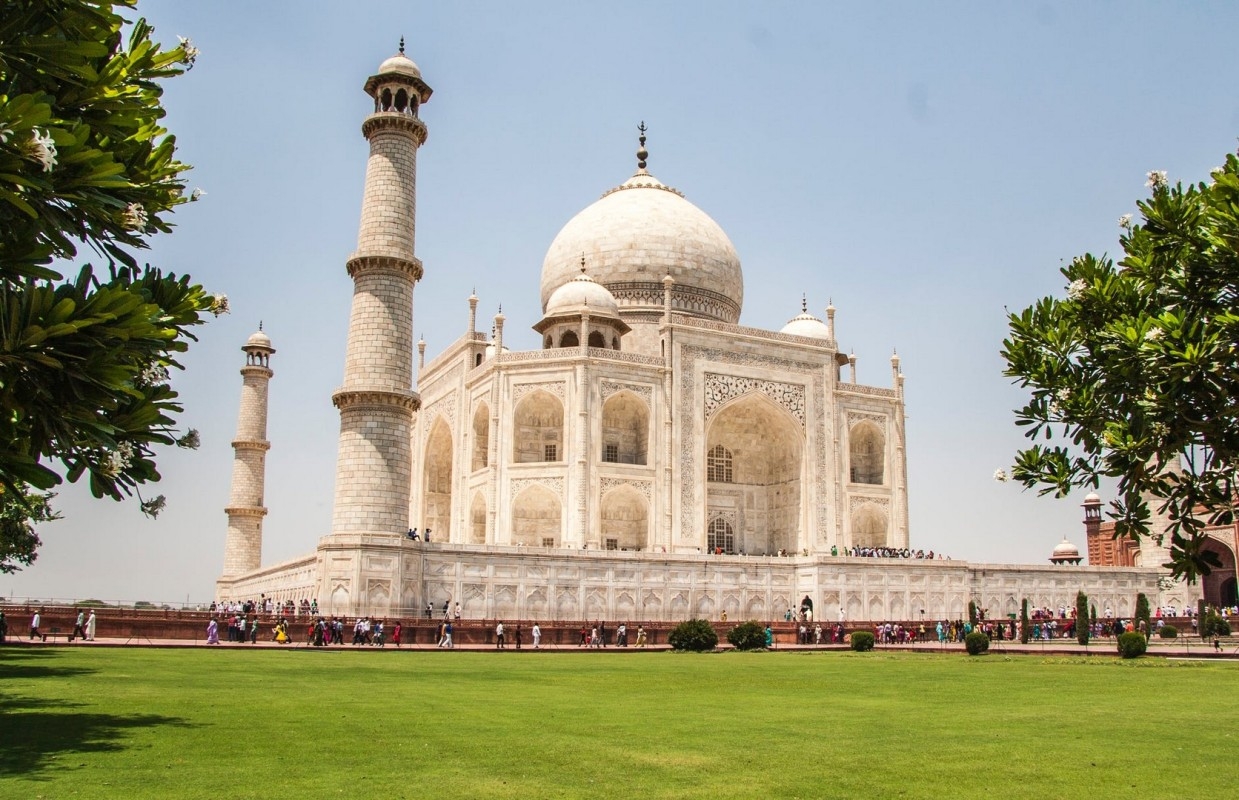
It takes 4 hrs to drive to Agra which is home to world’s greatest love symbol- the Taj Mahal. Taj Mahal - the jewel of Muslim art in India also called Mumtaz Mahal. Dedicated to his wife, this iconic architecture was built by Mughal emperor Shah Jahan. Stay overnight in a hotel in Agra.
Also called the pink city, Jaipur is one of the most architecturally wonders of India. The journey from Delhi to Jaipur takes about 4 hrs and passes through 16th centuryFatehpur Sikri which hosts many Mughal styled architectural monuments. In Jaipur, you will explore honeycombed Hawa Mahal and Amber Fort of Rajput. Stay overnight in Jaipur.
Morning drive back to Delhi and get transferred to Indira Gandhi International airport to catch return flight to Paro flight is about 2 hrs duration. Stay overnight in a hotel in Kathmandu.
After early morning breakfast, our Bhutanese guide will take you on a guided sightseeing tour of Bhutan. Among the sites you will visit include Kyichu Lhakhang (oldest temple of Bhutan); 17th century Rinpung Dzong and 17th century Drugyal Dzong Overnight in Paro. Stay overnight in hotel in Paro.
Take an early morning to Taktsang Monastery or the famous Tiger’s Nest Monastery (3180m). Guru Rinpoche or Chengritse is believed to have arrived on this spot riding a tigress. After spending some time here, you will head for Thimphu which takes about 2 hrs. On arrival in Thimphu, you will straight away visit King's Memorial Chorten, Folk Heritage Museum and National Library. Stay overnight in Thimpu.
Wake up early to go on a tour of Tashichho Dzong and then hike to Wangditse Gompa, followed by National Institute of Traditional Medicine and Textile Museum. After lunch we will head towards Punkaha, which is the capital of Punkaha. The scenic drive will involve crossing over Dochu La Pass at 3100m and through quiet rhododendron and fir forests. You will pass by 108 chorten Lungchutse Monastery. Stay overnight in hotel Punakha.
Enjoy morning hike to Khamsum Valley which will take almost 2 hrs. The valley is home to Namgyal Chorten which features old Buddhist paintings. From here it is just another 45 minutes will take you to Punakha Dzong, which is perched at the crossing of Pho Chhu and Mo Chhu Rivers. Built in 1637, Punakha Dzong is one of the oldest and largest Dzong in Bhutan. Afterwards you will drive back to Paro which is a 2-3 hr journey.
Depending on the timing of your international flight, you will be transferred to international airport in Paro for your flight back home.
Experience the rich cultures, stunning landscapes, and historic landmarks of Nepal, India, and Bhutan with Asiana Treks and Tours. This 17-day journey takes you from the bustling streets of Kathmandu to the serene valleys of Bhutan, including rafting on the Trisuli River, exploring Pokhara, jungle safaris in Chitwan, witnessing the Taj Mahal in Agra, and hiking to the iconic Tiger’s Nest Monastery in Paro. Each day combines immersive sightseeing with comfortable accommodations and carefully planned activities for an unforgettable adventure.
This tour ensures a smooth blend of adventure, culture, and comfort, making it ideal for first-time visitors and seasoned travelers alike.
Your Start Date is the day you land in Nepal, and your End Date is when you fly home.
If the set Nepal India Bhutan Tour group dates don’t suit your schedule, we can offer alternative dates upon request.
Asiana Treks and Tours offers a comprehensive package that includes airport transfers, accommodations in 3 to 4-star hotels and lodges, domestic flights (including Paro to Delhi), transportation in private vehicles, entrance fees to monuments and national parks, guided sightseeing tours, and all necessary permits. Meals are included in most parts of the tour, particularly during jungle safaris and in Bhutan. A licensed tour guide will accompany travelers throughout, ensuring a smooth and enriching experience across Nepal, India, and Bhutan.
This tour is considered moderate in terms of physical activity. Sightseeing in cities involves walking and light hiking. The most strenuous part is the hike to Tiger’s Nest monastery in Bhutan, which takes about 4–6 hours round trip at high altitude. A general level of fitness is recommended, but no advanced trekking experience is necessary. Asiana Treks and Tours will pace the tour according to the group’s abilities, and support staff are available to assist if needed during hikes.
Yes, Asiana Treks and Tours has designed this itinerary to be family-friendly and accommodating to older travelers. Comfortable transportation, high-quality accommodation, and a flexible schedule make it suitable for most ages. The only moderately challenging activity is the Tiger’s Nest hike, which can be skipped or done partially if needed. Families with children or seniors can request additional support, and the company can tailor certain days for ease and comfort. Private or customized options are also available on request.
Group sizes for this tour are typically kept small, ranging from 4 to 12 people. This ensures personalized attention, greater flexibility, and a more immersive cultural experience. Smaller groups also allow for smoother logistics and easier access to historical sites. Asiana Treks and Tours also offers private tours for families, couples, or custom groups upon request. Each group is accompanied by experienced local guides in each country, ensuring that travelers gain authentic insights into local traditions and history.
Wi-Fi is available in most hotels and some restaurants across Nepal, India, and Bhutan. Mobile coverage is generally reliable in urban and semi-urban areas, though rural regions like Chitwan or Punakha may have limited connectivity. Asiana Treks and Tours can assist travelers in obtaining local SIM cards upon arrival if needed. In Bhutan, SIM cards are provided as part of the package. While connectivity is good, travelers are encouraged to enjoy the cultural immersion and unplug when possible.
Absolutely. Asiana Treks and Tours specializes in personalized travel experiences. The 17-day itinerary can be adjusted in terms of duration, destinations, or activities based on traveler preferences. Whether you want more time in one country, cultural workshops, spiritual retreats, or luxury upgrades, the team can design a bespoke itinerary. Private departures for families, corporate groups, or couples are also available. Simply contact the company with your preferences, and their travel consultants will tailor an unforgettable experience accordingly.
Each country has its own unique customs, and Asiana Treks and Tours provides briefings to prepare you. In general, modest clothing is recommended when visiting temples or monasteries. Remove shoes before entering sacred spaces. In Bhutan, bowing to elders and using both hands when offering items is polite. In Nepal and India, use of the right hand for eating or giving is customary. Photography may be restricted in religious sites, so always ask. Respect for local traditions is deeply appreciated.
Travelers are advised to consult their doctor 4–6 weeks before departure. Routine vaccines like hepatitis A, typhoid, tetanus, and COVID-19 are recommended. Carry personal medications and a basic first aid kit. Altitude sickness isn’t a major issue on this itinerary, though hydration is important, especially in higher areas like Paro or Thimpu. Asiana Treks and Tours ensures food is safe and accommodation hygienic, but bottled water is recommended. The company also maintains contact with local medical facilities for emergencies.
Gratuities are not included in the base tour price and are at the traveler's discretion. However, tipping is customary and appreciated in South Asia. Asiana Treks and Tours recommends tipping guides, drivers, and hotel staff for their services. Suggested amounts vary by role and duration of service. Your tour guide will provide tipping guidelines to help ensure fairness and local appropriateness. A collective tip at the end of the tour for the main guide and driver is often common.
Yes, solo travelers are welcome and often join small groups on this tour. Asiana Treks and Tours offers single-occupancy rooms for an additional fee and ensures solo travelers are safe and well-accompanied throughout the journey. The guided group setting offers an excellent opportunity to meet other like-minded travelers while retaining personal space and flexibility. Many solo guests appreciate the logistical ease, cultural depth, and social atmosphere provided by the company’s experienced guides and curated itinerary.
Yes, you need separate visas for Nepal and India, while Bhutan requires a pre-arranged visa through a licensed travel agency. Asiana Treks and Tours assists clients with the visa application process by providing invitation letters, necessary documentation, and step-by-step guidance. The company handles the Bhutan visa entirely on your behalf. For Nepal and India, you’ll need to apply online or via the embassy before arrival. Ensure your passport is valid for at least six months beyond your travel dates.
Booking is simple and can be done through Asiana Treks and Tours’ official website or by contacting their travel consultants via email or phone. A deposit is required to secure your spot, with the balance due before arrival. Once booked, you’ll receive a detailed itinerary, visa instructions, packing list, and pre-departure information. Flexible payment options, group discounts, and seasonal promotions may be available. The team is responsive and provides assistance every step of the way to ensure a seamless travel experience.
Throughout the tour, Asiana Treks and Tours provides comfortable, clean, and centrally located 3 to 4-star hotels or heritage lodges. In Kathmandu, Pokhara, and Delhi, you’ll stay in modern hotels with amenities. During the jungle stay in Chitwan, accommodations are in eco-friendly lodges. In Bhutan, you’ll stay in traditional-style hotels known for their hospitality and charm. All lodgings include en-suite bathrooms, hot showers, and often Wi-Fi. Accommodation can be upgraded upon request for luxury travelers at an additional cost.
Yes, Asiana Treks and Tours strongly recommends that all travelers purchase comprehensive travel insurance before arriving. This should include coverage for medical emergencies, trip cancellations, baggage loss, and evacuation if needed. While Bhutan requires all travelers to be insured, it’s also essential for Nepal and India due to varying healthcare access. The company can suggest reputable insurance providers if needed. Proof of insurance may be required before the Bhutan portion of the tour is confirmed.
Asiana Treks and Tours provides full airport assistance, including pick-up and drop-off services at every location. All internal transportation, including the flight from Kathmandu to Delhi and from Delhi to Paro, is included in the package. The company handles ticketing, check-in, and any in-country travel logistics. Private vehicles are used for all overland transfers, ensuring comfort and safety. Flight schedules are coordinated with the tour plan, and guides assist with baggage and airport formalities throughout the journey.
Asiana Treks and Tours employs multilingual guides fluent in English and local languages like Nepali, Hindi, and Dzongkha (Bhutanese). Guides are professionally licensed, knowledgeable in history and culture, and skilled in cross-cultural communication. On request, guides speaking other languages such as Spanish, French, or German can be arranged for private or group tours. The consistency in having English-speaking guides throughout all three countries makes it easier for international travelers to fully engage and ask questions during the journey.
Safety is a top priority for Asiana Treks and Tours. The company ensures reliable vehicles, trained drivers, licensed guides, and carefully vetted accommodations. Travelers receive safety briefings upon arrival in each country. Emergency contacts and support staff are available 24/7. Bhutan and Nepal are considered safe for tourism, and India’s tourist routes are well-policed. Health and hygiene standards are followed closely. In the event of political unrest or weather issues, Asiana adjusts the itinerary to prioritize traveler well-being.
The ideal time to embark on this multi-country tour is during the spring (March to May) or autumn (September to November). These months offer clear skies, mild weather, and optimal conditions for sightseeing and hiking. Spring is especially vibrant with blooming rhododendrons in Nepal and pleasant temperatures in India. Autumn provides the clearest mountain views and coincides with major cultural festivals like Dashain in Nepal and Diwali in India. Bhutan is also particularly scenic during these seasons.
Most meals are included, particularly in Bhutan and during jungle activities in Chitwan. In Nepal and India, breakfasts are typically included with hotel stays, while lunches and dinners are often at traveler’s discretion to allow exploration of local cuisines. Asiana Treks and Tours provides recommendations for safe, hygienic, and authentic restaurants. Special dietary requirements—vegetarian, vegan, gluten-free, etc.—can be accommodated with prior notice. Group meals are occasionally arranged to experience traditional fare and foster group interaction during the tour.
Packing should cover diverse climates. Bring lightweight, breathable clothing for India’s warm weather, layers for Nepal, and warmer clothes for Bhutan, especially in the evenings. Comfortable walking shoes are essential, along with a daypack for excursions. Include a rain jacket, sun protection, and any personal medication. A reusable water bottle, power bank, and camera are also useful. Dress modestly, especially for temple visits. Asiana Treks and Tours provides a detailed packing checklist upon booking confirmation to help travelers prepare.


 (2)
(2)  100% recommend (0)
 (0)
(0)