Mardi Himal trekking
| Trip code | ATT-MHT |
| Package name | Mardi Himal trekking |
| Duration | 4 |
| Max. elevation | 4500 m |
| Level | Moderate |
| Transportation | Private Jeep |
| Accomodation | Simple guest house |
| Starts at | Pokhara |
| Ends at | Pokhara |
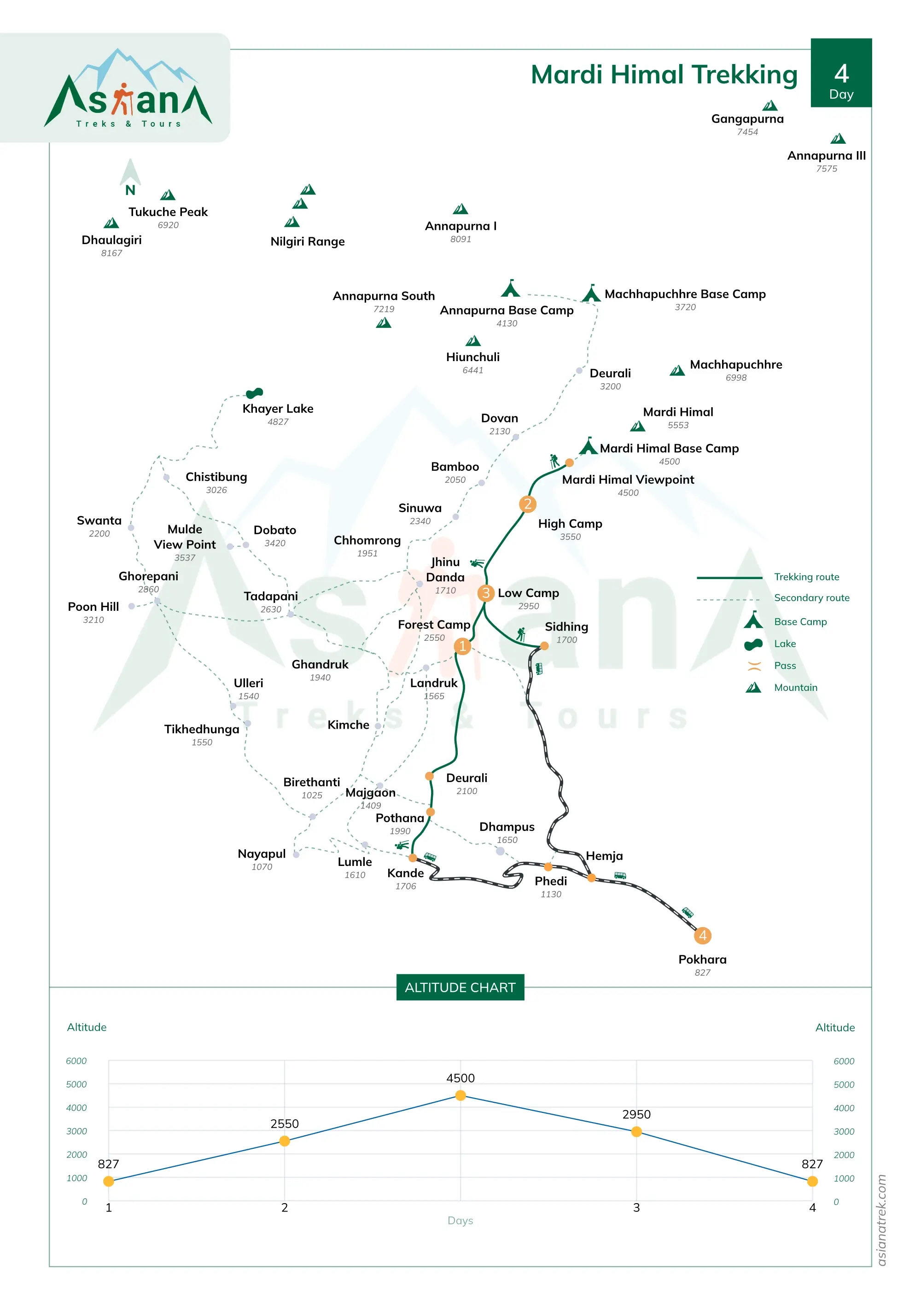
| Trip route | Pokhara- Kande - Australian Camp -Pothana- Forest Camp - Low Camp - Badal Danda - High Camp - Mardi Himal View Points -Siding - Pokhara |
| Cost | USD 271 per person |
Highlights
- Peace and serene walk through the forest.
- Best view of Himchuli, Annapurna South, Annapurna North, Mardi Himal and many more peaks.
- Close to see Annapurna Base Camp.
- Long-range view of the Modikhola valley and cultivated Rice and millet fields.
- A much more traditional lifestyle village with a wide range of stunning views.
Overview
Pokhara to Pokhara 4-Day Mardi Himal Trek is one of the most popular short treks in the Annapurna region, offering close-up views of Machhapuchhre (Fishtail), Mardi Himal, and the entire Annapurna Himalayan Range. Starting from Pokhara, this fast-paced route is ideal for trekkers seeking a short, scenic, and peaceful adventure, for people with limited time, and for trekking lovers. The journey combines breathtaking Himalayan views, rich Gurung culture, and the natural beauty of the Annapurna Conservation Area.
After a short drive from Pokhara to Kande, the trek ascends through charming villages like Australian Camp, or Dhampus, Pothana, and Deurali, gradually entering dense rhododendron and oak forests. As the trail climbs higher toward Forest Camp, Low Camp, Badal Danda, and High Camp, the landscapes open to dramatic panoramas of Annapurna South, Hiunchuli, Gangapurna, and Annapurna III. The trek’s highlight is the hike to the Mardi Himal Viewpoint (4,500 m / 14,764 ft), a stunning vantage point offering sunrise views over the Annapurna Massif, the Modi Khola Valley, Ghandruk and the ridgeline stretching toward Mt. Dhaulagiri and Mt. Manaslu.
This trek was first explored in the 1960s by Col. Jimmy Roberts. This area was once known as the “Other Sanctuary” due to its pristine wilderness and quiet ridgelines. Today, the Mardi Himal Trek has become a rising favourite for its perfect blend of adventure, serenity, and accessibility.
Returning via Siding Village, the trail passes through terraced fields and traditional settlements before you drive back to Pokhara for a relaxing evening by Phewa Lake. With excellent service from Asiana Treks and Tours, create a short Mardihimal trek for people with limited time and budget. This short Himalayan journey delivers unforgettable scenery, warm hospitality, and a rewarding trekking experience.
Why the 4-Day Mardi Himal Trek Is a Must-Do trek?
Machhapuchhre (Fishtail) and Mardi Himal, where you could witness the sun rise over the Annapurna Range. The trail is excellent for anyone who doesn't have much time. It has serene forests, beautiful ridgelines, and authentic Gurung culture, all without the crowds. It's an excellent excursion for both novice and experienced trekkers because it's easy to reach from Pokhara, offers excellent teahouses, and offers stunning views. Mardi Himal is the best journey for people who want a short, tranquil, and wonderful experience in the Himalayas.
Key Reasons to Choose the 4-Day Mardi Himal Trek:
- Close-up views of Mardi Himal & Machhapuchhre, and many more mountain Peaks
- Short, time-efficient itinerary from Pokhara to Pokhara
- Peaceful trails with the Jungle and open meadows with fewer crowds
- First explored in the 1960s by Col. Jimmy Roberts
- Stunning sunrise viewpoints at 4,500 m
- Rich Gurung culture & friendly teahouses
- Ideal for beginners with reasonable fitness levels
- Beautiful rhododendron forests & high ridges
- A budget-friendly trek can offer all kinds of trek lovers
What to expect on the 4-Day Mardi Himal Trek:
The 4-Day Mardi Himal Trek is a memorable and exciting way to explore the Himalayas. Expect a beautiful mix of thick rhododendron forests, peaceful pathways, and steep high peaks that lead to Mardi Himal Viewpoint (4,500 m). The views of Machhapuchhre (Fishtail), Annapurna South, and Hiunchuli keep getting better every day, making the journey perfect for photographers and anyone else who wants to see the sunrise. The rooms at the teahouse are clean and comfortable; however, as you climb, the air grows thinner and the oxygen levels drop, making it feel like you're truly walking at high altitude. However, trekking has become popular, so you can really interact with nature and Gurung culture without being disturbed. This short hike is perfect for people who want to see enormous mountains in a short amount of time.
What You Can Expect Mardi Himal trek – Key Points
- Close-up views of Mardi Himal & Machhapuchhre
- Quiet, peaceful trails with fewer trekkers
- Beautiful rhododendron and oak forests
- Comfortable teahouse stays each night
- High ridge walk to 4,500 m viewpoint
- Stunning sunrise and sunset panoramas
- Interaction with Gurung culture and villages
- Challenging yet manageable uphill sections
- Quick access from Pokhara.
Why Book The Mardi Himal Trek With Us:
Choosing Asiana Treks and Tours for your Mardi Himal Trek means travelling with a trusted, experienced, and customer-focused team. We provide professional, radiant, friendly, and knowledgeable guides who make sure your journey is safe, smooth, and enriching. Our pricing is transparent, and our itineraries are flexible, allowing you to customise your trek as needed. From Pokhara to Mardi Himal Base Camp and back, we handle all essentials — permits, logistics, accommodation, transportation, safety measures, and cultural insights. Whether you travel solo or in a group, we promote responsible tourism, support local communities, and offer 24/7 assistance. With decades of Himalayan experience, we guarantee a memorable and worry-free adventure.
Summary of reasons to book with us :
- Local experience with 25+ years of experience
- Customizable and traveller-friendly flexible itineraries
- Licensed, Radient-friendly guides and porters
- Emergency support and safety assurance
- Ethical and responsible travel practices
- Transparent pricing with no hidden cost fees
- Wide range of traveller-suitable packages: luxury to budget
- Personalised service for individuals and groups
- Strong support for solo or female travellers
- An authentic cultural and scenic experience throughout the Annapurna region
Advantages of booking with Asiana Treks and Tours:
- Private transportation for airport transfers to and from your hotel.
- Feel free to connect on Facebook or online if you'd like to discuss the trip.
- Last-minute booking at your hotel at a suitable time after your arrival.
- Easy booking and reservation system.
- Multi-channel communication via Email, WhatsApp, Facebook, Viber, Skype, and 24/7 phone communication at +977-9851076270
- Free excess luggage storage during the trek
- Pulse oximeters for monitoring blood oxygen saturation at high altitudes to detect altitude sickness early
- Medical kits along the trek and hot airbags are available in winter
- Arrangements for sleeping bags, duffel bags, and down jackets, as well as walking poles if you don't have your own.
Preparation for Mardi Himal Trek:
Preparing well for the Mardi Himal Trek ensures a safe, enjoyable, and successful adventure. Before booking, understand the trek’s difficulty, daily walking hours, and altitude gains. Start physical training at least 4–6 weeks in advance by hiking, jogging, or cycling to build stamina, leg strength, and endurance. Mental preparation is equally important, as the trek involves steep trails and high-altitude walking. Pack wisely with essential gear, including sturdy trekking boots, warm layered clothing, a quality sleeping bag, trekking poles, and seasonal essentials. Carry the required permits, travel insurance, and some cash. Stay hydrated, eat nutritious meals, and acclimatise properly to avoid altitude-related issues.
Preparation Summary for Mardi Himal Trek
- Know the trek difficulty before booking.
- Begin fitness training 4–6 weeks earlier.
- Pack light but essential trekking gear
- Carry permits, insurance, and cash
- Acclimatise properly at higher altitudes
- Stay hydrated and follow a balanced diet
- Prepare mentally for steep climbs and long walking days
Mardi Himal Trekking Itinerary:
Asiana Treks and Tours offers the best Mardi Himal Trekking itinerary for travellers seeking a short, scenic, and rewarding Himalayan experience. This trek is perfect for trekkers with moderate fitness who want to explore Nepal’s diverse landscapes—from peaceful villages to high-altitude ridges. Each day provides breathtaking views of Machhapuchhre, Annapurna South, and Mardi Himal, making the journey truly unforgettable. Experience the contrast of warm days, cold nights at High Camp, and a relaxing finish in Pokhara. With well-planned walking distances, safe altitude progression, and expert guidance, this itinerary ensures a comfortable and memorable adventure for both beginners and experienced trekkers.
| Day, Place, and route | Altitude (m / ft) | walking Distance | ||
| Day 1, Pokhara - Kande - Forest Camp | 2,500 m / 8,202 ft | 10–11 km | ||
| Day 2, Forest Camp -High Camp | 3,580 m / 11,745 ft | 8–9 km | ||
| Day 3, High Camp - Mardi Himal Viewpoint - Low Camp | 4,200 m / 13,780 ft (Viewpoint) | 10–11 km | ||
| Day 4, Low Camp - Siding - Drive to Pokhara | 1,745 m / 5,725 ft | Pokhara |
Mardi Himal Trekking Distance:
The Mardi Himal Trek can be extended by adding it to other famous routes, or you can start and end it in Kathmandu for a more extended vacation. This larger option includes airport transfers, tours of UNESCO World Heritage sites in Kathmandu, and a complete sightseeing programme in Pokhara, making it a more complete package for travellers who want to experience both culture and hiking.
However, for trekkers with limited time, Asiana Treks and Tours offers a shorter, flexible 4-day Pokhara–Pokhara itinerary. The trek distance begins with a 27 km (17 miles) drive from Pokhara to Kande. From here, the trekking distance from Kande to Siding is about 44 km (27.3 miles), passing through Forest Camp, Low Camp, Badal Danda, High Camp, and Mardi Himal Viewpoint. The trek ends in Siding, followed by a 44–45 km (27 miles) drive back to Pokhara. In total, the complete round-trip distance is 71–72 km (44–45 miles), combining both walking and driving.
Mardi Himal Trekking route:
The 4-day Mardi Himal Trekking route takes you through beautiful valleys, terraced fields, and a beautiful village before rising into the stunning Himalayan foothills. The ridgeline walk leads to incredible views of Annapurna South, Himchuli, and Dhaulagiri on the left, and Machhapuchhre and Mardi Himal stand right in front. In the spring, the rhododendron forests come to life. This short yet rewarding hike offers stunning mountain views and is suitable for both new and experienced trekkers. The path passes through Kande, Australian Camp, Pothana, Deurali, Forest Camp, Low Camp, Badal Danda, High Camp, and the amazing Mardi Himal Viewpoints and ends in Pokhara. The descent passes through Siding Village before returning to Pokhara, which is the perfect end to a Himalayan trip.
4-Day Mardi Himal Package Cost (Price)
The 4-day Mardi Himal Trek offers excellent value, with prices varying based on group size, service level, and accommodation type. Asiana Treks and Tours provides transparent pricing and a reliable, well-planned itinerary focused on comfort and safety. Costs generally range from US$491 for solo trekkers to US$ 457 for larger groups, we have regular complete bord plan, B/B plan and No meal plan depending on guide/porter services, transportation choices, trekking gear needs, and hotel categories in Kathmandu or Pokhara.
For flexibility, the trek can start and end in Pokhara. We offer three well-structured plans to suit different budgets and travel preferences.
Mardi Himal Trek Price Breakdown by Package Type:
| Package type | Service includes P/P | Price range |
| Regular Full-Board Plan | All trekking meals, Accommodation, permits, and a professional guide porter, private transport (start & end) | US$615 – US$657 |
| B/B Plan (Bed & Breakfast) | Best available accommodation, breakfast, permits, transportation, professional guide (meals optional) | US$495 – US$500 |
| Only service No-Meal Plan | Airport/hotel pick-up & drop-off in Kathmandu & Pokhara, permits, transportation, and a guide or porter | US$345 - US$365 |
Mardi Himal Trekking Altitude:
The Mardi Himal Trek starts and concludes in Pokhara, which is 827 m (2,713 ft) above sea level. The trail ascends slowly through green forests, following the old trek route, and from Australian Camp in Pothana, It reaches Deurali and Low Camp, where the view opens up to the Annapurna range. As you climb higher to High Camp at 3,590 m (11,778 ft), the air gets thinner, and the sights are more amazing. The Mardi Himal Viewpoint, which is 4,500 m (14,760 ft) above sea level, is the highest point on the walk. From there, you can see Mardi Himal, Machhapuchhre, and Annapurna up close. Walking for 4 to 7 hours a day on different types of terrain.
Mardi Himal trek Place, height in meters and fit, Trekking distance km/miles, and oxygen level summary Table:
| Day & Place | Walking Hours | Distance (km/miles) | Altitude (m / ft) /oxygen level in % |
| 1, Pokhara - Forest Camp | 5–6 hours | 10 km / 6.2 miles | 2,540 m / 8,333 ft / ~73% |
| 2, Forest Camp -High Camp | 5–6 hours | 7.5 km / 4.6 miles | 3,590 m / 11,778 ft/ – 66% |
3, Hicamp - Mardi Himal Viewpoints back to Low Camp | 7–8 hours | 10 km / 6.2 miles | Viewpoint: 4,500 m / 14,763 ft/ 58% Low Camp: 2,970 m / 9,744 ft/ 70% |
3: Low Camp - Hiking to Siding Village and Drive to Pokhara | 4–5 hours trek 2–3 hours drive | 7 km / 4.3 miles trekking 45 km / 28 miles drive | Siding: 1,700 m / 5,577 ft/ 85% Pokhara: 827 m / 2,713 ft/ 96% |
Major villages of Mardi Himal Trekking:
The major Magar and Gurung villages along the Mardi Himal Trekking route are Phedi, Dhampus, Pothana, Deurali, Forest Camp, Badaldanda High Camp, Siding, Lwang, Astam Melbet, and finally driving back to Pokhara. These villages are significant landmarks and offer scenic beauty and accommodation options along the Annapurna Base Camp Trekking route.
Best Viewpoints Mardi Himal Trekking:
The views of Mardi Himal are among the most beautiful in the Annapurna region. Each viewpoint offers stunning views, from terraced valleys to close-ups of Machhapuchhre, Annapurna South, and Mardi Himal. These beautiful moments make the walk even better, offering a sunrise with colours, panoramic views, and stunning mountain horizons.
Key highlighted best viewpoints:
Australian Camp: Beautiful views of Annapurna, Machhapuchhre, many other Himalayan ranges, broad valleys, and rice terraces.
Deurali: Scenic Pokhara Valley and Modi Khola Valley panoramas with clear mountain views as well as Ghandruk Village.
Forest Camp: Peaceful rhododendron forest with sunrise views of Machhapuchhre, Annapurna South, and Himchuli.
Low Camp: Stunning views of Annapurna I, Annapurna South, Dhaulagiri, Himchuli, Fishtail, and Modi Valley.
Badal Danda: Spectacular ridgeline vistas and dramatic mountain scenery.
High Camp: Close-up Himalayan views with striking sunrise and sunset colours.
Mardi Himal Viewpoint: Best point for panoramic peaks, including Mardi Himal and Machhapuchhre.
Siding Village: Scenic valley views before returning to Pokhara.
Biodiversity of the Mardi Himal trekking:
The biodiversity of the Mardi Himal Treks is best for nature lovers, with many different kinds of plants and animals. The lower track passes through thick forests of rhododendron, oak, and bamboo, home to many species, including Himalayan tahr, musk deer, and playful langur monkeys. As you ascend, the vegetation shifts to alpine shrubs and colourful wildflowers carpeting the high ridges. Birdlife is exceptionally vibrant along this route, with over 500 species recorded—including the Himalayan Monal, pheasants, flycatchers, and various raptors.
This ever-changing ecosystem offers trekkers a rare chance to experience subtropical forests, temperate woodlands, and alpine habitats within a short distance, making Mardi Himal one of the most rewarding nature-focused treks in Nepal.
Key Biodiversity Highlights of the Mardi Himal Trek:
- Vegetation: Rhododendron, oak, bamboo forests, alpine shrubs, and seasonal wildflowers.
- Mammals: Himalayan tahr, musk deer, langur monkeys, and other high-altitude wildlife.
- Birds: Over 500 species, including Himalayan Monal, pheasants, sparrows, and flycatchers.
Festivals and Cultures In the Mardi Himal Trekking:
The Mardi Himal hikes are rich in culture, traditions, and local festivals, making the trek more enjoyable. You will see Gurung and Magar communities along the way. They are known for their warm hospitality, lively music, and bright festivals. Dashain, Tihar, Losar, and local harvest festivals are some of the biggest celebrations. They showcase ancient dances, Mother group dance chants, and rituals passed down through the years. Trekkers can see prayer flags, Buddhist chortens, and hamlet monasteries that show how deeply rooted the people are in their faith. The Mardi Himal Trek is a one-of-a-kind blend of natural beauty and authentic Nepalese culture, thanks to the stunning Himalayan backdrop and cultural experiences along the way.
Mardi Himal Festival & Culture – Key Highlights:
- Experience the rich traditions of Gurung and Magar communities along the Mardi Himal trail.
- Villagers celebrate major festivals such as Dashain, Tihar, Losar, and local harvest festivals.
- Enjoy traditional dances, folk music, cultural songs, and community rituals.
- Witness vibrant cultural elements like prayer flags, Buddhist chortens, and small monasteries.
- Festivals reflect deep spiritual roots influenced by Buddhism and Hinduism.
- Trekking through Mardi Himal offers authentic cultural interactions and warm local hospitality.
- A perfect blend of Himalayan beauty, ethnic heritage, and lively festival celebrations.
Trek Booking:
Asiana Treks and Tours is the best and most trusted trek and tour company operator authorised by the Nepal government. We require a 10% advance payment to book your trip, and you'll need to send us a copy of your passport, photos, travel insurance, and flight details as soon as you book a tour with us. You can use a bank transfer or another method, like Western Union, or pay online via our website, which is easy. The remaining trip cost can be paid upon arrival in Nepal. We offer last-minute bookings, but changes may be necessary due to factors such as bad weather.
Transportation for Mardi Himal trekking:
We pride ourselves on our flexible transportation options, which include planes, helicopters, tourist buses, coasters, vans, jeeps, and cars. These are tailored to our Clients' specific needs, preferences, itineraries, and agreements, ensuring a comfortable and personalised travel experience. However, we provide Tourist buses to and from Pokhara, Private transportation from Nayapul to and from Sewai and Kathmandu sightseeing private vehicle as per the group, and optional flight to and from Pokhara at an extra cost.
Currency Exchange:
The Nepalese rupee is Nepali currency, and 1 USD is approximately 130 NPR. Only NPR is accepted in Nepal, so it's best to bring cash to facilitate transactions. Banks and ATMs in Kathmandu provide currency exchange services, but note that most banks prefer new, crisp notes
Guide and Porter Arrangement:
Our company, Asiana Treks and Tours, focuses on responsible tourism in Nepal. We make sure our guides and porters are well-trained in Trekking and mountaineering. They know a lot about the areas we go to, including geography, history, customs, and culture. We train them regularly in safety, first aid, and environmental conservation. We follow guidelines to treat our porters fairly, providing them with good pay, accommodation, and meals during treks. Our guides and porters are essential team members, and we appreciate their hard work. When you trek with us, you support ethical tourism in Nepal, making your trip meaningful and memorable.
Asiana Treks and Tours prioritizes your safety and enjoyment. Our knowledgeable guides, reliable equipment, and safety measures ensure a great trekking experience in Nepal.
Porter, Luggage, and extra Luggage storage:
We cover the cost of porters for your luggage, but the maximum weight limit is 12 kg per person. Each porter carries luggage for two trekkers; please share a duffle bag with another. Our porters will carry up to 25 kg each. If you need a porter for yourself, we can arrange that. We also recommend carrying a small backpack for your valuables and important documents. You can leave extra luggage at our office for free and at a hotel in Pokhara, Namche, etc.
Accommodation:
Accommodation during the Mardi Himal Trek varies. Along the trekking route, you'll stay in guest houses, commonly known as teahouses. These basic lodges offer rooms, dining areas, and toilets. The quality of guest houses varies but remains affordable and convenient for trekkers. Rooms typically have twin or bunk beds and shared bathrooms, and blankets and pillows are provided. Our company can offer a sleeping bag if you don't have one. You'll spend nine nights in lodges along the trekking route, two nights in a hotel in Pokhara, and three nights in a hotel in Kathmandu. Some places and lodges have attached bathrooms, while others offer simple yet clean rooms with shared facilities. We can arrange a solo trekking service if you're traveling solo, but availability may be limited during peak season in some places. In Kathmandu or Pokhara, your hotel room will have excellent amenities, including TV, 24/7 hot water, electricity, and laundry service.
Meals during the trip:
Eating well is essential since the Mardi Himal Trek takes you through the high Himalayas. You'll have plenty of nutritious meals in the trekking regions, although the options won't be as varied as in the cities. You'll get twelve breakfasts, eight lunches, and nine dinners during the Trek. The menu includes local, Asian, and Western dishes, but it gets more straightforward as you climb higher. Try popular Nepali foods like lentils, rice, curry, dumplings, noodles, Spagaties, and many more. We highly recommend eating fresh vegetables and drinking liquids like green tea, lemon tea, hot lemon, ginger tea, and garlic soup, especially at high altitudes. While non-vegetarian options are available during the Trek, we suggest avoiding them for hygiene reasons. It's also best to steer clear of dairy, cheese, alcohol, caffeine, and hot chocolate. Personal expenses like alcoholic drinks and extra beverages at lodges or cafes aren't included in the package.
Teahouse Facilities:
Guest houses are familiar places to stay while trekking in Nepal. They're simple lodges with rooms, eating areas, and toilets. Guest houses vary in quality but are affordable and convenient for trekkers. They offer warm heating in the winter, and the dining place serves Nepali and international food. Rooms usually have twin or bunk beds, and bathrooms are shared. They provide blankets and pillows. Our company offers sleeping bags, but bringing one for extra comfort is a good idea.
Drinking water:
Nepal is the second country in the world regarding water sources after Brazil. According to the Nepal government, only 27% of people here have clean drinking water. You can buy mineral water in teahouses, but it is expensive; people prefer plastic bottles in some trekking areas. So, there are some safe drinking water stations where you can refill your bottle. However, we recommend carrying Steripen, iodine drops, water purification tablets for safe drinking, and refillable water bottles for boiled or filtered water. We strongly advise not to drink from taps, wells, and rivers in trekking areas. However, in all the city areas, Mineral water is available at a reasonable cost everywhere.
Extra Personal Expenses:
While most expenses during the Trek are covered, you'll need to spend money on accommodations and meals in Kathmandu and Pokhara, souvenirs, and additional beverages. We estimate about USD 10-20 per trekking day for miscellaneous expenses.
Teahouse Facilities:
Guest houses are familiar places to stay while trekking in Nepal. They're simple lodges with rooms, eating areas, and toilets. Guest houses vary in quality but are affordable and convenient for trekkers. They offer warm heating in the winter, and the dining place serves Nepali and international food. Rooms usually have twin or bunk beds, and bathrooms are shared. They provide blankets and pillows. Our company offers sleeping bags, but bringing one for extra comfort is a good idea.
Internet Connectivity:
While trekking in the Himalayan region of Nepal, connecting with your family and friends is also a good idea. You can find internet access at teahouses and lodges, but it might be extra minimal cost. The signal might be weak because of the remote location. You can also get internet access using a local SIM card and data packages available at Kathmandu airport or nearby shops in Thamel and Pokhara. You'll have a passport-sized photo and a copy of your passport to get a SIM card. It's a good idea to compare prices and data packages from telecom companies like Ncell and Nepal Telecom before buying. Knowing about teahouse connectivity. Our guide will suggest connections for you.
Electricity voltage and plugs:
However, 95 % of Nepali people have access to electricity as of May 29, 2023. almost popular trekking routes, teahouses, and lodges have electricity. However, some isolated and solo trekking tea houses in the jungle don't have electricity. Most of these tea houses let travellers charge their devices for a small fee. The average electrical voltage in Nepal is 230 volts, with plug types like Type C, Type D, and Type M. Travellers should bring a suitable adapter and, if needed, a voltage converter for their electronic devices.
Communication:
The guest houses in the trekking regions have internet access. You could buy a SIM card at Tribhuvan International Airport Kathmandu and Pokhara. However, the signal may need to be more assertive at high altitudes. Our office keeps in touch with all trekking teams via the trek guide at least once daily to ensure everything goes as planned.
Trip Extension:
Suppose you have extra days in Nepal after the Trek. In that case, we can arrange a tour, overnight stay at Nagarkot Balthali or any other place around Kathmandu and Chitwan, jungle safari, paragliding, rafting, canyoning, or other treks. Do not hesitate to Inform us. We will create the best for you.
Trek Difficulty:
The Mardi Himal trek presents an easy, moderate, and challenging yet enriching adventure. Your enjoyment of the trip will largely depend on your level of fitness. We recommend building stamina at least two weeks before the trek. Activities include jogging, running, swimming, or taking long hikes for the journey ahead.
Completing this trek is achievable even if you're a beginner, although you must maintain a reasonable fitness level. Prior trekking experience can be advantageous, though it is optional. All you need is the readiness to hike steadily for 4-8 hours, navigating tricky terrain.
Suppose trekkers have pre-existing medical conditions, such as lung or heart diseases. In that case, they are advised to consult their physician before booking the trek to ensure their safety and well-being throughout the journey.
Trip Safety:
We prioritize your safety. We provide experienced guides with first aid kits and necessary safety gear to ensure a safe trip. Our team monitors weather and trail conditions and takes precautions to avoid risks. Before starting the trek, we discuss the trip to provide a clear understanding and ensure a reliable experience.
Group & Private Treks:
We organize many group and private treks simultaneously, with discounts available for larger groups. Every group will have a trekking guide and porters; an assistant guide may be provided for larger groups. Our team ensures a safe and enjoyable trekking experience for all participants.
About solo traveller:
If you're a solo traveller, please get in touch with us to confirm departure dates before booking. You can tell us via call, WhatsApp, or email. We have listed upcoming departure dates for your convenience. Feel free to share the trip details with friends and family.
Notes: Please be aware that the itinerary may change due to weather or other factors, and we'll adjust it accordingly for the group's safety and enjoyment. We look forward to guiding you through the stunning landscapes of the Annapurna region and ensuring a memorable trekking experience.
Responsible Travel:
We prioritize responsible travel to minimize environmental impact and support local communities. We collaborate with organizations like the Kathmandu Environmental Education Project (KEEP) to promote eco-friendly practices in trekking regions.
Graduate:
Graduate or tipping is appreciated in Nepali culture and reflects the quality of service provided. You decide how much to tip, but we recommend tipping as a group at the end of the trip.
End of Trek:
On the 12th day, you'll take a bus from Pokhara back to Kathmandu, which takes about seven hours. Alternatively, you can fly from Pokhara to Kathmandu for an extra fee. In the evening, we'll host a farewell dinner in Kathmandu.
Departure:
On the day of your departure flight, we'll come to pick you up from your hotel and transfer you to Tribhuvan International Airport. We hope you enjoyed the Nepal trek and will consider returning for more adventures in Nepal.
Feedback:
After you complete the Mardi Himal Trek, we'll organize a farewell dinner in Kathmandu and present you with a trekking achievement certificate. After the dinner, you can provide feedback about the Trek on travel portals.
Last-Minute Booking:
If you can't book in advance, we offer last-minute bookings. Full payment is required 24 hours before departure. While we do our best to accommodate last-minute bookings, delays may occur due to unforeseen.
Special Note: Please remember that sometimes unforeseen circumstances, such as inclement weather or unavailable lodging, may cause the schedule to be altered. Your trip guide will design a fresh schedule based on the group's interests in such circumstances.
Annapurna Region Trekking: Guides, Tips & Himalayan Adventures
Discover the beauty of Nepal’s Annapurna region with Asiana Treks & Tours. Explore breathtaking mountain landscapes, authentic local culture, popular trekking routes, and practical tips to help you plan an unforgettable Himalayan adventure.
Annapurna Base Camp vs Everest Base Camp: The Best Trek
Trekking Equipment List for Asiana Treks & Tours
Trekking Permit Requirements for Different Regions in Nepal
Best Sunrise and Sunset Destinations in Nepal
Top Successful Trek for Beginners – Annapurna Base Camp
Most Popular Trek with High Success Rate – Annapurna Base Camp Trek (ABC) Trek
How to Prepare for the Annapurna Base Camp Trek (Gear, Fitness & Tips)
Ghorepani Poon Hill Trek Gateway
Top 26 Annapurna Region Trekking Packages in Nepal – The Ultimate Guide
Tadapani Diaries: One Magical Night in the Mountains
Discovering Ghandruk: A Peaceful Village in the Heart of Nepal
Trekking the Best of Annapurna: Poon Hill to Mardi Himal
Why Chhomrong is the Heart of the Annapurna Base Camp Trek
Exploring Sinuwa on the Annapurna Trail
Deurali: A Peaceful Mountain Village on the ABC Trail
Bamboo: A Hidden Gem of the ABC Trek
Dovan Nepal: Peaceful Stopover on the Annapurna Base Camp Trail
Himalaya Village: A Quiet Haven on the Way to Annapurna Base Camp
Dhampus Village – Annapurna Classical Alternative Gateway
Pothana: The Alternative Gateway to Annapurna Base Camp and Mardi Himal
Best Camping and Overnight Stays: Australian Camp & Mardi Himal Trek
List of Hotel in Mardi Himal Base Camp Trek
Trekking to Low Camp: A Peaceful Path to Mardi Himal
Forest Camp Adventures: Exploring the Mardi Himal Trek in Nepal
High Camp on the Mardi Himal Trek | Views, Altitude & Trekking Guide
Discovering the Magic of Mardi Himal Viewpoint
Top Highlights of the Mardi Himal Trek in Nepal
Best Time to Trek Mardi Himal: Tips for Perfect Views
A Beginner’s Guide to the Mardi Himal Trek in Nepal
Surprising Facts About the Mardi Himal Trek
Essential Guide to Mardi Himal Trekking Permits in Nepal
Mardi Himal Trek Info: Elevation, Altitude, Height and Weather
Mardi Himal Trek Accommodation and Food Tips
Best Time to Trek Annapurna Base Camp in Nepal
Top Highlights of the Annapurna Base Camp Trek
Food and Accommodation on the ABC Trek: What It’s Really Like
Altitude Tips for a Safe Annapurna Base Camp Trek
Annapurna Base Camp Permits: Costs, Process, and Requirements
Top Tips and Facts for Trekking to Annapurna Base Camp
Annapurna Base Camp Trek: Elevation, Height & Temperature Guide
Dobato Stopover: Experiencing the Heart of the Khopra Danda Route
Upper Chistibung: What to Expect on the Way to Khopra Danda
Exploring Khopra Danda Ridge and Khayar Lake
Discover Swanta’s Beauty on the Khopra Danda Trail
Amazing Facts About Khayar Lake in the Annapurna Region
Bayeli Kharka Adventure: From Khopra Danda with Stunning Views
Khopra Danda Trekking Guide: Cost, Permits, Meals, Lodging and Best Season
Exploring Mardi Himal, ABC, and Khopra Ridge in One Epic Journey
Khopra Khair Lake with Annapurna Base Camp Trek: A Complete Journey
Khopra Khair Lake with ABC Trek: Nature, Culture, and Mountains
Complete Guide to Mohare Danda Trekking in Nepal
Sunrise Views from Mohare Danda: What to Expect
Top Highlights of Poon Hill and Mardi Himal Trek
Exploring Poon Hill and Mardi Himal: A Beginner’s Guide
Exploring the Ghorepani Dhampus Circuit Trek in Nepal
An Amazing Hike from Galeshwor to Nangi via Bans Kharka : Mohare Danda Trekking
Landruk: Gateway to the Stunning Mardi Himal Views
Mardi Himal Adventure: Exploring Badal Danda on the Siding Trek
Sunrise Views from Poon Hill and Mulde Viewpoints
Dhaulagiri Annapurna Trail: A New Alternative Trek in Nepal
Is It Possible to Cycle the Annapurna Circuit in Nepal?
Besisahar – The Heart of Lamjung District: Gateway to the Himalayas
Exploring Jagat During the Annapurna Circuit Trek
Dharapani Village in Nepal: Where the Manaslu Circuit and Annapurna Circuit Trails Meet Point
Chame Village: A Peaceful Stop on the Annapurna Circuit Trek
Discover Upper Pisang: A Hidden Gem on the Annapurna Circuit
Exploring Lower Pisang: A Gateway on the Annapurna Circuit
Manang: The Heart of the Annapurna Circuit Trek
Yak Kharka (4,020m): A Must-Stop Village on the Annapurna Circuit
Thorong Phedi: Final Preparation Before Thorong La Pass
Crossing Thorong La Pass (5,416 m): The Highest Point of the Annapurna Circuit
Muktinath in Mustang: A High-Altitude Spiritual Journey on the Annapurna Circuit
Jomsom (2,743 m): The Windy Valley That Connects Annapurna and Upper Mustang
Trip Preparation
- Thermal underwear (top and bottom)
- Moisture-wicking t-shirts (long-sleeved)
- Moisture-wicking underwear
- Fleece jacket or pullover
- Insulated down or synthetic jacket
- Waterproof, windproof jacket (Gore-Tex or similar)
- Waterproof, windproof pants (Gore-Tex or similar)
- Warm beanie or hat
- Sun hat or cap
- Neck gaiter or scarf
- Trekking pants (convertible preferred)
- Waterproof trousers
- Lightweight gloves (inner)
- Insulated gloves or mittens (outer)
- Hiking boots (broken in and waterproof)
- Comfortable camp shoes (e.g., sneakers or sandals)
- Trekking backpack (30-40 liters) with waterproof cover
- Sleeping bag (rated for cold temperatures)
- Sleeping pad or mattress (insulated)
- Adjustable trekking poles
- Insulated water bottles or hydration bladder (2 liters capacity)
- Travel-sized toiletries
- Biodegradable soap
- Quick-dry towel
- Medications for altitude sickness, pain relief, and common ailments
- Sun protection cream, wet wipes, and hand sanitizer
- Camera and batteries
- Notebook and pen
- Earplugs (for sleeping in lodges)
- Portable solar charger
- Headlamp, power bank, and extra batteries
Trip Itinerary
Day 1 : Pokhara – Forest Camp
Your day begins with Breakfast at your Hotel, then a scenic drive from Pokhara to Kande, the gateway of the Annapurna Classic route. From Kande, the trek starts with a steady ascent toward Australian Camp, offering expansive Himalayan vistas. Continue to Pothana (1,950 m / 6,397 ft) and enter the Annapurna Conservation Area, where the oxygen level begins to decrease gradually. The trail leads to Deurali (2,100 m / 6,889 ft), a perfect lunch stop with stunning views of Annapurna South, Himchuli, the Modi River Valley, and Ghandruk Village.
After Deurali, the route gradually climbs up through dense rhododendron and oak forests. The final stretch to Forest Camp (2,600 m / 8,530 ft) offers peaceful woodland trekking, fresh mountain air, and increasing exposure to altitude.
Day 2 : Forest Camp- High Camp
After Breakfast at Forest Camp (2,600 m / 8,530 ft), begin a gradual uphill trek through dense rhododendron and oak forests. As you reach Low Camp (3,050 m / 10,006 ft), the oxygen level decreases slightly, and the views of Mt. Machhapuchhre (Fishtail) begin to open beautifully. Continue your ascent to Badal Danda, a stunning ridge viewpoint offering sweeping panoramas of Annapurna South and Hiunchuli.
From Badal Danda, the trail becomes steeper but rewarding, with clear skyline paths leading toward High Camp. Walking distance averages 4–5 hours, with cooler air and alpine vegetation dominating the landscape. Reach High Camp, your highest overnight stop, where breathtaking close-up mountain views signal your final approach toward Mardi Himal.
Day 3 : High Camp to Mardi Himal View point (4500/ 14764ft) Back to Low camp Camp
After a peaceful night at High Camp (3,550 m / 11,647 ft), begin an early morning ascent along a narrow high ridge toward Mardi Himal Viewpoint. As you climb higher, the tree line disappears and the oxygen level drops, making the walk moderately strenuous but offering an advantageous view. The trail offers breathtaking close-up views of Mt. Machhapuchhre, Mardi Himal, Annapurna South, and the entire Annapurna massif.
Upon reaching Mardi Viewpoint (4,500 m / 14,764 ft)—the highest point of the trek—enjoy a spectacular Himalayan panorama. After capturing the best sunrise scenery, descend back to High Camp for refreshments. Continue downhill through alpine meadows and forest trails to Low Camp (3,050 m / 10,006 ft) for an overnight stay at a cosy lodge.
Day 4 : Low Camp – Siding (1700 M/5576 Miles ) 1.5 hour hike 2 hour drive back to Pokhara
After breakfast at Low Camp, begin a scenic 3.5-hour downhill trek to Siding Village. The route descends through dense rhododendron forests, terraced farmland, and traditional Gurung settlements, where the oxygen level rises and walking becomes gradually easier. Enjoy clear views of Machhapuchhre, Mardi Himal, and the lush mid-hill landscapes throughout the trail.
Upon reaching Siding (1,745 m / 5,725 ft), relax and enjoy lunch with warm local hospitality. Afterwards, board a jeep for the return journey to Pokhara. The drive begins on a bumpy gravel road, then merges onto the smooth highway near Hyangja. Arrive in Pokhara by late afternoon and enjoy a peaceful lakeside evening to end your Mardi Himal adventure trek, and say goodbye to your trekking crew after a farewell dinner, or after arriving in Pokhara, as you wish.
- 1 - 2 pax US$ 271
- 3 - 6 pax US$ 251
- 7 - 12 pax US$ 241
- 13 - above pax US$ 211
Inclusions
What is included?
- Airport picks up and transfers to hotel.
- Hotel accommodations in Kathmandu and Pokhara in the 3-star category with breakfast.
- Half-day Kathmandu sightseeing with an English/ any other foreign language-speaking city guide.
- First aid medical kit, Oximeter to check pulse, heart rate, and oxygen saturation at higher altitudes.
- Land transportation Kathmandu- Pokhara-Kathmandu.
- Annapurna Conservation Area Entry Permit.
- TIMS (Trekking Information Management System.
- An experienced and first aid-trained license holder accompanying a trekking guide.
- Equipped and insured trekking porter (one porter for 2 persons, one porter carries 25 KG.)
- Meals, insurance, salary, equipment, accommodation, and transportation of our trekking crew.
- Tea House accommodation on a twin or multi-sharing basis during the trek.
- Applicable government taxes (13% VAT and 10% tourism service charges).
- Farewell dinner.
What isn't included?
- Nepal entry visa and your Travel/Medical insurance.
- Lunch & dinner in Kathmandu and Pokhara.
- Hot shower while on trek and Bar bill and Laundery service.
- Single supplements in hotels except for solo trekking service.
- Battery Charges( Available during trek with Extra cost).
- Optional trips not specified in the itinerary and personal trekking equipment.
- Helicopter evacuation/rescue in case of emergency.
- Donations to the local organization.
- Tipping to guide and porter.
Complimentary
Mardi Himal Trek Start and End Points: