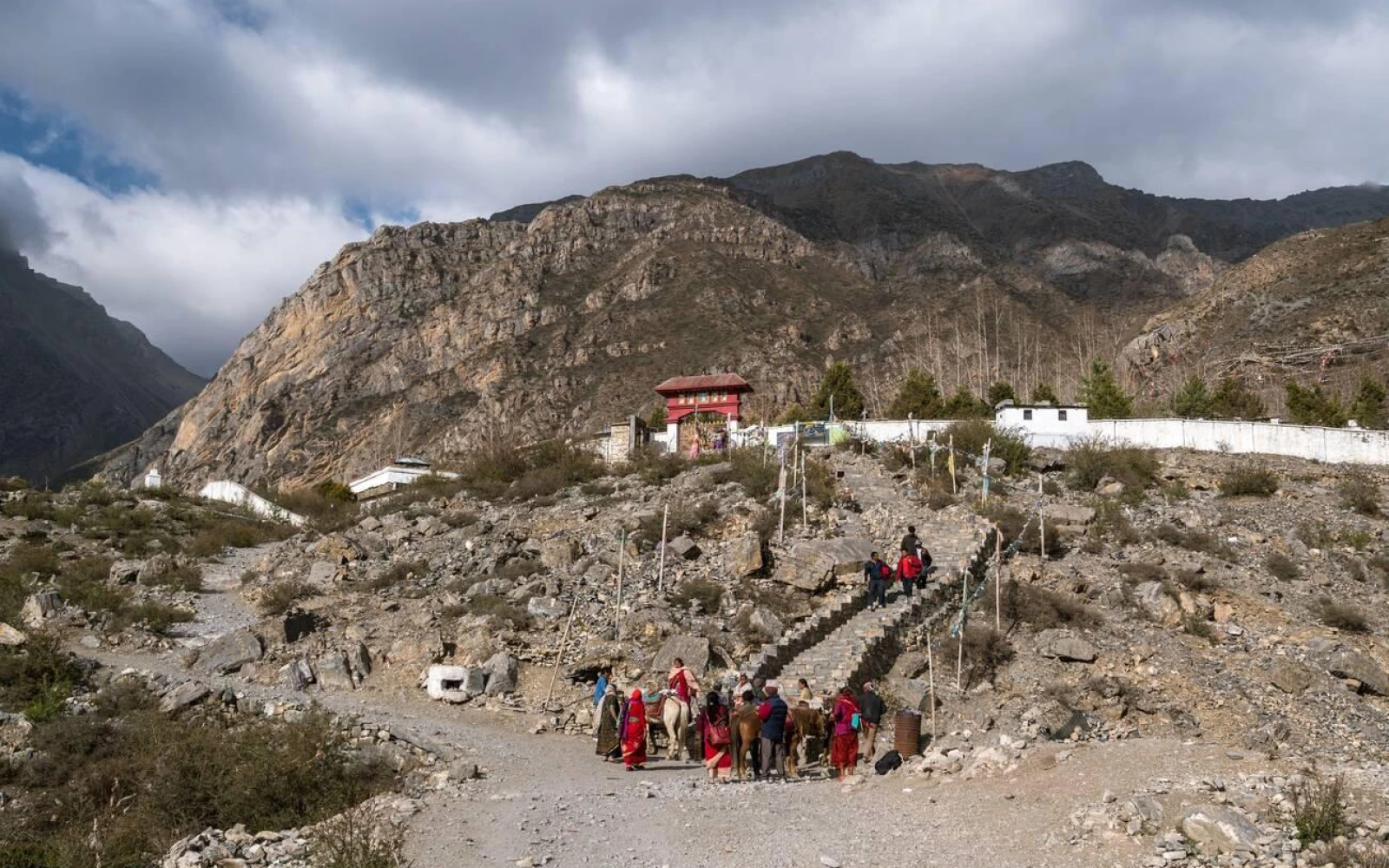
Muktinath, located in the remote Mustang district of Nepal, is one of the most revered pilgrimage destinations in the Himalayas. Sitting at an altitude of around 3,710 meters, it lies along the legendary Annapurna Circuit trekking route and attracts both spiritual seekers and adventure travelers. The site is unique because it blends Hindu and Buddhist beliefs, making it a rare symbol of religious harmony in the high mountains.
For trekkers and pilgrims, reaching Muktinath is not just a journey across landscapes but also a deeply symbolic ascent toward spiritual liberation. The surrounding terrain shifts from lush valleys to arid Himalayan deserts, offering dramatic scenery throughout the approach.
Key highlights:
Muktinath is often described as a “gateway to salvation” due to its strong spiritual reputation. The site is believed to offer moksha (liberation) in Hindu tradition and deep tantric blessings in Tibetan Buddhism. The journey itself, often starting from Kathmandu and passing through Pokhara and Jomsom, is considered part of the spiritual experience.
Beyond its religious meaning, the approach to Muktinath is breathtaking. Towering Himalayan peaks, deep valleys, and windswept landscapes create a powerful atmosphere of isolation and peace. Many travelers describe the feeling of arriving at Muktinath as both physically challenging and emotionally transformative.
Key highlights:
Muktinath is located in the Mustang District of northern Nepal, within the trans-Himalayan region that lies behind the Annapurna and Dhaulagiri ranges. The area is part of the rain-shadow zone, meaning it receives very little rainfall and has a dry, desert-like mountain environment, unlike most of Nepal.
The temple sits near the village of Ranipauwa, which serves as the main settlement for pilgrims. The nearest major town is Jomsom, accessible by air from Pokhara or via rugged road routes through Beni and Tatopani. The geography makes Muktinath both remote and incredibly scenic, with dramatic mountain views at every turn.
Key highlights:
Muktinath Temple is one of the few places in the world deeply sacred to both Hindus and Buddhists. Hindus refer to it as “Mukti Kshetra,” meaning “Place of Liberation,” and believe that visiting the temple cleanses sins and leads to salvation. It is also counted among the 108 Divya Desams dedicated to Lord Vishnu.
For Buddhists, the site is known as “Chumig Gyatsa,” meaning “Hundred Waters,” and is associated with Guru Rinpoche (Padmasambhava). It is considered a powerful meditation site where natural elements like fire and water coexist, symbolizing harmony and enlightenment. The famous 108 water spouts and the eternal flame at Jwala Mai Temple are central spiritual attractions.
Key highlights:
Muktinath is one of the most important cultural and spiritual milestones on the famous Annapurna Circuit Trek. After crossing the challenging Thorong La Pass (5,416 meters), trekkers descend toward Muktinath at around 3,810 meters, making it a natural transition from high alpine wilderness to a sacred pilgrimage zone. The route from Thorong Phedi or High Camp over the pass and down to Muktinath is considered one of the most rewarding sections of the entire circuit.
This segment of the journey combines physical endurance with spiritual fulfillment. Many trekkers and pilgrims view reaching Muktinath after Thorong La as a symbolic achievement—moving from struggle and altitude challenge toward purification and peace. From Muktinath, most travelers continue by jeep to Jomsom, completing the Mustang section of the circuit.
Key highlights:
Reaching Muktinath can be done through multiple routes depending on time, budget, and physical ability. The most popular route is via Pokhara to Jomsom, followed by a short jeep ride to Ranipauwa, the settlement below the temple. This option is widely used by pilgrims and older travelers due to its convenience and reduced trekking effort.
For trekkers, Muktinath is also accessible as part of the Annapurna Circuit route, either after crossing Thorong La Pass or by trekking through lower Mustang villages like Kagbeni. Road access from Kathmandu and Pokhara via Beni and Tatopani is also possible, though the journey is long and rugged due to mountainous terrain.
Key highlights:
Upon reaching Muktinath Temple, pilgrims participate in purification rituals that are deeply symbolic in both Hindu and Buddhist traditions. One of the most important practices is bathing under the 108 water spouts, known as “Muktidhara,” believed to wash away sins and negative karma. Devotees also visit the sacred pond (Mukti Kunda) before entering the main temple complex.
Another major attraction is the eternal flame at Jwala Mai Temple, where natural gas seeps from the earth and burns continuously alongside water streams. This rare phenomenon is considered a divine miracle representing the balance of fire, water, earth, and sky. Pilgrims often meditate here or offer prayers seeking spiritual liberation and blessings.
Key highlights:
Muktinath’s high altitude of around 3,710–3,810 meters makes it a challenging destination for many travelers. Altitude sickness can occur if proper acclimatization is not followed, especially for those arriving quickly from lower elevations like Pokhara. Symptoms may include headache, dizziness, and fatigue, making a gradual ascent highly recommended.
The weather in the Mustang region is also extreme and unpredictable. Strong winds are common in the afternoon, and temperatures can drop sharply even in summer. The dry, cold climate requires proper clothing and preparation, especially for those traveling during early morning or winter seasons.
Key highlights:
The best time to visit Muktinath depends largely on weather stability, trekking conditions, and visibility of the Himalayan landscapes. The most favorable seasons are spring (March to May) and autumn (September to November), when the skies are clear, temperatures are moderate, and mountain views are at their best. During these periods, both pilgrims and trekkers can comfortably access the region without extreme weather disruptions.
Winter (December to February) is also possible for dedicated travelers, but temperatures drop significantly, and heavy snowfall may affect access routes. The monsoon season (June to August) is less ideal due to rain in lower regions, though Mustang remains relatively dry because of its rain-shadow location.
Key highlights:
Mustang offers a rich cultural experience shaped by centuries of Tibetan influence and the traditional lifestyle of the Thakali people. Villages along the route—such as Kagbeni, Jomsom, and Ranipauwa—reflect ancient Buddhist traditions, prayer flags, monasteries, and stone-built houses that blend seamlessly into the Himalayan landscape.
Travelers visiting Muktinath not only experience a sacred pilgrimage site but also interact with local communities whose customs are deeply rooted in hospitality, spirituality, and mountain survival traditions. The mix of Hindu pilgrims and Buddhist monks creates a unique cultural harmony rarely seen elsewhere.
Key highlights:
Accommodation along the Muktinath and Annapurna Circuit route is mainly in the form of teahouses and lodges. These are simple but comfortable guesthouses that provide basic facilities such as beds, blankets, and hot meals. In places like Jomsom and Ranipauwa, more developed lodges are available due to higher tourist traffic.
Food options are surprisingly diverse considering the remote location. Traditional Nepali dal bhat (rice, lentils, and vegetables) is the most common and energy-rich meal for trekkers. You can also find Tibetan-style bread, noodle soups, momos (dumplings), and basic international dishes like pasta and pancakes in larger stops.
Key highlights:
Muktinath and the surrounding Mustang region offer some of the most dramatic and diverse photography opportunities in Nepal. The landscape changes rapidly from deep river valleys and terraced hillsides to stark, desert-like Himalayan terrain. Snow-capped peaks such as the Annapurna and Dhaulagiri ranges often appear in the background, creating a striking contrast with the dry, wind-swept Mustang landscape.
At Muktinath itself, the sacred architecture adds another layer of visual beauty. The golden temple, 108 water spouts, prayer flags fluttering in the wind, and the eternal flame at Jwala Mai Temple provide powerful spiritual imagery. Sunrise and sunset are especially magical, with golden light illuminating the mountains and temple structures.
Key highlights:
Traveling to Muktinath requires careful preparation due to its high altitude and remote location. Proper permits, such as the Annapurna Conservation Area Permit (ACAP) and TIMS card, are required for trekkers. It is also essential to follow acclimatization guidelines, especially when crossing high passes like Thorong La or staying overnight at elevations above 3,000 meters.
Packing the right gear significantly improves safety and comfort. Warm layered clothing, windproof jackets, sun protection, and good trekking boots are essential. Travelers should also be aware of altitude sickness symptoms and maintain hydration while ascending gradually. Hiring experienced guides ensures safer navigation and a more meaningful cultural experience.
Key highlights:
A journey to Muktinath is far more than a trekking or sightseeing experience—it is a deeply spiritual and emotional transformation. Set in the heart of the Himalayas, the pilgrimage blends natural beauty, physical challenge, and sacred traditions into one unforgettable experience. Whether arriving via the Annapurna Circuit or by jeep from Jomsom, travelers are often left with a profound sense of peace and reflection.
Muktinath represents the meeting point of adventure and spirituality, where mountains become sacred guardians, and every step feels meaningful. With proper guidance, planning, and cultural respect, this journey becomes a lifelong memory of Himalayan purity and spiritual awakening.
Key highlights:
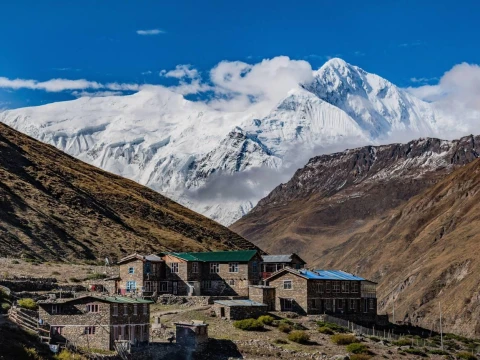
Yak Kharka is one of the most important overnight stops on the legendary Annapurna Circuit Trek. Sitting at an elevation of 4,020 meters (13,189 feet), this peaceful alpine settlement acts as a transitional point between the lower villages of the Annapurna region and the high-altitude crossing of Thorong La Pass. Trekkers traveling through
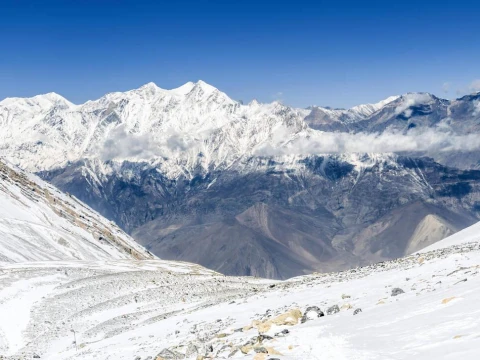
Thorong Phedi is widely regarded as the final major acclimatization stop before crossing the high Himalayan barrier of Thorong La Pass. Sitting at around 4,540 meters, it serves as a crucial staging point on the Annapurna Circuit for trekkers preparing for one of the highest and most demanding mountain passes in the world.
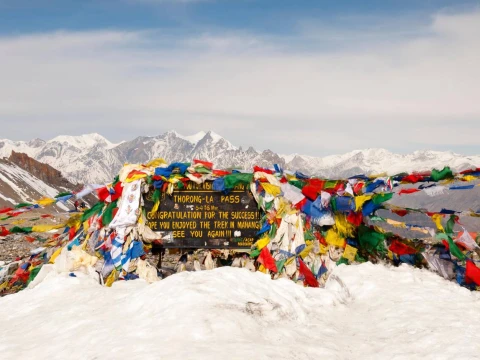
Crossing Thorong La Pass is considered one of the most thrilling achievements for trekkers visiting Nepal. Standing at an elevation of 5,416 meters (17,769 feet), Thorong La Pass is the highest point of the world-famous Annapurna Circuit Trek. The pass forms a natural connection between the beautiful Manang Valley in the east and the dry


 (2)
(2)  100% recommend (0)
 (0)
(0)