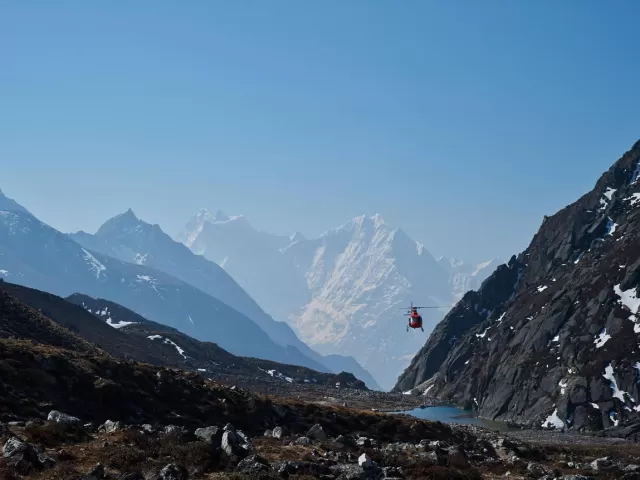
Start aunique adventurewith the 11-dayGokyo Trekand Helicopter Return viaEverest base camp package, designed for those who want to go without challengeEBC Trek in Khumbu. This journey takes you to the lesser-explored yet captivatingGokyo Valley in the Everest Region, providing seven days of trekking amid breathtaking landscapes. To optimize your time and energy, the return journey to Lukla is conveniently facilitated by a helicopter, offering a panoramic aerial perspective of the entireEverest Base Camp area, glaciers, and surrounding mountains.Commencing in Kathmandu, your expedition starts with aflight to Lukla, the starting point of your trek. As you progress through the days, you traverse theSagarmatha National Park, a UNESCO Natural World Heritage Site, and via various Sherpa villages. A rejuvenatingacclimatization day in Namche Bazaarbecomes a pivotal pause to absorb the awe-inspiring ambiance and views of the 7000 and 8000-meter peaks in proximity.Upon conquering a challenging ascent, Gokyo Lake becomes your ultimate destination. A hike to Gokyo Ri rewards you withbreathtaking vistas of the Gokyo lakesand themajestic Himalayan mountains. The trek culminates in athrilling helicopter flight back to Lukla, allowing you to savor the mesmerizing landscapes ofEverest Base Camp and Kala Patthar.This moderate to challenging trek demands mental and physical endurance as you navigate elevations exceeding 5000 meters. Prepared and guided byAsiana Treks and Tours, this expedition promises a test of resilience amid thestunning backdrop of the Everest Region.Everest Gokyo-Ri Trekking return by Heli itinerary:Asiana Treks and Tours has the perfect Everest Gokyo-Ri Trek itinerary. Travelers who desire to explore Nepal with moderate physical fitness. You'll discover the best places for breathtaking views from the city to the countryside. Experience the contrast of cold nights at Gokyo to a stunning view of the mountain wall, an unforgettable lifetime journey.Everest Gokyo-Ri Trekking return by Heli Distance:The Everest Gokyo-Ri trekking return by Hel takes 12 days, with 4 to eight-hour walking days, and is approximately 48 km, or 29.82 miles, depending on the itineraryEverest Gokyo-Ri Trekking return by Heli Trekking route:The Everest Gokyo- Ri Trekking return by Heli route showcases awe-inspiring natural beauty. Starting in lush valleys with terraced fields and traditional Sherpa. Villages, the journey unfolds amidst the Himalayan foothills. Rhododendron forests bloom in spring, accompanied by cascading waterfalls and snow-capped peaks. Traversing wildflower meadows and crossing suspension bridges over mountain streams, the landscape evolves as you ascend. Approaching Everest Gokyo-Ri trekking return by Heli, rugged terrain and glacial moraines dominate, leading to panoramic views of towering peaks. The Trek promises unforgettable moments, whether you're a seasoned trekker or novice adventurer, offering an unparalleled journey through Earth's most breathtaking landscapes and top of the world.Everest Gokyo-Ri Trekking return by Heli Trekking Price:Our Everest Gokyo-Ri trekking return by package tour ensures reliability in terms of cost, itinerary, and overall experience. The Everest Gokyo Ri trek typically ranges from US$2300 to 3000, depending on group size, service level, guide and porter services, transportation preferences, and accommodation category in Kathmandu. This cost estimation is subject to the types of trekking gear and accommodation preferences. Everest Gokyo-Ri Trekking return by Heli trek Height:The Everest Gokyo-Ri trekking and tours start from the bustling city of Kathmandu at an altitude of 1337 meters. From Kathmandu, take a flight to Lukla or during peak season from Ramechhap. You'll descend to the beautiful Manthali headquarters of Ramechhap,474 meters above sea level. If you Fly from Manthali to Lukla, you'll embark on your journey descending to crossing by the green forest to Chheplung; finally, the Trek culminates at Everest Gokyo-Re at a breathtaking height of 5,357m /17,575 ft.Major villages of Everest Gokyo-Ri Trekking trekking return by Heli:The major Sherpa villages along the Everest Gokyo-Ri Trekking route are Lukla, Chheplung, Thado Koshi, Phakding, Taktok, Banker Manjo, Jorsalle, Namche, Sanasha, Doley, Macherma,Gokyo valley Return from the same route and follow stunning Helicopter to Kathmandu. These villages are significant landmarks and offer scenic beauty and accommodation options along the Everest Gokyo-Ri Trekking return by Heli.Best Viewpoints Everest Gokyo -Ri Trekking return by Heli:These viewpoints provide unforgettable experiences, highlighting the beauty of the Everest Gokyo- Ri Trek.Everest Gokyo-Ri return by heli Trek offers breathtaking viewpoints, showcasing stunning panoramas of the surrounding Himalayan peaks. Here are the critical views along the route: On a clear day, board your FlightFlight to Lukla or Ramechhap, ensuring a seat on the left-hand side for a breathtaking view of the uncountable Himalayan peaks, from the Langtang Himalayan range to the majestic Mt Everest.Hillary Bridge:After halfway from Hillary Bridge to Namche, you will first glimpse the majestic Everest view. Hillary Park Sagarmatha Head Headquarters:At the top of Namche Headquarters of Sagarmatha National Park, Hillary Park, you have a stunning surrounding view of Many Himalayan ranges, including Mt Everest.Everest View Hotel:From Everest View Hotel, you can enjoy unparalleled vistas of Everest and neighbouring peaks, Dole Viewpoint:Located near the village of Dole, this viewpoint provides early glimpses of Cho Oyu and other peaks, setting the stage for the spectacular views to come further along the trek.Machhermo Viewpoint:This viewpoint is situated above the village of Machhermo and offers beautiful views of the surrounding peaks, including Thamserku, Kangtega, and Cho Oyu. It's a great spot to acclimatize and enjoy the landscape.Gokyo Lakes:A series of turquoise lakes set against snow-capped peaks. The third lake, Dudh Pokhari, is particularly stunning. The area around the lakes provides spectacular photo opportunities and serene spots to enjoy the natural beauty.Gokyo Ri (5,357 meters / 17,575 feet): The highlight of the trek, Gokyo-Ri, offers panoramic views of four of the world's highest peaks: Everest, Lhotse, Makalu, and Cho Oyu. The climb to the summit is challenging but rewarding, with unparalleled vistas of the Gokyo Lakes and the Ngozumpa Glacier, the longest glacier in the Himalayas.Ngozumpa Glacier:The longest glacier in the Himalayas is visible from several points along the trek. The glacier's dramatic ice formations and moraines are awe-inspiring, especially from the nearby hills.Scoundrel's Viewpoint: This viewpoint is located above the fifth Gokyo-Ri trekking return by Heli offers a more secluded and equally impressive perspective of Everest, Lhotse, Makalu, and Cho Oyu. It's less frequented by trekkers, providing a tranquil spot to take in the grandeur of the Himalayas.Each viewpoint leaves an indelible mark on your soul, ensuring the journey back to Lukla reminds you of the awe-inspiring vistas encountered throughout your Trek.Flora and Fauna in the Everest Gokyo-Ri Trekking :Everest Gokyo-Re Trekking return by Heli Trek is also in Sagarmatha National Park. It deserves many different flora and fauna, Where pine and hemlock forests are found at lower altitudes, and fir, juniper, birch, rhododendron, scrub, and alpine plants thrive at higher elevations. Sagarmatha National Park is inhabited by a diverse range of animals, like red panda, snow leopard, musk deer, Himalayan tahr, marten, Himalayan mouse hare (pika), and over 118 bird species, such as the Impeyan pheasant, snow cock, blood pheasant, and red-billed cough.Festivals and Culture of Everest Gokyo-Ri Trek return by Heli:The Everest Gokyo-Ri trek return by Heli trek offers a cultural immersion into Sherpa traditions. A highlight is the Dumji and Mani Rimdu Festival at Tengboche Monastery, held annually in October or November. This vibrant celebration features sacred dances and colorful ceremonies, providing insight into Sherpa culture.Buddhism, a central pillar of Sherpa life, is beautifully woven into the Trek's fabric. It's evident in the monasteries, prayer flags, and Mani walls that dot the route. Visitors are not just spectators but can actively participate in Buddhist rituals, fostering a deeper understanding of Sherpa spirituality and their profound connection to nature.In their harmonious coexistence with nature, Sherpas practices sustainable living with eco-friendly methods like using yak dung as fuel and waste management. These practices, born out of necessity and deep respect for the environment, are a testament to the Sherpa's ingenuity and their role as responsible stewards of the land. It's a practice that inspires respect and admiration. People and hospitality of Everest Gokyo-Ri Trekking Return by Heli:Nepal is a country where warm hospitality and incredible values are not just a custom, but a deeply ingrained part of its culture. Whether you're a foreign visitor or a local, you're greeted with open arms, friendly smiles, and a radiant manner. This tradition of hospitality, deeply rooted in Hinduism, Buddhism, and traditional customs, sees guests as blessings and treats them with utmost respect, generosity, and kindness.The Sherpa people, an indigenous ethnic group with a unique blend of Tibetan Buddhism and ancient Bon rituals, are the epitome of these values. Residing in the upper Khumbu area, they welcome guests with a distinct warmth and an unwavering spirit of hospitality, marked by their renowned honesty and loyalty.Advantage book with Asiana Treks and tours:Private transport for airport transfers to/from your hotel.Trip briefing on Facebook and online if you love to connect.Last minute booking at your hotel at a suitable time after your arrival.Easy booking and reservation system.Multi-channel communication via Email, WhatsApp, Facebook, Viber, Skyp 24/7 phone communication at +977-9851076270Free excess luggage storage during the TrekOximeters are provided to examine blood oxygen saturation at high altitudes to detect altitude sickness earlyMedical kits along the Trek and hot airbags are available in winterArrange sleeping bags, duffel bags, down jackets, and walking pools if you don't have your own.Trek Booking for Everest Gokyo -Ri Trekking return by Heli:Asiana Treks and Tours is the best and most trusted trek and tour company operator authorized by the Nepal government. We require a 10% advance payment to book your trip, and you'll need to send us a copy of your passport, photos, travel insurance, and flight details as soon as you book a tour with us. You can use bank transfer, or any other way like Western Union, or online via our website, which is easy. The remaining trip cost can be paid upon arrival in Nepal. We offer last-minute bookings, but changes may occur due to circumstances like bad weather. Transportation of Everest Gokyo-Ri trekking return by Heli:Asiana Treks and Tours Organizes all transportation logistics from start to end, according to our group size and agreement, including pickups and drops of service to flights between Kathmandu and Lukla for ground transportation for World Heritage site tours. Our services for all groups ensure convenient travel arrangements, whether a World Heritage tour or Flight tickets, and are tailored to the group, prioritizing safety, comfort, and efficiency. We aim to provide the best and most enjoyable travel experience, meeting the highest standards of safety and comfort.Trekking Start to Everest Gokyo -Re Trekking return by Heli:Your Everest Gokyo-Ri Trek return by Heli begins with a warm welcome in Kathmandu. Our team member will greet you at Tribhuvan International Airport. We'll escort you to your hotel in a private vehicle, ensuring a comfortable and hassle-free start to your adventure. This will set the tone for a memorable journey.If you miss the regular trip briefing, don't worry. We'll provide it at a convenient time before departure and before a World Heritage tour the following morning or the next day; we'll then proceed to the airport flight to Lukla or drive four 4-hour Manthali and Flight to Lukla.Currency Exchange:The Nepalese rupee is Nepali currency, and 1 USD is approximately 130 NPR. Only NPR is accepted in Nepal, so it's best to bring cash to facilitate transactions. Banks and ATMs in Kathmandu provide currency exchange services, but note that most banks prefer new, crisp notes.Our Team:The Asiana Treks and Tours team is professional, reliable, and responsible. They are well-trained, friendly, radiant, and fluent in English. You can feel comfortable sharing anything with them. They are experts in local culture, history, vegetation, food, accommodation, weather conditions, and first aid medication. They are also environmentally conscious and respect the rights of animals.However, please do not provoke them for personal gain during the trip. While you can enjoy your holiday with them, we kindly request that you do not try to change their customs, beliefs, religion, culture, or traditions.We and our staff are committed to making your adventure trip unforgettable memories of a lifetime journey in Nepal. Guide and Porter Arrangement for Everest Gokyo-Ri Trekking return by Heli:Our company, Asiana Treks and Tours, focuses on responsible tourism in Nepal. We make sure our guides and porters are well-trained in Trekking and mountaineering. They know a lot about the areas we go to, including geography, history, customs, and culture. We train them regularly in safety, first aid, and environmental conservation. We follow guidelines to treat our porters fairly, providing them good pay, accommodation, and meals during treks. Our guides and porters are essential team members, and we appreciate their hard work. When you trek with us, you support ethical tourism in Nepal, making your trip meaningful and memorable.Asiana Treks and Tours prioritizes your safety and enjoyment. Our knowledgeable guides, reliable equipment, and safety measures ensure a great trekking experience in Nepal.Porter, Luggage, and extra Luggage storage: We cover the cost of porters for your Luggage, but the maximum weight limit is 12 kg per person. Each porter carries Luggage for two trekkers; please share a duffle bag with another. Our porters will carry up to 25 kg each. If you need a porter for yourself, we can arrange that. We also recommend carrying a small backpack for your valuables and important documents. You can leave extra Luggage at our office for free and at a hotel in Pokhara, Namche, etc.Accommodation during the Everest Gokyo -Ri Trekking:Accommodation during the Everest Gokyo-Ri Trek varies. Along the trekking route, you'll stay in guest houses, commonly known as teahouses. These basic lodges offer rooms, dining areas, and toilets. The quality of guest houses varies but remains affordable and convenient for trekkers. Rooms typically have twin or bunk beds and shared bathrooms, and blankets and pillows are available. Our company can offer a sleeping bag if you don't have one. You'll spend nine nights in lodges along the trekking route and three nights in a hotel in Kathmandu. Some places and lodges have attached bathrooms, while others offer simple yet clean rooms with shared facilities. We can arrange a solo trekking service if you're traveling solo. In high season and particular areas, availability may be limited for you, although we try our best. In Kathmandu or Pokhara, your hotel room will have excellent amenities, including TV, 24/7 hot water, electricity, and laundry service.Meals during the Everest Gokyo -Ri Trekking:Eating well is essential since the Everest Gokyo-Ri Trek takes you through the Himalayas. You'll have plenty of nutritious meals in the trekking regions, although the options won't be as varied as in the cities. You'll get fifteen breakfasts, eleven lunches, and ten dinners during the Trek. The menu includes local, Asian, and Western dishes, but it gets more straightforward as you climb higher. Try popular Nepali foods like lentils, rice, curry, dumplings, noodles, Spagaties, and many more. We highly recommend eating fresh vegetables and drinking liquids like green tea, lemon tea, hot lemon, ginger tea, and garlic soup, especially at high altitudes. While non-vegetarian options are available during the Trek, we suggest avoiding them for hygiene reasons. It's also best to steer clear of dairy, cheese, alcohol, caffeine, and hot chocolate. Personal expenses like alcoholic drinks, extra beverages, and cafes aren't included in the package. Drinking water during the Everest Gokyo -Ri Trekking:Nepal is the second country in the world in terms of water sources after Brazil. According to the Nepal government, only 27% of people here have clean drinking water. You can buy mineral water in teahouses, but it is expensive; Lokals people are not prefer plastic bottles in some trekking areas So, there are some safe drinking water stations where you can refill your bottle. However, we recommend carrying Steripen, iodine drops, water purification tablets for safe drinking, and refillable water bottles for boiled or filtered water. We strongly advise not to drink from taps, wells, and rivers in trekking areas. However, in all the city areas, Mineral water is available at a reasonable cost everywhere.Extra Personal Expenses:Your Trip covers most expenses during the Trek; you'll need to spend money on extra accommodations and meals in Kathmandu, souvenirs, and beverages. We estimate about USD 15-25 per trekking day for miscellaneous expenses. However, personal expenses depend on your Income, habits, and style.Toilet Facilities in during the Everest Gokyo -Ri Trekking:Most teahouses have Western-style flush toilets during mountain treks, especially at lower elevations. But as you go higher, find simple squat toilets along the trails and teahouses at higher altitudes. These toilets usually have water or toilet paper, but it's a good idea to bring your toilet paper just in case. You can also use restrooms at nearby teahouses or find a private spot along the trekking routes.Internet Connectivity during the Everest Gokyo -Ri Trekking:While trekking in the Himalayan region of Nepal, connecting with your family and friends is also a good idea. You can find internet access at teahouses and lodges, but it might be extra minimal cost. The signal might be weak because of the remote location. You can also get internet access using a local SIM card and data packages available at Kathmandu airport or nearby shops in Thamel and Pokhara. You'll have a passport-sized photo and a copy of your passport to get a SIM card. It's a good idea to compare prices and data packages from telecom companies like Ncell and Nepal Telecom before buying. Knowing about teahouse connectivity. Our guide will suggest connections for you. Electricity voltage and plugs:However, 95 % of Nepali people have access to electricity as of May 29, 2023. almost popular trekking routes, teahouses, and lodges have electricity. However, some isolated and solo trekking tea houses in the jungle don't have electricity; most tea houses let travelers charge for their devices for a small fee. The average electrical voltage in Nepal is 230 volts, with plug types like Type C, Type D, and Type M. Travellers should bring a suitable adapter and, if needed, a voltage converter for their electronic devices.Communication during the Everest Gokyo -Ri Trekking:The guest houses in the trekking regions have internet access. You could buy a SIM card at Tribhuvan International Airport Kathmandu and Namche. However, the signal may need to be more assertive at high altitudes. Our office keeps in touch with all trekking teams via the trek guide at least once daily to ensure everything goes as planned.Trip Extension:Suppose you have extra days in Nepal after the Trek. In that case, we can arrange a tour, overnight stay at Nagarkot Balthali or any other place around Kathmandu and Chitwan, jungle safari, paragliding, rafting, canyoning, or other treks. Do not hesitate to Inform us. We will create the best for you.Trek Difficulty:The Everest Gokyo-Ri Trek presents a moderate and challenging yet enriching adventure. Your enjoyment of the trip will largely depend on your level of fitness. We recommend building stamina at least two weeks before the Trek. Activities include jogging, running, swimming, or taking long hikes for the journey ahead.Completing this Trek is achievable even if you're a beginner, although you must maintain a reasonable fitness level. Prior trekking experience can be advantageous, though it is optional. All you need is the readiness to hike steadily for 4-8 hours, navigating tricky terrain.Suppose trekkers have pre-existing medical conditions, such as lung or heart diseases. In that case, they are advised to consult their physician before booking the Trek to ensure their safety and well-being throughout the journey.Trip Safety during the Everest Gokyo -Ri Trekking:We highly give top priority. We provide experienced guides with first aid kits and necessary safety gear to ensure a safe hand. Our team monitors weather and trail conditions and takes precautions to avoid risks. Before starting the Trek, we discuss the trip to provide a clear understanding and ensure a reliable experience.Group & Private Treks information for the Everest Gokyo -Ri Trekking:We organize many group and private treks simultaneously, with discounts available for larger groups. Every group will have a trekking guide and porters. Regarding larger groups, we provide an assistant guide. Our team ensures a safe and enjoyable trekking experience for all participants.About solo traveler:If you're a solo traveler, please get in touch with us to confirm departure dates before booking. You can tell us via call, WhatsApp, or email. We have listed upcoming departure dates for your convenience. Feel free to share the trip details with friends and family.Notes: Please be aware that the itinerary may change due to weather or other factors, and we'll adjust it accordingly for the group's safety and enjoyment. We look forward to guiding you through the stunning landscapes of the Annapurna region and ensuring a memorable trekking experience.Responsible Travel:We prioritize responsible travel to minimize environmental impact and support local communities. We collaborate with organizations like the Kathmandu Environmental Education Project (KEEP) to promote eco-friendly practices in trekking regions.Gratitude:Graduate or tipping is appreciated in Nepali culture and reflects the quality of service provided. You decide how much to tip, but we recommend tipping as a group at the end of the trip.End of Trek:On the eleventh day, you'll take a bus from Pokhara back to Kathmandu, which takes about seven hours. Alternatively, you can fly from Pokhara to Kathmandu for an extra fee. In the evening, we'll host a farewell dinner in Kathmandu.Departure:On the day of your departure flight, we'll come to pick you up from your hotel and transfer you to Tribhuvan International Airport. We hope you enjoyed the Nepal trek and will consider returning for more adventures in Nepal.Feedback:After you complete the Everest Gokyo-Ri Trek, we'll organize a farewell dinner in Kathmandu and present you with a trekking achievement certificate. After the dinner, you can provide feedback about the Trek on travel portals.Last-Minute Booking:If you can't book in advance, we offer last-minute bookings. Last-minute booking offers are available but may cost slightly more than regular departure dates. Those opting for last-minute bookings must pay an additional 7% of the total trip cost on our website. While we strive to make last-minute requests, we try our best to accommodate according to your last-minute booking holiday.Special Note: Please remember that sometimes unforeseen circumstances, such as inclement weather or unavailable lodging, may cause the schedule to be changed. Your trip guide will design a fresh schedule based on the group's interests in such circumstances. Everest Regions Trekking Blog Post List:Asiana Treks & Tours offers an insightful blog on the Everest region, providing valuable information for trekkers. Explore stunning landscapes, local culture, and practical tips for your journey.Why Everest Base Camp Trek Should Be Your Next Adventure: Top ReasonsBeginner's Guide to Everest Base Camp TrekUnderstanding the Everest Base Camp Trek’s DifficultyEverest Base Camp Trek: Best Seasons (March-Mid June, Sep-Nov)Choosing the Best Route for Everest Base CampMajor Facts About the Everest Base Camp Trekking AdventureHiking from Gorak Shep to Kala Patthar & Everest Base CampIs There an Age Limit for Everest Base Camp Trekking?Is Everest Base Camp Trekking Possible for Women? Absolutely!The Complete List of Permits and Documents for Everest Region TreksMeals and Accommodation in the Everest RegionAccommodation Types in the Everest RegionTop Everest Region Trekking Packages 2025/2026Annapurna Base Camp vs Everest Base Camp: The Best TrekTrekking Permit Requirements for Different Regions in NepalThe First Viewpoint to See Mount EverestThe Beauty of Gokyo Lake with Views of EverestDiscovering the Beauty of Gokyo Lakes with Gokyo RiWhy Choose Everest Three Passes Trekking in NepalWhy Trek Everyone is the Ultimate Guide to Everest Base CampTrekking the Everest Three High Passes: Renjo La, Cho La & Kongma LaLukla: The Trekker's Ultimate GatewayAmazing Facts About Tenzing-Hillary Airport (Lukla Airport)Exploring Phakding: The First Step Toward EverestNamche Bazaar at 3,440m: A Rest Stop with a ViewTengboche Monastery: The Heartbeat of the KhumbuDingboche: The Smart Stop for Acclimatization and Stunning ViewsLobuche: A High-Altitude Himalayan Gem – History, Culture, Geography & Trekking HighlightsDiscover Everest Dudhkoshi Cultural Trek for BeginnersTraversing the Heart of Solu: Jiri to Sete, Junbesi & Nunthala via the Lamjura-La PassSacred Trails and Alpine Dreams: A Journey Through Pikey Peak, Dudh Kunda, and the Hidden Hamlets of SolukhumbuWhy Choose Everest Three Passes Trekking in NepalThe First Successful Summit: Sir Edmund Hillary and Tenzing NorgayHistory of Mount Everest : International Everest DayWhy Trek Everyone is the Ultimate Guide to Everest Base CampFAQs for Hiking to the Roof of the World (Everest Region

Annapurna Base Camp Trek with Return by Heli is a fantastic adventure trek that combines the excitement of a helicopter ride with the tranquil beauty in the lap of Annapurna and Annapurna south incircle by the Himalayas. This tremendous trek with helicopter trek return begins from Pokhara, and you'll trek north from Pokhara Valley towards the Annapurna Base Camp via charming villages and breathtaking landscape Tikhedhunga, Ullery, Ghorepani, Tadapani, Chhomrong tranquil village Bamboo, Dovan, Himalaya, Deurali MBC and finally at ABC. The Annapurna Base Camp is a famous spot for trekkers and climbers, offering stunning views of the snowy peaks and serene landscapes. While trekking is the most common way to get there, Annapurna Base Camp's return by Heli Tour provides a unique and luxurious alternative. This helicopter tour offers an incredible aerial journey through Nepal's breathtaking terrain, granting exceptional access to the heart and base of the Annapurna region via a mesmerizing view of the Nilgiri and Dhauligiri snowy mountain peaks from a helicopter. The ABC Helicopter Tour from Pokhara is ideal. It takes about 45 minutes to return to Pokhara. On the flight from ABC, you can enjoy beautiful views of green hills, cluster inhabitants Ghandruk, Landruk, Chhomrong, and many more villages of Gurung ethnic group, Pokhara valley, and impressive Himalayan Peaks Machapuchre, Annapurna I, Annapurna II, Dhaulagiri, and many more. This Heli return tour is an exciting and efficient way to witness the Annapurna Range's grandeur and surrounding beauty. This comprehensive overview will take you through the various aspects of this once-in-a-lifetime experience.You'll also catch sight of other picturesque rhododendron forests. Trekking to the Annapurna Base camp takes about 06 days by foot, so this tour is the perfect choice for people with limited time and who want to experience the beauty of the Himalayas with a return from Helicopter. Asiana Treks and Tours offers this fantastic flight at a reasonable cost for your unforgettable Heli tour.The journey concludes, and trekkers are left with a treasure trove of memories. From the serene moments at the base camp to the adrenaline rush of helicopter travel, each experience adds a unique flavor to the overall adventure, not just a suggestion but a heartfelt recommendation.The trek to Annapurna Base Camp is about reaching a destination and embracing a journey filled with awe-inspiring moments. The sunrise, the mountains, the helicopter ride – each component contributes to an adventure that transcends the ordinary. As you plan your Annapurna Base Camp trek, remember that the natural beauty lies in the destination and every step of the way.ABC Trekking return by Heli itinerary:Asiana Treks and Tours has the perfect ABC Trek itinerary. Travelers who desire to explore Nepal with moderate physical fitness. You'll discover the best places for breathtaking views from the city to the countryside. Experience the contrast of cold nights at Gokyo to a stunning view of the mountain wall, an unforgettable lifetime journey.ABC Trekking return by Heli Distance:The Annapurna Base Camp trekking return by Hel takes 10 days, with 4 to eight-hour walking days, and is approximately 81 km, or 50.33 miles, depending on the itinerary.ABC Trekking return by Heli Trekking route:The ABC return by Heli route showcases awe-inspiring natural beauty. Starting in lush valleys with terraced fields and traditional Sherpa. Villages, the journey unfolds amidst the Himalayan foothills. Rhododendron forests bloom in spring, accompanied by cascading waterfalls and snow-capped peaks. Traversing wildflower meadows and crossing suspension bridges over mountain streams, the landscape evolves as you ascend. Approaching Everest Gokyo-Ri trekking return by Heli, rugged terrain and glacial moraines dominate, leading to panoramic views of towering peaks. The Trek promises unforgettable moments, whether you're a seasoned trekker or novice adventurer, offering an unparalleled journey through Earth's most breathtaking landscapes and top of the world.ABC Trekking return by Heli Trekking Price:Our Annapurna Base Camp trekking return by package tour ensures reliability in terms of cost, itinerary, and overall experience. The Everest Gokyo Ri trek typically ranges from US$2300 to 3000, depending on group size, service level, guide and porter services, transportation preferences, and accommodation category in Kathmandu. This cost estimation is subject to the types of trekking gear and accommodation preferences. ABC Trekking return by Heli trek Height:The Annapurna Base Camp trek starts from the bustling city of Kathmandu at an altitude of 1337 meters. From there, you'll descend to the peaceful lakeside city of Pokhara, situated at 827 meters above sea level. Along the way, you'll ascend to famous viewpoints like Poon Hill, reaching an altitude of 3210 meters. Finally, the trek culminates at Annapurna Base Camp, situated at a breathtaking height of 4130 meters.Major villages of ABC Trekking Return by Heli:The major Magar and Gurung ethnic villages along the Annapurna Base Camp Trekking route are Nayapul, Birethanti, Matathati, Sudame, Hile, Tikhedhunga, Ulleri, Banthati, Nagethati, Ghorepani, Ghorepani Deurali, another Banthati, Tadapani, Chuile, Kimrong Khola, Gurjung, Taklung, Chhomrong, Lower and Upper Sinuwa, Bamboo, Dovan, Himalaya Hotel, Hinko Deurali, Machhapuchhre Base Camp (MBC), and Annapurna Base Camp (ABC). Return back to Pokhara taking easy way by the scenic Heli with in 20 minute. Best Viewpoints of ABC return by Heli:These viewpoints provide unforgettable experiences, highlighting the beauty of the Annapurna Base Camp Trek.Annapurna Base Camp Trek offers breathtaking viewpoints, showcasing stunning panoramas of the surrounding Himalayan peaks. Here are the critical views along the route:Near Naudanda and Kande:On the way to Nayapul, enjoy magnificent views of the mountains and rice terraces.Ulleri to Banthati:Experience impressive mountain vistas during the second day of trekking.Poon Hill:Witness the iconic sunrise at an altitude of 3,210 meters, with panoramic views of the Annapurna and Dhaulagiri ranges.Ghorepani Deurali:Enjoy similar breathtaking views to Poon Hill on the opposite side during the third day of trekking.Tadapani:Tadapani is a tranquil and peaceful place. Surrounded by Rhododendron and ever-green forest, it is the best location for overlooking the best view. In the Breezi morning, you have the best sunrise view of the stunning "Fish Tail" peak (Machhapuchhre) and Annapurna South and Himchuli right in front of you. Chhomrong:Chhomrong is the last big village of the Gurung people. It's located in front of the Annapurna, Himchuli, and Fishtail mountains. From here, you can see the glacier of Annapurna South. The village deserves a breathtaking view near Modi Khola, Chhomrong Khola, Annapurna, Himchuli, and Fishtail Mountains.Annapurna Base Camp (ABC):The ultimate destination, situated at 4,130 meters, offers unparalleled views of Annapurna I, Annapurna South, Hiunchuli, and other towering peaks, along with the Modi Khola Valley.Flora and Fauna in the ABC Trekking Return by Heli:The Annapurna Base Camp trekking trail is a biodiversity hotspot, perfect for nature lovers. Lush forests in the lower regions house various bird species, including rhododendrons and bamboo. Alpine meadows greet you higher up with vibrant wildflowers. Look out for elusive wildlife like Himalayan thars and snow leopards, while diverse birdlife, including the Himalayan Monal, adds to the experience. This trek offers a captivating glimpse into the Himalayan ecosystems, promising an unforgettable journey through nature's diversity.Festivals and Culture of ABC Trek return by Heli:You'll immerse yourself in vibrant festivals and cultural traditions along the Annapurna Base Camp Trekking route. The region, predominantly inhabited by ethnic groups like the Gurungs and Magars, celebrates various festivals. Dashain,typically in September or October, is a significant Hindu festival symbolizing the triumph of good over evil. Villages burst with colorful decorations, music, and dances as families gather for blessings and feasts.Tihar,known as the Festival of Lights, falls in October or November. This five-day celebration honors animals and the goddess of wealth, Laxmi. Oil lamps light up homes, and rituals bring prosperity and fortune. These festivals offer a unique and lifetime experience, as well as Nepalese culture with the majestic beauty of the Himalayas.People and hospitality of ABC Trekking Return by Heli:Nepal is a country where warm hospitality and incredible values are not just a custom, but a deeply ingrained part of its culture. Whether you're a foreign visitor or a local, you're greeted with open arms, friendly smiles, and a radiant manner. This tradition of hospitality, deeply rooted in Hinduism, Buddhism, and traditional customs, sees guests as blessings and treats them with utmost respect, generosity, and kindness. on the route most of the village are dominated by Gurung ethnic grops who involve Brave gorkha soldier in British Army and Indian Army have great culture and hospitality. Advantage book with Asiana Treks and tours:Private transport for airport transfers to/from your hotel.Trip briefing on Facebook and online if you love to connect.Last minute booking at your hotel at a suitable time after your arrival.Easy booking and reservation system.Multi-channel communication via Email, WhatsApp, Facebook, Viber, Skyp 24/7 phone communication at +977-9851076270Free excess luggage storage during the TrekOximeters are provided to examine blood oxygen saturation at high altitudes to detect altitude sickness earlyMedical kits along the Trek and hot airbags are available in winterArrange sleeping bags, duffel bags, down jackets, and walking pools if you don't have your own.Abc Trekking Return by Heli:Asiana Treks and Tours is the best and most trusted trek and tour company operator authorized by the Nepal government. We require a 10% advance payment to book your trip, and you'll need to send us a copy of your passport, photos, travel insurance, and flight details as soon as you book a tour with us. You can use bank transfer, or any other way like Western Union, or online via our website, which is easy. The remaining trip cost can be paid upon arrival in Nepal. We offer last-minute bookings, but changes may occur due to circumstances like bad weather. Transportation of ABC Trekking return by Heli:Asiana Treks and Tours Organizes all transportation logistics from start to end, according to our group size and agreement, including pickups and drops of service to flights between Kathmandu and Lukla for ground transportation for World Heritage site tours. Our services for all groups ensure convenient travel arrangements, whether a World Heritage tour or Flight tickets, and are tailored to the group, prioritizing safety, comfort, and efficiency. We aim to provide the best and most enjoyable travel experience, meeting the highest standards of safety and comfort.Trekking Start to ABC return by Heli:Your Annapurna base camp trek begins with a warm welcome in Kathmandu. As soon as you arrive at Tribhuvan International Airport, our dedicated team will be there to greet you. We'll then escort you to your hotel in a private vehicle, ensuring a comfortable and hassle-free start to your adventure, setting the tone for a memorable journey.If you miss the regular trip briefing, don't worry. We'll provide it at a convenient time before departure, Pokhara, either before a World Heritage tour the following morning or the next day; we'll then proceed to Pokhara by tourist bus, departing around 7 a.m. from Sorakhutte, Kathmandu. The package includes transportation by tourist bus from Kathmandu to Pokhara, offering a comfortable and scenic journey. However, if you prefer a quicker option, you can also take a 25-minute domestic flight to Pokhara or use a private vehicle for an additional cost, giving you the freedom to choose what suits you best.Currency Exchange:The Nepalese rupee is Nepali currency, and 1 USD is approximately 130 NPR. Only NPR is accepted in Nepal, so it's best to bring cash to facilitate transactions. Banks and ATMs in Kathmandu provide currency exchange services, but note that most banks prefer new, crisp notes.Our Team:The Asiana Treks and Tours team is professional, reliable, and responsible. They are well-trained, friendly, radiant, and fluent in English. You can feel comfortable sharing anything with them. They are experts in local culture, history, vegetation, food, accommodation, weather conditions, and first aid medication. They are also environmentally conscious and respect the rights of animals.However, please do not provoke them for personal gain during the trip. While you can enjoy your holiday with them, we kindly request that you do not try to change their customs, beliefs, religion, culture, or traditions.We and our staff are committed to making your adventure trip unforgettable memories of a lifetime journey in Nepal. Guide and Porter Arrangement for ABC Trekking return by Heli:Our company, Asiana Treks and Tours, focuses on responsible tourism in Nepal. We make sure our guides and porters are well-trained in Trekking and mountaineering. They know a lot about the areas we go to, including geography, history, customs, and culture. We train them regularly in safety, first aid, and environmental conservation. We follow guidelines to treat our porters fairly, providing them good pay, accommodation, and meals during treks. Our guides and porters are essential team members, and we appreciate their hard work. When you trek with us, you support ethical tourism in Nepal, making your trip meaningful and memorable.Asiana Treks and Tours prioritizes your safety and enjoyment. Our knowledgeable guides, reliable equipment, and safety measures ensure a great trekking experience in Nepal.Porter, Luggage, and extra Luggage storage: We cover the cost of porters for your Luggage, but the maximum weight limit is 12 kg per person. Each porter carries Luggage for two trekkers; please share a duffle bag with another. Our porters will carry up to 25 kg each. If you need a porter for yourself, we can arrange that. We also recommend carrying a small backpack for your valuables and important documents. You can leave extra Luggage at our office for free and at a hotel in Pokhara, Namche, etc.Accommodation during the ABC Trekking Return by Heli:Accommodation during the ABC Trek varies. Along the trekking route, you'll stay in guest houses, commonly known as teahouses. These basic lodges offer rooms, dining areas, and toilets. The quality of guest houses varies but remains affordable and convenient for trekkers. Rooms typically have twin or bunk beds and shared bathrooms, and blankets and pillows are available. Our company can offer a sleeping bag if you don't have one. You'll spend nine nights in lodges along the trekking route and three nights in a hotel in Kathmandu. Some places and lodges have attached bathrooms, while others offer simple yet clean rooms with shared facilities. We can arrange a solo trekking service if you're traveling solo. In high season and particular areas, availability may be limited for you, although we try our best. In Kathmandu or Pokhara, your hotel room will have excellent amenities, including TV, 24/7 hot water, electricity, and laundry service.Meals during the ABC Trekking Return By Heli:Eating well is essential since the ABC Trek takes you through the Himalayas. You'll have plenty of nutritious meals in the trekking regions, although the options won't be as varied as in the cities. You'll get fifteen breakfasts, eleven lunches, and ten dinners during the Trek. The menu includes local, Asian, and Western dishes, but it gets more straightforward as you climb higher. Try popular Nepali foods like lentils, rice, curry, dumplings, noodles, Spagaties, and many more. We highly recommend eating fresh vegetables and drinking liquids like green tea, lemon tea, hot lemon, ginger tea, and garlic soup, especially at high altitudes. While non-vegetarian options are available during the Trek, we suggest avoiding them for hygiene reasons. It's also best to steer clear of dairy, cheese, alcohol, caffeine, and hot chocolate. Personal expenses like alcoholic drinks, extra beverages, and cafes aren't included in the package. Drinking water during the ABC Trekking Return by Heli:Nepal is the second country in the world in terms of water sources after Brazil. According to the Nepal government, only 27% of people here have clean drinking water. You can buy mineral water in teahouses, but it is expensive; Lokals people are not prefer plastic bottles in some trekking areas So, there are some safe drinking water stations where you can refill your bottle. However, we recommend carrying Steripen, iodine drops, water purification tablets for safe drinking, and refillable water bottles for boiled or filtered water. We strongly advise not to drink from taps, wells, and rivers in trekking areas. However, in all the city areas, Mineral water is available at a reasonable cost everywhere.Extra Personal Expenses For ABC trek return by Heli:Your Trip covers most expenses during the Trek; you'll need to spend money on extra accommodations and meals in Kathmandu, souvenirs, and beverages. We estimate about USD 15-25 per trekking day for miscellaneous expenses. However, personal expenses depend on your Income, habits, and style.Toilet Facilities in during the ABC Trekking return by Heli:Most teahouses have Western-style flush toilets during mountain treks, especially at lower elevations. But as you go higher, find simple squat toilets along the trails and teahouses at higher altitudes. These toilets usually have water or toilet paper, but it's a good idea to bring your toilet paper just in case. You can also use restrooms at nearby teahouses or find a private spot along the trekking routes.Internet Connectivity during the ABC Trekking:While trekking in the Himalayan region of Nepal, connecting with your family and friends is also a good idea. You can find internet access at teahouses and lodges, but it might be extra minimal cost. The signal might be weak because of the remote location. You can also get internet access using a local SIM card and data packages available at Kathmandu airport or nearby shops in Thamel and Pokhara. You'll have a passport-sized photo and a copy of your passport to get a SIM card. It's a good idea to compare prices and data packages from telecom companies like Ncell and Nepal Telecom before buying. Knowing about teahouse connectivity. Our guide will suggest connections for you. Electricity voltage and plugs:However, 95 % of Nepali people have access to electricity as of May 29, 2023. almost popular trekking routes, teahouses, and lodges have electricity. However, some isolated and solo trekking tea houses in the jungle don't have electricity; most tea houses let travelers charge for their devices for a small fee. The average electrical voltage in Nepal is 230 volts, with plug types like Type C, Type D, and Type M. Travellers should bring a suitable adapter and, if needed, a voltage converter for their electronic devices.Communication during the ABC Trekking return by Heli:The guest houses in the trekking regions have internet access. You could buy a SIM card at Tribhuvan International Airport Kathmandu and Namche. However, the signal may need to be more assertive at high altitudes. Our office keeps in touch with all trekking teams via the trek guide at least once daily to ensure everything goes as planned.Trip Extension:Suppose you have extra days in Nepal after the Trek. In that case, we can arrange a tour, overnight stay at Nagarkot Balthali or any other place around Kathmandu and Chitwan, jungle safari, paragliding, rafting, canyoning, or other treks. Do not hesitate to Inform us. We will create the best for you.Trek Difficulty:The ABC Trek presents a moderate and challenging yet enriching adventure. Your enjoyment of the trip will largely depend on your level of fitness. We recommend building stamina at least two weeks before the Trek. Activities include jogging, running, swimming, or taking long hikes for the journey ahead.Completing this Trek is achievable even if you're a beginner, although you must maintain a reasonable fitness level. Prior trekking experience can be advantageous, though it is optional. All you need is the readiness to hike steadily for 4-8 hours, navigating tricky terrain.Suppose trekkers have pre-existing medical conditions, such as lung or heart diseases. In that case, they are advised to consult their physician before booking the Trek to ensure their safety and well-being throughout the journey.Trip Safety during the ABC Trekking:We highly give top priority. We provide experienced guides with first aid kits and necessary safety gear to ensure a safe hand. Our team monitors weather and trail conditions and takes precautions to avoid risks. Before starting the Trek, we discuss the trip to provide a clear understanding and ensure a reliable experience.Group & Private Treks information for the ABC Trekking:We organize many group and private treks simultaneously, with discounts available for larger groups. Every group will have a trekking guide and porters. Regarding larger groups, we provide an assistant guide. Our team ensures a safe and enjoyable trekking experience for all participants.About solo traveler:If you're a solo traveler, please get in touch with us to confirm departure dates before booking. You can tell us via call, WhatsApp, or email. We have listed upcoming departure dates for your convenience. Feel free to share the trip details with friends and family.Notes: Please be aware that the itinerary may change due to weather or other factors, and we'll adjust it accordingly for the group's safety and enjoyment. We look forward to guiding you through the stunning landscapes of the Annapurna region and ensuring a memorable trekking experience.Responsible Travel:We prioritize responsible travel to minimize environmental impact and support local communities. We collaborate with organizations like the Kathmandu Environmental Education Project (KEEP) to promote eco-friendly practices in trekking regions.Gratitude:Graduate or tipping is appreciated in Nepali culture and reflects the quality of service provided. You decide how much to tip, but we recommend tipping as a group at the end of the trip.End of Trek:On the eleventh day, you'll take a bus from Pokhara back to Kathmandu, which takes about seven hours. Alternatively, you can fly from Pokhara to Kathmandu for an extra fee. In the evening, we'll host a farewell dinner in Kathmandu.Departure:On the day of your departure flight, we'll come to pick you up from your hotel and transfer you to Tribhuvan International Airport. We hope you enjoyed the Nepal trek and will consider returning for more adventures in Nepal.Feedback:After you complete the ABC we'll organize a farewell dinner in Kathmandu and present you with a trekking achievement certificate. After the dinner, you can provide feedback about the Trek on travel portals.Last-Minute Booking:If you can't book in advance, we offer last-minute bookings. Last-minute booking offers are available but may cost slightly more than regular departure dates. Those opting for last-minute bookings must pay an additional 7% of the total trip cost on our website. While we strive to make last-minute requests, we try our best to accommodate according to your last-minute booking holiday.Special Note: Please remember that sometimes unforeseen circumstances, such as inclement weather or unavailable lodging, may cause the schedule to be changed. Your trip guide will design a fresh schedule based on the group's interests in such circumstances.Annapurna Region Trekking: Guides, Tips & Himalayan AdventuresDiscover the beauty of Nepal’s Annapurna region with Asiana Treks & Tours. Explore breathtaking mountain landscapes, authentic local culture, popular trekking routes, and practical tips to help you plan an unforgettable Himalayan adventure.Annapurna Base Camp vs Everest Base Camp: The Best TrekTrekking Equipment List for Asiana Treks & ToursTrekking Permit Requirements for Different Regions in NepalBest Sunrise and Sunset Destinations in NepalTop Successful Trek for Beginners – Annapurna Base CampMost Popular Trek with High Success Rate – Annapurna Base Camp Trek (ABC) TrekHow to Prepare for the Annapurna Base Camp Trek (Gear, Fitness & Tips)Ghorepani Poon Hill Trek GatewayTop 26 Annapurna Region Trekking Packages in Nepal – The Ultimate GuideTadapani Diaries: One Magical Night in the MountainsDiscovering Ghandruk: A Peaceful Village in the Heart of NepalTrekking the Best of Annapurna: Poon Hill to Mardi HimalWhy Chhomrong is the Heart of the Annapurna Base Camp TrekAnnapurna Base Camp (ABC) & Machhapuchhre Base Camp (MBC) Trek: Two Base Camps, One Incredible JourneyExploring Sinuwa on the Annapurna TrailDeurali: A Peaceful Mountain Village on the ABC TrailBamboo: A Hidden Gem of the ABC TrekDovan Nepal: Peaceful Stopover on the Annapurna Base Camp TrailHimalaya Village: A Quiet Haven on the Way to Annapurna Base CampDhampus Village – Annapurna Classical Alternative GatewayPothana: The Alternative Gateway to Annapurna Base Camp and Mardi HimalBest Camping and Overnight Stays: Australian Camp & Mardi Himal TrekList of Hotel in Mardi Himal Base Camp TrekTrekking to Low Camp: A Peaceful Path to Mardi HimalForest Camp Adventures: Exploring the Mardi Himal Trek in NepalHigh Camp on the Mardi Himal Trek | Views, Altitude & Trekking GuideDiscovering the Magic of Mardi Himal ViewpointTop Highlights of the Mardi Himal Trek in NepalBest Time to Trek Mardi Himal: Tips for Perfect ViewsA Beginner’s Guide to the Mardi Himal Trek in NepalSurprising Facts About the Mardi Himal TrekEssential Guide to Mardi Himal Trekking Permits in NepalMardi Himal Trek Info: Elevation, Altitude, Height and WeatherMardi Himal Trek Accommodation and Food TipsBest Time to Trek Annapurna Base Camp in NepalTop Highlights of the Annapurna Base Camp TrekFood and Accommodation on the ABC Trek: What It’s Really LikeAltitude Tips for a Safe Annapurna Base Camp TrekAnnapurna Base Camp Permits: Costs, Process, and RequirementsTop Tips and Facts for Trekking to Annapurna Base CampAnnapurna Base Camp Trek: Elevation, Height & Temperature GuideDobato Stopover: Experiencing the Heart of the Khopra Danda RouteUpper Chistibung: What to Expect on the Way to Khopra DandaExploring Khopra Danda Ridge and Khayar LakeDiscover Swanta’s Beauty on the Khopra Danda TrailAmazing Facts About Khayar Lake in the Annapurna RegionBayeli Kharka Adventure: From Khopra Danda with Stunning ViewsKhopra Danda Trekking Guide: Cost, Permits, Meals, Lodging and Best SeasonExploring Mardi Himal, ABC, and Khopra Ridge in One Epic JourneyKhopra Khair Lake with Annapurna Base Camp Trek: A Complete JourneyKhopra Khair Lake with ABC Trek: Nature, Culture, and MountainsComplete Guide to Mohare Danda Trekking in NepalSunrise Views from Mohare Danda: What to ExpectTop Highlights of Poon Hill and Mardi Himal TrekExploring Poon Hill and Mardi Himal: A Beginner’s GuideExploring the Ghorepani Dhampus Circuit Trek in NepalAn Amazing Hike from Galeshwor to Nangi via Bans Kharka : Mohare Danda TrekkingLandruk: Gateway to the Stunning Mardi Himal ViewsMardi Himal Adventure: Exploring Badal Danda on the Siding TrekSunrise Views from Poon Hill and Mulde ViewpointsDhaulagiri Annapurna Trail: A New Alternative Trek in NepalBest Nepal Tour Packages: Adventure, Honeymoon, Senior Tours, Himalayan Highlights, Triangle & Sunrise Hill Station ToursIs It Possible to Cycle the Annapurna Circuit in Nepal?Besisahar – The Heart of Lamjung District: Gateway to the HimalayasExploring Jagat During the Annapurna Circuit TrekDharapani Village in Nepal: Where the Manaslu Circuit and Annapurna Circuit Trails Meet PointChame Village: A Peaceful Stop on the Annapurna Circuit TrekDiscover Upper Pisang: A Hidden Gem on the Annapurna CircuitExploring Lower Pisang: A Gateway on the Annapurna CircuitManang: The Heart of the Annapurna Circuit TrekYak Kharka (4,020m): A Must-Stop Village on the Annapurna CircuitThorong Phedi: Final Preparation Before Thorong La PassCrossing Thorong La Pass (5,416 m): The Highest Point of the Annapurna CircuitMuktinath in Mustang: A High-Altitude Spiritual Journey on the Annapurna CircuitJomsom (2,743 m): The Windy Valley That Connects Annapurna and Upper Mustang
The Kanchenjunga 16-day trekking return by helicopter is a spectacular adventure that combines the raw natural beauty and cultural richness of Nepal’s far east with the convenience and luxury of helicopter travel. This trek offers an incredible opportunity to explore the majestic Kanchenjunga region, home to the world’s third-highest peak, without the crowds found on more popular trails. The journey is perfectly suited for trekkers seeking a blend of remote wilderness, authentic cultural experiences, and breathtaking Himalayan vistas.Starting from Kathmandu, the itinerary includes a domestic flight to Bhadrapur and a scenic drive to Ilam, Nepal’s renowned tea-producing area, where the fresh mountain air and lush greenery welcome you. The trek then ventures deeper into the Kanchenjunga Conservation Area, passing through picturesque villages inhabited by the Limbu and Rai ethnic communities. The terrain shifts from vibrant rhododendron forests to alpine meadows and rugged mountain passes. Throughout the trek, you encounter pristine rivers, cascading waterfalls, and panoramic views of snow-capped peaks.One of the highlights of this trek is the helicopter return from Kanchenjunga Base Camp to Kathmandu, allowing trekkers to avoid the long descent and instead enjoy a breathtaking aerial view of the Himalayan ranges. This helicopter journey adds a touch of luxury and saves valuable time, making this trek accessible to a wider range of adventure seekers. Adequate acclimatization days are included to ensure a safe and enjoyable trek. Overall, this 16-day trek offers a rare combination of adventure, natural splendor, and cultural immersion under the expert guidance of Asiana Treks and Tours.Key highlights:Explore Nepal’s far eastern wilderness and the Kanchenjunga Conservation AreaTrek through diverse landscapes from subtropical forests to alpine terrainImmerse in Limbu and Rai cultural traditions and village lifeReach Kanchenjunga Base Camp, a remote and stunning mountain destinationHelicopter return from base camp to Kathmandu for a luxurious and time-saving end to the trekProfessional support and personalized service by Asiana Treks and Tours2. Kanchenjunga Trek Return By Heli PackageThe Kanchenjunga Trek Return By Helicopter package with Asiana Treks and Tours offers a well-rounded experience combining adventure trekking, cultural exploration, and modern convenience. The package includes:Domestic round-trip flights: Kathmandu to Bhadrapur and helicopter return from Kanchenjunga Base Camp to KathmanduComfortable accommodation in Kathmandu, Ilam, and along the trekking route (teahouses and lodges)Experienced trekking guide, porters, and full support teamAll necessary permits and fees including Kanchenjunga Conservation Area permitsMeals on the trek (breakfast, lunch, and dinner) to ensure proper nutrition and energyAcclimatization days incorporated for health and safetyAirport transfers and all ground transportationComprehensive briefing and personalized itinerary planningThe package is designed for moderate to experienced trekkers who want to experience the raw beauty of the Himalayas without the long trek back down on foot. The helicopter ride back is a unique feature that adds excitement and comfort to this challenging yet rewarding adventure.3. Kanchenjunga Trek Return By Heli ItineraryDay 1: Arrival in Kathmandu – Transfer to hotel, trek briefing and restDay 2: Heritage tour of Kathmandu – Explore UNESCO World Heritage Sites including Pashupatinath, Boudhanath, and Durbar SquareDay 3: Fly Kathmandu to Bhadrapur – Drive to Ilam – Overnight in Ilam, enjoy tea gardens and green hillsDay 4: Ilam to Mitlung – Begin trekking through forests and farmland to the village of MitlungDay 5: Mitlung to Chirwa – Trek through scenic villages and dense forested areasDay 6: Chirwa to Sukathum – Continue trekking uphill with views of the Kanchenjunga rangeDay 7: Sukathum to Amjilossa – Passing rhododendron forests and river valleysDay 8: Amjilossa to Gyabla – Entering higher altitudes with alpine sceneryDay 9: Gyabla to Ghunsa – Traditional village with panoramic mountain viewsDay 10: Acclimatization day at Ghunsa – Optional day hikes and restDay 11: Ghunsa to Khambachen – Trekking through rugged terrain and yak pasturesDay 12: Acclimatization day at Khambachen – Explore the area and prepare for higher altitudeDay 13: Khambachen to Lhonak – Remote high-altitude settlement with spectacular vistasDay 14: Lhonak to Pangpema – Trekking closer to Kanchenjunga Base CampDay 15: Trek to Kanchenjunga Base Camp – Enjoy awe-inspiring views of the mountain, then board helicopter for flight back to KathmanduDay 16: Departure from Kathmandu – Transfer to airport and onward journey4. Kanchenjunga Trek Return By Heli DistanceThe total trekking distance covered over the 16 days is approximately 120–140 kilometers (75–87 miles), varying slightly based on exact routes and side excursions. The trek gradually ascends from lowland subtropical forests to alpine and glacial terrain at the base camp, with daily distances averaging between 7 to 12 kilometers.Initial days: Easy to moderate trekking through Ilam and tea gardens (5–8 km per day)Mid-trek: Moderate uphill trekking with altitude gain (8–12 km per day)Final days: High altitude trekking with steep terrain and shorter distances for acclimatization (5–8 km per day)The helicopter return from Kanchenjunga Base Camp significantly reduces the trekking distance for descent, saving several days of walking and providing an extraordinary aerial perspective of the Himalayan ranges.5. Kanchenjunga Trek Return By Heli Cost 2026/2027The estimated cost for the Kanchenjunga Trek Return By Helicopter package with Asiana Treks and Tours for the 2026/2027 season ranges between:USD $3,200 to $3,800 per person (based on group size and seasonal variations)The price includes:All domestic flights and helicopter transferAccommodation in hotels and teahouses during the trekTrekking permits and conservation feesProfessional guide and porter supportMeals on trek (breakfast, lunch, dinner)Ground transportation and airport transfersAcclimatization days and medical supportOptional extras:Travel insurancePersonal gear rentalTips for guides and portersThis price reflects the premium nature of the trek, including the helicopter return, expert guiding, and the logistical support necessary for a safe and comfortable journey into this remote Himalayan region.Kanchenjunga Trek Return By Heli Price BreakdownThe Kanchenjunga Trek Return By Helicopter package with Asiana Treks and Tours offers excellent value given the remote and challenging nature of the trek. The overall cost covers essential elements such as permits, domestic flights, accommodation, meals, guide services, and helicopter transfer, all of which contribute to a seamless trekking experience in one of the most pristine parts of Nepal. The helicopter return is a premium addition that reduces trekking time significantly and adds safety and comfort, justifying the higher price range compared to conventional treks.Typically, the package price ranges between USD $3,200 to $3,800 per person, depending on group size and season. This pricing includes all domestic airfares (Kathmandu to Bhadrapur and helicopter ride from Base Camp to Kathmandu), accommodation in tea houses and hotels, meals during trekking days, official trekking permits including Kanchenjunga Conservation Area fees, as well as the expert guidance and porter support. Optional expenses such as personal gear, travel insurance, tips, and any additional activities are usually not included.Price Breakdown:Domestic flights and helicopter transfer: ~35-40% of total costAccommodation and meals: ~25-30%Guide and porter wages and support staff: ~20-25%Permits and government fees: ~10-15%Miscellaneous (equipment, transport, contingency): ~5-10%This comprehensive pricing ensures trekkers receive a professional and comfortable experience in one of Nepal’s most remote regions.Kanchenjunga Trek Return By Heli Altitude GuideThe Kanchenjunga Trek takes trekkers through varied altitudes, starting from the low hills around Ilam at approximately 1,400 meters (4,600 ft) and climbing gradually up to the Kanchenjunga Base Camp at around 5,140 meters (16,860 ft). Because of the significant altitude gain, proper acclimatization is crucial to prevent altitude sickness. The itinerary includes designated acclimatization days at strategic points such as Ghunsa and Khambachen, allowing trekkers to adjust to thinner air and reduced oxygen levels.Trekking through altitudes above 3,000 meters means oxygen levels drop, and the body needs time to adapt. By ascending slowly and including rest days, the risk of Acute Mountain Sickness (AMS) is minimized. The helicopter return from Base Camp is not only a luxury but also a safer option to avoid descending on foot through challenging terrain at high altitude fatigue. Trekkers should be prepared for variable weather, ranging from warm days at lower altitudes to freezing temperatures near the base camp.Altitude Milestones:Ilam (start): ~1,400 m / 4,600 ftGhunsa: ~3,400 m / 11,155 ftKhambachen: ~3,700 m / 12,139 ftLhonak: ~4,400 m / 14,435 ftKanchenjunga Base Camp: ~5,140 m / 16,860 ftProper acclimatization and a gradual ascent ensure a safer and more enjoyable trekking experience in this spectacular Himalayan region.Why Choose Kanchenjunga Trek Return By Heli?Choosing the Kanchenjunga Trek Return By Helicopter with Asiana Treks and Tours means opting for an extraordinary adventure in one of Nepal’s least-traveled and most pristine regions. This trek offers an authentic and less commercialized trekking experience compared to the Everest or Annapurna circuits, allowing you to connect deeply with nature and local cultures. The scenic diversity, from subtropical forests to glacial landscapes, combined with warm encounters with Limbu and Rai communities, offers an enriching cultural and natural immersion.The helicopter return is a key differentiator that appeals to trekkers who want to experience Kanchenjunga’s grandeur without spending additional days descending on foot through challenging terrain. This feature saves time, reduces physical strain, and provides a spectacular aerial perspective of the Himalayan ranges, making the overall trek safer and more accessible to a wider range of fitness levels. With professional support from Asiana Treks and Tours, known for their expert guidance and attention to safety, this trek is both adventurous and comfortable.Why choose this trek:Less crowded, off-the-beaten-path trekking destinationUnique cultural experiences with indigenous communitiesSpectacular views of Kanchenjunga, the world’s third-highest peakHelicopter return saves time and energyComprehensive support from experienced guides and portersPreparing for Kanchenjunga Trek Return By HeliPreparation is vital for a successful Kanchenjunga trek, especially given the high altitudes and remote terrain involved. Physical fitness is essential; trekkers should engage in cardiovascular training, strength building, and endurance exercises well before the trip. Hiking with a loaded backpack, stair climbing, and long walks on uneven terrain will help condition your body. Mental preparation is equally important, as trekking in remote areas can be physically and emotionally challenging.Gear-wise, packing layered clothing suitable for wide temperature ranges is necessary, as daytime temperatures can be warm at lower elevations but drop sharply at high altitude. Quality hiking boots, thermal wear, a down jacket, and waterproof outer layers are essential. Don’t forget sun protection, a good sleeping bag rated for cold weather, trekking poles, and a first aid kit. Hydration and nutrition plans also matter—always carry water purification tablets or filters and high-energy snacks. Before departure, ensure your travel insurance covers high-altitude trekking and helicopter evacuation.Preparation essentials:Physical fitness training (cardio + strength)Layered clothing for variable weatherSturdy hiking boots and trekking polesMedical kit and altitude sickness medicationTravel insurance covering trekking and helicopter evacuationMental readiness for remote and challenging environmentsWhat to Expect on the 15–16-Day Kanchenjunga Trek Return By Heli AdventureThe Kanchenjunga trek with helicopter return is a journey through some of the most spectacular and untouched landscapes of the Himalayas. Over 15–16 days, trekkers will experience a gradual elevation gain through lush green forests, terraced hillsides, and traditional villages before reaching the alpine zone with its vast rhododendron and juniper forests. The trail offers breathtaking views of the Kanchenjunga massif, including Kangchenjunga South, Central, and Main summits.Acclimatization days are built into the itinerary at Ghunsa and Khambachen to help your body adjust to the altitude and to explore the surrounding areas, including optional hikes to nearby viewpoints. The trekking pace is moderate, allowing time to absorb the stunning natural scenery and interact with local communities. After reaching the Kanchenjunga Base Camp, the helicopter flight back to Kathmandu offers a unique aerial experience and an effortless end to the adventure.What to expect:Diverse terrain: forests, meadows, alpine landscapesInteraction with Limbu and Rai ethnic groupsAcclimatization days with optional side hikesStunning panoramic mountain views every dayHelicopter flight return from base camp for spectacular aerial viewsModerate trekking pace suitable for fit trekkersOxygen Levels on Kanchenjunga Trek Return By HeliAs you ascend during the Kanchenjunga trek, oxygen levels decrease significantly, which can impact your body’s ability to function efficiently. At sea level, the air contains approximately 21% oxygen, but at Kanchenjunga Base Camp (5,140 m / 16,860 ft), the oxygen content is roughly half of that available at sea level. This reduction requires your body to adapt by producing more red blood cells and improving breathing efficiency, which is why acclimatization is critical.Low oxygen levels can cause symptoms such as headache, nausea, dizziness, and fatigue, commonly known as Acute Mountain Sickness (AMS). The trekking itinerary is designed to minimize these risks by including rest days and limiting daily altitude gains to under 500 meters once above 3,000 meters. The availability of helicopter evacuation adds a safety net in case of severe altitude sickness or emergencies.Oxygen level facts:Oxygen at Base Camp is ~50% of sea level levelsAcclimatization days reduce AMS riskSymptoms of low oxygen include headache, dizziness, nauseaSlow ascent and hydration improve toleranceHelicopter evacuation available for emergenciesMajor Villages and Scenic Viewpoints on Kanchenjunga Trek Return By Heli RouteThe Kanchenjunga Trek Return By Helicopter route passes through several major villages that offer a glimpse into the traditional Himalayan lifestyle while providing necessary rest stops and cultural interaction points. Starting from Ilam, known as Nepal’s tea capital, the trek moves through villages like Mitlung, Chirwa, Sukathum, Ghunsa, Khambachen, and Lhonak. Each village has its distinct charm and unique cultural attributes, inhabited mainly by Limbu, Rai, and Sherpa communities. These settlements provide a warm welcome, delicious local cuisine, and basic accommodation facilities, allowing trekkers to experience authentic mountain village life.The trek also features some of the most spectacular scenic viewpoints along the entire route. From the vantage points near Ghunsa and Khambachen, trekkers enjoy panoramic views of the Kanchenjunga massif, which includes Kanchenjunga South, Kanchenjunga Central, and Kangchenjunga Main peaks. Other viewpoints reveal vast rhododendron forests, high alpine meadows, and serene glaciers. Lhonak offers an extraordinary landscape at high altitude, with views extending to Tibet’s snow-capped peaks. These scenic stops are perfect for photography and simply soaking in the untouched Himalayan wilderness.Key villages and viewpoints:Ilam: Tea gardens and rolling green hillsMitlung and Chirwa: Traditional Limbu villages with rich cultural flavorGhunsa: Gateway to Kanchenjunga with stunning mountain panoramasKhambachen: Picturesque village surrounded by alpine pasturesLhonak: Remote high-altitude settlement with glacier viewsPangpema: Kanchenjunga Base Camp with breathtaking mountain viewsFlora and Fauna of Kanchenjunga Trek Return By HeliThe Kanchenjunga region is a biodiversity hotspot rich in unique flora and fauna, owing to its varying climate zones from subtropical to alpine. As you trek from Ilam through dense forests and up to the high mountains, the vegetation changes dramatically. Lower elevations are dominated by lush rhododendron forests, which bloom vibrantly in spring, along with oak, magnolia, and bamboo groves. At higher elevations, the flora transitions into alpine meadows filled with dwarf junipers, wildflowers, and mosses. The Kanchenjunga Conservation Area supports a rich variety of plant species, some of which are endemic and rare.Fauna sightings on the trek can include elusive Himalayan species such as red pandas, snow leopards, musk deer, Himalayan black bears, and various bird species including blood pheasants and Himalayan monals. The region’s relative remoteness and protected status help maintain the natural habitats of these animals. Trekkers might also spot smaller mammals like Himalayan marmots and enjoy listening to the calls of pheasants and colorful butterflies fluttering amid alpine flowers.Flora and fauna highlights:Rhododendron and oak forests in lower elevationsAlpine meadows with junipers and wildflowersRare species like red panda and musk deerBirds such as Himalayan monal and blood pheasantProtected habitats within Kanchenjunga Conservation AreaFestivals and Local Culture Along Kanchenjunga Trek Return By Heli RouteThe Kanchenjunga trek offers more than just natural beauty; it also provides a deep dive into the vibrant culture of the indigenous communities living in Nepal’s eastern Himalayas. The Limbu and Rai people, two prominent ethnic groups along the route, maintain traditional customs, language, and unique festivals that celebrate nature, harvest, and ancestral spirits. If your trek coincides with the season, you may witness lively festivals such as Chasok Tangnam (harvest festival) where locals gather to thank nature for a bountiful yield with song, dance, and ritual offerings.Another important festival is Udhauli, celebrated in November, marking the migration of animals and people to lower altitudes as winter approaches. This festival includes traditional dances, prayers, and feasts. During the trek, trekkers can interact with local villagers, learn about their farming lifestyle, traditional crafts, and folklore. Homestay options in some villages allow for immersive cultural experiences, including tasting homemade alcoholic drinks like Tongba and enjoying local hospitality.Cultural highlights and festivals:Limbu and Rai ethnic communities with rich traditionsChasok Tangnam: Harvest festival with music and danceUdhauli festival celebrating seasonal migrationTraditional dances, rituals, and handicraftsOpportunities for cultural homestays and local cuisineWhy Book with Asiana Treks and Tours for Kanchenjunga Trek Return By HeliBooking your Kanchenjunga Trek Return By Helicopter with Asiana Treks and Tours ensures a professionally managed and unforgettable adventure. Asiana Treks has extensive experience organizing Himalayan treks, particularly in less-explored regions like Kanchenjunga. Their team comprises knowledgeable guides, porters, and support staff dedicated to ensuring your safety, comfort, and cultural enrichment throughout the trek. They handle all logistics, permits, and transportation, allowing you to focus on the experience rather than the details.Asiana Treks and Tours pride themselves on personalized service and environmental responsibility. They use locally sourced accommodations and support community initiatives in the trekking areas, promoting sustainable tourism. The inclusion of helicopter return from Kanchenjunga Base Camp showcases their commitment to making challenging treks accessible without compromising adventure. Their focus on client satisfaction, experienced staff, and transparent pricing make them a trustworthy choice for your Himalayan journey.Reasons to book with Asiana Treks and Tours:Expert local guides and professional support staffComprehensive logistical management including helicopter returnCommitment to sustainable and responsible tourismPersonalized service tailored to your needsStrong safety protocols and client satisfaction recordHow to Book Kanchenjunga Trek Return By HeliBooking the Kanchenjunga Trek Return By Helicopter with Asiana Treks and Tours is a straightforward process designed to give you peace of mind from start to finish. First, contact Asiana Treks via their official website or email to inquire about availability and package details. Their friendly customer service team will provide a detailed itinerary, pricing, and answer any questions you may have. Once you decide to proceed, a booking form is completed along with a deposit to secure your place on the trek.Asiana Treks will then handle all permits, internal flights, accommodations, and other logistics, keeping you updated regularly. Prior to departure, you’ll receive a pre-trek briefing document outlining gear lists, health advice, and detailed daily plans. Payments can usually be made via bank transfer, credit card, or online payment portals. Their transparent booking policy and clear communication ensure a hassle-free experience. It’s recommended to book several months in advance, especially for peak trekking seasons, to ensure availability.Booking steps:Contact Asiana Treks via website or emailReceive itinerary, price details, and booking formPay deposit to confirm bookingReceive permits, flight tickets, and pre-trek briefingFinal payment and preparation for departureEarly booking recommended for peak seasons
Feel free to inquire, and together, we'll design the perfect journey to suit your preferences and desires.


 (2)
(2)  100% recommend (0)
 (0)
(0)