Experience the sacred journey of the Buddhist Circuit Tour across Nepal and India with Asiana Treks and Tours, beginning in vibrant Kathmandu with cultural and spiritual exploration. Travel to the birthplace of Buddha in Lumbini, continue to Kushinagar, where he attained Mahaparinirvana, and visit historic Patna. Meditate beneath the Bodhi Tree in Bodhgaya, then witness the spiritual energy of Varanasi along the Ganges. Conclude in New Delhi after an inspiring pilgrimage through the most revered Buddhist sites, blending history, devotion, and unforgettable cultural encounters worldwide.
The Buddhist Circuit Tour offered by Asiana Treks and Tours is a spiritual journey through the most significant Buddhist heritage sites spanning Nepal and India. This tour covers sacred places where Lord Buddha was born, attained enlightenment, gave his first sermon, and finally attained Mahaparinirvana (liberation). Starting from Kathmandu, Nepal, and extending to several Indian spiritual hubs, the tour offers a profound insight into the life and teachings of Gautama Buddha.
This spiritual circuit includes Lumbini in Nepal, the birthplace of Buddha, and major Indian sites like Bodhgaya, Sarnath, Kushinagar, and Patna. Along the way, travellers explore ancient temples, stupas, monasteries, and UNESCO heritage sites, offering a rare opportunity to immerse themselves in Buddhist culture, history, and spirituality. Asiana Treks and Tours ensures that visitors not only witness these sites but also understand their deep religious and cultural significance.
The Buddhist Circuit Tour is designed to take travellers on an immersive spiritual journey, visiting the key sites that represent pivotal moments in Buddha’s life. The route covers:
Kathmandu is rich in Buddhist culture and home to many ancient monasteries.
Lumbini – Buddha’s birthplace in Nepal.
Kushinagar – the site of Buddha’s passing into Mahaparinirvana.
Patna – the historical centre near ancient Buddhist universities.
Bodhgaya – where Buddha attained enlightenment.
Varanasi – a vital pilgrimage city.
By following this circuit, visitors witness the physical footprints of Buddhist history and gain a deeper understanding through guided tours and spiritual experiences. Asiana Treks and Tours specialises in curating meaningful journeys blending culture, history, and spirituality.
These sites are UNESCO World Heritage sites, preserving ancient architecture, art, and traditions. The tour offers cultural immersion with opportunities to attend local Buddhist ceremonies, meet monks, and explore Buddhist teachings in situ.
This circuit is more than just a sightseeing journey—it is a pilgrimage tracing Buddha’s footsteps, allowing visitors to experience the evolution of Buddhist philosophy. From birth to enlightenment to final liberation, the route connects the physical and spiritual heritage of Buddhism.
Each location is a living testament to Buddhism’s enduring legacy. The cultural exchanges and rituals enrich the experience, offering insight into how Buddhism shaped local customs and continues to inspire millions.
The Buddhist Circuit Tour spans 10 days, balancing travel, exploration, and spiritual reflection.
Key destinations include:
Day 1: Arrival in Kathmandu – acclimatisation and introduction.
Day 2: Spiritual tour of Kathmandu’s Buddhist sites.
Day 3: Kathmandu to Lumbini – journey to Buddha’s birthplace.
Day 4: Lumbini to Kushinagar – the place of Buddha’s Mahaparinirvana.
Day 5: Kushinagar to Patna – a historical and cultural centre.
Day 6: Patna to Bodhgaya – site of enlightenment.
Day 7: Bodhgaya to Varanasi – spiritual city on the Ganges.
Day 8: Varanasi exploration – cultural and spiritual immersion.
Day 9: Varanasi to New Delhi – connecting hub for departure.
Day 10: Departure day.
Asiana Treks and Tours ensures comfortable accommodations, knowledgeable guides, and smooth transport throughout the journey.
When embarking on the Buddhist Circuit Tour with Asiana Treks and Tours, it is important to keep in mind several essential considerations to ensure a smooth and enjoyable experience. This spiritual journey covers multiple destinations across Nepal and India, so travelers should be prepared for varied climates, cultural environments, and travel conditions. The itinerary involves a mix of city tours, temple visits, and rural excursions, which may include moderate walking and exposure to different altitudes and weather conditions.
Travelers are advised to pack light but adequately, keeping essentials like comfortable walking shoes, modest clothing for temple visits, and personal medication handy. It is also beneficial to carry a reusable water bottle and basic hygiene supplies, as some locations might have limited access to facilities. Staying hydrated and following the guidelines provided by your guide will ensure a comfortable journey.
Key points:
Prepare for varying climates and cultural environments
Carry comfortable and modest clothing suitable for temples
Pack personal medication and hygiene supplies
Be ready for moderate walking and altitude changes
2. Visa and Travel Documentation Requirements
Traveling across Nepal and India on the Buddhist Circuit Tour requires appropriate visas and travel documents. Most international visitors need a visa for both Nepal and India. Nepal offers visa-on-arrival facilities for many nationalities at Tribhuvan International Airport, making entry relatively hassle-free. However, for India, travelers usually need to obtain an e-visa or a traditional visa before arrival, depending on their nationality.
It is important to carry a valid passport with at least six months validity from the date of entry. Travelers should ensure all necessary visas are arranged in advance or confirm eligibility for visa-on-arrival services. Additionally, keep multiple copies of your passport, visa pages, and itinerary with you and stored separately in case of loss. Asiana Treks and Tours provides guidance and support to help you navigate the visa application process for a smooth experience.
Key points:
Valid passport with minimum six months validity required
Nepal offers visa-on-arrival for many countries
India visa usually requires advance application or e-visa
Carry copies of passport and visa documents
Consult Asiana Treks and Tours for visa assistance
3. Health and Safety Guidelines
Health and safety are top priorities on the Buddhist Circuit Tour. Travelers should be mindful of food and water hygiene to avoid stomach ailments, which are common when traveling in South Asia. It is recommended to drink bottled or purified water, avoid raw foods, and eat freshly cooked meals. Carry a basic medical kit including anti-diarrheal medicine, insect repellent, and any personal prescriptions.
Vaccinations such as Hepatitis A, Typhoid, and routine immunizations are recommended before travel. It is also wise to consult a travel health professional to get personalized advice. While traveling, always follow your guide’s instructions, especially when crossing borders or traveling in rural areas. Travel insurance covering medical emergencies and evacuation is highly recommended.
Key points:
Drink bottled or purified water only
Avoid raw or street foods if unsure about hygiene
Carry a personal medical kit with basic medications
Get recommended vaccinations before travel
Follow guide’s safety instructions strictly
Obtain comprehensive travel insurance
4. Weather and Best Travel Seasons
The Buddhist Circuit Tour spans regions with diverse climatic conditions, so knowing the weather patterns will help you plan your trip better. The best time to visit Nepal and northern India for this tour is during the autumn (September to November) and spring (March to May) seasons. These months offer pleasant weather, clear skies, and ideal conditions for sightseeing and outdoor activities.
The winter months (December to February) can be cold, especially in Kathmandu and higher elevations, while the summer monsoon (June to August) brings heavy rains that may disrupt travel plans. Packing appropriate clothing, such as layers for colder weather and rain gear during monsoon season, will help ensure comfort throughout the tour.
Key points:
Best seasons: Autumn (Sept-Nov) and Spring (Mar-May)
Winter can be cold, especially in Kathmandu and surrounding hills
Monsoon season (June-Aug) brings heavy rains and travel disruptions
Pack layers for cold and rain gear during monsoon
5. Cultural Etiquette and Dress Code
Respecting local customs and traditions is essential when visiting Buddhist sacred sites in Nepal and India. Modest dress is required when entering temples and monasteries—both men and women should wear clothing that covers shoulders and knees. Removing shoes and hats before entering religious places is customary. Avoid loud talking and disruptive behavior inside spiritual sites to maintain the sanctity of the environment.
Showing respect to monks and nuns is important; ask permission before taking photographs and avoid physical contact unless initiated by them. When interacting with locals, a polite greeting such as "Namaste" accompanied by a slight bow with palms pressed together is appreciated. Asiana Treks and Tours guides will brief travelers on specific cultural nuances to ensure respectful interactions.
Key points:
Dress modestly covering shoulders and knees in temples
Remove shoes and hats before entering religious sites
Keep noise levels low and behave respectfully
Ask permission before photographing monks and locals
Greet locals with “Namaste” and a respectful bow
6. Currency and Payment Tips
The currencies used in Nepal and India are the Nepalese Rupee (NPR) and Indian Rupee (INR) respectively. It is advisable to carry sufficient local currency for small purchases, transportation, and tips, as many places do not accept international credit cards. ATMs are available in major cities, but may be scarce in rural areas, so plan accordingly.
Inform your bank of your travel plans to avoid card blocking and carry a mix of cash and cards for convenience. Exchanging currency at official exchange counters or banks is safer than street changers. Small denominations of local currency are useful for tipping guides, drivers, and vendors. Asiana Treks and Tours will provide detailed advice on currency exchange and tipping customs.
Key points:
Use Nepalese Rupees (NPR) in Nepal and Indian Rupees (INR) in India
Carry cash in small denominations for tips and minor expenses
ATMs available mainly in cities; carry sufficient cash for rural travel
Exchange currency at official banks or counters
Inform your bank before international travel
7. Language and Communication Tips
The primary languages spoken along the Buddhist Circuit are Nepali in Nepal and Hindi in India, with English widely used in tourist areas and among guides. Having some basic phrases of Nepali and Hindi can enhance your interaction with locals and show respect for their culture.
Most guides from Asiana Treks and Tours are fluent in English and local languages, ensuring smooth communication throughout the journey. Carrying a small phrasebook or translation app can be helpful, especially in remote areas where English may be less common. Politeness and patience go a long way in bridging language barriers.
Key points:
Nepali is spoken in Nepal; Hindi in India; English common in tourist areas
Learn basic greetings and polite phrases in local languages
Guides speak English and local languages for smooth communication
Use translation apps or phrasebooks for remote areas
Practice patience and politeness when language barriers arise
The Buddhist Circuit Tour by Asiana Treks and Tours is a spiritually enriching 10-day journey through the most sacred sites connected to the life of Lord Buddha across Nepal and India. The tour begins in Kathmandu with visits to revered monasteries and stupas, followed by a journey to Lumbini, the birthplace of Siddhartha Gautama. From there, travelers continue to Kushinagar, where Buddha attained Mahaparinirvana, then travel onward through Patna to reach the sacred meditation site of Bodhgaya, where Buddha achieved enlightenment.
The pilgrimage continues to Varanasi, one of the world’s oldest living cities, and nearby Sarnath, where Buddha delivered his first sermon. The journey concludes in New Delhi, blending spiritual discovery with cultural exploration. Carefully designed by Asiana Treks and Tours, this tour offers a meaningful experience of Buddhist heritage, sacred landmarks, and the profound teachings of peace and enlightenment.
Your trip day starts today when you arrive to Tribhuvan International Airport in Kathmandu. Upon your arrival, you will be received by our representative at the airport. He will be carrying a signboard with our company’s name on it. Then you will be transferred to the tour hotel and checked in. A trip briefing will follow later today and the time will be notified to you by the representative who picks you up from the airport. We will come to meet and brief you about the trip at the fixed time. Until then just relax or explore a bit of surrounding.
We take you for a day tour of cultural heritage monuments in Kathmandu valley after breakfast. The tour will give you a mixed insight of history, culture, art, architecture and spirituality of Kathmandu valley. The sites include; Swoyambhunath aka Monkey Temple: The oldest of all sites in Kathmandu valley, Swoyambhunath is an important Buddhist spiritual site having the history over two thousand years old. This site has gained a popular name as monkey temple as this small forested hill is a good habitat for hundreds of monkeys. The visit there will heighten your spiritual and cultural experience. Patan City including Patan Durbar Square: A tour to medieval city of Patan gives you a great insight about ethnic Newari culture, Budhhist spirituality, religious harmony, art and architecture while you stroll around the charismatic alleys taking you to magnificent local community squares known as Bahal and eventually leading you to an incredible medieval palace square. The monuments and skill of the local artisans displayed on those monuments in the square will stun you with their unbelievable harm. Boudhanath Stupa: The largest of its kind in the world, this magnificent stupa is a very important center of faith for the people following Tibetan Buddhism. This place is nice Circular Square with the stunning stupa in the middle of it which spreads a lot of spiritual vibrations around the atmosphere.
Take your breakfast and fly to Bhairahawa and drive to Lumbini. Explore the birth place of Buddha for the whole day. Visit Mayadevi temple, sacred garden, world peace flame, world peace stupa, monasteries of different countries, international Buddhist museum and many other interesting places
Take your breakfast and drive to Nepal India border, go through the custom process and drive to Kushinagar, the place where Buddha achieved Mahaparinirvana. Check into hotel and relax after a long day drive.
Visit Mahaparinirvana Temple and Rambhar Stupa at Kushinagar after breakfast. Drive to Patna later in the afternoon. Check into a hotel and relax.
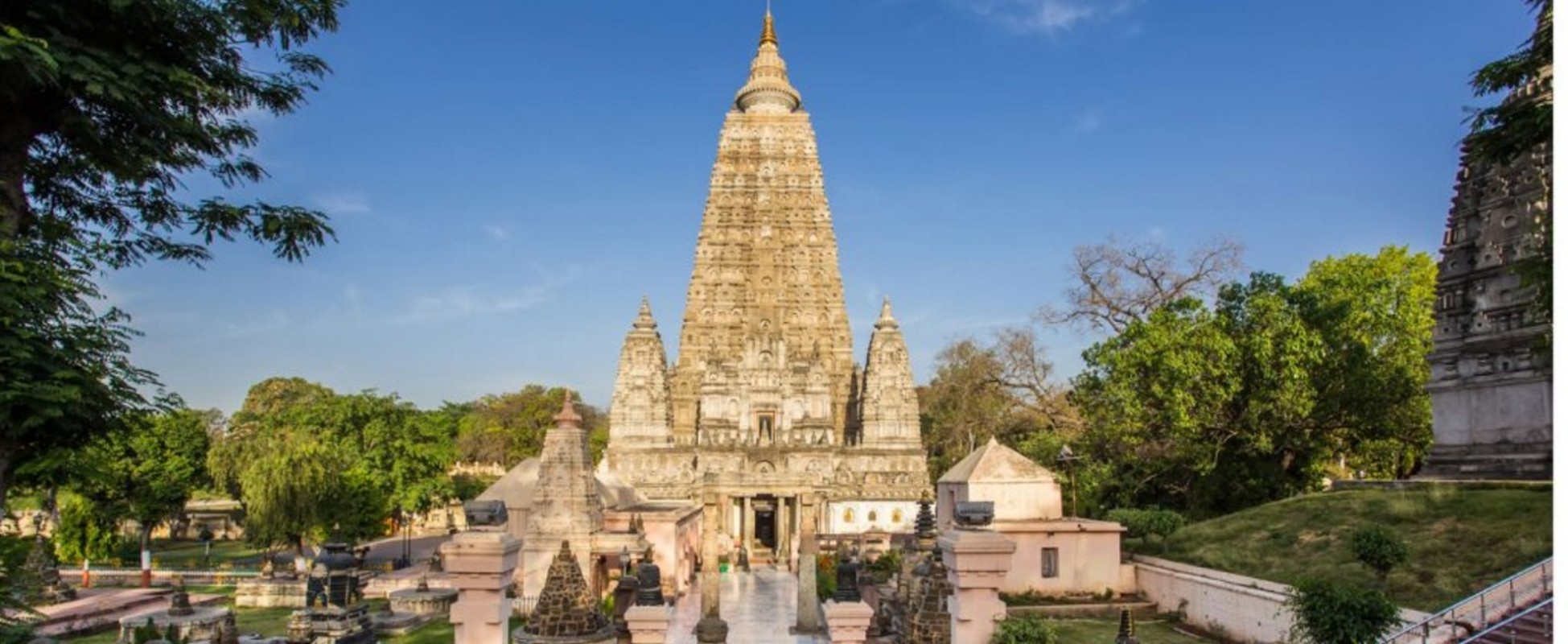
You will explore Bodhagaya today. Bodhgaya is the place where Siddhartha Gautama attained the enlightenment to become the Buddha. Drive to Bodhgaya from Patna and go for a sightseeing tour of sacred places there. Visit Mahabodhi temple, the actual spot where Buddha meditated to realize the enlightenment. Visit some other sacred Buddhist temples on the site. Stay overnight at Bodhgaya.
Drive to Varanasi, a holy city, after breakfast. A long day drive today will take you to the spiritual city of Varanasi for the exploration. Stay overnight at a hotel.
Go for a boat ride on the sacred Ganges in the morning and watch people paying their homage on their pilgrimage. Later, drive to Sarnath, the sacred place where Buddha gave his first sermons. Visit holy temples and stupas there. Drive back to Varanasi for overnight stay.
Fly to Delhi after breakfast. You will be received at the airport by our representative and transferred to hotel. You can go for the exploration of some of the sites in Old and New Delhi.
We will transfer you to airport for your final departure flight back home or to next destination.
Transportation Terms
During the Buddhist Circuit Tour, Nepal Journey Travels arranges comfortable tourist vehicles for all overland journeys between sacred destinations like Kathmandu, Lumbini, Kushinagar, Patna, Bodhgaya, Varanasi, and New Delhi. Travel includes private cars, vans, or buses depending on group size, with professional drivers familiar with cross-border routes and pilgrimage sites.
Accommodation / Meals Terms
The tour offers comfortable hotel accommodation with daily breakfast and selected meals, ensuring a relaxing stay near major pilgrimage sites such as Maya Devi Temple and Mahabodhi Temple. Hotels are typically 3-star or similar category with clean rooms, essential amenities, and easy access to sightseeing locations.
Money & Payments / Travel Insurance
Travelers should carry some local currency, such as Nepalese Rupee and Indian Rupee, for small purchases, donations at temples, and personal expenses. Major hotels and some shops accept cards, but cash is useful in smaller towns. Travel insurance covering medical emergencies, trip delays, and cross-border travel is highly recommended for peace of mind.
Travel Documents
Visitors must carry a valid passport and obtain the appropriate visa for both Nepal and India before travel. Border crossing between Nepal and India will require document verification, so keeping copies of passports, visas, and travel permits is essential throughout the journey.
Common Travel Phrases / Sightseeing
English is widely used in tourist areas, but simple local greetings can enhance your experience while visiting sacred places connected with Gautama Buddha. Respectful behavior and modest dress are recommended when visiting monasteries and temples.
Off the Beaten Path
Beyond the main pilgrimage sites, travelers may explore peaceful monasteries, meditation centers, and riverside areas around Bodhgaya and Varanasi. These quieter spots provide a deeper spiritual atmosphere and insight into Buddhist traditions.
Travel Advisory, Health & Safety
Pilgrimage routes are generally safe, but travelers should stay hydrated, follow guide instructions, and respect local customs. Carry basic medications, drink bottled water, and use sun protection during sightseeing in warm regions of Nepal and India.
This Buddhist Circuit Tour organized by Nepal Journey Travels, offers a meaningful journey through the most sacred places associated with the life of the Buddha, blending spiritual discovery with comfortable travel across Nepal and India.
Your Start Date is the day you land in Nepal, and your End Date is when you fly home.
If the set Buddhist Circuit Tour Nepal India group dates don’t suit your schedule, we can offer alternative dates upon request.
Optional (Rural / Trekking):
Tips:
The Buddhist Circuit Tour by Asiana Treks and Tours is a culturally enriching journey across Nepal and India, tracing the footsteps of Lord Buddha. Starting in Kathmandu and traveling through sacred sites like Lumbini, Kushinagar, Bodhgaya, and Varanasi, this tour offers a deep dive into Buddhist heritage, spirituality, and history. It combines sightseeing with spiritual experiences, making it ideal for those interested in Buddhism and ancient culture.
The tour covers key Buddhist pilgrimage sites including Kathmandu (Nepal), Lumbini (birthplace of Buddha), Kushinagar (place of Buddha’s Mahaparinirvana), Patna, Bodhgaya (site of Buddha’s enlightenment), and Varanasi, ending in New Delhi. Each location has significant historical and religious importance, offering visitors a comprehensive understanding of Buddha’s life and teachings.
The tour spans 10 days, starting with arrival in Kathmandu and concluding with departure from New Delhi. Highlights include spiritual tours in Kathmandu, visits to Lumbini, Kushinagar, Patna, Bodhgaya, and Varanasi, with ample time for exploration and cultural immersion. The itinerary balances travel with sightseeing, ensuring participants experience the essence of each site.
Yes, the tour is well-suited for solo travelers interested in spirituality, history, and culture. Asiana Treks and Tours provides group and private options, ensuring safety and companionship. Experienced guides accompany all group tours, facilitating interaction and offering deep insights into the Buddhist heritage, making solo travelers feel comfortable and engaged throughout.
The package typically includes accommodations, daily breakfast, airport transfers, inter-city transportation, sightseeing fees, entrance tickets, and the services of professional guides. It also covers spiritual tours, cultural experiences, and sometimes meals, depending on the itinerary. Travel insurance, visas, and personal expenses are usually not included and should be arranged separately.
The tour involves moderate physical activity, including walking at historical sites and some transfers between locations. It is suitable for most travelers with average fitness levels. The company ensures flexibility in the itinerary, allowing rest days and shorter excursions to accommodate individual needs, especially for elderly travelers or those with mobility issues.
Yes, Asiana Treks and Tours caters to various dietary preferences including vegetarian, vegan, gluten-free, and other special diets. Meals during the tour feature local and international cuisine, with ample choices to ensure travelers’ dietary needs and preferences are met comfortably.
Absolutely! Asiana Treks and Tours offers customized packages to suit your interests, budget, and schedule. Whether you want more time in specific locations, additional cultural experiences, or different accommodation levels, the team will work with you to create a personalized Buddhist Circuit tour tailored to your needs.
The tour can be adapted for families, offering educational and culturally immersive experiences suitable for children and adults alike. The pace and activities can be modified to accommodate younger travelers, making it a memorable and enriching journey for the entire family.
Visitors should dress modestly, remove shoes before entering temples, avoid loud behavior, and seek permission before photographing monks or sacred rituals. Respect for local customs and religious practices is emphasized to ensure a positive and respectful experience throughout the tour.
Asiana Treks and Tours offers comfortable accommodations ranging from 3-star hotels to heritage lodges, ensuring a restful stay after days of exploration. Hotels are selected based on location, comfort, and local flavor, providing easy access to major sites along the Buddhist Circuit. Special requests for upgraded accommodations can often be arranged upon advance notice.
Transportation between destinations is provided by comfortable, air-conditioned coaches or private vehicles, depending on group size and itinerary specifics. For longer routes like Kathmandu to Lumbini or Varanasi to New Delhi, flights may be used. All vehicles are well-maintained, and professional drivers ensure a safe and smooth travel experience throughout the tour.
Yes, visitors usually need separate visas for Nepal and India. Nepal offers visa on arrival for many nationalities, while India requires a pre-approved visa or an e-visa depending on your country of origin. Asiana Treks and Tours can assist with visa guidance and paperwork to ensure a smooth entry process for travelers.
Booking is straightforward—contact Asiana Treks and Tours via their website, email, or phone. The team will provide detailed information, answer questions, and assist with reservations. Early booking is recommended, especially during peak travel seasons.
The best time to visit is during the cooler and drier months, typically from October to March. This period offers pleasant weather ideal for sightseeing and outdoor activities, avoiding the heavy monsoon rains and extreme summer heat. The tour company can advise on the best travel dates based on weather and local festivals.
Yes, the tour includes expert local guides well-versed in Buddhist history, culture, and religious significance. Guides provide informative commentary, answer questions, and facilitate spiritual and cultural experiences, enriching your understanding of the sites visited.
Yes, the itinerary often includes visits to meditation centers and Buddhist monasteries where travelers can participate in meditation sessions or spiritual rituals. These experiences provide a deeper connection to Buddhist teachings and a peaceful retreat during the journey.
Asiana Treks and Tours prioritizes traveler safety by employing experienced guides, using reliable vehicles, and adhering to health protocols. The company monitors local conditions and provides assistance for medical emergencies. Travelers are also encouraged to have travel insurance for additional peace of mind.
Guides typically speak English fluently and may also speak regional languages such as Nepali, Hindi, or others depending on the group’s needs. If you require a guide speaking a specific language, inform Asiana Treks and Tours in advance.
Travelers should pack comfortable clothing suitable for warm days and cool evenings, modest attire for temple visits, sturdy walking shoes, a hat, sunscreen, insect repellent, and personal toiletries. Bringing a reusable water bottle and a small daypack for excursions is also recommended.


 (2)
(2)  100% recommend (0)
 (0)
(0)