

Tenzing-Hillary Airport, often referred to as Lukla Airport, is located in the small town of Lukla in the Solu-Khumbu region of Nepal, nestled in the foothills of the Himalayas. The airport is famously known as one of the most dangerous in the world due to its challenging weather conditions, short runway, and steep mountain terrain. It was originally built in 1964 with the assistance of Sir Edmund Hillary, one of the first two men to reach the summit of Mount Everest, and Tenzing Norgay, his climbing partner. They helped establish this critical gateway for climbers, trekkers, and the local Sherpa people, as it allows access to the Everest region. The airport's runway is just 1,729 feet (527 meters) long, and it is angled at a 12-degree incline to assist with the steep gradient of the surrounding mountains.
The airport's location at an altitude of 9,186 feet (2,800 meters) means that weather conditions can change abruptly, making flights to and from the airport risky and unpredictable. The runway’s short length combined with its proximity to steep mountains creates significant challenges for pilots, who need specialized training and experience to navigate the landing and takeoff. The approach to the airport is especially difficult, as planes must fly through narrow valleys and avoid high peaks before landing on the sloped runway. Despite its dangerous reputation, Lukla is a vital hub for the thousands of trekkers and mountaineers who embark on Everest expeditions, as well as for locals who depend on the airport for supplies and travel. The small size of the airport and the rugged terrain around it make it an iconic part of the trekking experience in the Everest region.
Tenzing-Hillary Airport gets its name from two of the most iconic figures in mountaineering history—Sir Edmund Hillary and Tenzing Norgay. These legendary climbers were the first to successfully summit Mount Everest in 1953, marking one of the most significant achievements in the history of exploration. In recognition of their pioneering efforts and their deep connection to the region, the airport was renamed in their honor in 2008. The name symbolizes their shared legacy and their contributions to the exploration of the Himalayas. While the airport was originally called Lukla Airport, the decision to rename it was made to acknowledge the crucial roles that Hillary and Norgay played in bringing international attention to the region.
The renaming of the airport was also a way to celebrate the enduring friendship and partnership between Hillary and Norgay, whose collaboration led to the historic Everest summit. Sir Edmund Hillary, a New Zealander, and Tenzing Norgay, a Sherpa of Nepal, formed an iconic team that transcended national and cultural boundaries, and their bond helped to open the door for future expeditions to Everest. The name "Tenzing-Hillary Airport" reflects the mutual respect and admiration shared by both men for the mountain, the Sherpa people, and the challenges of high-altitude mountaineering. Today, the name stands as a tribute to their shared journey and serves as a reminder of the perseverance and courage it took to conquer the world's tallest peak.
Tenzing-Hillary Airport, also known as Lukla Airport, holds the distinction of being one of the highest international airports in the world, located at a staggering altitude of 9,334 feet (2,845 meters) above sea level. This extreme altitude poses significant challenges for both aircraft and passengers, as the thinner air at higher elevations affects the performance of planes, making takeoff and landing even more difficult. Lukla Airport is primarily used by trekkers and mountaineers on their way to Everest Base Camp and other Himalayan destinations, making it a key access point for the region. Despite its small size and isolated location, the airport is incredibly busy, handling numerous flights each day, especially during peak trekking seasons.
Lukla Airport’s high altitude also contributes to its reputation as one of the most dangerous airports in the world. It is notoriously known for its unpredictable weather conditions, including sudden fog, snow, and high winds, which can quickly make flying conditions hazardous. Because of these challenges, flights to and from Lukla often experience delays and cancellations. Only specially trained pilots with years of experience navigating the Himalayas are permitted to operate at Lukla, adding to the complex nature of flying into one of the most dangerous airports in the world. Despite its risks, the airport remains an essential hub for those seeking to embark on trekking or mountaineering adventures in the Everest region, demonstrating the vital connection it provides between remote villages and the outside world.
One of the defining features of Lukla Airport is its short and steep runway, which adds to the challenges of landing and taking off from the airport. The runway measures just 1,729 feet (527 meters) long, which is exceptionally short by international airport standards. This makes it one of the shortest commercial runways in the world. Coupled with its short length, the runway has a steep incline of 12%, which means planes must approach at a precise angle to land and take off. The steep gradient helps to provide extra lift during takeoff, but it also makes the process much more dangerous, as a miscalculation or change in weather can easily lead to a crash.
Landing at Lukla is a highly specialized maneuver that requires expert skill from pilots. The steep runway means that planes must approach the airport at a downward angle, often flying over rugged mountain terrain before making a swift and precise descent. During takeoff, planes must accelerate quickly to clear the surrounding mountains and avoid a potential crash. These factors make Lukla Airport one of the most challenging airports in the world for pilots. Despite the risks, the airport is crucial for accessing the Everest region, with trekkers and climbers relying on it to start their expeditions. It is a testament to both the resilience of the local community and the professionalism of the pilots who navigate its challenging conditions daily.
Asiana Treks & Tours is one of Nepal’s leading trekking and tour companies, offering a wide range of travel experiences throughout the Himalayan region. The company specializes in organizing guided treks, mountaineering expeditions, and cultural tours, providing adventurers with the opportunity to explore some of the world’s most stunning and remote destinations. Asiana Treks & Tours is known for its professionalism, safety, and dedication to providing an unforgettable adventure. From the iconic Everest Base Camp trek to the Annapurna Circuit and beyond, the company offers tailored itineraries that cater to various levels of trekkers, ensuring a memorable and rewarding experience in the heart of the Himalayas.
One of the unique features of Asiana Treks & Tours is its deep commitment to responsible and sustainable tourism. The company works closely with local communities, particularly the Sherpa people, to ensure fair wages, proper working conditions, and opportunities for education and healthcare. This approach helps to improve the lives of those living in the trekking regions while ensuring that the natural environment is protected. Asiana Treks & Tours also prioritizes the use of environmentally-friendly practices, encouraging trekkers to minimize waste and follow ethical guidelines while exploring the pristine landscapes of Nepal, Bhutan, and Tibet. With a focus on authentic cultural experiences, safety, and sustainability, Asiana Treks & Tours has earned a stellar reputation for delivering exceptional and responsible trekking adventures in the Himalayas.
Asiana Treks & Tours stands out for its personalized approach to trekking, offering customized itineraries that cater to individual preferences, whether trekkers are seeking a challenging adventure or a more leisurely exploration of the Himalayas. The company’s expert guides, many of whom are experienced mountaineers and Sherpas, provide in-depth knowledge about the local culture, history, and geography of the areas trekkers visit. They ensure that each group is well-prepared for the trek ahead, with comprehensive briefings on safety, acclimatization, and equipment. For those tackling high-altitude expeditions, such as Everest Base Camp or Annapurna Circuit, Asiana Treks & Tours offers valuable advice on how to prevent altitude sickness and maintain overall health during the trek.
Safety is a top priority for Asiana Treks & Tours, and the company takes extensive measures to ensure that all trekking expeditions are conducted in the safest possible manner. This includes providing top-quality trekking gear, arranging for reliable transportation, and having a team of experienced guides and medical personnel on hand in case of emergencies. Asiana Treks & Tours also ensures that all clients are thoroughly briefed on the risks of trekking in high-altitude regions and are well-prepared for the physically demanding nature of the treks. Whether it’s a journey to the base of Everest or a cultural exploration through the villages of the Annapurna region, Asiana Treks & Tours guarantees a safe, enjoyable, and life-changing adventure for every traveler.
Tenzing-Hillary Airport (Lukla Airport) is often considered the primary gateway to Everest Base Camp, which is one of the most sought-after trekking destinations in the world. Serving as the main access point for adventurers aiming to reach the base of Mount Everest, the airport plays an essential role in Nepal’s tourism industry, especially for trekkers looking to explore the Everest region. Lukla Airport’s strategic location—just a short flight away from Kathmandu—makes it the most convenient and efficient way to begin the journey to Everest Base Camp. While the trek itself typically takes 12 to 14 days, involving acclimatization stops and visits to iconic villages like Namche Bazaar, the airport significantly reduces travel time by offering a direct flight from the capital city to the heart of the Himalayas.
For many, reaching Everest Base Camp is the culmination of a dream to see the world's highest peak up close, and Lukla Airport is the first stepping stone toward that goal. The airport sees a steady stream of trekkers and climbers, especially during the trekking seasons of spring and autumn. While trekking to Everest Base Camp is a rewarding experience, the logistical challenge of getting there would be far more difficult without Lukla Airport. The short yet critical flight from Kathmandu to Lukla saves trekkers the long and arduous journey by road, which is often challenging due to the terrain and weather. Thus, the airport’s significance in providing quick access to the Everest region cannot be overstated, as it allows adventurers to begin their journey with ease and convenience.
Lukla Airport is highly weather-dependent, with its operations significantly impacted by the region’s unpredictable and often extreme weather conditions. The airport is located in the heart of the Himalayas, where the weather can change rapidly, and it’s known for its frequent fog, snow, and thunderstorms, which can create hazardous flying conditions. The challenging weather makes flying to and from Lukla a gamble, as visibility can be reduced to zero in a matter of minutes, and flights are often delayed or canceled for several days during adverse conditions. The difficulty in predicting the weather has led to a reliance on specialized weather forecasts, and even with these forecasts, conditions can still change unexpectedly, resulting in last-minute cancellations or rescheduling.
Because Lukla Airport has such limited space and relies on a small fleet of aircraft, the number of flights operating each day is restricted. During the peak trekking seasons, when the demand for flights is at its highest, the weather poses a significant challenge in managing the large volume of passengers. This results in delays, with travelers often stuck in Kathmandu or Lukla for longer than expected until conditions improve. The airport has a reputation for being one of the most flight-uncertain airports in the world, as weather patterns can quickly change and impact operations. Pilots are trained to navigate these challenging conditions, but safety remains the priority, and flights may be grounded if visibility or weather conditions are deemed unsafe.
The approach to Lukla Airport is one of the most dramatic and challenging for pilots in the world. Due to the steep mountain slopes surrounding the airport and the short, sloped runway, pilots must exercise precision and skill when landing at or departing from Lukla. The approach involves flying through narrow mountain valleys, often at low altitudes, to line up with the runway. The narrowness of the valley combined with unpredictable wind patterns and rapidly changing weather adds an extra level of complexity. As pilots descend into Lukla, they must navigate around the towering peaks and ensure they are perfectly aligned with the runway, which is both short and steep, to safely execute a landing.
Once they have successfully lined up with the runway, the landing itself is a precision maneuver, requiring expert knowledge of both the aircraft and the unique conditions at Lukla. The runway, which is just 1,729 feet (527 meters) long, is inclined at a 12% gradient to assist with the takeoff, but this also means that landing planes must reduce speed quickly while avoiding any obstacles. Similarly, during takeoff, aircraft need to build up speed rapidly in order to clear the surrounding mountains, with the risk of encountering turbulence from wind drafts that are common in mountainous regions. All these factors combine to make Lukla’s airport approach an intense and nerve-wracking experience for pilots, which is why only those with specific training and experience in high-altitude, short-runway landings are allowed to operate at the airport.
Despite the inherent dangers and complexities, Lukla’s dramatic and thrilling approach is what makes it an iconic and memorable part of the Everest trekking experience. For travelers, the thrill of landing at one of the world’s most dangerous airports adds an element of adventure and excitement to the journey ahead. Pilots and airport staff, however, approach each flight with great caution and professionalism, understanding that their skill and expertise are essential to ensuring the safety of everyone involved.
Lukla Airport plays a vital role in facilitating mountaineering expeditions to Mount Everest, serving as the primary entry point for trekkers, climbers, and mountaineers heading to the Everest region. This small yet crucial airport is the first stop for those aiming to trek to Everest Base Camp or attempt a summit of Mount Everest itself. Lukla’s location, perched in the Khumbu Valley, significantly reduces the travel time for climbers, eliminating the need for an arduous journey overland to reach the starting point of many Everest expeditions. The airport acts as a lifeline to the surrounding villages and climbing routes, allowing expedition teams to bring in supplies and equipment crucial for their climbs, while also enabling trekkers to access the base camp within a few days. Without Lukla, the logistics of accessing the Everest region would be much more complicated, making the airport an indispensable hub for mountaineers.
The airport’s connection to Everest expeditions goes beyond simply providing access—it helps streamline the entire process of mountaineering, making it more feasible for large groups of climbers to get to the base camp with relative ease. By airlifting trekkers and climbers from Kathmandu to Lukla, the airport reduces the need for a long trek through the lower valleys of Nepal, which could take up to a week or more. This efficiency is particularly important for high-altitude expeditions where time is of the essence to acclimatize properly before ascending. While Lukla is far from an easy landing point, its strategic role in these high-profile expeditions makes it a vital gateway to Everest and the surrounding areas, helping trekkers and climbers from around the world pursue their dreams of reaching the top of the world.
Given the airport's challenging conditions, the aircraft used for flights to Lukla Airport are specifically designed to handle the high-altitude, short-runway, and rugged terrain. The planes that fly into Lukla are typically small, twin-engine aircraft like the De Havilland Dash 8 or the Cessna Grand Caravan, which are favored for their ability to take off and land in such challenging conditions. These aircraft are built to operate at high altitudes where the air is thinner, allowing them to maintain lift despite the reduced air pressure. Additionally, these planes are equipped with powerful engines that provide the necessary thrust to clear the steep inclines of Lukla’s runway and the surrounding mountains. Their relatively small size makes them agile and capable of navigating the tight valleys and mountainous terrain that characterize the approach to the airport.
Lukla’s unusual and risky landing conditions also require specialized landing gear to ensure that the aircraft can safely land on the short and steep runway. The landing gear of these planes is reinforced to handle the stresses of landing on such an inclined surface. In addition, pilots rely heavily on the brakes and the aircraft’s reverse thrust capabilities to slow down quickly after landing to avoid overshooting the runway. The planes are also equipped with enhanced avionics that help pilots navigate the challenging conditions of the region, including real-time weather information, GPS tracking, and radar systems. These technical adaptations and modifications allow pilots to execute precise landings and takeoffs in what is considered one of the most dangerous airports in the world. Despite the perilous nature of the airport, these specialized aircraft and landing gear systems enable Lukla to remain a vital link for expeditions heading toward Everest.
Lukla Airport has earned its reputation as one of the most dangerous airports in the world due to the combination of its short runway, high altitude, and volatile weather conditions. The airport's runway is only 1,729 feet (527 meters) long, and its 12% incline provides an additional challenge for pilots attempting to land or take off. The airport is nestled in a valley surrounded by towering peaks, leaving little room for error when landing. Pilots must approach Lukla from narrow mountain valleys, with high mountains on either side. The limited space and steep terrain create an environment where a small miscalculation in speed, angle, or timing could result in disaster.
In addition to the physical challenges posed by the airport’s runway, Lukla’s weather is notorious for its unpredictability. Dense fog, snow, heavy winds, and sudden temperature drops are common in the region, making flights difficult to schedule. These erratic weather patterns make it especially hazardous for planes to land safely, contributing to the airport’s reputation for dangerous landings. The combination of poor visibility and turbulent weather conditions can quickly turn what should be a routine flight into a life-threatening situation. Despite these challenges, pilots who operate in the region are highly trained and experienced, and they undergo rigorous procedures to ensure safety. Nonetheless, the inherent risks involved with flying into and out of Lukla contribute to its infamous status as one of the most treacherous airports in the world, where even seasoned aviators face unpredictable conditions.
While the airport's dangers cannot be underestimated, its role in connecting the Everest region to the rest of the world remains indispensable. Every day, thousands of trekkers, climbers, and locals pass through Lukla, relying on its operations to begin their journeys. For many, the thrill of flying into such a renowned location adds an extra layer of excitement to their adventure, making Lukla’s infamous reputation just another part of the unforgettable experience.
Lukla Airport’s challenging terrain and high-altitude location make it difficult to transport goods and people by traditional means. As a result, airdrops and helicopter services play a vital role in supplying the Everest region, especially during peak trekking seasons. Helicopters are frequently used to transport emergency supplies, food, and medical equipment to and from Lukla and surrounding areas, as well as evacuating injured or sick trekkers from remote locations. Airdrops are also conducted in instances when helicopter access is limited due to weather conditions or heavy traffic at the airport. These air operations are particularly important during times of crisis, such as after natural disasters or when a rapid response is needed for a mountaineering emergency.
Helicopter services are also used to transport trekkers, climbers, and adventure groups to more remote destinations within the region, including Everest Base Camp or nearby villages that may not be easily accessible by foot or by small aircraft. In addition to providing logistical support, helicopters can reduce the need for long treks, saving valuable time for expeditions and providing quicker access to critical resources. However, these services are weather-dependent and can be delayed due to the same challenges faced by Lukla’s regular flights, such as unpredictable weather, limited visibility, and high winds. Still, helicopters and airdrops have become indispensable for keeping the region connected and ensuring the safety and well-being of travelers and locals.
The Lukla Airport Control Tower plays a crucial role in ensuring safe and efficient operations at one of the most challenging airports in the world. Due to its remote location, the control tower is responsible for managing flight schedules, monitoring weather conditions, coordinating takeoffs and landings, and communicating with incoming and outgoing aircraft. Given the airport’s short runway and unpredictable weather, the control tower's role becomes even more critical in managing the flow of flights and ensuring that each landing is executed safely. The air traffic controllers at Lukla are trained specifically for high-altitude operations and have a deep understanding of the unique challenges posed by the airport’s location.
The operations of the control tower are influenced by a number of factors, including fluctuating weather patterns, limited runway space, and the frequency of flights to the region. Controllers must constantly monitor weather updates and provide real-time communication with pilots, offering important guidance on landing conditions, potential delays, and safety precautions. Additionally, Lukla’s busy flight schedule requires precise coordination to avoid any overlap or congestion on the runway. The control tower is vital for maintaining smooth operations in a region where safety is always a priority, and the cooperation between pilots, controllers, and ground staff ensures that flights are conducted with as much precision as possible under challenging circumstances.
One of the most striking aspects of Lukla Airport is its close proximity to the towering peaks of the Himalayas. Situated at the base of Mount Everest, the airport is nestled within a narrow valley surrounded by some of the highest mountains in the world. This location makes Lukla a gateway not only to Everest Base Camp but also to a multitude of trekking and climbing routes that lead adventurers into the heart of the Himalayas. The landscape around the airport is both awe-inspiring and intimidating, with steep cliffs, rugged ridges, and snow-capped peaks that create a visually dramatic and unforgettable experience for those arriving and departing from the airport.
The proximity to these majestic mountains is both a blessing and a challenge for Lukla Airport. On one hand, it provides trekkers and climbers with breathtaking views and a tangible sense of adventure right from the moment they step off the plane. On the other hand, it creates significant difficulties for aviation, as the terrain limits the airport’s operational space and makes it extremely difficult to build infrastructure or extend the runway. Moreover, the high-altitude location means that aircraft have to contend with reduced air pressure and turbulent winds, complicating both landings and takeoffs. Despite these obstacles, Lukla remains the primary access point to the Everest region, a reflection of its indispensable role in connecting travelers with one of the world’s most iconic mountain ranges.
Lukla Airport has become synonymous with the Everest region, attracting adventurers, trekkers, and mountaineers from all over the world. Its popularity is largely driven by its role as the gateway to Everest Base Camp and other major trekking routes in the Khumbu Valley. Every year, thousands of trekkers make the journey to Lukla, eager to experience the beauty of the Himalayas and embark on the adventure of a lifetime. The airport serves as the starting point for some of the most renowned trekking routes in Nepal, including the Everest Base Camp trek, the Gokyo Lakes trek, and the Three Passes trek, making it an essential stop for anyone seeking to explore this iconic region.
The excitement and anticipation that come with arriving at Lukla are palpable. For many, flying into Lukla is the first step toward an unforgettable adventure, and the thrill of landing at such a famous and challenging airport adds an extra layer of excitement to the experience. Despite its reputation for danger, Lukla continues to attract adventurers eager to test their limits in one of the world’s most awe-inspiring landscapes. The airport’s central role in the trekking and mountaineering community ensures its place as a vital hub for travelers heading to the Everest region. It is a symbol of the spirit of adventure, resilience, and the pursuit of dreams for countless trekkers and climbers.
Building and maintaining Lukla Airport has been a significant challenge due to its remote location and the extreme conditions of the surrounding environment. The airport was originally constructed in 1964, and over the years, efforts have been made to improve its infrastructure. However, the high-altitude location, steep terrain, and unpredictable weather have made maintenance difficult and costly. The airport’s runway, which is already short and inclined, has required frequent repairs to ensure that it remains in a safe and functional condition. Given the lack of available resources and the challenges of transporting construction materials to such a remote area, every project related to the airport requires careful planning and coordination.
Additionally, maintaining the airport’s infrastructure has been a challenge due to the extreme weather patterns, which can quickly deteriorate runways, terminals, and other structures. The fluctuating temperatures, seasonal snow, and heavy rainfalls often result in erosion or damage to the airport's facilities, further complicating efforts to improve or expand the infrastructure. Despite these difficulties, there have been ongoing initiatives to improve safety and operational efficiency, such as the installation of modern navigation equipment and regular inspections of the runway. The difficulty in building and maintaining Lukla Airport underscores the resilience of the people who work there and the importance of the airport for the region’s economy and tourism industry.
Future improvements and developments at Lukla Airport are crucial to ensuring its continued ability to serve the growing number of trekkers and climbers heading to the Everest region. While significant upgrades are constrained by the airport's location and the challenges of building at such high altitudes, there have been ongoing discussions about extending the runway to accommodate larger aircraft and improve safety. Extending the runway, however, would require significant investment and overcoming the technical and logistical difficulties associated with the terrain. Other proposed developments include improving the airport’s terminal facilities, enhancing air traffic control systems, and implementing better weather monitoring tools to reduce flight delays and cancellations caused by adverse weather conditions.
In addition to infrastructure improvements, there are ongoing efforts to make Lukla Airport more resilient to the impacts of climate change. This includes reinforcing the airport’s buildings to withstand extreme weather events and ensuring that the runway can handle the wear and tear caused by frequent flights. With the increasing number of tourists visiting the region, ensuring that the airport remains operational and safe is a top priority for both the government and the private sector. Though the future of Lukla Airport presents challenges, there is a clear understanding that improvements are necessary to keep pace with the demands of the trekking and mountaineering community while ensuring safety and sustainability in the region.
Tenzing-Hillary Airport faces unique challenges due to its high-altitude location, short runway, and difficult terrain. The combination of these factors makes operations at the airport particularly dangerous, especially during the monsoon season or winter months when weather conditions can change rapidly. Pilots must have specialized training to navigate the tight valleys and unpredictable winds surrounding the airport, and only a select number of airlines have the required aircraft and expertise to operate in these conditions. Furthermore, Lukla’s remote location means that the airport relies on limited resources for maintenance and operations, making upgrades and repairs slow and difficult to implement.
In addition to the physical challenges of the airport, the increasing number of trekkers and mountaineers visiting the Everest region has put additional pressure on Lukla’s infrastructure. The airport was not initially designed to handle such a high volume of traffic, and as tourism continues to rise, managing the flow of passengers and flights becomes more complicated. Despite these difficulties, Tenzing-Hillary Airport remains a crucial hub for the region, and ongoing efforts to improve its safety, efficiency, and resilience will ensure that it continues to serve as the gateway to Everest for years to come. The airport’s unique challenges make it a focal point for discussions on high-altitude aviation and the ongoing development of Nepal’s tourism infrastructure.
What is Tenzing-Hillary Airport, and why is it famous?
Tenzing-Hillary Airport, also known as Lukla Airport, is located in Lukla, Nepal, and serves as the gateway to the Everest region. It is famous for its challenging runway and breathtaking location, as it is perched at an altitude of 2,860 meters (9,383 feet) in the Himalayas. The airport is primarily used by trekkers and climbers heading to Mount Everest, making it a vital hub for those embarking on Everest expeditions.
What makes the runway at Lukla Airport so dangerous?
Lukla Airport is notorious for its steep and short runway, which is only 527 meters (1,729 feet) long. The runway has a significant incline, sloping uphill at a 12% gradient, which makes takeoffs and landings incredibly tricky, especially in adverse weather conditions. It is also located between steep cliffs, with mountains surrounding the airport on all sides, leaving little room for error. Pilots must be highly skilled and experienced to land safely, adding to the airport’s reputation as one of the most dangerous in the world.
Why is Lukla Airport named after Tenzing Norgay and Edmund Hillary?
The airport is named in honor of Tenzing Norgay and Sir Edmund Hillary, the first climbers to reach the summit of Mount Everest in 1953. Their successful ascent made them international heroes and helped bring global attention to the region. The airport serves as a tribute to their historic achievement and their contribution to mountaineering. It was officially renamed in their honor in 2008, cementing their legacy in the hearts of the local Sherpa people and mountaineers worldwide.
How are flights affected by weather conditions at Lukla Airport?
Weather conditions at Lukla Airport can be highly unpredictable, with frequent rain, snow, and thick fog that can cause flight delays or cancellations. The surrounding mountains create a microclimate, leading to sudden weather changes, which often result in limited visibility and turbulence. The airport operates in a narrow window of time, with the best weather conditions for flying occurring in the morning. Due to the challenging weather and terrain, flights are often delayed, and passengers are advised to remain flexible with their travel plans.
What is the role of Lukla Airport in Nepal's tourism and economy?
Lukla Airport plays a significant role in Nepal's tourism and local economy, particularly for the Everest region. It is the main entry point for trekkers and mountaineers who wish to explore the Everest Base Camp or attempt to summit Mount Everest. The airport facilitates thousands of tourists each year, providing an economic boost to local businesses, such as hotels, guides, and trekking agencies. It also supports the region's infrastructure, helping deliver essential supplies to remote villages. Despite its challenges, the airport's role in Nepal's tourism industry cannot be overstated, as it remains a vital link to the heart of the Himalayas.
How do weather conditions affect flight operations at Lukla Airport?
Weather plays a crucial role in flight operations at Lukla. The region’s high altitude and mountainous terrain create unpredictable weather patterns. Thick fog, snowstorms, and strong winds frequently cause flight delays or cancellations, particularly in the afternoon when weather conditions are more volatile. Because of its location, Lukla operates in a narrow window of opportunity for safe flying, typically in the early morning when the weather is most stable. Passengers should be prepared for last-minute changes to flight schedules due to these weather challenges.
How many flights does Lukla Airport handle annually?
Lukla Airport is one of the busiest airports in Nepal when it comes to handling small aircraft, primarily for domestic flights. On average, the airport sees around 100,000 passengers annually, many of whom are trekkers heading to Everest Base Camp or other parts of the Khumbu region. It is a key part of Nepal’s tourism infrastructure and directly supports the local economy by facilitating the movement of people and goods to and from remote mountain villages.
What is Tenzing-Hillary Airport, and where is it located?
Tenzing-Hillary Airport, commonly known as Lukla Airport, is situated in Lukla, Nepal, at the base of the Himalayan mountains. Located at an altitude of 2,860 meters (9,383 feet), it serves as the primary gateway for trekkers, mountaineers, and adventurers heading to the Everest region. The airport's remote location makes it a critical access point for those aiming to explore the Everest Base Camp or attempt to summit Mount Everest.
What kind of aircraft operate at Lukla Airport?
Due to the short and steep runway, only small aircraft are capable of operating at Lukla Airport. The most common planes are small twin-engine aircraft, such as the DHC-6 Twin Otter and the Pilatus PC-6 Porter, which are well-suited for short takeoffs and landings in challenging conditions. These planes are typically flown by highly trained pilots who have extensive experience flying in mountainous environments. Helicopters are also used occasionally, particularly for rescue operations or transporting supplies.
How do pilots ensure safety while landing at Lukla?
Pilots landing at Lukla undergo extensive training, including specific instruction for mountain flying. They are required to be highly skilled in navigating the unique and difficult conditions of Lukla's approach. To ensure safety, pilots rely on visual navigation rather than instruments, as the mountainous terrain and unpredictable weather conditions make it difficult to use standard aviation systems. They also carefully monitor wind conditions, and landing approaches are often timed to align with the calmest weather in the early morning hours.
How is the airport being modernized and improved?
In recent years, there have been ongoing efforts to improve the safety and capacity of Lukla Airport. Plans have been discussed to extend the runway to accommodate larger aircraft and to improve the airport's infrastructure, such as better navigational aids and terminal facilities. However, given the difficult geographical conditions, such improvements are challenging and expensive. Still, these changes are crucial for ensuring the continued operation of the airport and for maintaining the safety of the thousands of visitors who rely on it each year.
Asiana Treks & Tours: An Overview
Asiana Treks & Tours is a reputable travel and trekking company based in Nepal, specializing in guided trekking and adventure tours in the Himalayas. The company offers a wide range of services for trekking enthusiasts, including organized expeditions to Everest Base Camp, Annapurna Circuit, Langtang Valley, and many other popular trekking destinations across Nepal, Bhutan, and Tibet. Asiana Treks & Tours is known for providing personalized services to trekkers, ensuring safety and comfort while maintaining an intimate connection with the natural beauty and cultural richness of the Himalayas. The company's team consists of experienced local guides, porters, and mountain experts who possess in-depth knowledge of the terrain and culture of the region.
Asiana Treks & Tours not only focuses on adventure travel but also places an emphasis on responsible tourism. The company actively promotes sustainable trekking practices, supporting local communities by ensuring that their employees, particularly the Sherpas and porters, are paid fairly and treated with respect. Their itineraries are carefully designed to include cultural experiences, such as visits to Buddhist monasteries, Himalayan villages, and conservation areas, offering trekkers a well-rounded adventure. Asiana Treks & Tours is committed to making each trek an unforgettable and enriching experience, with the goal of promoting both the natural beauty and cultural heritage of the regions they operate in. Their expertise and dedication have earned them a loyal following among trekkers, mountaineers, and nature lovers alike.
Commitment to Responsible Tourism and Sustainable Practices
Asiana Treks & Tours is committed to responsible tourism, with a strong focus on sustainable travel practices that benefit local communities and protect the environment. The company works closely with local Sherpas and guides, ensuring fair wages and providing support for education and healthcare programs in rural areas. This approach helps empower local communities and contributes to the long-term wellbeing of the people living in the trekking regions. In addition, Asiana Treks & Tours has made it a priority to reduce the environmental impact of trekking activities by encouraging trekkers to follow Leave No Trace principles and minimizing waste along trekking routes.
The company’s dedication to responsible tourism extends to its commitment to providing trekkers with an authentic and respectful cultural experience. Asiana Treks & Tours organizes cultural exchange opportunities, allowing travelers to engage with local communities, learn about their traditions, and participate in community-based projects that promote cultural preservation. By offering a combination of adventure, culture, and sustainability, Asiana Treks & Tours not only provides an unforgettable journey for its clients but also contributes to the preservation of the natural and cultural heritage of the Himalayan region. This holistic approach has garnered a loyal following of trekkers who value both the thrill of adventure and the positive impact of their travels.

The TIMS card is required for all trekkers to record their entry into Nepal’s trekking regions. It serves as a safety measure in case of an emergency and helps the government maintain an updated record of trekkers.
There are several options, each catering to different levels of fitness, experience, and time availability. Whether you're a first-time trekker or an experienced mountaineer, understanding the route choices will help you select the one that best aligns with your personal preferences and goals.
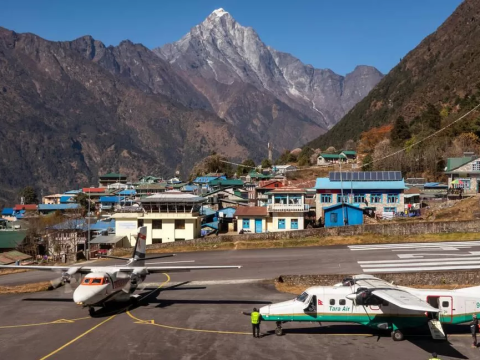
Lukla, a small town nestled in the Solu-Khumbu region of Nepal, is often referred to as the "Gateway to Everest" due to its crucial role as the starting point for trekking adventures in the Everest region. Sitting at an altitude of 2,860 meters (9,383 feet), Lukla has become a popular destination for trekkers seeking to conquer the mighty Mount Everest or explore the nearby trails such as the Everest Base Camp (EBC) trek.


 (2)
(2)  100% recommend (0)
 (0)
(0)