
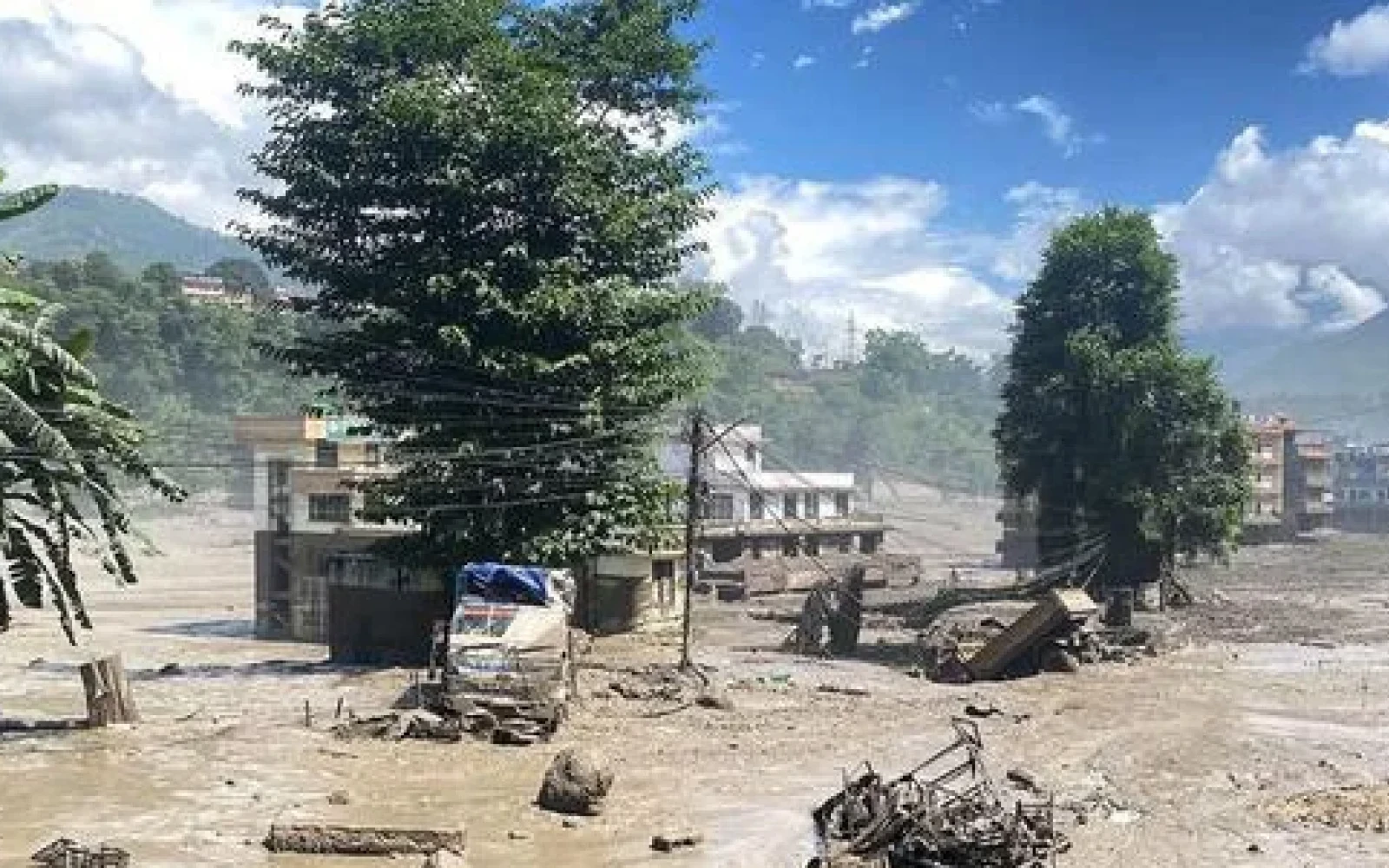
The Rasuwa Bhotekoshi flood has created a major disruption to tourism, transportation, and cross-border travel in northern Nepal. A preliminary Nepal Tourism Board (NTB) update identified 384 tourists and travellers whose whereabouts were yet to be confirmed, comprising 291 foreign nationals and 93 Nepali nationals. Among the foreign nationals identified so far were 105 Indians, 37 NRIs, 17 Malaysians, 12 UK nationals, 4 South Africans, 3 U.S. nationals, 1 Australian and 1 Netherlands national, while the nationalities of a number of others were still being verified. The figures are preliminary and are being cross-checked with tourism agencies, guides, local authorities and security agencies.
The disaster is particularly significant for international tourism because Rasuwa is a gateway toward the Nepal–China/Tibet border and serves travellers heading toward destinations and routes associated with Langtang, Gosaikunda, the Tamang Heritage Trail and the Tibet/Kailash Mansarovar travel corridor. Damage and disruption along the Bhote Koshi and Trishuli river systems can therefore affect both trekking tourism and cross-border movement.
Key tourism and travel concerns include:
A sudden and destructive flash flood struck the Bhote Koshi River in Rasuwa district on August 26, 2026, rapidly affecting settlements, transportation links and infrastructure near the Nepal–China border. The Nepal Tourism Board reported that the flood occurred at approximately 8:30 a.m., after which the board, Tourist Police, tourism businesses, local administration and security agencies began working to determine the safety and whereabouts of tourists and travellers in the affected region.
The event developed into a wider regional emergency as floodwaters and debris affected areas connected with the Bhote Koshi and downstream river systems. Reports indicate damage to settlements, roads, bridges and hydropower infrastructure, while difficult Himalayan terrain has complicated rescue and recovery operations. The cause has been reported in early accounts as a sudden high-mountain flood event, with later reporting pointing toward a glacial/ice-rock collapse or related mountain hazard rather than the earthquake initially suspected.
The immediate tourism significance is substantial because the affected corridor carries domestic and international visitors through northern and central Nepal.
The flood was exceptionally rapid, giving people in the river corridor limited time to respond. Initial reports considered several possible triggers, while subsequent scientific and news reporting indicated that an ice-rock or glacial collapse/avalanche-related event was responsible for the sudden surge. The U.S. Geological Survey was reported to have determined that the event was associated with a landslide rather than the earthquake initially suspected.
The scale of the emergency was reflected not only in casualties and missing-person reports but also in the destruction of physical infrastructure. Villages, vehicles, roads, bridges and other facilities were swept away or damaged, and multiple hydropower projects were reportedly affected. Search and rescue operations have been difficult because of high water levels, damaged access routes and the steep Himalayan landscape.
The immediate consequences include:
Because the NTB traveller figures are preliminary, the numbers of missing, located, rescued or affected people should be treated as subject to verification and change.
Rasuwa occupies an important position in Nepal's Himalayan tourism network. It provides access to major trekking destinations and is also strategically important for travel toward the Nepal–China border. The Langtang region, Gosaikunda, Tamang Heritage Trail and Tibet-border travel routes depend on road and trail connectivity through or near the affected area.
The Bhote Koshi corridor is also important beyond conventional trekking. International visitors use northern Nepal for pilgrimage, cultural tourism, trekking and cross-border journeys. The preliminary NTB records show the international character of the affected travel population, including Indian pilgrims and tourists as well as travellers from the United States, United Kingdom, Malaysia, South Africa, Australia and the Netherlands.
The tourism importance of the region can be summarized as follows:
Consequently, the flood's impact extends beyond the immediate disaster zone. Even areas that are not directly flooded may experience cancellations, road closures, supply disruptions and reduced tourist arrivals because access through the wider corridor is uncertain.
The flood has severely affected the transportation infrastructure on which tourism in northern and central Nepal depends. Damage to roads and bridges can isolate trekking areas and settlements even when the actual tourist destination itself has not been directly damaged. The disruption is particularly important because several major road corridors connect Kathmandu and central Nepal with Rasuwa and the northern border.
Routes requiring particular attention include the Prithvi Highway, Galchhi–Nuwakot–Rasuwa–Syafrubesi road and the Muglin–Narayangadh road, together with local roads and bridges along the Bhote Koshi and Trishuli river systems. Reports have confirmed widespread damage to transport infrastructure in the flood-affected Himalayan valleys, making road conditions subject to rapid change.
The disruption can have several direct effects on tourism:
For tourists already in or travelling toward affected districts, the safest approach is to avoid riverbanks, bridges, low-lying areas and flooded roads; follow instructions from local authorities, security agencies and Tourist Police; remain in safe locations; maintain contact with hotels, trekking agencies and guides; and verify road conditions before undertaking onward travel. Travellers should never attempt to cross a flooded road, stream or river and should move to higher, safer ground immediately when instructed by authorities.
For tourists planning to visit the affected areas, postponing travel is advisable until authorities confirm that roads, bridges, trails and border routes are safe and operational. The NTB has emphasized coordination with tourism operators and authorities while the status of travellers is being verified.
The Bhotekoshi flood has created serious access and safety concerns for tourism in the Langtang region because Syabrubesi is a principal gateway to Langtang Valley. The flood severely affected the Rasuwa corridor, including Syabrubesi and other settlements, while roads and bridges connecting the area were damaged. This means that even if some higher-elevation trekking sections remain physically intact, trekkers may be unable to reach the trailhead safely until road access, bridges, communications and local conditions have been assessed.
The situation also creates uncertainty for trekking agencies, guides, accommodation providers and visitors planning autumn mountain tourism. The Nepal Tourism Board's preliminary list of 384 travellers who had lost contact included tourists travelling toward Gosaikunda and Kailash Mansarovar, demonstrating how heavily tourism movement in the region depends on the affected transport corridor.
Key challenges for Langtang tourism include:
For the immediate period, travellers should not attempt to enter the affected corridor simply because a trekking itinerary remains technically scheduled. Road and trail conditions should be confirmed with local authorities, trekking agencies and guides before departure, and travel should be postponed when authorities advise against movement.
Gosaikunda is both a major pilgrimage destination and an important trekking destination in the Langtang area. The flood has therefore created a dual tourism concern: it can affect religious pilgrims travelling toward the sacred lake as well as trekkers using routes connected with the wider Langtang and Rasuwa network. Radio Nepal reported that tourists who had travelled toward Gosaikunda and Kailash Mansarovar were among those whose whereabouts were initially unconfirmed after the disaster.
The disruption is particularly important because pilgrimage and trekking movements often rely on the same local transport, accommodation, guides and logistical networks. Damage to access roads and bridges in Rasuwa can consequently affect the movement of pilgrims even where the destination itself has not suffered direct flood damage. Until authorities and local tourism operators establish safe access, the priority must remain emergency response rather than normal pilgrimage or adventure-tourism activity.
Major effects may include:
The disaster also demonstrates the vulnerability of Himalayan pilgrimage tourism to sudden natural hazards. Visitors should therefore distinguish between the condition of Gosaikunda itself and the safety of the route used to reach it. A destination may remain physically accessible at higher elevation while its lower-elevation gateway or connecting road remains unsafe.
The Tamang Heritage Trail is closely connected with villages and communities in the Rasuwa highlands, making it an important example of community-based tourism. Local households benefit from trekkers through homestays, small lodges, restaurants, guiding, porter services, transport, handicrafts and the sale of locally produced goods. A prolonged interruption to visitor movement can therefore affect household income well beyond the immediate flood zone.
The Bhotekoshi disaster has damaged settlements and infrastructure across the Rasuwa corridor, while communication and transportation problems make it difficult to establish the condition of every tourism-related community immediately. Authorities have reported extensive damage in areas including Syabrubesi and other riverside settlements, while rescue operations continue.
The principal risks to the Tamang Heritage tourism economy include:
Community-based tourism recovery will require more than reopening a trekking trail. Villages need safe roads and bridges, functioning communications, reliable supplies and restored basic services before tourism can return normally. Once emergency conditions improve, tourism can become part of the economic recovery process by bringing income back to affected households—but reopening should occur only after safety assessments.
The flood has affected communities that depend directly and indirectly on tourism, transportation and cross-border commerce. Riverside settlements in Rasuwa and neighbouring districts suffered extensive damage, while roads, bridges, markets, communications and other infrastructure were disrupted. The Kathmandu Post reported that entire settlements were heavily affected and that numerous concrete bridges were swept away.
Tourism businesses are particularly vulnerable because they depend on uninterrupted movement through the region. Hotels, trekking companies, guides, porters, restaurants, vehicle operators and shops can lose income immediately when roads close and visitors are advised to postpone travel. At the same time, some tourism workers and businesses may become involved in emergency accommodation, transport, communication and rescue-support activities.
The main community and business impacts include:
The disaster also highlights the importance of tourism resilience in Himalayan communities. Recovery planning should include restoration of roads and bridges, communications, accommodation, trekking infrastructure and emergency-warning systems, while ensuring that affected residents—not only larger tourism companies—benefit from reconstruction and the eventual return of visitors.
Rasuwa is one of Nepal's most important gateways for overland travel between Nepal and Tibet. The Rasuwagadhi–Kerung corridor supports cross-border tourism, pilgrimage journeys and other international travel toward Tibet. The flood severely affected the Timure and Syabrubesi areas and damaged roads and bridges connected with the Rasuwagadhi border crossing, creating a major disruption to this tourism corridor.
The consequences extend beyond ordinary trekking. Travellers undertaking Tibet tours and Mount Kailash–Mansarovar pilgrimages may be particularly affected because these journeys depend on reliable road access through northern Rasuwa. The preliminary tourism-board information confirms that many of the travellers affected by the flood were associated with trips toward Kailash Mansarovar.
The cross-border tourism impacts include:
For travellers planning to cross into Tibet, the situation should be treated as temporarily disrupted until Nepalese and Chinese authorities confirm safe and operational access. Tourists should remain in contact with their tour operators and avoid attempting alternative or unofficial crossings. The immediate priority is the safety of travellers and local communities, followed by assessment and restoration of the border infrastructure.
The disaster also has wider significance for Nepal's international tourism network. Because Rasuwa functions as a connection between Kathmandu, Langtang-area tourism and the Tibet border, damage in one corridor can affect several different tourism products simultaneously. Recovery of the Nepal–Tibet corridor will therefore be important not only for cross-border travel but also for the broader revival of tourism businesses throughout Rasuwa.
The Bhotekoshi flood can significantly affect international tourists travelling to the Langtang Valley because access to the region depends heavily on transportation routes through Rasuwa, particularly the road toward Syabrubesi. Even where trekking trails at higher elevations remain unaffected, tourists may face difficulties reaching trailheads because of damaged roads, bridges, landslides, flooding and disrupted communications. This creates uncertainty for visitors who have already booked trekking packages as well as those planning upcoming journeys.
Tour operators face an additional challenge because they must coordinate tourists, guides, transport providers, accommodation and emergency contacts while infrastructure conditions continue to change. The Nepal Tourism Board has been coordinating with tourism businesses, guides, local authorities, security agencies and Tourist Police to establish the whereabouts and safety of travellers affected by the disaster. This coordination is particularly important for international visitors who may not be familiar with local geography, emergency procedures or alternative transportation arrangements.
Key concerns include:
International tourists should avoid independent travel into affected areas until authorities and local operators confirm that routes are safe. Tour operators should also prioritize traveller safety over maintaining scheduled itineraries.
Safety and accessibility are likely to determine how quickly tourism can return to Rasuwa. The immediate danger is not limited to floodwater itself. Damaged bridges, unstable riverbanks, debris, landslides, weakened roads, and rapidly changing river conditions can create secondary hazards for travellers. Roads along the Bhote Koshi and Trishuli river systems therefore require careful inspection before normal tourism movement resumes.
Visitors already in or near affected districts should follow instructions issued by local authorities, security agencies and Tourist Police. They should avoid rivers, riverbanks, bridges and low-lying areas, remain in safe locations and maintain regular contact with hotels, trekking agencies and guides. Travellers should never attempt to cross flooded roads, streams or rivers.
Important safety priorities include:
The future of tourism in Rasuwa will depend on whether authorities can restore safe connectivity while rebuilding public confidence. Reopening should be based on verified safety assessments rather than pressure to restart tourism quickly. A phased reopening of roads, trekking routes and tourism facilities would allow visitors to return while reducing exposure to additional hazards.
Tourism provides an important source of income for communities throughout the Rasuwa and Langtang region. Hotels, teahouses, trekking agencies, guides, porters, restaurants, vehicle operators, shops, and other small businesses depend on regular tourist movement. When roads close and trekking or pilgrimage trips are postponed, the economic effects can spread quickly through the local tourism supply chain.
The impact may be particularly serious for small enterprises with limited financial reserves. A hotel may lose several weeks of bookings, while guides and porters can lose income immediately when trekking groups cancel. Transport operators can also be affected because vehicles cannot reach damaged sections of the road or because tourist demand falls.
Major economic effects include:
Recovery assistance may therefore need to extend beyond rebuilding roads and bridges. Tourism-dependent businesses may require temporary financial support, restoration of electricity and communications, access to supplies and assistance with rebuilding damaged facilities. Restoring visitor confidence will also be essential because the local economy cannot recover fully until tourists can safely return.
The flood has potentially significant environmental consequences for the Himalayan tourism landscape. A sudden high-energy flood can remove riverbank vegetation, alter river channels, deposit large quantities of sediment and debris, damage trails and affect habitats along the river corridor. Mountain environments are particularly sensitive because steep terrain can magnify the effects of sudden floods, landslides and debris movement.
Tourism infrastructure built close to rivers and unstable slopes may also increase environmental vulnerability. Damaged trails, bridges, lodges and roads can leave construction material and debris in natural areas. At the same time, emergency reconstruction carried out without careful environmental planning could create additional erosion, waste and habitat disturbance.
Potential environmental effects include:
The recovery process should therefore combine tourism reconstruction with environmental restoration. Rebuilding roads and trails should consider river dynamics, drainage, slope stability and future flood risks. The disaster provides an opportunity to make Himalayan tourism infrastructure more resilient rather than simply replacing infrastructure in the same vulnerable locations.
The first stage of recovery should focus on saving lives, locating missing people and ensuring basic safety, followed by restoration of essential connectivity. Roads and bridges connecting affected communities with emergency services need to be assessed and repaired before regular tourism movement resumes. Communication networks are equally important because tourists, guides, hotels and authorities need reliable ways to exchange information during emergencies.
Once immediate emergency needs have been addressed, reconstruction can progressively restore the tourism system. This includes roads toward Rasuwa and Syabrubesi, bridges, trekking trails, accommodation facilities, telecommunications, electricity, water supplies and border connectivity. The condition of routes toward Langtang, Gosaikunda, Tamang Heritage areas and the Tibet border should be assessed individually rather than assuming that all tourism routes have the same level of damage.
Priority areas for recovery include:
The final stage should focus on building a more resilient tourism system. Reconstruction should incorporate stronger bridges, improved drainage, safer road alignments, emergency-warning systems, evacuation procedures and better coordination between tourism operators and government agencies. For international tourism to return sustainably, visitors need not only access to Rasuwa but also confidence that the region has adequate safety systems and reliable emergency support.
The disaster should therefore be viewed not simply as a temporary interruption to tourism, but as an opportunity to strengthen the resilience of Langtang, Gosaikunda, Tamang Heritage and Nepal–Tibet tourism routes against future Himalayan natural hazards.
The Bhotekoshi flood demonstrates the need for a stronger climate- and disaster-resilient tourism system in Rasuwa. Himalayan tourism depends on roads, bridges, trekking trails, river crossings, accommodation and communications that can be highly exposed to floods, landslides and other mountain hazards. Future investment should therefore focus not only on rebuilding damaged infrastructure but also on reducing exposure to similar disasters in the future.
Climate-resilient tourism should combine stronger infrastructure with better early-warning systems, emergency planning and visitor information. Roads and bridges should be designed with local river behaviour and extreme-weather risks in mind, while trekking destinations should have clearly identified evacuation routes and emergency communication systems.
Important resilience measures include:
The objective should be to create a tourism system capable of continuing safely after future disruptions rather than repeatedly rebuilding infrastructure in vulnerable locations.
The government and local authorities have a central responsibility in coordinating emergency response, infrastructure restoration and the eventual reopening of tourism. Federal, provincial and local agencies need to work together with the Nepal Tourism Board, Tourist Police, trekking agencies, hotels, guides, transport companies and local communities. Clear communication is particularly important when road conditions and access restrictions can change rapidly.
Tourism stakeholders also have an important responsibility. Hotels and trekking agencies should maintain contact with their guests, guides and transport providers, while guides should not take visitors into areas that authorities have declared unsafe. Accurate information should be shared with travellers rather than relying on rumours or unverified social-media reports.
Key responsibilities include:
Effective cooperation among these groups will be essential to restore visitor confidence while protecting residents and tourism workers.
During the recovery period, tourists should place personal safety and respect for affected communities above the desire to continue a planned itinerary. Visitors should not travel into disaster-affected areas simply to observe the damage, take photographs or reach a destination before infrastructure has been declared safe. Unnecessary movement can place additional pressure on rescue operations and expose travellers to secondary hazards.
The Nepal Tourism Board's safety guidance should be followed closely. Visitors in affected areas should avoid rivers, riverbanks, bridges and low-lying areas; follow instructions from local authorities, security agencies and Tourist Police; remain in safe locations; maintain regular contact with hotels, trekking agencies, guides and local tourism operators; and check road conditions before undertaking onward travel.
Visitors are advised to:
Travellers should also support affected communities where possible by using responsible local services after tourism routes officially reopen. Recovery tourism should never become disaster tourism: local residents' privacy, dignity and safety should be respected throughout the recovery process.
The long-term prospects for Langtang, Gosaikunda and Tamang Heritage tourism remain significant because these destinations have strong trekking, cultural and pilgrimage appeal. However, recovery will depend on restoring safe access rather than simply encouraging visitors to return quickly. Roads, bridges, trails, accommodation and communications need to be inspected and restored before normal tourism activity can resume.
Langtang and the Tamang Heritage Trail are particularly important for community-based tourism because local households and small businesses depend on trekkers. Gosaikunda combines pilgrimage and adventure tourism, making it important for both domestic and international visitors. Once safety conditions improve, these destinations can contribute significantly to the economic recovery of Rasuwa and surrounding communities.
Future recovery priorities include:
The future of these destinations should therefore be based on safer, more resilient and community-focused tourism, rather than simply returning to pre-disaster tourism practices.
The Rasuwa disaster provides important lessons for Nepal's wider Himalayan tourism industry. Nepal's trekking and mountain destinations depend on infrastructure located in difficult terrain, where floods, landslides, avalanches, glacial hazards and extreme weather can rapidly interrupt travel. Tourism planning must therefore treat disaster preparedness as a permanent part of destination management.
One important lesson is that visitor safety information needs to reach tourists quickly and consistently. International visitors may not understand local geography or know which roads and trails remain dangerous. Tourism businesses should therefore have clear emergency communication procedures and regularly update visitors about changing conditions.
Major lessons include:
The broader lesson is that tourism resilience is community resilience. Protecting tourists while protecting the people and businesses that depend on tourism must be treated as a single objective.
The Bhotekoshi flood has created a serious challenge for Rasuwa's communities, tourism infrastructure and cross-border travel network. Its effects extend beyond the immediate flood zone because Rasuwa provides access to major destinations including Langtang, Gosaikunda and the Tamang Heritage Trail, as well as the Nepal–Tibet travel corridor. The immediate priority must remain rescue, safety, infrastructure assessment and support for affected residents.
Tourism recovery should then proceed in stages, beginning with safe transportation and communications before reopening trekking routes and tourism businesses. Government agencies, the Nepal Tourism Board, Tourist Police, local authorities, guides, trekking companies, hotels and communities all have a role in rebuilding confidence and establishing safer tourism conditions.
The recovery priorities should be:
Visitors should rely on official instructions and contact emergency services when assistance is required. The emergency contacts provided for this advisory are:
These numbers should be verified against current official government or Nepal Tourism Board information before publication or distribution, as emergency contact arrangements can change.
Above all, tourists currently in or planning to enter affected areas should not attempt to cross flooded roads, streams or rivers, should avoid riverbanks and bridges, and should move to higher, safer ground when instructed by authorities. Travellers planning trips to affected parts of Rasuwa are advised to postpone travel until competent authorities confirm that routes and tourism areas are safe.
Rebuilding Rasuwa will require more than repairing physical infrastructure. It will require restoring the confidence of local communities, tourism workers, domestic travellers and international visitors. With resilient infrastructure, responsible tourism, effective emergency systems and coordinated recovery, Rasuwa can gradually rebuild its tourism economy and emerge as a safer and more resilient Himalayan destination.


 (2)
(2)  100% recommend (0)
 (0)
(0)