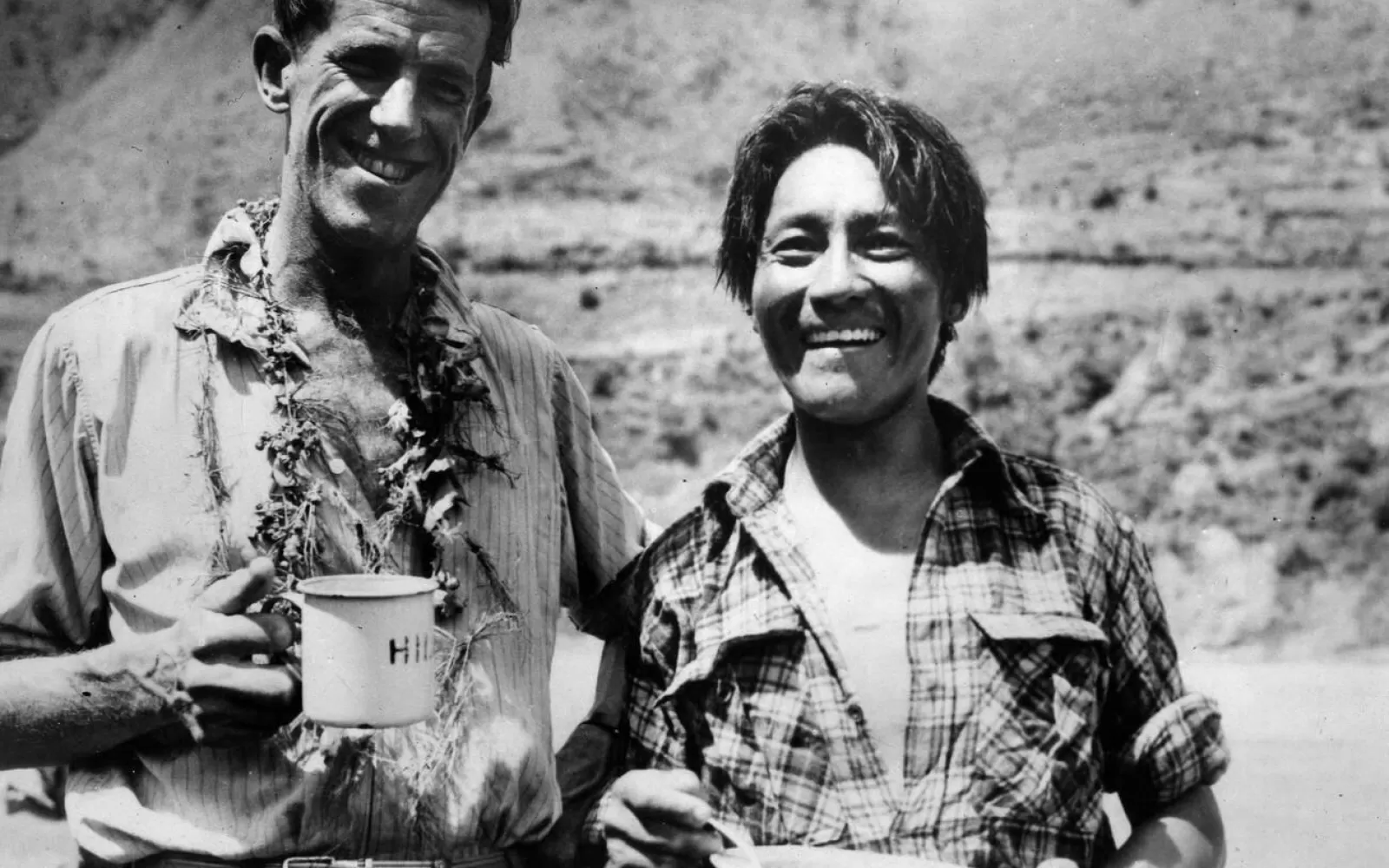
Climbing the Roof of the World: The Historic First Summit of Mount Everest The ascent of Mount Everest on May 29, 1953, is a moment in history that forever changed the world of mountaineering. Sir Edmund Hillary from New Zealand and Tenzing Norgay, a Sherpa from Nepal, achieved the seemingly impossible: reaching the summit of the world’s highest peak at 8,848 meters (29,029 feet). Their success was the culmination of years of failed attempts, extreme conditions, and human perseverance. Their climb marked not only a physical achievement but also a significant leap in human exploration and determination, offering a new frontier in mountaineering.
Hillary and Norgay's achievement was not a solo effort. Their victory was built on the collective contributions of the British Everest Expedition team, which was led by Colonel John Hunt. Despite the harsh weather, treacherous terrain, and lack of oxygen, Hillary and Norgay’s teamwork, and their ability to push through the physical and mental challenges, secured their place in history. Their success brought hope and inspiration to adventurers worldwide, showcasing the spirit of exploration and the human will to overcome the seemingly impossible.
Sir Edmund Hillary, a New Zealand mountaineer, explorer, and philanthropist, is best known for his historic achievement in 1953, when he, alongside Tenzing Norgay, became the first people to reach the summit of Mount Everest. Born in 1919 in Auckland, New Zealand, Hillary developed a passion for adventure and the outdoors from a young age. He first gained international recognition in 1951 when he joined an expedition to the Himalayas and developed his fascination with Everest, which would ultimately lead to his legendary climb. Hillary's physical stamina and mental resilience made him an ideal candidate for the harsh conditions of Everest, and his determination to reach the summit was a driving force in the success of the 1953 expedition.
However, Hillary's achievements went beyond mountaineering. After summiting Everest, he dedicated his life to supporting the people of Nepal, particularly the Sherpa community. His philanthropic efforts were legendary, establishing hospitals, schools, and other institutions to improve the living standards of those living in the Himalayas. His relationship with the Sherpas deepened after his Everest ascent, and he worked tirelessly to honor their contributions to high-altitude expeditions. Over the years, Hillary became not just a figure of adventure but also a global symbol of altruism and humanitarian work.
Tenzing Norgay, a Sherpa of Tibetan-Nepalese descent, was born in 1914 and became one of the most renowned climbers in history for his role in the first successful summit of Mount Everest alongside Sir Edmund Hillary. Before his historic ascent, Norgay had participated in several Everest expeditions, serving as a guide and porter. His deep knowledge of the Himalayan terrain and expertise in high-altitude climbing made him an invaluable asset to any expedition. By the time of the 1953 British Everest Expedition, Norgay was already a seasoned mountaineer, and his understanding of the mountain's perilous routes would prove essential to the team's success.
Though much of the world focused on Hillary’s success, Norgay’s contributions were equally crucial. As a Sherpa, Norgay's role in the ascent highlighted the often-overlooked significance of Sherpas in high-altitude mountaineering. He was not only a key partner in reaching the summit but also a symbol of the Sherpa people’s vital contributions to mountaineering history. After Everest, Norgay became a national hero in Nepal and a global icon, helping to elevate the Sherpa community's status in the mountaineering world. His legacy continues to inspire climbers and adventurers, especially those who seek to understand the importance of cultural and collaborative partnerships in the harshest of environments.
The partnership between Sir Edmund Hillary and Tenzing Norgay was a perfect example of complementary strengths. Hillary brought physical endurance and a strong will to the climb, while Norgay offered a vast understanding of the mountain and expert navigation skills in the treacherous conditions of the Himalayas. Together, they reached the summit of Mount Everest on May 29, 1953, marking one of the greatest achievements in human exploration. Their success on Everest was a testament to teamwork, perseverance, and the ability to overcome extreme adversity.
This partnership also broke barriers. Hillary, a Westerner from New Zealand, and Norgay, a Sherpa from Nepal, represented two vastly different cultures, but their collaboration on the mountain paved the way for greater cross-cultural understanding and respect. It helped to highlight the importance of local knowledge and expertise in mountaineering expeditions, where Sherpas had always played a crucial, yet often underappreciated, role. Their legacy has endured, not only because of their summit achievement but because of the lasting impact they had on mountaineering and their contributions to the communities that supported their success.
The 1953 British Everest Expedition, which led to the first successful summit, was not the first attempt to conquer Everest. Numerous expeditions had tried and failed before, but this particular attempt was meticulously planned. Colonel John Hunt, the expedition leader, ensured that the climbers were well-prepared for the harsh environment of the Himalayas. His strategic leadership, combined with the skill sets of the climbers, made the 1953 attempt stand out.
The challenges Hillary and Norgay faced were beyond ordinary human endurance. From the unpredictable weather to the thinning oxygen at high altitudes, the climb tested their limits. Yet, it was their complementary partnership that proved crucial to overcoming these challenges. Hillary’s strength and determination paired with Norgay’s extensive knowledge of the mountain terrain and experience at high altitudes helped them navigate dangerous obstacles like the Hillary Step, a steep rock face that required technical skill to pass.
While Sir Edmund Hillary and Tenzing Norgay are the iconic figures associated with the first summit of Mount Everest, the teamwork behind their success cannot be overstated. The expedition was not a solitary effort. Many other climbers and Sherpas played pivotal roles in their ascent, from carrying supplies to setting up base camps at high altitudes. In fact, the unsung heroes of the expedition included Sherpas like Ang Tsering, who provided critical logistical support. The success of the expedition depended not only on Hillary and Norgay’s courage but on the entire team’s coordination and teamwork.
Tenzing Norgay’s experience as a Sherpa and his understanding of Everest’s terrain were indispensable for the expedition. His role in guiding the team and navigating the mountain's treacherous routes ensured the safety of the climbers. After reaching the summit, Hillary and Norgay spent only 15 minutes on top of the world due to the freezing temperatures and the lack of oxygen. It was a fleeting moment of glory, but one that would resonate through history forever.
The ascent to the summit of Mount Everest was a long and dangerous journey. From the moment the expedition began, climbers faced an unforgiving environment that demanded exceptional endurance. The use of supplemental oxygen played a key role in the success of the climb, as it allowed Hillary and Norgay to survive the extreme altitudes where the oxygen levels were dangerously low. In the years that followed, the use of oxygen in mountaineering would become a standard practice, though it was a point of contention for some who believed it compromised the purity of the ascent.
The final push from the South Col was especially grueling. The last obstacle before reaching the summit, the Hillary Step, posed a technical challenge, as it was a steep rock wall that required advanced climbing techniques. Both Hillary and Norgay overcame this difficult section, demonstrating their skills, resilience, and partnership. Their success on this fateful day not only marked the conquest of Mount Everest but also set a new precedent for high-altitude climbing.
Sir Edmund Hillary and Tenzing Norgay’s paths to the summit of Everest were marked by years of preparation and physical exertion. Hillary, a determined explorer from New Zealand, had already gained experience in polar expeditions, and his mental and physical toughness was an asset on the climb. Norgay, on the other hand, was a seasoned Sherpa who had participated in several prior Everest expeditions, making him an invaluable guide on the journey. Together, they formed a partnership that would achieve what seemed impossible.
Their preparation for the climb was no easy feat. Extensive training at high altitudes, along with developing techniques for using supplemental oxygen, prepared them for the summit. Despite the dangers of frostbite, avalanches, and extreme exhaustion, Hillary and Norgay’s teamwork and mental fortitude carried them to the top. Their journey to the summit was not just a physical one, but a testament to the resilience of the human spirit in the face of nature’s most formidable challenges.
The partnership between Sir Edmund Hillary and Tenzing Norgay was one of cultural significance. It bridged the gap between Western explorers and the Sherpa people, whose contributions to Himalayan expeditions had often been overlooked. Norgay’s expertise in navigating the harsh terrain of the Himalayas and his intimate knowledge of the region made him a key figure in the success of the expedition. His role as a Sherpa, alongside Hillary’s global recognition, elevated the status of local guides in high-altitude mountaineering.
After the summit, Tenzing Norgay’s status as a Sherpa was forever changed. He became a symbol of pride for the Sherpa people and was widely recognized for his achievements. Hillary, in turn, remained deeply involved with the Sherpa community, dedicating much of his life to philanthropic work in Nepal. Their partnership not only resulted in the first successful ascent of Everest but also paved the way for greater appreciation of the Sherpa culture in the mountaineering community.
The successful summit of Mount Everest in 1953 was more than just a climactic moment in mountaineering history. It marked the beginning of an era of exploration and achievement that inspired countless future expeditions. After their successful climb, both Sir Edmund Hillary and Tenzing Norgay became internationally celebrated figures. Hillary was knighted by Queen Elizabeth II, while Norgay was honored with several accolades, including recognition by the government of Nepal.
The legacy of the 1953 expedition extends beyond the fame of its climbers. It had a profound impact on the world of exploration and mountaineering, encouraging adventurers to attempt summits of other high-altitude peaks. It also set the stage for future technical advancements, such as improved climbing gear, oxygen systems, and mountaineering techniques that would make future Everest summits more accessible.
The road to the summit of Mount Everest was filled with obstacles that tested both the physical and mental limits of the climbers. Preparation for such an endeavor required detailed planning, extensive training, and careful acclimatization to the high altitudes. The expedition also faced logistical challenges, such as food shortages and harsh weather conditions, which tested the resilience of the climbers and their team.
Technology played an essential role in the success of the 1953 ascent. The use of supplemental oxygen, though controversial in later years, allowed Hillary and Norgay to survive at altitudes where the air was too thin to breathe. Despite the benefits of this technology, it remained a critical point of discussion, as many mountaineers debated whether the use of oxygen compromised the purity of the climb.
After their historic success on Mount Everest, both Sir Edmund Hillary and Tenzing Norgay led remarkable lives. Hillary, always dedicated to the Sherpa community, established several schools and hospitals in Nepal, improving the lives of countless Sherpas. His work in humanitarian efforts continues to be a testament to his legacy.
Tenzing Norgay, too, became a legend in his own right. He became an advocate for Sherpa rights and was instrumental in raising awareness of the Sherpa community’s vital role in mountaineering. His legacy lives on in the countless Sherpas who continue to guide climbers up Everest today. Together, their legacies serve as a beacon of human achievement, perseverance, and cross-cultural cooperation.
While Sir Edmund Hillary and Tenzing Norgay are the most celebrated figures in the 1953 Everest Expedition, the contributions of the unsung heroes are often overlooked. Sherpas like Ang Tsering and Sonam Gyatso played crucial roles in transporting supplies, setting up camps, and guiding climbers through treacherous terrain. These climbers and guides endured the same dangers as the famous duo but rarely received the recognition they deserved.
Behind the scenes, the team faced significant challenges, including food shortages, adverse weather conditions, and the constant threat of avalanches. Yet, despite these obstacles, the teamwork and careful planning by every member of the expedition helped ensure the safety and success of the mission. Without these unsung heroes, the success of the 1953 ascent would have been far less certain.


 (2)
(2)  100% recommend (0)
 (0)
(0)