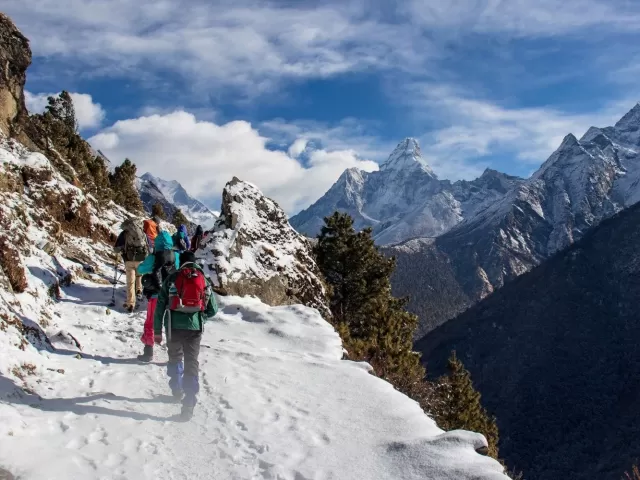
Everest Trekking begins with a thrilling flight from Kathmandu to Lukla or Manthali, followed by continuous ascents to Kalapattar. However, it's crucial to remember that this journey requires moderate physical fitness and altitude acclimatisation.On the Everest Base Camp Trek, following in the footsteps of Hillary, you'll pass through the rare yeti territory and the Dudh Koshi River valley. Trekkers encounter lush forests, terraced farmlands, undulating hills, alpine pastures, and majestic mountains. The trek ascends to 5,364 meters at Everest Base Camp and 5,545 meters at Kalapattar, offering breathtaking views of peaks such as Pumori, Lhotse, Nuptse, Lobuche, and Mount Everest. The route, marked by tranquillity and dotted with teahouses, offers trekkers a serene resting place, allowing them to feel at peace amid nature's grandeur.With diverse peaks, captivating vistas, Sherpa culture, ancient Gompas, and awe-inspiring panoramas, the Everest region offers trekkers worldwide a memorable experience.Everest Base Camp Trek Preparation Guide:Preparing for the Everest Base Camp Trek requires attention to physical readiness, cultural sensitivity, and smart packing. Asiana Treks and Tours ensures a safe and enriching journey, but travellers should still be well-prepared. Ensure your travel documents are in order, maintain physical fitness, and pack appropriately for changing mountain weather. Respect local customs, be environmentally conscious, and stay flexible to embrace Nepal's unique experiences. Staying hydrated, eating carefully, and carrying essential gear, including passport-sized photos, will contribute to a smooth trekking experience.Everest Base Camp Preparation Summary Guide: Plan Your Adventure Early:Book your Everest Base Camp Trek with a trusted operator, such as Asiana Treks and Tours, to ensure safe logistics, professional guides, and proper permits. Confirm your flight to Lukla, hotel booking, and pick-up/drop-off services before arrival in Kathmandu.Understand the Trek Challenge –The Everest Base Camp Trek is a moderate to challenging trek that reaches an elevation of 5,364 meters. It requires good stamina, mental strength, and proper acclimatisation to handle high-altitude conditions.Figure out what the Trek difficulty is:The Everest Base Camp Trek is a moderate to challenging trek that reaches an elevation of up to 5,364 metres. You need to be in good physical shape, have a strong mind, and be accustomed to high altitudes to handle them effectively.Physical Fitness Training:Do physical activities —like jogging, biking, and hiking — for at least 5 - 6 weeks before your trip. Exercises such as lunges and step-ups will help you build strength in your legs, back, and core. For long climbs, you need good balance and endurance.Smart and Light Packing: Pack warm, layered clothing suitable for cold mountain temperatures. Include insulated jackets, thermal wear, gloves, trekking boots, hats, and a waterproof backpack. Don’t forget sunscreen, sunglasses, and a reusable water bottle.Permits and Documentation:Obtain the Sagarmatha National Park Entry Permit and Khumbu Pasang Lhamu Rural Municipality Permit. Asiana Treks and Tours can arrange all required paperwork for your convenience.Acclimatisation and Health:Stroll, drink plenty of water, and take scheduled rest days (such as in Namche Bazaar and Dingboche) to acclimate to the altitude. Avoid alcohol, caffeine, and smoking to minimise the risk of altitude sickness (AMS).Mental Preparation:Stay positive and flexible—mountain weather can change quickly. Be patient and embrace the journey’s challenges as part of your adventure.Cultural Awareness:Respect Sherpa traditions, greet locals with a warm “Namaste,” and refrain from touching religious objects or prayer flags. Be polite and supportive in mountain lodges.Eco-Friendly Trekking:Carry reusable items, minimise plastic use, and respect the environment. Follow the “Leave No Trace” principles throughout the Everest region.Travel Insurance and Safety:Bring comprehensive travel insurance that covers high-altitude trekking and emergency evacuation. Keep a copy of your passport, insurance, and permits with you at all times. Alternative Everest Region Trekking Package List:Everest Panorama TrekkingGokyo Lakes and Gokyo Ri TrekEverest Base Camp Chola Pass Trek via Gokyo RiGokyo Ri Renjo La Pass TrekkingEverest Three High Passes TrekPikey Peak TrekkingEverest Dudh Kunda TrekkingEverest Base Camp Trekking via Jiri Everest Regions Trekking Blog Post List:Asiana Treks & Tours offers an insightful blog on the Everest region, providing valuable information for trekkers. Explore stunning landscapes, local culture, and practical tips for your journey.Why Everest Base Camp Trek Should Be Your Next Adventure: Top ReasonsBeginner's Guide to Everest Base Camp TrekUnderstanding the Everest Base Camp Trek’s DifficultyEverest Base Camp Trek: Best Seasons (March-Mid June, Sep-Nov)Choosing the Best Route for Everest Base CampMajor Facts About the Everest Base Camp Trekking AdventureHiking from Gorak Shep to Kala Patthar & Everest Base CampIs There an Age Limit for Everest Base Camp Trekking?Is Everest Base Camp Trekking Possible for Women? Absolutely!The Complete List of Permits and Documents for Everest Region TreksMeals and Accommodation in the Everest RegionAccommodation Types in the Everest RegionTop Everest Region Trekking Packages 2025/2026Annapurna Base Camp vs Everest Base Camp: The Best TrekTrekking Permit Requirements for Different Regions in NepalThe First Viewpoint to See Mount EverestThe Beauty of Gokyo Lake with Views of EverestDiscovering the Beauty of Gokyo Lakes with Gokyo RiWhy Choose Everest Three Passes Trekking in NepalWhy Trek Everyone is the Ultimate Guide to Everest Base CampTrekking the Everest Three High Passes: Renjo La, Cho La & Kongma LaLukla: The Trekker's Ultimate GatewayAmazing Facts About Tenzing-Hillary Airport (Lukla Airport)Exploring Phakding: The First Step Toward EverestNamche Bazaar at 3,440m: A Rest Stop with a ViewTengboche Monastery: The Heartbeat of the KhumbuDingboche: The Smart Stop for Acclimatization and Stunning ViewsLobuche: A High-Altitude Himalayan Gem – History, Culture, Geography & Trekking HighlightsDiscover Everest Dudhkoshi Cultural Trek for BeginnersTraversing the Heart of Solu: Jiri to Sete, Junbesi & Nunthala via the Lamjura-La PassSacred Trails and Alpine Dreams: A Journey Through Pikey Peak, Dudh Kunda, and the Hidden Hamlets of SolukhumbuWhy Choose Everest Three Passes Trekking in NepalThe First Successful Summit: Sir Edmund Hillary and Tenzing NorgayHistory of Mount Everest : International Everest DayWhy Trek Everyone is the Ultimate Guide to Everest Base CampFAQs for Hiking to the Roof of the World (Everest RegionEverest Base Camp Trek Itinerary and Distance:Asiana Treks and Tours offers the ideal Everest Base Camp trek itinerary and distance for travellers with moderate physical fitness, combining adventure, culture, and natural beauty. The journey begins in Kathmandu, where you'll explore heritage sites, then fly to Lukla to start your trek through picturesque Sherpa villages, dense forests, and alpine landscapes. Each day offers breathtaking views, from the vibrant streets of Namche Bazaar to the majestic peaks of the Khumbu region. You'll experience the dramatic contrast of cold nights at Everest Base Camp with the unforgettable sunrise views from Kala Patthar.Day & ActivityDistance ( Km / Miles )Altitude ( Meters / Feet )Day 1: Arrival in Kathmandu7 Km / 4.34 miles1,400 m / 4,593 ftDay 2: Kathmandu – Lukla – Phakding5 km / 3.1 miles2,610 m / 8,562 ftDay 3: Phakding – Namche Bazaar7 km / 4.8 miles3,440 m / 11,286 ftDay 4: Acclimatisation Day at Namche6 km / 3.7 miles (approx)3,880 m / 12,730 ft ( Everest View Hotel )Day 5: Namche To Tangboche8 km / 5 miles3,860 m / 12,664 ftDay 6: Tengboche – Dingboche11 km / 6.8 miles4,410 m / 14,469 ftDay 7: Acclimatisation Day in Dingboche6 km / 3.7 miles ( approx )4,800 m / 15,748 ft ( Nagarjun Hill )Day 8: Dingboche – Lobuche7 km / 4.3 miles4,910 m / 16,109 ftDay 9: Lobuche – Gorakshep – Everest Base Camp11 km / 6.8 miles EBC: 5,364 m / 17,598 ftGorakshep: 5,545 m / 18192 ftDay 10: Gorakshep – Kalapatthar – Pheriche9 km / 5.6 milesKala Patthar: 5,545 m / 18,192 ftPheriche: 4,240 m / 13,910 ftDay 11: Pheriche – Namche Bazaar15 km / 9.3 miles ( approx )3,440 m / 11,286 ftDay 12: Namche – Lukla19 km / 11.8 miles ( approx )2,860 m / 9,383 ftDay 13: Fly Lukla – Kathmandu-Kathmandu: 1,400 m / 4,593 ftEverest Base Camp Trek Route:The Everest Base Camp Trekking Route offers several scenic trails, each showcasing breathtaking Himalayan landscapes, rich Sherpa culture, and thrilling adventure. All routes are the best route; however, it depends on the time, budget, and personal preference. Trekkers can choose the Classic Route via Lukla, flying both ways; the historic Jiri–Bhandara Route, reached by bus from Kathmandu and following the original Hillary Trail; or the Salleri–Phaplu Route, accessible by jeep or short flight, which starts the trek toward Lukla.Each route passes through traditional Sherpa villages, rhododendron forests, ancient monasteries, and suspension bridges before reaching the iconic Everest Base Camp (5,364 m) at the foot of Mount Everest (8,848.86 m). These trails promise an unforgettable mix of culture, nature, and mountain adventure.Everest Base Camp Route summary Table:RouteAccess ModeHighlightLukla RouteFlight from Kathmandu - Lukla or RamechhapMost popular, shortest route to EBCJiri – Bhandara RouteDrive from Kathmandu, trek via the Hillary TrailHistoric trail, cultural experienceSalleri – Phaplu RouteDrive to Surke or fly to PhapluOffbeat path with scenic mountain viewsEverest Base Camp Trekking PricePackage TypePrice Range ( USD)IncludeLuxury Complete Package6053$ - 8015$5 - star hotel in Kathmandu,Yeti Mountain Home or Everest Summit Lodge until Namche,Then, after the best available lodges en route,all permits, from the city to the Mountain guide / porter,all meals, and a helicopter return from EBC / KalapatharFull-Service Package1100 $ - 1500$Flights to / from Lukla, all permits, guide and porter, all meals,accommodation in Kathmandu and during the trekStandard Package$1,100 – $14,00Permits, flights to / from Lukla,guide or porter, Breakfast, Lunch and Dinnerand accommodation only during the trekSimple Package$800 – $1,20B/B ( Bed and Breakfast ), guide, and porter,all necessary Trekking permits ( trekking only )Guide & Accommodation$600 – $700Only guide service and accommodation during the trekPorter $300 – $500 PorterPorter service during the trek onlyEverest Base Camp Trekking Height:The Everest Base Camp trek and tours begin in the bustling city of Kathmandu, located at an altitude of 1,337 meters. From Kathmandu, take a flight to Lukla, or, during peak season, consider flying from Ramechhap. You'll descend to the beautiful Manthali headquarters of Ramechhap,474 meters above sea level. If you fly from Manthali to Lukla, you'll embark on your journey, descending through the green forest to Chheplung; finally, the Trek culminates at Everest Base Camp at a breathtaking height of 5,36 mt/ 17598/ftLocationAltitude Meter and FitAltitude Gain / Loss Arrival in Kathmandu1,400 m / 4,593 ftArrive NepalKathmandu – Lukla – Phakding2,610 m / 8,563 ft1,210 (Lukla) - 200 ( Phakding )Phakding – Namche3,440 m / 11,286 ftGain: 830 m / Loss: 0 mNamche – Tengboche3,860 m / 12,664 ftGain: 420 m / Loss: 0 mTengboche – Dingboche4,410 m / 14,468 ftGain: 550 m / Loss: 0 mDingboche – Lobuche4,910 m / 16,109 ftGain: 500 m / Loss: 0 mLobuche – Gorakshep – EBC5,364 m / 17,598 ft454 ( Gorakshep ) - 150 (EBC)Gorakshep – Kalapatthar – Pheriche4,240 m / 13,911 ftGain: 400 m ( to Kala Patthar ) /Loss: 1,524 m ( to Pheriche )Pheriche – Namche3,440 m / 11,286 ftGain: 0 m / Loss: 800 mNamche – Lukla2,860 m / 9,383 ftGain: 0 m / Loss: 580 mFly back to Lukla – Kathmandu1,400 m / 4,593 ftGain: 0 m / Loss: 0 mDeparture from Kathmandu1,400 m / 4,593 ftFly to your Home destinationMajor Sherpa villages of the Everest Base Camp Trekking Route:The Everest Base Camp trekking route passes through several culturally rich and scenic Sherpa villages. These villages not only provide essential rest stops and accommodation but also offer a deep insight into the Sherpa way of life. From the bustling town of Lukla to the serene heights of Gorakshep, each village plays a unique role in shaping the trekking experience. As you ascend and descend the trail, these villages offer warm hospitality, spiritual significance, and picturesque Himalayan views. Village nameAltitude Meter and FitShort DescriptionLukla 2,860 m / 9,383 ft Gateway to Everest; home to Tenzing-Hillary Airport.Starting point of the trek.Chheplung2,700 m / 8,858 ftScenic village after Lukla with views of the Dudh Koshi River.Thado Koshi2,580 m / 8,465 ftSmall riverside village with a peaceful atmosphere.Phakding2,610 m / 8,563 ftPopular first overnight stop with lodges and riverside charm.Taktok2,700 m / 8,858 ftA traditional Sherpa village with stone houses and a quiet setting.Banker2,700 m / 8,858 ftA quiet village surrounded by natural beauty and a few teahouses.Manjo2,835 m / 9,301 ftEntrance checkpoint to Sagarmatha National Park.Jorsalle2,740 m / 8,990 ftLast stop before Namche, a popular lunch break location.Namche Bazaar3,440 m / 11,286 ftCentral trading hub with cafés, shops, and acclimatisation points.Sanasha3,600 m / 11,811 ftTrail junction to both Everest Base Camp and Gokyo Lakes.Phugithanga3,250 m / 10,663 ftResting spot at the base of the climb to Tengboche.Tengboche3,867 m / 12,687 ftSpiritual centre with the famous monastery and mountain views.Diboche3,820 m / 12,532 ftA peaceful alternative to Tengboche, with serene lodges.Pangboche3,985 m / 13,074 ftHome to the region’s oldest monastery and Sherpa culture.Somera4,050 m / 13,287 ftA small Lunch Hemlet between Pangboche and Dingboche.Harso4,150 m / 13,615 ftA simple resting point before reaching Dingboche.Dingboche4,410 m / 14,469 ftCentral acclimatisation village with stunning landscapes.Thukla ( Dughla )4,620 m / 15,157 ftSite of memorials for fallen climbers; an emotional stop.Lobuche4,940 m / 16,207 ftA high-altitude village before Gorakshep and EBC.Gorakshep5,164 m / 16,942 ftFinal settlement before Everest Base Camp and Kala Patthar.Best viewpoints of the Everest Base Camp Trek:These viewpoints provide unforgettable experiences, highlighting the beauty of the Everest Base Camp Trek. Everest Base Camp Trek offers breathtaking views, showcasing stunning panoramas of the surrounding Himalayan peaks. Here are the critical views along the route:On a clear day, board your Flight to Lukla or Ramechhap, ensuring a seat on the left-hand side for a breathtaking view of the countless Himalayan peaks, from the Langtang Himalayan range to the majestic Mt Everest.Hillary Bridge: After halfway from Hillary Bridge to Namche, you will first glimpse the majestic Everest view. Hillary Park Sagarmatha Head Headquarters: Located at the top of Namche, the Headquarters of Sagarmatha National Park, Hillary Park offers stunning views of Many Himalayan ranges, including Mt. Everest.Everest View Hotel: From Everest View Hotel, you can enjoy unparalleled vistas of Everest and neighbouring peaks, Tangboche, Pangboche, Deboche: Traverse picturesque villages, each providing unique perspectives of the towering giants en route to Everest Base Camp.Thukla: On the way from Lobuche to Thukla, soak in the stunning views of jaw-dropping Himalayan peaks.Kala Patthar: Summit at dawn for an unrivalled panorama of the Everest region, witnessing the mountains come alive in a symphony of colours as the sun rises. Each viewpoint leaves an indelible mark on your soul, ensuring the journey back to Lukla reminds you of the awe-inspiring vistas encountered throughout your Trek.Everest Base Camp (EBC): The ultimate destination, commonly listed as 5,550 m (18,209 ft). Meters offers unparalleled views of Flora and Fauna in the Everest Base Camp Trek.Flora and Fauna In the Everest Base Camp Trekking:The Everest Base Camp Trek is also located within Sagarmatha National Park. It boasts a diverse array of flora and fauna, with pine and hemlock forests at lower altitudes and fir, juniper, birch, rhododendron, scrub, and alpine plants at higher elevations. Sagarmatha National Park is home to a diverse range of animals, including the red panda, snow leopard, musk deer, Himalayan tahr, marten, Himalayan mouse hare (also known as a pika), and over 118 bird species, such as the Impeyan pheasant, snow cock, blood pheasant, and red-billed chough.CategoryDetailsEcosystemTemperate forests, subalpine forests, alpine meadows, tundra, glaciersElevation Range1,400m ( Kathmandu ) to 5,364m ( Everest Base Camp )Protected AreaSagarmatha National Park (UNESCO World Heritage Site)Flora ( Plants )Rhododendron forests, pine, juniper, fir, birch, blue poppies, mosses, lichensFauna ( Animals )Himalayan Tahr, Musk Deer, Snow Leopard, Red Panda,Himalayan Monal ( national bird of Nepal ), Danphe, Blood PheasantBirdsHimalayan Griffon, Snow Pigeon, Impeyan Pheasant, Bearded VultureCommon MammalsYak, Himalayan Black Bear, Grey Langur, PikaReptiles & AmphibiansHimalayan Pit Viper, Mountain Toad, High-altitude LizardsThreats to BiodiversityClimate change, deforestation, overgrazing, tourism impact, and habitat lossConservation EffortsSagarmatha National Park protection, community - based eco - tourism,and reforestation projectsFestivals and Culture of Everest Base Camp Trekking:The Everest Base Camp trek offers a cultural immersion into Sherpa traditions. A highlight is the Dumji and Mani Rimdu Festival at Tengboche Monastery, held annually in October or November. This vibrant celebration features sacred dances and colourful ceremonies, providing insight into Sherpa culture.Buddhism, a central pillar of Sherpa culture, is beautifully woven into the fabric of the Trek. It's evident in the monasteries, prayer flags, and Mani walls that dot the route. Visitors are not just spectators but can actively participate in Buddhist rituals, fostering a deeper understanding of Sherpa spirituality and their profound connection to nature. In their harmonious coexistence with nature, Sherpas practice sustainable living through eco-friendly methods, including the use of yak dung as fuel and effective waste management. These practices, born out of necessity and deep respect for the environment, are a testament to the Sherpas' ingenuity and their role as responsible stewards of the land. It's a practice that inspires respect and admiration. People and Hospitality:Nepal is a country where warm hospitality and incredible values are not just customs but deeply ingrained parts of its culture. Whether you're a foreign visitor or a local, you're greeted with open arms, friendly smiles, and a radiant manner. This tradition of hospitality, deeply rooted in Hinduism and Buddhism, as well as traditional customs, views guests as blessings and treats them with utmost respect, generosity, and kindness.The Sherpa people, an indigenous ethnic group with a unique blend of Tibetan Buddhism and ancient Bon rituals, embody these values. Residing in the upper Khumbu area, they welcome guests with a distinct warmth and an unwavering spirit of hospitality, marked by their renowned honesty and loyalty.Advantages of booking with Asiana Treks and Tours: Private transportation for airport transfers to and from your hotel.Feel free to connect via Facebook or online if you'd like to discuss the trip.Last-minute booking at your hotel at a suitable time after your arrival.Easy booking and reservation system.Multi-channel communication via Email, WhatsApp, Facebook, Viber, Skype, and 24/7 phone communication at +977-9851076270Free excess luggage storage during the TrekOximeters measure blood oxygen saturation, enabling early detection of altitude sickness at high altitudes.Medical kits along the Trek and hot air bags are available in winterArrange sleeping bags, duffel bags, down jackets, and walking poles if you don't have your own.Trekking Start: If you miss the regular trip briefing, don't worry. We'll provide it at a convenient time before departure from Pokhara, either before a World Heritage tour the following morning or the next day. We'll then proceed to the airport, either by flight to Lukla or by driving to Manthali and taking a flight there.Currency Exchange:The Nepalese rupee is Nepal's official currency, and 1 USD is approximately equivalent to 130 Nepalese rupees. Only NPR is accepted in Nepal, so it's best to bring cash to make transactions easier. Banks and ATMs in Kathmandu offer currency exchange services; however, most banks prefer new, crisp notes.Our Team:The Asiana Treks and Tours team is professional, reliable, and responsible. They are well-trained, friendly, radiant, and fluent in English. You can feel comfortable sharing anything with them. They are experts in local culture, history, vegetation, cuisine, accommodations, weather conditions, and first aid medications. They are also environmentally conscious and respect animal rights.However, please refrain from provoking them for personal gain during the trip. While you can enjoy your holiday with them, we kindly request that you refrain from trying to change their customs, beliefs, religion, culture, or traditions.We, along with our staff, are committed to making your adventure trip an unforgettable experience in Nepal. Guide and Porter Arrangement:Our company, Asiana Treks and Tours, focuses on responsible tourism in Nepal. We make sure our guides and porters are well-trained in Trekking and mountaineering. They are well-versed in the areas we visit, including geography, history, customs, and culture. We train them regularly in safety, first aid, and environmental conservation. We follow guidelines to treat our porters fairly, providing them with good pay, accommodation, and meals during treks. Our guides and porters are essential team members, and we appreciate their hard work. When you trek with us, you support ethical tourism in Nepal, making your trip meaningful and memorable.Asiana Treks and Tours prioritises your safety and enjoyment. Our knowledgeable guides, reliable equipment, and safety measures ensure a great trekking experience in Nepal.ServicesDescrptionPrice RangeFull Board with Guide and PorterBLD with professional (G/P) B/B with Guide and PorterB/B with Professional (G/P) Only GuideGuide and salary$25 per dayOnly PorterPorter and salary$20 per dayPorter, Luggage, and Extra Luggage Storage: We cover the cost of porters for your Luggage, but the maximum weight per person is 12 kg. Each porter carries Luggage for two trekkers; please share a duffel bag with another. Our porters will carry up to 25 kg each. If you need a porter, we can arrange one. We also recommend carrying a small backpack for your valuables and important documents. You can leave extra Luggage at our office for free, and at hotels in Pokhara, Namche, etc.Accommodation:Accommodation during the Everest Base Camp Trek varies. Along the trekking route, you'll stay in guest houses, commonly known as teahouses. These basic lodges offer rooms, dining areas, and toilets. The quality of guest houses varies, but they remain affordable and convenient for trekkers. Rooms typically feature twin or bunk beds, and shared bathrooms are available. Blankets and pillows are also provided. Our company can offer a sleeping bag if you don't have one. You'll spend nine nights in lodges along the trekking route and three nights in a hotel in Kathmandu. Some places and lodges have attached bathrooms, while others offer simple yet clean rooms with shared facilities. We can arrange a solo trekking service if you're travelling solo. During the high season and in certain areas, availability may be limited; however, we do our best to accommodate you. In Kathmandu or Pokhara, your hotel room will have excellent amenities, including TV, 24/7 hot water, electricity, and laundry service.Meals during the trip:Eating well is essential since the EBC Trek takes you through the Himalayas. You'll have plenty of nutritious meals in the trekking regions, although the options won't be as varied as in the cities. You'll get fifteen breakfasts, eleven lunches, and ten dinners during the Trek. The menu includes local, Asian, and Western dishes, but it gets more straightforward as you climb higher. Try popular Nepali foods like lentils, rice, curry, dumplings, noodles, Spaghetti, and many more. We highly recommend consuming fresh vegetables and drinking liquids such as green tea, lemon tea, hot lemon, ginger tea, and garlic soup, especially at high altitudes. While non-vegetarian options are available during the Trek, we suggest avoiding them for hygiene reasons. It's also best to avoid dairy, cheese, alcohol, caffeine, and hot chocolate. Personal expenses, such as alcoholic beverages, additional drinks, and cafes, aren't included in the package.Meal TypeDetailsTotal Meals Provided15 breakfasts, 11 lunches, 10 dinnersCuisine OptionsLocal Nepali, Asian, and Western dishesCommon MealsDal Bhat ( lentils, rice, curry ), dumplings ( momos ),noodles, spaghetti, soupsRecommended FoodsFresh vegetables, garlic soup, energy - rich mealsRecommended DrinksGreen tea, lemon tea, hot lemon, ginger teaFoods to AvoidNon-vegetarian items ( for hygiene reasons ),dairy, cheese, caffeine, alcohol, hot chocolateMeal SimplicityMore variety in lower altitudes,simpler options at higher elevationsExcluded ExpensesAlcoholic drinks, extra beverages, speciality cafésDrinking water:Staying hydrated on the trail is essential, as dehydration can contribute to Acute Mountain Sickness (AMS). You should drink at least three litres of fluids daily.Using bottled water while hiking generates waste and reduces financial resources. Reusable water bottles are a more affordable and environmentally beneficial alternative to plastic bottles. You can now use them after filling them with hot water from the teahouse.Mountain water is generally pure, but it's always best to be cautious. Consider using a bottle with a Steripen or an in-built filtration system, such as LifeStraw. Water purification tablets are another reliable option. With these precautions, you can drink mountain water with confidence, knowing it's safe.Using chlorine or iodine tablets may change the taste of the water. To help mask the unpleasant taste, you can add flavoured electrolyte powder, which is easily available at a medical shop in Kathmandu. These powders enhance the flavour and replenish essential minerals such as sodium, potassium, and magnesium, helping keep you healthy and energised during your hike.Teahouses offer boiled drinking water for an additional cost, which increases the higher you go. The kitchen staff will treat your drinking water and boil it during the climb.Extra Personal Expenses:Your Trip covers most expenses during the Trek; however, you will need to pay for additional accommodations and meals in Kathmandu, souvenirs, and beverages. We estimate miscellaneous expenses at USD 15-25 per trekking day. However, personal expenses depend on your Income, habits, and style.Toilet Facilities in Everest Base Camp Trekking:Most teahouses have Western-style flush toilets during mountain treks, especially at lower elevations. However, as you ascend, you'll find simple squat toilets along the trails and at teahouses at higher altitudes. These toilets usually have water and toilet paper, but it's a good idea to bring your own just in case. You can also use restrooms at nearby teahouses or find a private spot along the trekking routes.Internet Connectivity:While trekking in Nepal's Himalayan region, it's also a good idea to stay in touch with your family and friends. You can find internet access at teahouses and lodges, but it may be available at an additional cost. The signal may be weak due to the remote location. You can also get internet access using a local SIM card and data packages available at Kathmandu airport or nearby shops in Thamel and Pokhara. You'll need a passport-sized photo and a copy of your passport to get a SIM card. It's a good idea to compare prices and data packages from telecom companies like Ncell and Nepal Telecom before making a purchase. Knowing about the teahouse connectivity. Our guide will suggest connections for you. Electricity voltage and plugs:However, as of May 29, 2023, 95% of the Nepali population has access to electricity. Almost all popular trekking routes, teahouses, and lodges have electricity. However, some isolated and solo trekking tea houses in the jungle don't have electricity; most tea houses let travellers charge their devices for a small fee. The average electrical voltage in Nepal is 230 volts, with plug types like Type C, Type D, and Type M. Travellers should bring a suitable adapter and, if needed, a voltage converter for their electronic devices.Communication:The guesthouses in the trekking regions offer internet access. You can buy a SIM card at Tribhuvan International Airport in Kathmandu and Namche. However, the signal may need to be stronger at high altitudes. Our office maintains regular contact with all trekking teams through the trek guide, checking in at least once daily to ensure everything proceeds as planned.Trip Extension:Suppose you have extra days in Nepal after the Trek. In that case, we can arrange a tour that includes an overnight stay at Nagarkot, Balthali, or another location around Kathmandu and Chitwan, as well as activities such as jungle safaris, paragliding, rafting, canyoning, or other treks. Do not hesitate to inform us. We will create the best for you.Trek Difficulty:The Everest Base Camp trek offers a moderate yet challenging and enriching adventure. Your enjoyment of the trip will largely depend on your level of fitness. We recommend building stamina at least two weeks before the Trek. Activities include jogging, running, swimming, or taking long hikes for the journey ahead.Completing this Trek is achievable even if you're a beginner, although you must maintain a reasonable fitness level. Prior trekking experience is advantageous, though optional. All you need is the readiness to hike steadily for 4-8 hours, navigating tricky terrain.Suppose trekkers have pre-existing medical conditions, such as lung or heart diseases. In that case, they are advised to consult their physician before booking the Trek to ensure their safety and well-being throughout the journey.Trip Safety:We highly give top priority. We provide experienced guides, first-aid kits, and necessary safety gear to ensure a safe hand. Our team monitors weather and trail conditions, taking precautions to minimise risks. Before starting the Trek, we discuss the trip to provide a clear understanding and ensure a reliable experience.Group & Private Treks:We organise many group and private treks simultaneously, with discounts available for larger groups. Every group will have a trekking guide and porters. Regarding larger groups, we provide an assistant guide. Our team ensures a safe and enjoyable trekking experience for all participants.About a solo traveller:If you're a solo traveller, please get in touch with us to confirm departure dates before booking. You can tell us via call, WhatsApp, or email. We have listed upcoming departure dates for your convenience. Feel free to share the trip details with friends and family.Notes: Please be aware that the itinerary is subject to change due to weather or other unforeseen factors, and we'll adjust it accordingly to ensure the group's safety and enjoyment. We look forward to guiding you through the stunning landscapes of the Annapurna region and providing a memorable trekking experience.Responsible Travel:We prioritise responsible travel to minimise environmental impact and support local communities. We collaborate with organisations like the Kathmandu Environmental Education Project (KEEP) to promote eco-friendly practices in trekking regions.Gratitude:Gratuity, or tipping, is highly appreciated in Nepali culture and reflects the quality of service that has been provided. You decide how much to tip, but we recommend tipping as a group at the end of the trip.End of Trek:On the Last day, you'll take a flight from Lukla back to Kathmandu, which takes about 35 Minutes. Alternatively, we can fly from Ramechhap to Kathmandu for an extra fee. In the evening, we'll host a farewell dinner in Kathmandu.Departure:On the day of your departure flight, we'll come to pick you up from your hotel and transfer you to Tribhuvan International Airport. We hope you enjoyed the Nepal trek and will consider returning for more adventures in Nepal.Feedback:After you complete the EBC Trek, we'll organise a farewell dinner in Kathmandu and present you with a trekking achievement certificate. After the dinner, you can provide feedback about the Trek on travel portals.Last-Minute Booking:If you can't book in advance, we offer last-minute bookings. Last-minute booking offers are available, but they may incur a slight increase in cost compared to regular departure dates. Those opting for last-minute bookings must pay an additional 7% of the total trip cost on our website. While we strive to accommodate last-minute requests, we do our best to meet your last-minute holiday booking needs.Special Note: Please note that unforeseen circumstances, such as inclement weather or lodging unavailability, may occasionally necessitate schedule changes. Your trip guide will design a fresh schedule based on the group's interests in such circumstances.
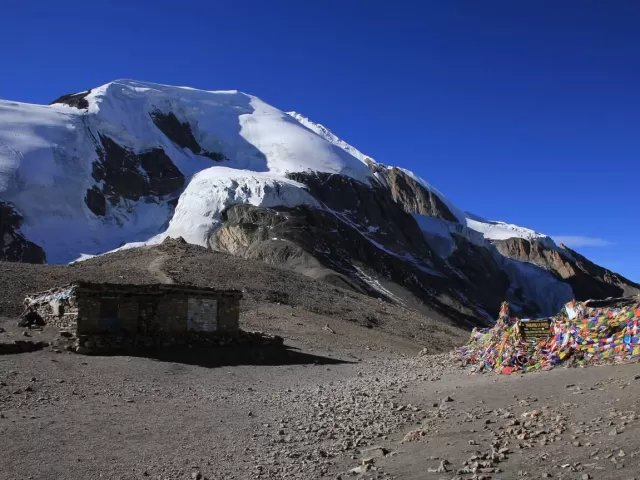
The Annapurna Circuit Trek, also known as the Round Annapurna Trek, is one of the best trekking trails in Nepal. It offers an incredible mix of adventure, culture, and breathtaking scenery. This high-altitude trekking route takes you through diverse landscapes, from lush valleys and terraced fields to rugged mountains and arid deserts.A significant highlight of the trek is crossing Thorong La Pass (5,416m), one of the world’s highest Trekking passes. Along the way, you’ll pass through the picturesque villages of Manang and Mustang, experiencing the warm hospitality of the Gurung, Manangi, Thakali and Magar communities while witnessing stunning views of the entire Annapurna and Dhaulagiri range with Tukuche Peak.The journey begins in Dumre, after road assess in Dumre, Besisahar; however, the trek starts from Bagarchhap due to the road access and follows the Marshyangdi River Valley, passing through key destinations like Chame, Pisang, and Manang. After crossing Thorong La Pass, the trail descends into the deepest Kali Gandaki Gorge, the world’s deepest gorge. Here, you’ll visit the sacred Muktinath Temple, an important pilgrimage site and Monastery. Further along, trekkers can relax in Marpha, the capital of Thakali and Apple. In the Tatopani Hot Springs, before concluding the trek, we fly from Jomsom.This trek is part of the Annapurna Conservation Area, home to diverse flora and fauna. Adventurers can also explore Gangapurna Lake, the other side of Manang Valley, and Gangapurna glacier viewpoints, one of the best viewpoints in Annapurna Circuit Trekking, or extend their trek to the Manang and Mustang regions.Lonely Planet recognizes Annapurna Round Trekking as a top trekking route, and Annapurna Circuit Trek is a must-do for those seeking an unforgettable Himalayan experience. Whether you choose a tea house trekking Nepal experience or a guided trek with Asiana Treks and Tours, this journey promises breathtaking views and rich cultural encounters.Preparing for the Nepal Trek with Asiana Treks and Tours: Ensure Your Travel Documents Are Ready Verify that your passport is valid for at least six months beyond travel dates.Obtain a Nepal visa in advance or on arrival at the airport.Carry travel insurance covering medical emergencies, trip cancellations, and unexpected delays.Peak wisely For Comfort and ConvenienceBring lightweight, breathable clothing for warm days and layered outfits for cooler evenings.Comfortable walking shoes, a rain jacket, sunglasses, sunscreen, and personal essentials are necessary.Pack a small daypack to carry essentials during daily excursions.Understand and Respect the Local CultureDress modestly, especially at religious sites, and remove your shoes before entering temples.Greet locals with a polite "Namaste" and respect local customs and traditions.Avoid public displays of affection, as Nepalese culture values modesty.Maintain Physical Readiness for the JourneyThe Silver Triangle Tour includes sightseeing and short walks, so staying active beforehand helps.Engage in light walking or basic stretching exercises before your trip to improve your stamina.If you have any medical conditions, carry the necessary medications and inform your tour guide.Prioritize Hydration and Well-BeingDrink purified or bottled water to avoid dehydration and stomach issues.Carry a reusable water bottle and refill it at safe water stations.Eat well-balanced meals with local cuisine, but avoid street food if you have a sensitive stomach.Stay Open-Minded and AdaptableNepal's charm lies in its authenticity, so be flexible with schedules and enjoy spontaneous experiences.Expect occasional delays due to road conditions or weather, and embrace the relaxed pace of travel.Interact with locals, explore hidden gems, and immerse yourself in the beauty of Nepalese culture.Be Environmentally ConsciousMinimize plastic waste by carrying reusable bottles and bags.Follow responsible tourism practices by respecting nature and local communities.Support eco-friendly accommodations and ethical tour operators.Capture Memories But Stay PresentBring a camera or smartphone to capture the stunning landscapes and cultural sites.Enjoy the beauty around you rather than focusing solely on photos.Seek permission before photographing people, especially in rural areas.Bring Necessary PhotographCarry some passport-sized photos, as they may be needed for permits, SIM cards, or other travel documents.Annapurna Circuit Trekking Itinerary: Asiana Treks and Tours has the perfect Annapurna Circuit trekking itinerary. Travelers who desire to explore Nepal with moderate physical fitness. You'll discover the best places for breathtaking views, from the city to the countryside. Experience the contrast of cold nights at ABC to relaxing in hot natural springs an unforgettable lifetime journey. Annapurna Circuit Trekking Distance:The Annapurna Circuit trek spans approximately 160 to 230 kilometres, or 99 to 142 miles, depending on the chosen itinerary. The route typically spans 14 days. Extending the itinerary by two days allows for a return trek to Pokhara through picturesque villages like Landruk, Tolka, Pothana, and Dhampus, and concluding at Phedi. Our package tour ensures reliability in terms of cost, itinerary, and overall experience. For Nepali citizens, the Annapurna Base Camp trek typically ranges from US$500 to 1000, with variations depending on group size, service level, guide and porter services, transportation preferences, and accommodation choices in Kathmandu or Pokhara. This cost estimation is subject to the types of trekking gear and accommodation preferences.Annapurna Circuit Trekking Route:The Annapurna Circuit Trekking route showcases awe-inspiring natural beauty. Starting in lush valleys with terraced fields and traditional villages, the journey unfolds amidst the Himalayan foothills. Rhododendron forests bloom in spring, accompanied by cascading waterfalls and snow-capped peaks. Traversing wildflower meadows and crossing suspension bridges over mountain streams, the landscape evolves as you ascend. Approaching Annapurna Base Camp, rugged terrain and glacial moraines dominate, leading to panoramic views of towering peaks like Annapurna I and Machhapuchhre. The trek promises unforgettable moments, whether you're a seasoned trekker or a novice adventurer, offering an unparalleled journey through Earth's most breathtaking landscapes.Annapurna Circuit Trekking Price:Our package tour ensures reliability in terms of cost, itinerary, and overall experience. For Nepali citizens, the Annapurna Base Camp trek typically ranges from US$ 500 to 1000, and for foreigners, US$ 715 to 1385, variations depending on group size, service level, guide and porter services, transportation preferences, and accommodation category in Kathmandu or Pokhara. This cost estimation is subject to the types of trekking gear and accommodation preferences. However, we could end the trek via Landruk and Dhampus if you avoid Kathmandu sightseeing and Pokhara exploration.Annapurna Circuit Trekking Height:Annapurna Circuit Trekking is one of the most charismatic and beautiful trekking routes available in Nepal, starting from the altitude of 1,337 meters high in the capital city of Kathmandu. You begin your jeep drive to Bessi Sahar and pass through deep caves, rice-terraced fields, and typical Nepali villages there. Some of the top viewpoints are in the ancient but high-altitude village of Manang at 3,540 meters. Trek takes you to an elevation of 5416 meters at the top of Thorong La Pass, where you will enjoy stunning views of the Annapurna and Dhaulagiri mountain ranges. Via the foot of the holy city of Muktinath, over Marpha and Jomsom, the riders pass to the road among the rich villages renowned for their Tibetan fruits and wines. Be it Pokhara, a peaceful riverside town at 827 meters.Major villages of Annapurna Circuit Trekking:The major Magar and Gurung ethnic villages along the Annapurna Circuit Trekking route are Bahundanda, Chamje, Bagarchap, Pisang, Manang, Yak Kharks, Thorong Fedi, Thorong La Pass, Muktinath, Jomsom and Ghorepani. The return route passes through Hotspring, Mataque, Sewai, Berithati, and Nayapul and finally drives back to Pokhara. These villages are significant landmarks and offer scenic beauty and accommodation options along the Annapurna Circuit Trekking route.Best Viewpoints Annapurna Circuit Trekking:These viewpoints provide unforgettable experiences, highlighting the beauty of the Annapurna Circuit. Annapurna Circuit Trek offers breathtaking views, showcasing stunning panoramas of the surrounding Himalayan peaks. Here are the critical views along the route:Ghyaru and Ngawal: These traditional villages off the main trail offer serene viewpoints with close-up views of Annapurna II, IV, and III. They provide a quieter and more cultural experience than other viewpoints along the trek. Manang Valley Viewpoints: As you trek through the Manang Valley, several viewpoints offer incredible vistas of the surrounding peaks, including Gangapurna and the Chulu peaks. These viewpoints provide a glimpse into the traditional Tibetan-influenced villages and the stark landscapes of the Mustang region. Thorong La Pass (5,416 meters / 17,769 feet) is the highest point of the Annapurna Circuit trek. It offers stunning panoramic views of the entire Annapurna range, including Annapurna I, II, III, IV, Gangapurna, and Tilicho Peak. The sunrise and sunset views from Thorong La Pass are particularly spectacular. Jomsom and Kagbeni: These towns in the lower Mustang region offer unique views of the arid, desert-like landscapes with a backdrop of snow-capped peaks. The views here are starkly different from the lush greenery of the lower valleys, showcasing the diversity of landscapes on the Annapurna Circuit. Poon Hill (3,210 meters / 10,531 feet): Although technically part of the Annapurna Ghorepani trek, many Annapurna Circuit trekkers also visit Poon Hill for its stunning sunrise views over the Annapurna and Dhaulagiri ranges. It offers a panoramic view of peaks such as Annapurna South, Machhapuchhre (Fish Tail), and Dhaulagiri. On the way down Banthati Ulleri: Experience impressive mountain vistas during the second day of trekking. Near Naudanda and Kande: On the way to Nayapul, enjoy magnificent views of the mountains and rice terraces. Biodiversity of Annapurna Circuit Trekking: The Annapurna Circuit trekking trail is a biodiversity hotspot, perfect for nature lovers. Lush forests in the lower regions house various bird species, including rhododendrons and bamboo. Alpine meadows greet you higher up with vibrant wildflowers. Look out for elusive wildlife like Himalayan thars and snow leopards, while diverse birdlife, including the Himalayan Monal, adds to the experience. This trek offers a captivating glimpse into the Himalayan ecosystems, promising an unforgettable journey through nature's diversity.Festivals and cultures in Annapurna Circuit Trekking:You'll immerse yourself in vibrant festivals and cultural traditions along the Annapurna Circuit Trekking route. The region, predominantly inhabited by ethnic groups like the Gurungs and Magars, celebrates various festivals. Dashain, typically in September or October, is a significant Hindu festival symbolizing the triumph of good over evil. Villages burst with colorful decorations, music, and dances as families gather for blessings and feasts.Tihar, known as the Festival of Lights, falls in October or November. This five-day celebration honors animals and the goddess of wealth, Laxmi. Oil lamps light up homes, and rituals bring prosperity and fortune.These festivals offer a unique and lifetime experience, combining Nepalese culture with the majestic beauty of the Himalayas. Advantages of booking with Asiana Treks and Tours:We provide the best experienced local guide for you on your Trek. Our booking process is hassle-free. We guarantee your happiness and offer the best price for your Trek. Group discounts are available based on the number of participants, so you can save more when trekking with friends or family.Currency Exchange:The Nepalese rupee is Nepali currency, and 1 USD is approximately 130 NPR. Only NPR is accepted in Nepal, so it's best to bring cash to facilitate transactions. Banks and ATMs in Kathmandu provide currency exchange services, but note that most banks prefer new, crisp notes.Luggage and extra storage:We cover the cost of porters for your luggage, but the maximum weight limit is 12 kg per person. Each porter carries the luggage of two trekkers; please share a duffle bag with another. Our porters will carry only up to 25 kg each. If you need a porter for yourself, we can arrange that. We also recommend carrying a small backpack for your valuables and important documents. You can leave extra luggage at our office for free and at a hotel in Pokhara, Namche, etc.Weather Conditions of Annapurna Circuit Trekking:Each season offers unique experiences during the ABC Trek. Spring brings mild weather and blooming rhododendrons, while summer provides lush vegetation despite the monsoon. Autumn features clear skies and vibrant festivals, and winter offers snowy peaks with fewer crowds.Trek Difficulty:The Annapurna base camp Trek is moderately complex, requiring 5-7 hours of daily hiking. While no technical skills are necessary, being reasonably fit for trekking at higher altitudes is essential. Trekkers with pre-existing medical conditions should inform us before booking their trip.Group & Private Treks:We organize many group and private treks simultaneously, with discounts available for larger groups. Every group will have a trekking guide and porters; an assistant guide may be provided for larger groups. Our team ensures a safe and enjoyable trekking experience for all participants.Responsible Travel:We prioritize responsible travel to minimize environmental impact and support local communities. We collaborate with organizations like the Kathmandu Environmental Education Project (KEEP) to promote eco-friendly practices in trekking regions.Notes: Please be aware that the itinerary may change due to weather or other factors, and we'll adjust it accordingly for the group's safety and enjoyment. We look forward to guiding you through the stunning landscapes of the Annapurna region and ensuring a memorable trekking experience. About solo Travelers: If you're a solo traveler, please get in touch with us to confirm departure dates before booking. You can tell us via call, WhatsApp, or email. We have listed upcoming departure dates for your convenience. Feel free to share the trip details with friends and family. Accommodation : You'll stay in different places along the way during the Annapurna Trek. You'll spend eight nights in lodges in the trekking regions and two nights in a hotel in Pokhara. At some stops, you will have rooms with bathrooms, but most places you'll stay in are standard rooms shared with other People.If you're traveling alone, we'll arrange for you to have a private room with a bathroom in Kathmandu and Pokhara; most places do not have private bathrooms. In Kathmandu or Pokhara, your hotel room will have a bathroom, TV, hot water 24/7, electricity, and laundry service. Meals during the Trip: Eating well is essential since the ABC Trek takes you through the high Himalayas. You'll have plenty of nutritious meals in the trekking regions, although the options won't be as varied as in the cities. You'll get ten breakfasts, nine lunches, and nine dinners during the Trek. The menu includes local, Asian, and Western dishes, but it gets more straightforward as you climb higher. Try popular Nepali foods like lentils, rice, curry, dumplings, noodles, Spaghetti, and many more.We highly recommend eating fresh vegetables and drinking liquids like green tea, lemon tea, hot lemon ginger tea, and garlic soup, especially at high altitudes. While non-vegetarian options are available during the Trek, we suggest avoiding them for hygiene reasons. It's also best to steer clear of dairy, cheese, alcohol, caffeine, and hot chocolate. Personal expenses like alcoholic drinks and extra beverages at lodges or cafes aren't included in the package. Extra Personal Expenses: While most expenses during the Trek are covered, you'll need to spend money on accommodations and meals in Kathmandu and Pokhara, souvenirs, and additional beverages. We estimate about USD 10-20 per trekking day for miscellaneous expenses. Electricity voltage and plugs: However, as of May 29, 2023, 95 % of Nepali people have access to electricity. Most popular trekking routes, teahouses, and lodges have electricity. However, some isolated and solo trekking tea houses in the jungle don't.Most of these tea houses let travelers charge their devices for a small fee. The average electrical voltage in Nepal is 230 volts, with plug types like Type C, Type D, and Type M. Travellers should bring a suitable adapter and, if needed, a voltage converter for their electronic devices. Drinking water: Nepal is the second country in the world in terms of water sources after Brazil. According to the Nepal government, only 27% of people here have clean drinking water. You can buy mineral water in teahouses, but it is expensive; people prefer plastic bottles in some trekking areas. So, there are some safe drinking water stations where you can refill your bottle. However, we recommend carrying Steripen, iodine drops, water purification tablets for safe drinking, and refillable water bottles for boiled or filtered water. We strongly advise not to drink from taps, wells, and rivers in trekking areas. However, in all the city areas, Mineral water is available at a reasonable cost everywhere. Communication: The guest houses in the trekking regions have internet access. You can buy a SIM card at Tribhuvan International Airport Kathmandu and Pokhara. However, the signal may need to be more assertive at high altitudes. Our office keeps in touch with all trekking teams via the trek guide at least once daily to ensure everything goes as planned. Our Team: Our team includes qualified guides, Sherpas, porters, and assistant guides for larger groups. They're local Himalayan people with high endurance and experience at high altitudes. We ensure their well-being by covering their expenses and providing necessary training. Trip Extension: Suppose you have extra days in Nepal after the Trek. In that case, we can arrange a tour, overnight stay at Nagarkot Balthali or any other place around Kathmandu and Chitwan, jungle safari, paragliding, rafting, canyoning, or other treks. Do not hesitate to inform us. We will create the best for you. Tipping: Tipping is appreciated in Nepali culture and reflects the quality of service provided. You decide how much to tip, but we recommend tipping as a group at the end of the trip. End of Trek: On the eleventh day, you'll take a bus from Pokhara back to Kathmandu, which takes about seven hours. Alternatively, you can fly from Pokhara to Kathmandu for an extra fee. In the evening, we'll host a farewell dinner in Kathmandu. Departure: On the day of your departure flight, we'll come to pick you up from your hotel and transfer you to Tribhuvan International Airport. We hope you enjoyed the Nepal trek and will consider returning for more adventures in Nepal. Feedback: After you complete the ABC Trek, we'll organize a farewell dinner in Kathmandu and present you with a trekking achievement certificate. After the dinner, you can provide feedback about the Trek on travel portals. Typical Day:The day begins early in some places, especially for sunrise views over the Himalayas. After soaking in the stunning scenery, enjoy a hearty breakfast before starting the day’s journey.Pack your essentials and begin the Trek from 7:30 to 11:30 am. The journey passes through charming villages, serene forests, waterfalls, terraced fields, and rugged landscapes, providing a glimpse of Nepal’s beautiful countryside.Lunch Break 11:30 to 1:00 pm: Stop at a local restaurant to enjoy authentic Nepali cuisine or international dishes, replenishing energy for the rest of the day. After a short rest, continue the Trek towards the overnight destination. Upon arrival, check-in, refresh, and explore the surroundings or relax.Enjoy a delicious dinner from 6:00 to 7:30 pm, followed by a briefing from your guide about the next day’s plan. Then, you can relax, socialize, or even learn a few Nepali words from the crew.Depending on the location, optional sunrise viewpoints, yoga sessions, or morning nature walks may be included before breakfast. With Asiana Treks and Tours, every journey is seamless, immersive, and unforgettable.Last-Minute Booking:If you can't book in advance, we offer last-minute bookings. Full payment is required 24 hours before departure. While we do our best to accommodate last-minute bookings, delays may occur due to unforeseen circumstances.Annapurna Region Trekking: Guides, Tips & Himalayan AdventuresDiscover the beauty of Nepal’s Annapurna region with Asiana Treks & Tours. Explore breathtaking mountain landscapes, authentic local culture, popular trekking routes, and practical tips to help you plan an unforgettable Himalayan adventure.Annapurna Base Camp vs Everest Base Camp: The Best TrekTrekking Equipment List for Asiana Treks & ToursTrekking Permit Requirements for Different Regions in NepalBest Sunrise and Sunset Destinations in NepalTop Successful Trek for Beginners – Annapurna Base CampMost Popular Trek with High Success Rate – Annapurna Base Camp Trek (ABC) TrekHow to Prepare for the Annapurna Base Camp Trek (Gear, Fitness & Tips)Ghorepani Poon Hill Trek GatewayTop 26 Annapurna Region Trekking Packages in Nepal – The Ultimate GuideTadapani Diaries: One Magical Night in the MountainsDiscovering Ghandruk: A Peaceful Village in the Heart of NepalTrekking the Best of Annapurna: Poon Hill to Mardi HimalWhy Chhomrong is the Heart of the Annapurna Base Camp TrekAnnapurna Base Camp (ABC) & Machhapuchhre Base Camp (MBC) Trek: Two Base Camps, One Incredible JourneyExploring Sinuwa on the Annapurna TrailDeurali: A Peaceful Mountain Village on the ABC TrailBamboo: A Hidden Gem of the ABC TrekDovan Nepal: Peaceful Stopover on the Annapurna Base Camp TrailHimalaya Village: A Quiet Haven on the Way to Annapurna Base CampDhampus Village – Annapurna Classical Alternative GatewayPothana: The Alternative Gateway to Annapurna Base Camp and Mardi HimalBest Camping and Overnight Stays: Australian Camp & Mardi Himal TrekList of Hotel in Mardi Himal Base Camp TrekTrekking to Low Camp: A Peaceful Path to Mardi HimalForest Camp Adventures: Exploring the Mardi Himal Trek in NepalHigh Camp on the Mardi Himal Trek | Views, Altitude & Trekking GuideDiscovering the Magic of Mardi Himal ViewpointTop Highlights of the Mardi Himal Trek in NepalBest Time to Trek Mardi Himal: Tips for Perfect ViewsA Beginner’s Guide to the Mardi Himal Trek in NepalSurprising Facts About the Mardi Himal TrekEssential Guide to Mardi Himal Trekking Permits in NepalMardi Himal Trek Info: Elevation, Altitude, Height and WeatherMardi Himal Trek Accommodation and Food TipsBest Time to Trek Annapurna Base Camp in NepalTop Highlights of the Annapurna Base Camp TrekFood and Accommodation on the ABC Trek: What It’s Really LikeAltitude Tips for a Safe Annapurna Base Camp TrekAnnapurna Base Camp Permits: Costs, Process, and RequirementsTop Tips and Facts for Trekking to Annapurna Base CampAnnapurna Base Camp Trek: Elevation, Height & Temperature GuideDobato Stopover: Experiencing the Heart of the Khopra Danda RouteUpper Chistibung: What to Expect on the Way to Khopra DandaExploring Khopra Danda Ridge and Khayar LakeDiscover Swanta’s Beauty on the Khopra Danda TrailAmazing Facts About Khayar Lake in the Annapurna RegionBayeli Kharka Adventure: From Khopra Danda with Stunning ViewsKhopra Danda Trekking Guide: Cost, Permits, Meals, Lodging and Best SeasonExploring Mardi Himal, ABC, and Khopra Ridge in One Epic JourneyKhopra Khair Lake with Annapurna Base Camp Trek: A Complete JourneyKhopra Khair Lake with ABC Trek: Nature, Culture, and MountainsComplete Guide to Mohare Danda Trekking in NepalSunrise Views from Mohare Danda: What to ExpectTop Highlights of Poon Hill and Mardi Himal TrekExploring Poon Hill and Mardi Himal: A Beginner’s GuideExploring the Ghorepani Dhampus Circuit Trek in NepalAn Amazing Hike from Galeshwor to Nangi via Bans Kharka : Mohare Danda TrekkingLandruk: Gateway to the Stunning Mardi Himal ViewsMardi Himal Adventure: Exploring Badal Danda on the Siding TrekSunrise Views from Poon Hill and Mulde ViewpointsDhaulagiri Annapurna Trail: A New Alternative Trek in NepalBest Nepal Tour Packages: Adventure, Honeymoon, Senior Tours, Himalayan Highlights, Triangle & Sunrise Hill Station ToursIs It Possible to Cycle the Annapurna Circuit in Nepal?Besisahar – The Heart of Lamjung District: Gateway to the HimalayasExploring Jagat During the Annapurna Circuit TrekDharapani Village in Nepal: Where the Manaslu Circuit and Annapurna Circuit Trails Meet PointChame Village: A Peaceful Stop on the Annapurna Circuit TrekDiscover Upper Pisang: A Hidden Gem on the Annapurna CircuitExploring Lower Pisang: A Gateway on the Annapurna CircuitManang: The Heart of the Annapurna Circuit TrekYak Kharka (4,020m): A Must-Stop Village on the Annapurna CircuitThorong Phedi: Final Preparation Before Thorong La PassCrossing Thorong La Pass (5,416 m): The Highest Point of the Annapurna CircuitMuktinath in Mustang: A High-Altitude Spiritual Journey on the Annapurna CircuitJomsom (2,743 m): The Windy Valley That Connects Annapurna and Upper Mustang
Sikles Trekking offers an adventure off the beaten road and provides a cultural introduction to the Gurung Villages of Ghale Gaun and Parche. The hill that rises over the Sikles hamlet offers stunning views of the Eastern Annapurnas. To get to Parche Village, the walk travels through hospitable communities, terraced fields, alpine pastures, and rhododendron forests. The journey continues through a shaded forest of rhododendrons that are covered in moss and lichen, as well as wildflowers and orchids that are in bloom on the branches above.Since it is one of the scenic treks that reveals the natural beauty of Nepal, Sikles Trekking in the Kaski district has become the most popular trekking destination. You'll be traveling through a rhododendron-filled, verdant woodland as well as a stunning mountain range and environment. One of the intriguing walking routes in the Annapurna range is the Sikles trip. This is a breathtaking short trip through a Gurung (Gurkha) village and a forested area. Moreover, it is Nepal's second-largest Gurung village. Due to its well-preserved traditional culture, tradition, ceremonies, and rituals, this village is one of the most well-known tourist sites in Nepal. Sikles is a prominent ethnic village with over 850 families and most of which are Gurung and follow their sociocultural customs from ancient times.Sikles Trekking is a magnificent trip to the least visited Pokhara. Visitation of Kaphuche Lake is the ultimate goal of the Sikles Kaphuche (Kafuche) Lake Trek. If you're lucky, you might catch a glimpse of a few minor snow-slides while visiting Kaphuche Ice Lake as they slide down to the lake with the sound of snow and ice sliding. The words "Ka" and "Phu" in the Gurung language used locally denote ice or snow, sliding down following the break, and settling on plain land, respectively. This indicates that this Ice Lake, which is named "Kafuche" in the local Gurung language, is generated by a continual avalanche from Mount Annapurna II and Lamjung Himal.Sikles Trekking ItineraryAsiana Treks and Tours has the perfectSikles Trek itinerary. Travelers who desire to explore Nepal with moderate physical fitness. You'll discover the best places for breathtaking views from the city to the countryside and experience an unforgettable lifetime journey.Sikles Trekking Distance:Sikles Trekking spans approximately 35 kM, or 21.7 miles, depending on the chosen itinerary.This route typically spans 5 days, and concluding at Pokhara.Our package tour ensures reliability in terms of cost, itinerary, and overall experience. For Nepali citizens, Panchase typically ranges from US$ 385 to 595 with variations depending on group size, service level, guide and porter services, transportation preferences, and accommodation choices in Kathmandu or Pokhara. This cost estimation is subject to the types of trekking gear and accommodation preferences.Sikles Trekking route:Sikles Trekking route showcases awe-inspiring natural beauty. Starting in lush valleys with terraced fields and traditional villages, the journey unfolds amidst the Himalayan foothills. Rhododendron forests bloom in spring, accompanied by cascading waterfalls and snow-capped peaks. Traversing wildflower meadows and crossing suspension bridges over mountain streams. leading to panoramic views of towering peaks like Annapurna south, Himchuli and Machhapuchhre. The trek promises unforgettable moments, whether you're a seasoned trekker or novice adventurer, offering an unparalleled journey through Earth's most breathtaking landscapes.Sikles Trekking price:Our package tour ensures reliability in terms of cost, itinerary, and overall experience. For Nepali citizens, the Annapurna Base Camp trek typically ranges from US$ 385 to 595, variations depending on group size, service level, guide and porter services, transportation preferences, and accommodation category in Kathmandu or Pokhara. This cost estimation is subject to the types of trekking gear and accommodation preferences. However, we could end the trek via Landruk and Dhampus if you avoid Kathmandu sightseeing and Pokhara exploration.Sikles Trekking Height:Sikles Trek starts from the lively and metropolitan city Kathmandu which is situated at an altitude of 1,337 meters. From Kathmandu, you are headed towards the beautiful lakeside city of Pokhara situated at 827 meters above sea level. During the trek, you are going to ascend towards popular viewpoints sarangkot, Dhampus, and Lwang. The maximum altitude you will reach Dhampus is 2550 above the sea level. From Lwang village , you descend towards Khoramukh and take private transportation drive back to Pokhara. At last, you take a drive from Pokhara to Kathmandu, where the trek ends.Major Village at Sikles Trekking:The major Gurung ethnic villages along the Sikles Trekking route are world peace stupa, Pumdikot, Bhumdi, Panchase Bhanjyang, Bhadeure or Chitre, return route follows the path back to Sarangkot or Dhampus and finally driving back to Pokhara. These villages are significant landmarks and offer scenic beauty and accommodation options along the Trekking route.Best viewpoints in Sikles Trekking:These viewpoints provide unforgettable experiences, highlighting the beauty of the Siklesh Trek.Sikles Trek offers breathtaking viewpoints, showcasing stunning panoramas of the surrounding Himalayan peaks. Here are the critical views along the route:Sikles Village: Sikles itself is a fantastic viewpoint. This Unique Gurung village offers stunning views of Lamjung Himal, Annapurna II, and IV. The village is also a great place to experience the Gurung culture and lifestyle.Ghalekharka: This village is another excellent viewpoint, offering panoramic views of the Annapurna and Lamjung Himal ranges.This route passing through forests and terraced fields.Karbakeli Thanti: This viewpoint provides a magnificent panorama of the Annapurna range, including Annapurna II, IV, and Lamjung Himal. The early morning views are particularly stunning as the first rays of the sun hit the snow-capped peaks.Huwa (Huwa Lake): The area around Huwa Lake offers serene and tranqual views of hills and distant mountains. The peaks' reflections on the lake's surface create a picturesque scene.Tara Hilltop: This viewpoint offers an extensive view of the Annapurna and Manaslu ranges.It is great spot for overlooking sunrise and sunsetviews, providing a broad perspective of the Himalayan landscape.Parche Village: Located near Sikles, Parche offers another vantage point from which to enjoy views of the Annapurna range. The village itself is charming and surrounded by terraced fields and lush forests.Nyauli Kharka: This pastureland is a beautiful spot to relax and take in the views of the surrounding mountains. The open landscape provides a clear view of the Himalayan peaks. Biodiversity of Sikles Trekking: Sikles Trekking trail is a biodiversity hotspot, perfect for nature lovers. Lush forests in the lower regions house various bird species, including rhododendrons, oaks and with vibrant wildflowers and homes of different kind of orchid. Look out for elusive wildlife and diverse birdlife. This trek offers a captivating glimpse into the green Hills, Amazing terraces, promising an unforgettable journey through serene nature and flora and fauna. Festivals and cultures in Sikles Trekking: You'll immerse yourself in vibrant festivals and cultural traditions along the Sikles Trekking route. The region, predominantly inhabited by ethnic groups like the Gurungs and Magars, celebrates various festivals. Dashain, typically in September or October, is a significant Hindu festival symbolizing the triumph of good over evil. Villages burst with colorful decorations, music, and dances as families gather for blessings and feasts.Tihar, known as the Festival of Lights, falls in October or November. This five-day celebration honors animals and the goddess of wealth, Laxmi. Oil lamps light up homes, and rituals bring prosperity and fortune.These festivals offer a unique and lifetime experience, as well as Nepalese culture with the majestic beauty of the Himalayas.Advantage book with Asiana Treks and tours with Sikles Trekking:Private transport for airport transfers to/from your hotel.Trip briefing on Facebook and online if you love to connect.Last minute booking at your hotel at a suitable time after your arrival.Easy booking and reservation system.Multi-channel communication via Email, WhatsApp, Facebook, Viber, Skyp 24/7 phone communication at +977-9851076270Free excess luggage storage during the trekPulse oximeters for monitoring blood oxygen saturation at high altitudes to detect altitude sickness earlyMedical kits along the trek and hot airbags are available in winterArrange sleeping bags, duffel bags, down jackets, and walking pools if you don't have your own.How to Sikles Trek Booking:Asiana Treks and Tours is the best and most trusted trek and tour company operator authorized by the Nepal government. We require a 10% advance payment to book your trip, and you'll need to send us a copy of your passport, photos, travel insurance, and flight details as soon as you book a tour with us. You can use bank transfer, or any other way like Western Union, or online via our website, which is easy. The remaining trip cost can be paid upon arrival in Nepal. We offer last-minute bookings, but changes may occur due to circumstances like bad Weather. Transportation for Sikles Trekking weather. We pride ourselves on our flexible transportation options, which include planes, helicopters, tourist buses, coasters, vans, jeeps, and cars. These are tailored to our Clints' specific needs, preferences, itineraries, and agreements, ensuring a comfortable and personalized travel experience. However, we provide Tourist buses to and from Pokhara, Private transportation from Nayapul to and from Sewai and Kathmandu sightseeing private vehicle as per the group, and optional fly to and from Pokhara at extra cost.Sikleh Trekking Start: Sikles Trek begins with a warm welcome in Kathmandu. Our dedicated team will be there to greet you as soon as you arrive at Tribhuvan International Airport. We'll then escort you to your hotel in a private vehicle, ensuring a comfortable and hassle-free start to your adventure, and setting the tone for a memorable journey.If you miss the regular trip briefing, don't worry. We'll provide it at a convenient time before departure, Pokhara, either before a World Heritage tour the following morning or the next day; we'll then proceed to Pokhara by tourist bus, departing around 7 a.m. from Sorakhutte, Kathmandu.The package includes transportation by tourist bus from Kathmandu to Pokhara, offering a comfortable and scenic journey. However, if you prefer a quicker option, you can also take a 25-minute domestic flight to Pokhara or use a private vehicle for an additional cost, allowing you to choose what suits you best.Currency Exchange:The Nepalese rupee is Nepali currency, and 1 USD is approximately 130 NPR. Only NPR is accepted in Nepal, so it's best to bring cash to facilitate transactions. Banks and ATMs in Kathmandu provide currency exchange services but note that most banks prefer new, crisp notes.Guide and Porter Arrangement to Sikles Trekking:Our company, Asiana Treks and Tours, focuses on responsible tourism in Nepal. We make sure our guides and porters are well-trained in Trekking and mountaineering. They know a lot about the areas we go to, including geography, history, customs, and culture. We train them regularly in safety, first aid, and environmental conservation. We follow guidelines to treat our porters fairly, providing them with good pay, accommodation, and meals during treks. Our guides and porters are essential team members, and we appreciate their hard work. When you trek with us, you support ethical tourism in Nepal, making your trip meaningful and memorable.Asiana Treks and Tours prioritizes your safety and enjoyment. Our knowledgeable guides, reliable equipment, and safety measures ensure a great trekking experience in Nepal.Porter, Luggage, and extra Luggage storage: We cover the cost of porters for your luggage, but the maximum weight limit is 12 kg per person. Each porter carries luggage for two trekkers; please share a duffle bag with another. Our porters will carry up to 25 kg each. If you need a porter for yourself, we can arrange that. We also recommend carrying a small backpack for your valuables and important documents. You can leave extra luggage at our office for free and at a hotel in Pokhara, Namche, etc.Accommodation during the Sikles Trekking:Accommodation during the Sikles Trek varies. Along the trekking route, you'll stay in guest houses, commonly known as teahouses. These basic lodges offer rooms, dining areas, and toilets. The quality of guest houses varies but remains affordable and convenient for trekkers. Rooms typically have twin or bunk beds and shared bathrooms, and blankets and pillows are provided. Our company can offer a sleeping bag if you don't have one. You'll spend nine nights in lodges along the trekking route, two nights in a hotel in Pokhara, and three nights in a hotel in Kathmandu. Some places and lodges have attached bathrooms, while others offer simple yet clean rooms with shared facilities. We can arrange a solo trekking service if you're traveling solo, but availability may be limited during peak season in some places. In Kathmandu or Pokhara, your hotel room will have excellent amenities, including TV, 24/7 hot water, electricity, and laundry service.Meals during the Sikles TrekkingEating well is essential since the Sikles Trek takes you through the high Himalayas. You'll have plenty of nutritious meals in the trekking regions, although the options won't be as varied as in the cities. You'll get fourteen breakfasts, eleven lunches, and ten dinners during the Trek. The menu includes local, Asian, and Western dishes, but it gets more straightforward as you climb higher. Try popular Nepali foods like lentils, rice, curry, dumplings, noodles, Spagaties, and many more. We highly recommend eating fresh vegetables and drinking liquids like green tea, lemon tea, hot lemon, ginger tea, and garlic soup, especially at high altitudes. While non-vegetarian options are available during the Trek, we suggest avoiding them for hygiene reasons. It's also best to steer clear of dairy, cheese, alcohol, caffeine, and hot chocolate. Personal expenses like alcoholic drinks and extra beverages at lodges or cafes aren't included in the package. Drinking Water along the Sikles Trek:Nepal is the second country in the world regarding water sources after Brazil. According to the Nepal government, only 27% of people here have clean drinking water. Regarding to drinking water, However drinking water is not big deal in The trekking ,you can buy mineral water in teahouses, but it is expensive; people prefer plastic bottles in some trekking areas. So, there are some safe drinking water stations where you can refill your bottle. However, we recommend carrying Steripen, iodine drops, water purification tablets for safe drinking, and refillable water bottles for boiled or filtered water. We strongly advise not to drink from taps, wells, and rivers in trekking areas. However, in all the city areas, Mineral water is available at a reasonable cost everywhere.Extra Personal Expenses:While most expenses during the Trek are covered, you'll need to spend money on accommodations and meals in Kathmandu and Pokhara, souvenirs, and additional beverages. We estimate about USD 10-20 per trekking day for miscellaneous expenses.Toilet Facilities in Sikles Trekking:Most teahouses have Western-style flush toilets and some places have simple squat toilets along the treks, These toilets usually have water or toilet paper, but it's a good idea to bring your toilet paper just in case. You can also use restrooms at nearby teahouses or find a private spot along the trekking routes.Internet Connectivity during the Sikles Trekking:While trekking in the Himalayan region of Nepal, connecting with your family and friends is also a good idea. You can find internet access at teahouses and lodges, but it might be extra minimal cost. The signal might be weak because of the remote location. You can also get internet access using a local SIM card and data packages available at Kathmandu airport or nearby shops in Thamel and Pokhara. You'll have a passport-sized photo and a copy of your passport to get a SIM card. It's a good idea to compare prices and data packages from telecom companies like Ncell and Nepal Telecom before buying. Knowing about teahouse connectivity. Our guide will suggest connections for you. Electricity voltage and plugs:However, 95 % of Nepali people have access to electricity as of May 29, 2023. almost popular trekking routes, teahouses, and lodges have electricity. However, some isolated and solo trekking tea houses in the jungle don't have electricity; Most of these tea houses let travelers charge their devices for a small fee. The average electrical voltage in Nepal is 230 volts, with plug types like Type C, Type D, and Type M. Travellers should bring a suitable adapter and, if needed, a voltage converter for their electronic devices.Communication in Sikles Trekking:The guest houses in the trekking regions have internet access. You could buy a SIM card at Tribhuvan International Airport Kathmandu and Pokhara. However, the signal may need to be more assertive at high altitudes. Our office keeps in touch with all trekking teams via the trek guide at least once daily to ensure everything goes as planned.Trip Extension:Suppose you have extra days in Nepal after the Trek. In that case, we can arrange a tour, overnight stay at Nagarkot Balthali or any other place around Kathmandu and Chitwan, jungle safari, paragliding, rafting, canyoning, or other treks. Do not hesitate to Inform us. We will create the best for you.Sikles Trek Difficulty:Siklesh Trekking presents easy low land trekking. Completing this trek is achievable even if you're a beginner, although you must maintain a reasonable fitness level. Prior trekking experience can be advantageous, though it is optional. All you need is the readiness to hike steadily for 3-5 hours, easy trails.Suppose trekkers have pre-existing medical conditions, such as lung or heart diseases. In that case, they are advised to consult their physician before booking the trek to ensure their safety and well-being throughout the journey.Trip Safety during the Sikles Trekking:We highly give top priority. We provide experienced guides with first aid kits and necessary safety gear to ensure a safe hand. Our team monitors weather and trail conditions and takes precautions to avoid risks. Before starting the trek, we discuss the trip to provide a clear understanding and ensure a reliable experience.Group & Private Treks:We organize many group and private treks simultaneously, with discounts available for larger groups. Every group will have a trekking guide and porters; an assistant guide may be provided for larger groups. Our team ensures a safe and enjoyable trekking experience for all participants.About solo traveler:If you're a solo traveler, please contact us to confirm departure dates before booking. You can tell us via call, WhatsApp, or email. We have listed upcoming departure dates for your convenience. Feel free to share the trip details with friends and family.Notes: Please be aware that the itinerary may change due to weather or other factors, and we'll adjust it accordingly for the group's safety and enjoyment. We look forward to guiding you through the stunning landscapes of the Annapurna region and ensuring a memorable trekking experience.Responsible Travel:We prioritize responsible travel to minimize environmental impact and support local communities. We collaborate with organizations like the Kathmandu Environmental Education Project (KEEP) to promote eco-friendly practices in trekking regions.Graduate:Graduate or tipping is appreciated in Nepali culture and reflects the quality of service provided. You decide how much to tip, but we recommend tipping as a group at the end of the trip.End of Trek:On the eleventh day, you'll take a bus from Pokhara back to Kathmandu, which takes about seven hours. Alternatively, you can fly from Pokhara to Kathmandu for an extra fee. In the evening, we'll host a farewell dinner in Kathmandu.Departure:On the day of your departure flight, we'll come to pick you up from your hotel and transfer you to Tribhuvan International Airport. We hope you enjoyed the Nepal trek and will consider returning for more adventures in Nepal.Feedback:After you complete the Siklesh Trek, we'll organize a farewell dinner in Kathmandu and present you with a trekking achievement certificate. After the dinner, you can provide feedback about the Trek on travel portals.Last-Minute Booking:If you can't book in advance, we offer last-minute bookings. Full payment is required 24 hours before departure. While we do our best to accommodate last-minute bookings, delays may occur due to unforeseen.Special Note: Please remember that sometimes unforeseen circumstances, such as inclement weather or unavailable lodging, may cause the schedule to be altered. Your trip guide will design a fresh schedule based on the group's interests in such circumstances.
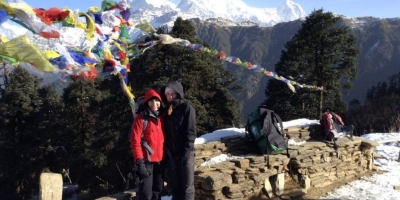
Poon Hill easy trekking route in Nepal is one of the most beautiful short and easy trekking. Within a short time, you could see a close-up view of the mountain and different scenery available due to other landscapes and terrain. All trekking in Nepal is not extremely hard; that is not true. There, Asiana Trek and Tours creates trekking routes for seniors who want to taste Nepalese village life and scenery, so we design easy walks for those interested in discovering these hidden treasures.Poon Hill easy trekking create this itinerary recommendation on our hundreds of past clients feedback as well as vast research of Asiana treks and tours. A very famous Poon Hill easy trekking is classifying the main three possible propose, at the same trekking loop we made it easy, luxury and regular trek. Many of the senior people who have a great desire to reach Poon Hill and enjoy the scenery of Annapurna and Dhaulagiri Himalayan range as their wish though due to the regular itinerary and hasty that is out of the control them and feel so hard some of the well-wishers. With the attention of those clients, we extend the day and proper remedy to make it easier to access them to get the best view of the Annapurna and Dhaulagiri ranges as well as the Beautiful mountain, Fishtail, and many more mountains in the central Himalayas region. We create bespoke treks that provide adventure and comfort based on your needs. Our tour of the most stunning views of the Himalayas conveys information about unique village life and guides you to beautiful landscapes. Our guides have years of experience specializing in treks for seniors, so we design easy trekking for people who want to enjoy the scenery without being hasty.Poon Hill EasyTrekking Itinerary:Asiana Treks and Tours has the perfect Poon Hill Trek itinerary. Travelers who desire to explore Nepal with moderate physical fitness. You'll discover the best places for breathtaking views, from the city to the countryside, and experience an unforgettable lifetime journey.Poon Hill Easy Trekking Distance:Poon Hill short Trekking spans approximately 45 kilometers, or 27 miles, depending on the chosen itinerary.This route typically spans 12 days. Our package tour ensures reliability in terms of cost, itinerary, and overall experience. The Poon Hill short trek ranges typically from US$ 315 to 395 with variations depending on group size, service level, guide and porter services, transportation preferences, and accommodation choices. This cost estimation is subject to the type of trekking gear and accommodation preferences.Poon Hill easy Trekking Route:Poon Hill Easy trekking route showcases awe-inspiring natural beauty. Starting in lush valleys with terraced fields and traditional villages, the journey unfolds amidst the Himalayan foothills. Rhododendron forests bloom in spring, accompanied by cascading waterfalls and snow-capped peaks. Traverse wildflowers lead to panoramic views of towering peaks like the Dhauligiri Range, Tukuche Peak, the Niligiri Range, Annapurna South, Barhashikher, Himchuli, Machhapuchhre Mountain (MT Fishtail), Lamjung Himal, and Manaslu Himal on clear days. The trek promises unforgettable moments, whether you're a seasoned trekker or a novice adventurer, offering an unparalleled journey through Earth's most breathtaking landscapes.Poon Hill Easy Trekking price:Our package tour ensures reliability in terms of cost, itinerary, and overall experience. For Nepali citizens, the Poon hilltrek typically ranges from US$ 315 to 475, and for foreigners, US$ 375 to 595, variations depending on group size, service level, guide and porter services, transportation preferences, and accommodation category in Kathmandu. This cost estimation is subject to the types of trekking gear and accommodation preferences. However, we could end the trek by sightseeing and exploring Pokhara.Poon Hill Easy Trekking Height:The Poon Hill Easy trek begins in the lively city of Kathmandu at an altitude of 1,337 meters. From Kathmandu, you will drive to Pokhara (827 meters). During the trek, you will ascend to the famous Magar village. The highest point you will get is Ghorepani, 2775 meters above sea level. From there, descend to Tadapani; you will head towards Ghandruk, after Pokhara, and then back to Kathmandu.Major Village in Poon Hill Easy Trekking:The major Gurung ethnic villages along the Poon Hill Easy Trekking route include Tikhedhung, Banthali, Ghorepani, Tadapani, and Ghandruk. The return journey includes sightseeing in Pokhara before driving back to Kathmandu. These villages are significant landmarks, offering scenic beauty and accommodation options along the trekking route. Poon Hill Easy Trekking Viewpoints:The Poon Hill short trek offers breathtaking viewpoints, showcasing stunning panoramas of the surrounding Himalayan peaks. Here are the critical views along the route:Tadapani: Tadapani is a tranquil and peaceful place. It is the best location for overlooking the best view, surrounded by rhododendrons and evergreen forests. On a Breezi morning, you have the best sunrise view of the stunning "Fish Tail" peak (Machhapuchhre) and Annapurna South and Himchuli. Ghandruk: Ghandruk is a big and significant village of the Gurung people. It's in front of the Annapurna, Himchuli, and Fishtail mountains. From here, you can see the glacier of Annapurna South. From the Annapurna conservation head office, the village has a breathtaking view of the Modi Khola, Annapurna, Himchuli, and Fishtail Mountains.Poon Hill: Witness the iconic sunrise at an altitude of 3,210 meters, with panoramic views of the Annapurna and Dhaulagiri ranges.Biodiversity of Poon Hill Easy Trekking: The Poonhill Trekking trail is a biodiversity hotspot, perfect for nature lovers. Lush forests in the lower regions house various bird species, including rhododendrons and bamboo with vibrant wildflowers. Look out for elusive wildlife like Jakles, snow leopards, and deers, while diverse birdlife adds to the experience. This trek offers a captivating glimpse of serene ecosystems, promising an unforgettable journey through nature's diversity. Festivals and culture Poon Hill Trekking: Along the Poonhill Trekking route, you'll immerse yourself in vibrant festivals and cultural traditions. The region, predominantly inhabited by ethnic groups like the Gurungs and Magars, celebrates various festivals. Dashain, typically in September or October, is a significant Hindu festival symbolizing the triumph of good over evil. Villages burst with colorful decorations, music, and dances as families gather for blessings and feasts.Tihar, known as the Festival of Lights, falls in October or November. This five-day celebration honors animals and the goddess of wealth, Laxmi. Oil lamps light up homes, and rituals bring prosperity and fortune.These festivals offer a unique and lifetime experience, combining Nepalese culture with the majestic beauty of the Himalayas.Advantages of booking with Asiana Treks and Tours:Private transport for airport transfers to/from your hotel.Trip briefing on Facebook and online if you love to connect.Last-minute booking at your hotel at a suitable time after your arrival.Easy booking and reservation system.Multi-channel communication via Email, WhatsApp, Facebook, Viber, Skype 24/7 phone communication at +977-9851076270Free excess luggage storage during the trekPulse oximeters for monitoring blood oxygen saturation at high altitudes to detect altitude sickness earlyMedical kits along the trek and hot airbags are available in winterArrange sleeping bags, duffel bags, down jackets, and walking pools if you don't have your own.Poon Hill Easy Trekking Booking:Asiana Treks and Tours is the best and most trusted trek and tour company operator authorized by the Nepal government. We require a 10% advance payment to book your trip, and you'll need to send us a copy of your passport, photos, travel insurance, and flight details as soon as you book a tour with us. You can use bank transfer, or any other way like Western Union, or online via our website, which is easy. The remaining trip cost can be paid upon arrival in Nepal. We offer last-minute bookings, but changes may occur due to circumstances like bad weather. Transportation for Poon Hill Easy Trekking:We pride ourselves on our flexible transportation options according to our Itinerary, which includes planes, helicopters, tourist buses, coasters, vans, jeeps, and cars. These are tailored to our clients' needs, preferences, itineraries, and agreements, ensuring a comfortable and personalized travel experience. However, we provide Tourist buses to and from Pokhara and Lumbini, Private transportation from Nayapul to and from Sewai and Kathmandu, sightseeing private vehicles as per the group size and Itinerary, and optional flights to and from Pokhara at extra cost.Poon Hill Easy Trekking Start: Your Poon Hill Trek begins with a warm welcome in Kathmandu. Our dedicated team will greet you when you arrive at the airport. We'll then escort you to your hotel in a private vehicle, ensuring a comfortable and hassle-free start to your adventure and setting the tone for a memorable journey.If you miss the regular trip briefing, don't worry. We'll provide it conveniently before departure, Pokhara, either before a World Heritage tour the following morning or the next day; we'll then proceed to Pokhara by tourist bus, departing around 7 a.m. from your Hotel, Kathmandu.The package includes private transportation from Kathmandu to Sundarijal and back from your trekking end Points, offering a comfortable and scenic journey. Currency Exchange:The Nepalese rupee is Nepali currency, and 1 USD is approximately 130 NPR. Only NPR is accepted in Nepal, so it's best to bring cash to facilitate transactions. Banks and ATMs in Kathmandu provide currency exchange services, but note that most banks prefer new, crisp notessGuide and Porter Arrangement:Our company, Asiana Treks and Tours, focuses on responsible tourism in Nepal. We make sure our guides and porters are well-trained in Trekking and mountaineering. They know a lot about the areas we go to, including geography, history, customs, and culture. We train them regularly in safety, first aid, and environmental conservation. We follow guidelines to treat our porters fairly, providing them good pay, accommodation, and meals during treks. Our guides and porters are essential team members, and we appreciate their hard work. When you trek with us, you support ethical tourism in Nepal, making your trip meaningful and memorable.Asiana Treks and Tours prioritizes your safety and enjoyment. Our knowledgeable guides, reliable equipment, and safety measures ensure a great trekking experience in Nepal.Porter, Luggage, and extra Luggage storage: We cover the cost of porters for your luggage, but the maximum weight limit is 12 kg per person. Each porter carries the luggage of two trekkers; please share a duffle bag with another. Our porters will carry up to 25 kg each. If you need a porter for yourself, we can arrange that. We also recommend carrying a small backpack for your valuables and important documents. You can leave extra luggage at our office in Kathmandu. Accommodation:Accommodation during the Poon Hill Easy Trek varies. Along the trekking route, you'll stay in guest houses, commonly known as teahouses. These basic lodges offer rooms, dining areas, and toilets. The quality of guest houses varies but remains affordable and convenient for trekkers. Rooms typically have twin or bunk beds and shared bathrooms, and blankets and pillows are provided. Our company can offer a sleeping bag if you don't have one. You'll spend nine nights in lodges along the trekking route and a night in a hotel in Kathmandu. We can arrange a solo trekking service if you're traveling solo. Meals during the trip:Eating well is essential since the Poon Hill Trek takes you through the high Himalayas. You'll have plenty of nutritious meals in the trekking regions, although the options won't be as varied as in the cities. You'll get fourteen breakfasts, eleven lunches, and ten dinners during the Trek. The menu includes local, Asian, and Western dishes, but it gets more straightforward as you climb higher. Try popular Nepali foods like lentils, rice, curry, dumplings, noodles, spaghetti, and many more. We highly recommend eating fresh vegetables and drinking liquids like green tea, lemon tea, hot lemon ginger tea, and garlic soup, especially at high altitudes. While non-vegetarian options are available during the Trek, we suggest avoiding them for hygiene reasons. It's also best to steer clear of dairy, cheese, alcohol, caffeine, and hot chocolate. Personal expenses like alcoholic drinks and extra beverages at lodges or cafes aren't included in the package. Drinking water:Nepal is the second country in the world in terms of water sources after Brazil. According to the Nepalese government, only 27% of people here have access to clean drinking water. However, drinking water is not a big deal in this trek, as you can buy mineral water in teahouses. We recommend you carry Steripen, iodine drops, water purification tablets for safe drinking, and refillable water bottles for boiled or filtered water. We strongly advise not to drink from taps, wells, and rivers in trekking areas. However, in all the city areas, Mineral water is available at a reasonable cost everywhere.Extra Personal Expenses:While most expenses during the Trek are covered, you'll need to spend money on accommodations and meals if you love to take souvenirs and additional beverages. We estimate about USD 10-20 per trekking day for miscellaneous expenses.Toilet Facilities in Poon Hill Easy Trekking:Most teahouses have Western-style flush toilets during mountain treks, especially at lower elevations. But as you go higher, you will find simple squat toilets along the trails and teahouses at higher altitudes. These toilets usually have water or toilet paper, but it's a good idea to bring your toilet paper just in case. You can also use restrooms at nearby teahouses or find a private spot along the trekking routes. However, this trekking route does not have any problems with toilets. Internet Connectivity:While trekking in the Himalayan region of Nepal, connecting with your family and friends is also a good idea. You can find internet access at teahouses and lodges, but it might be for an extra minimal cost. The signal might be weak because of the remote location. You can also get internet access using a local SIM card and data packages available at Kathmandu airport or nearby shops in Thamel and Pokhara. You'll need a passport-sized photo and a copy of your passport to get a SIM card. It's a good idea to compare prices and data packages from telecom companies like Ncell and Nepal Telecom before buying. Knowing about teahouse connectivity. Our guide will suggest connections for you. However, connections are best for this trek.Electricity voltage and plugs:However, 95 % of Nepali people have access to electricity as of May 29, 2023. almost all popular trekking routes, teahouses, and lodges have electricity. However, some isolated and solo trekking tea houses in the jungle don't have electricity. Most tea houses let travelers charge their devices for a small fee. The average electrical voltage in Nepal is 230 volts, with plug types like Type C, Type D, and Type M. Travellers should bring a suitable adapter and, if needed, a voltage converter for their electronic devices.Communication in Poon Hill Easy Trekking:The guest houses in the trekking regions have internet access. You can buy a SIM card at Tribhuvan International Airport Kathmandu. However, the signal may need to be more assertive at high altitudes. Our office keeps in touch with all trekking teams via the trek guide at least once daily to ensure everything goes as planned.Trip Extension:Suppose you have extra days in Nepal after the Trek. In that case, we can arrange a tour, overnight stay at Nagarkot Balthali or any other place around Kathmandu and Chitwan, jungle safari, paragliding, rafting, canyoning, or other treks. Do not hesitate to inform us. We will create the best for you.Trek Difficulty:Poon Hill Easy Trekking presents easy low-land trekking. Completing this trek is achievable even if you're a beginner, although you must maintain a reasonable fitness level. Prior trekking experience can be advantageous, though it is optional. All you need is the readiness to hike steadily for 3-5 hours on easy trails.Suppose trekkers have pre-existing medical conditions, such as lung or heart diseases. In that case, they are advised to consult their physician before booking the trek to ensure their safety and well-being throughout the journey.Trip Safety:We highly give top priority. We provide experienced guides with first aid kits and necessary safety gear to ensure a safe hand. Our team monitors weather and trail conditions and takes precautions to avoid risks. Before starting the trek, we discuss the trip to provide a clear understanding and ensure a reliable experience.Group & Private Treks:We organize many group and private treks simultaneously, with discounts available for larger groups. Every group will have a trekking guide and porters; an assistant guide may be provided for larger groups. Our team ensures a safe and enjoyable trekking experience for all participants.About solo travelers:If you're a solo traveler, please get in touch with us to confirm departure dates before booking. You can tell us via call, WhatsApp, or email. We have listed upcoming departure dates for your convenience. Feel free to share the trip details with friends and family.Notes: Please be aware that the itinerary may change due to weather or other factors, and we'll adjust it accordingly for the group's safety and enjoyment. We look forward to guiding you through the stunning landscapes of the Annapurna region and ensuring a memorable trekking experience.Responsible Travel:We prioritize responsible travel to minimize environmental impact and support local communities. We collaborate with organizations like the Kathmandu Environmental Education Project (KEEP) to promote eco-friendly practices in trekking regions.Gratituate:Graduating or tipping is appreciated in Nepali culture and reflects the quality of service provided. You decide how much to tip, but we recommend tipping as a group at the end of the trip.End of Trek:On the final day, you'll take a private transportation bus to go sightseeing in Bhaktapur. In the evening, we'll host a farewell dinner in Kathmandu.Departure:On the day of your departure flight, we'll come to pick you up from your hotel and transfer you to Tribhuvan International Airport. We hope you enjoyed the Nepal trek and will consider returning for more adventures in Nepal.Feedback:After you complete the Trek, we'll organize a farewell dinner in Kathmandu and present you with a trekking achievement certificate. After the dinner, you can provide feedback about the Trek on travel portals.Last-Minute Booking:If you can't book in advance, we offer last-minute bookings. Full payment is required 24 hours before departure. While we do our best to accommodate last-minute bookings, delays may occur due to unforeseen.Special Note: Please remember that sometimes, unforeseen circumstances, such as inclement weather or unavailable lodging, may cause the schedule to be altered. Your trip guide will design a fresh schedule based on the group's interests in such circumstances.Annapurna Region Trekking: Guides, Tips & Himalayan AdventuresDiscover the beauty of Nepal’s Annapurna region with Asiana Treks & Tours. Explore breathtaking mountain landscapes, authentic local culture, popular trekking routes, and practical tips to help you plan an unforgettable Himalayan adventure.Annapurna Base Camp vs Everest Base Camp: The Best TrekTrekking Equipment List for Asiana Treks & ToursTrekking Permit Requirements for Different Regions in NepalBest Sunrise and Sunset Destinations in NepalTop Successful Trek for Beginners – Annapurna Base CampMost Popular Trek with High Success Rate – Annapurna Base Camp Trek (ABC) TrekHow to Prepare for the Annapurna Base Camp Trek (Gear, Fitness & Tips)Ghorepani Poon Hill Trek GatewayTop 26 Annapurna Region Trekking Packages in Nepal – The Ultimate GuideTadapani Diaries: One Magical Night in the MountainsDiscovering Ghandruk: A Peaceful Village in the Heart of NepalTrekking the Best of Annapurna: Poon Hill to Mardi HimalWhy Chhomrong is the Heart of the Annapurna Base Camp TrekAnnapurna Base Camp (ABC) & Machhapuchhre Base Camp (MBC) Trek: Two Base Camps, One Incredible JourneyExploring Sinuwa on the Annapurna TrailDeurali: A Peaceful Mountain Village on the ABC TrailBamboo: A Hidden Gem of the ABC TrekDovan Nepal: Peaceful Stopover on the Annapurna Base Camp TrailHimalaya Village: A Quiet Haven on the Way to Annapurna Base CampDhampus Village – Annapurna Classical Alternative GatewayPothana: The Alternative Gateway to Annapurna Base Camp and Mardi HimalBest Camping and Overnight Stays: Australian Camp & Mardi Himal TrekList of Hotel in Mardi Himal Base Camp TrekTrekking to Low Camp: A Peaceful Path to Mardi HimalForest Camp Adventures: Exploring the Mardi Himal Trek in NepalHigh Camp on the Mardi Himal Trek | Views, Altitude & Trekking GuideDiscovering the Magic of Mardi Himal ViewpointTop Highlights of the Mardi Himal Trek in NepalBest Time to Trek Mardi Himal: Tips for Perfect ViewsA Beginner’s Guide to the Mardi Himal Trek in NepalSurprising Facts About the Mardi Himal TrekEssential Guide to Mardi Himal Trekking Permits in NepalMardi Himal Trek Info: Elevation, Altitude, Height and WeatherMardi Himal Trek Accommodation and Food TipsBest Time to Trek Annapurna Base Camp in NepalTop Highlights of the Annapurna Base Camp TrekFood and Accommodation on the ABC Trek: What It’s Really LikeAltitude Tips for a Safe Annapurna Base Camp TrekAnnapurna Base Camp Permits: Costs, Process, and RequirementsTop Tips and Facts for Trekking to Annapurna Base CampAnnapurna Base Camp Trek: Elevation, Height & Temperature GuideDobato Stopover: Experiencing the Heart of the Khopra Danda RouteUpper Chistibung: What to Expect on the Way to Khopra DandaExploring Khopra Danda Ridge and Khayar LakeDiscover Swanta’s Beauty on the Khopra Danda TrailAmazing Facts About Khayar Lake in the Annapurna RegionBayeli Kharka Adventure: From Khopra Danda with Stunning ViewsKhopra Danda Trekking Guide: Cost, Permits, Meals, Lodging and Best SeasonExploring Mardi Himal, ABC, and Khopra Ridge in One Epic JourneyKhopra Khair Lake with Annapurna Base Camp Trek: A Complete JourneyKhopra Khair Lake with ABC Trek: Nature, Culture, and MountainsComplete Guide to Mohare Danda Trekking in NepalSunrise Views from Mohare Danda: What to ExpectTop Highlights of Poon Hill and Mardi Himal TrekExploring Poon Hill and Mardi Himal: A Beginner’s GuideExploring the Ghorepani Dhampus Circuit Trek in NepalAn Amazing Hike from Galeshwor to Nangi via Bans Kharka : Mohare Danda TrekkingLandruk: Gateway to the Stunning Mardi Himal ViewsMardi Himal Adventure: Exploring Badal Danda on the Siding TrekSunrise Views from Poon Hill and Mulde ViewpointsDhaulagiri Annapurna Trail: A New Alternative Trek in NepalBest Nepal Tour Packages: Adventure, Honeymoon, Senior Tours, Himalayan Highlights, Triangle & Sunrise Hill Station ToursIs It Possible to Cycle the Annapurna Circuit in Nepal?Besisahar – The Heart of Lamjung District: Gateway to the HimalayasExploring Jagat During the Annapurna Circuit TrekDharapani Village in Nepal: Where the Manaslu Circuit and Annapurna Circuit Trails Meet PointChame Village: A Peaceful Stop on the Annapurna Circuit TrekDiscover Upper Pisang: A Hidden Gem on the Annapurna CircuitExploring Lower Pisang: A Gateway on the Annapurna CircuitManang: The Heart of the Annapurna Circuit TrekYak Kharka (4,020m): A Must-Stop Village on the Annapurna CircuitThorong Phedi: Final Preparation Before Thorong La PassCrossing Thorong La Pass (5,416 m): The Highest Point of the Annapurna CircuitMuktinath in Mustang: A High-Altitude Spiritual Journey on the Annapurna CircuitJomsom (2,743 m): The Windy Valley That Connects Annapurna and Upper Mustang

Annapurna Base Camp Trek with Return by Heli is a fantastic adventure trek that combines the excitement of a helicopter ride with the tranquil beauty in the lap of Annapurna and Annapurna south incircle by the Himalayas. This tremendous trek with helicopter trek return begins from Pokhara, and you'll trek north from Pokhara Valley towards the Annapurna Base Camp via charming villages and breathtaking landscape Tikhedhunga, Ullery, Ghorepani, Tadapani, Chhomrong tranquil village Bamboo, Dovan, Himalaya, Deurali MBC and finally at ABC. The Annapurna Base Camp is a famous spot for trekkers and climbers, offering stunning views of the snowy peaks and serene landscapes. While trekking is the most common way to get there, Annapurna Base Camp's return by Heli Tour provides a unique and luxurious alternative. This helicopter tour offers an incredible aerial journey through Nepal's breathtaking terrain, granting exceptional access to the heart and base of the Annapurna region via a mesmerizing view of the Nilgiri and Dhauligiri snowy mountain peaks from a helicopter. The ABC Helicopter Tour from Pokhara is ideal. It takes about 45 minutes to return to Pokhara. On the flight from ABC, you can enjoy beautiful views of green hills, cluster inhabitants Ghandruk, Landruk, Chhomrong, and many more villages of Gurung ethnic group, Pokhara valley, and impressive Himalayan Peaks Machapuchre, Annapurna I, Annapurna II, Dhaulagiri, and many more. This Heli return tour is an exciting and efficient way to witness the Annapurna Range's grandeur and surrounding beauty. This comprehensive overview will take you through the various aspects of this once-in-a-lifetime experience.You'll also catch sight of other picturesque rhododendron forests. Trekking to the Annapurna Base camp takes about 06 days by foot, so this tour is the perfect choice for people with limited time and who want to experience the beauty of the Himalayas with a return from Helicopter. Asiana Treks and Tours offers this fantastic flight at a reasonable cost for your unforgettable Heli tour.The journey concludes, and trekkers are left with a treasure trove of memories. From the serene moments at the base camp to the adrenaline rush of helicopter travel, each experience adds a unique flavor to the overall adventure, not just a suggestion but a heartfelt recommendation.The trek to Annapurna Base Camp is about reaching a destination and embracing a journey filled with awe-inspiring moments. The sunrise, the mountains, the helicopter ride – each component contributes to an adventure that transcends the ordinary. As you plan your Annapurna Base Camp trek, remember that the natural beauty lies in the destination and every step of the way.ABC Trekking return by Heli itinerary:Asiana Treks and Tours has the perfect ABC Trek itinerary. Travelers who desire to explore Nepal with moderate physical fitness. You'll discover the best places for breathtaking views from the city to the countryside. Experience the contrast of cold nights at Gokyo to a stunning view of the mountain wall, an unforgettable lifetime journey.ABC Trekking return by Heli Distance:The Annapurna Base Camp trekking return by Hel takes 10 days, with 4 to eight-hour walking days, and is approximately 81 km, or 50.33 miles, depending on the itinerary.ABC Trekking return by Heli Trekking route:The ABC return by Heli route showcases awe-inspiring natural beauty. Starting in lush valleys with terraced fields and traditional Sherpa. Villages, the journey unfolds amidst the Himalayan foothills. Rhododendron forests bloom in spring, accompanied by cascading waterfalls and snow-capped peaks. Traversing wildflower meadows and crossing suspension bridges over mountain streams, the landscape evolves as you ascend. Approaching Everest Gokyo-Ri trekking return by Heli, rugged terrain and glacial moraines dominate, leading to panoramic views of towering peaks. The Trek promises unforgettable moments, whether you're a seasoned trekker or novice adventurer, offering an unparalleled journey through Earth's most breathtaking landscapes and top of the world.ABC Trekking return by Heli Trekking Price:Our Annapurna Base Camp trekking return by package tour ensures reliability in terms of cost, itinerary, and overall experience. The Everest Gokyo Ri trek typically ranges from US$2300 to 3000, depending on group size, service level, guide and porter services, transportation preferences, and accommodation category in Kathmandu. This cost estimation is subject to the types of trekking gear and accommodation preferences. ABC Trekking return by Heli trek Height:The Annapurna Base Camp trek starts from the bustling city of Kathmandu at an altitude of 1337 meters. From there, you'll descend to the peaceful lakeside city of Pokhara, situated at 827 meters above sea level. Along the way, you'll ascend to famous viewpoints like Poon Hill, reaching an altitude of 3210 meters. Finally, the trek culminates at Annapurna Base Camp, situated at a breathtaking height of 4130 meters.Major villages of ABC Trekking Return by Heli:The major Magar and Gurung ethnic villages along the Annapurna Base Camp Trekking route are Nayapul, Birethanti, Matathati, Sudame, Hile, Tikhedhunga, Ulleri, Banthati, Nagethati, Ghorepani, Ghorepani Deurali, another Banthati, Tadapani, Chuile, Kimrong Khola, Gurjung, Taklung, Chhomrong, Lower and Upper Sinuwa, Bamboo, Dovan, Himalaya Hotel, Hinko Deurali, Machhapuchhre Base Camp (MBC), and Annapurna Base Camp (ABC). Return back to Pokhara taking easy way by the scenic Heli with in 20 minute. Best Viewpoints of ABC return by Heli:These viewpoints provide unforgettable experiences, highlighting the beauty of the Annapurna Base Camp Trek.Annapurna Base Camp Trek offers breathtaking viewpoints, showcasing stunning panoramas of the surrounding Himalayan peaks. Here are the critical views along the route:Near Naudanda and Kande:On the way to Nayapul, enjoy magnificent views of the mountains and rice terraces.Ulleri to Banthati:Experience impressive mountain vistas during the second day of trekking.Poon Hill:Witness the iconic sunrise at an altitude of 3,210 meters, with panoramic views of the Annapurna and Dhaulagiri ranges.Ghorepani Deurali:Enjoy similar breathtaking views to Poon Hill on the opposite side during the third day of trekking.Tadapani:Tadapani is a tranquil and peaceful place. Surrounded by Rhododendron and ever-green forest, it is the best location for overlooking the best view. In the Breezi morning, you have the best sunrise view of the stunning "Fish Tail" peak (Machhapuchhre) and Annapurna South and Himchuli right in front of you. Chhomrong:Chhomrong is the last big village of the Gurung people. It's located in front of the Annapurna, Himchuli, and Fishtail mountains. From here, you can see the glacier of Annapurna South. The village deserves a breathtaking view near Modi Khola, Chhomrong Khola, Annapurna, Himchuli, and Fishtail Mountains.Annapurna Base Camp (ABC):The ultimate destination, situated at 4,130 meters, offers unparalleled views of Annapurna I, Annapurna South, Hiunchuli, and other towering peaks, along with the Modi Khola Valley.Flora and Fauna in the ABC Trekking Return by Heli:The Annapurna Base Camp trekking trail is a biodiversity hotspot, perfect for nature lovers. Lush forests in the lower regions house various bird species, including rhododendrons and bamboo. Alpine meadows greet you higher up with vibrant wildflowers. Look out for elusive wildlife like Himalayan thars and snow leopards, while diverse birdlife, including the Himalayan Monal, adds to the experience. This trek offers a captivating glimpse into the Himalayan ecosystems, promising an unforgettable journey through nature's diversity.Festivals and Culture of ABC Trek return by Heli:You'll immerse yourself in vibrant festivals and cultural traditions along the Annapurna Base Camp Trekking route. The region, predominantly inhabited by ethnic groups like the Gurungs and Magars, celebrates various festivals. Dashain,typically in September or October, is a significant Hindu festival symbolizing the triumph of good over evil. Villages burst with colorful decorations, music, and dances as families gather for blessings and feasts.Tihar,known as the Festival of Lights, falls in October or November. This five-day celebration honors animals and the goddess of wealth, Laxmi. Oil lamps light up homes, and rituals bring prosperity and fortune. These festivals offer a unique and lifetime experience, as well as Nepalese culture with the majestic beauty of the Himalayas.People and hospitality of ABC Trekking Return by Heli:Nepal is a country where warm hospitality and incredible values are not just a custom, but a deeply ingrained part of its culture. Whether you're a foreign visitor or a local, you're greeted with open arms, friendly smiles, and a radiant manner. This tradition of hospitality, deeply rooted in Hinduism, Buddhism, and traditional customs, sees guests as blessings and treats them with utmost respect, generosity, and kindness. on the route most of the village are dominated by Gurung ethnic grops who involve Brave gorkha soldier in British Army and Indian Army have great culture and hospitality. Advantage book with Asiana Treks and tours:Private transport for airport transfers to/from your hotel.Trip briefing on Facebook and online if you love to connect.Last minute booking at your hotel at a suitable time after your arrival.Easy booking and reservation system.Multi-channel communication via Email, WhatsApp, Facebook, Viber, Skyp 24/7 phone communication at +977-9851076270Free excess luggage storage during the TrekOximeters are provided to examine blood oxygen saturation at high altitudes to detect altitude sickness earlyMedical kits along the Trek and hot airbags are available in winterArrange sleeping bags, duffel bags, down jackets, and walking pools if you don't have your own.Abc Trekking Return by Heli:Asiana Treks and Tours is the best and most trusted trek and tour company operator authorized by the Nepal government. We require a 10% advance payment to book your trip, and you'll need to send us a copy of your passport, photos, travel insurance, and flight details as soon as you book a tour with us. You can use bank transfer, or any other way like Western Union, or online via our website, which is easy. The remaining trip cost can be paid upon arrival in Nepal. We offer last-minute bookings, but changes may occur due to circumstances like bad weather. Transportation of ABC Trekking return by Heli:Asiana Treks and Tours Organizes all transportation logistics from start to end, according to our group size and agreement, including pickups and drops of service to flights between Kathmandu and Lukla for ground transportation for World Heritage site tours. Our services for all groups ensure convenient travel arrangements, whether a World Heritage tour or Flight tickets, and are tailored to the group, prioritizing safety, comfort, and efficiency. We aim to provide the best and most enjoyable travel experience, meeting the highest standards of safety and comfort.Trekking Start to ABC return by Heli:Your Annapurna base camp trek begins with a warm welcome in Kathmandu. As soon as you arrive at Tribhuvan International Airport, our dedicated team will be there to greet you. We'll then escort you to your hotel in a private vehicle, ensuring a comfortable and hassle-free start to your adventure, setting the tone for a memorable journey.If you miss the regular trip briefing, don't worry. We'll provide it at a convenient time before departure, Pokhara, either before a World Heritage tour the following morning or the next day; we'll then proceed to Pokhara by tourist bus, departing around 7 a.m. from Sorakhutte, Kathmandu. The package includes transportation by tourist bus from Kathmandu to Pokhara, offering a comfortable and scenic journey. However, if you prefer a quicker option, you can also take a 25-minute domestic flight to Pokhara or use a private vehicle for an additional cost, giving you the freedom to choose what suits you best.Currency Exchange:The Nepalese rupee is Nepali currency, and 1 USD is approximately 130 NPR. Only NPR is accepted in Nepal, so it's best to bring cash to facilitate transactions. Banks and ATMs in Kathmandu provide currency exchange services, but note that most banks prefer new, crisp notes.Our Team:The Asiana Treks and Tours team is professional, reliable, and responsible. They are well-trained, friendly, radiant, and fluent in English. You can feel comfortable sharing anything with them. They are experts in local culture, history, vegetation, food, accommodation, weather conditions, and first aid medication. They are also environmentally conscious and respect the rights of animals.However, please do not provoke them for personal gain during the trip. While you can enjoy your holiday with them, we kindly request that you do not try to change their customs, beliefs, religion, culture, or traditions.We and our staff are committed to making your adventure trip unforgettable memories of a lifetime journey in Nepal. Guide and Porter Arrangement for ABC Trekking return by Heli:Our company, Asiana Treks and Tours, focuses on responsible tourism in Nepal. We make sure our guides and porters are well-trained in Trekking and mountaineering. They know a lot about the areas we go to, including geography, history, customs, and culture. We train them regularly in safety, first aid, and environmental conservation. We follow guidelines to treat our porters fairly, providing them good pay, accommodation, and meals during treks. Our guides and porters are essential team members, and we appreciate their hard work. When you trek with us, you support ethical tourism in Nepal, making your trip meaningful and memorable.Asiana Treks and Tours prioritizes your safety and enjoyment. Our knowledgeable guides, reliable equipment, and safety measures ensure a great trekking experience in Nepal.Porter, Luggage, and extra Luggage storage: We cover the cost of porters for your Luggage, but the maximum weight limit is 12 kg per person. Each porter carries Luggage for two trekkers; please share a duffle bag with another. Our porters will carry up to 25 kg each. If you need a porter for yourself, we can arrange that. We also recommend carrying a small backpack for your valuables and important documents. You can leave extra Luggage at our office for free and at a hotel in Pokhara, Namche, etc.Accommodation during the ABC Trekking Return by Heli:Accommodation during the ABC Trek varies. Along the trekking route, you'll stay in guest houses, commonly known as teahouses. These basic lodges offer rooms, dining areas, and toilets. The quality of guest houses varies but remains affordable and convenient for trekkers. Rooms typically have twin or bunk beds and shared bathrooms, and blankets and pillows are available. Our company can offer a sleeping bag if you don't have one. You'll spend nine nights in lodges along the trekking route and three nights in a hotel in Kathmandu. Some places and lodges have attached bathrooms, while others offer simple yet clean rooms with shared facilities. We can arrange a solo trekking service if you're traveling solo. In high season and particular areas, availability may be limited for you, although we try our best. In Kathmandu or Pokhara, your hotel room will have excellent amenities, including TV, 24/7 hot water, electricity, and laundry service.Meals during the ABC Trekking Return By Heli:Eating well is essential since the ABC Trek takes you through the Himalayas. You'll have plenty of nutritious meals in the trekking regions, although the options won't be as varied as in the cities. You'll get fifteen breakfasts, eleven lunches, and ten dinners during the Trek. The menu includes local, Asian, and Western dishes, but it gets more straightforward as you climb higher. Try popular Nepali foods like lentils, rice, curry, dumplings, noodles, Spagaties, and many more. We highly recommend eating fresh vegetables and drinking liquids like green tea, lemon tea, hot lemon, ginger tea, and garlic soup, especially at high altitudes. While non-vegetarian options are available during the Trek, we suggest avoiding them for hygiene reasons. It's also best to steer clear of dairy, cheese, alcohol, caffeine, and hot chocolate. Personal expenses like alcoholic drinks, extra beverages, and cafes aren't included in the package. Drinking water during the ABC Trekking Return by Heli:Nepal is the second country in the world in terms of water sources after Brazil. According to the Nepal government, only 27% of people here have clean drinking water. You can buy mineral water in teahouses, but it is expensive; Lokals people are not prefer plastic bottles in some trekking areas So, there are some safe drinking water stations where you can refill your bottle. However, we recommend carrying Steripen, iodine drops, water purification tablets for safe drinking, and refillable water bottles for boiled or filtered water. We strongly advise not to drink from taps, wells, and rivers in trekking areas. However, in all the city areas, Mineral water is available at a reasonable cost everywhere.Extra Personal Expenses For ABC trek return by Heli:Your Trip covers most expenses during the Trek; you'll need to spend money on extra accommodations and meals in Kathmandu, souvenirs, and beverages. We estimate about USD 15-25 per trekking day for miscellaneous expenses. However, personal expenses depend on your Income, habits, and style.Toilet Facilities in during the ABC Trekking return by Heli:Most teahouses have Western-style flush toilets during mountain treks, especially at lower elevations. But as you go higher, find simple squat toilets along the trails and teahouses at higher altitudes. These toilets usually have water or toilet paper, but it's a good idea to bring your toilet paper just in case. You can also use restrooms at nearby teahouses or find a private spot along the trekking routes.Internet Connectivity during the ABC Trekking:While trekking in the Himalayan region of Nepal, connecting with your family and friends is also a good idea. You can find internet access at teahouses and lodges, but it might be extra minimal cost. The signal might be weak because of the remote location. You can also get internet access using a local SIM card and data packages available at Kathmandu airport or nearby shops in Thamel and Pokhara. You'll have a passport-sized photo and a copy of your passport to get a SIM card. It's a good idea to compare prices and data packages from telecom companies like Ncell and Nepal Telecom before buying. Knowing about teahouse connectivity. Our guide will suggest connections for you. Electricity voltage and plugs:However, 95 % of Nepali people have access to electricity as of May 29, 2023. almost popular trekking routes, teahouses, and lodges have electricity. However, some isolated and solo trekking tea houses in the jungle don't have electricity; most tea houses let travelers charge for their devices for a small fee. The average electrical voltage in Nepal is 230 volts, with plug types like Type C, Type D, and Type M. Travellers should bring a suitable adapter and, if needed, a voltage converter for their electronic devices.Communication during the ABC Trekking return by Heli:The guest houses in the trekking regions have internet access. You could buy a SIM card at Tribhuvan International Airport Kathmandu and Namche. However, the signal may need to be more assertive at high altitudes. Our office keeps in touch with all trekking teams via the trek guide at least once daily to ensure everything goes as planned.Trip Extension:Suppose you have extra days in Nepal after the Trek. In that case, we can arrange a tour, overnight stay at Nagarkot Balthali or any other place around Kathmandu and Chitwan, jungle safari, paragliding, rafting, canyoning, or other treks. Do not hesitate to Inform us. We will create the best for you.Trek Difficulty:The ABC Trek presents a moderate and challenging yet enriching adventure. Your enjoyment of the trip will largely depend on your level of fitness. We recommend building stamina at least two weeks before the Trek. Activities include jogging, running, swimming, or taking long hikes for the journey ahead.Completing this Trek is achievable even if you're a beginner, although you must maintain a reasonable fitness level. Prior trekking experience can be advantageous, though it is optional. All you need is the readiness to hike steadily for 4-8 hours, navigating tricky terrain.Suppose trekkers have pre-existing medical conditions, such as lung or heart diseases. In that case, they are advised to consult their physician before booking the Trek to ensure their safety and well-being throughout the journey.Trip Safety during the ABC Trekking:We highly give top priority. We provide experienced guides with first aid kits and necessary safety gear to ensure a safe hand. Our team monitors weather and trail conditions and takes precautions to avoid risks. Before starting the Trek, we discuss the trip to provide a clear understanding and ensure a reliable experience.Group & Private Treks information for the ABC Trekking:We organize many group and private treks simultaneously, with discounts available for larger groups. Every group will have a trekking guide and porters. Regarding larger groups, we provide an assistant guide. Our team ensures a safe and enjoyable trekking experience for all participants.About solo traveler:If you're a solo traveler, please get in touch with us to confirm departure dates before booking. You can tell us via call, WhatsApp, or email. We have listed upcoming departure dates for your convenience. Feel free to share the trip details with friends and family.Notes: Please be aware that the itinerary may change due to weather or other factors, and we'll adjust it accordingly for the group's safety and enjoyment. We look forward to guiding you through the stunning landscapes of the Annapurna region and ensuring a memorable trekking experience.Responsible Travel:We prioritize responsible travel to minimize environmental impact and support local communities. We collaborate with organizations like the Kathmandu Environmental Education Project (KEEP) to promote eco-friendly practices in trekking regions.Gratitude:Graduate or tipping is appreciated in Nepali culture and reflects the quality of service provided. You decide how much to tip, but we recommend tipping as a group at the end of the trip.End of Trek:On the eleventh day, you'll take a bus from Pokhara back to Kathmandu, which takes about seven hours. Alternatively, you can fly from Pokhara to Kathmandu for an extra fee. In the evening, we'll host a farewell dinner in Kathmandu.Departure:On the day of your departure flight, we'll come to pick you up from your hotel and transfer you to Tribhuvan International Airport. We hope you enjoyed the Nepal trek and will consider returning for more adventures in Nepal.Feedback:After you complete the ABC we'll organize a farewell dinner in Kathmandu and present you with a trekking achievement certificate. After the dinner, you can provide feedback about the Trek on travel portals.Last-Minute Booking:If you can't book in advance, we offer last-minute bookings. Last-minute booking offers are available but may cost slightly more than regular departure dates. Those opting for last-minute bookings must pay an additional 7% of the total trip cost on our website. While we strive to make last-minute requests, we try our best to accommodate according to your last-minute booking holiday.Special Note: Please remember that sometimes unforeseen circumstances, such as inclement weather or unavailable lodging, may cause the schedule to be changed. Your trip guide will design a fresh schedule based on the group's interests in such circumstances.Annapurna Region Trekking: Guides, Tips & Himalayan AdventuresDiscover the beauty of Nepal’s Annapurna region with Asiana Treks & Tours. Explore breathtaking mountain landscapes, authentic local culture, popular trekking routes, and practical tips to help you plan an unforgettable Himalayan adventure.Annapurna Base Camp vs Everest Base Camp: The Best TrekTrekking Equipment List for Asiana Treks & ToursTrekking Permit Requirements for Different Regions in NepalBest Sunrise and Sunset Destinations in NepalTop Successful Trek for Beginners – Annapurna Base CampMost Popular Trek with High Success Rate – Annapurna Base Camp Trek (ABC) TrekHow to Prepare for the Annapurna Base Camp Trek (Gear, Fitness & Tips)Ghorepani Poon Hill Trek GatewayTop 26 Annapurna Region Trekking Packages in Nepal – The Ultimate GuideTadapani Diaries: One Magical Night in the MountainsDiscovering Ghandruk: A Peaceful Village in the Heart of NepalTrekking the Best of Annapurna: Poon Hill to Mardi HimalWhy Chhomrong is the Heart of the Annapurna Base Camp TrekAnnapurna Base Camp (ABC) & Machhapuchhre Base Camp (MBC) Trek: Two Base Camps, One Incredible JourneyExploring Sinuwa on the Annapurna TrailDeurali: A Peaceful Mountain Village on the ABC TrailBamboo: A Hidden Gem of the ABC TrekDovan Nepal: Peaceful Stopover on the Annapurna Base Camp TrailHimalaya Village: A Quiet Haven on the Way to Annapurna Base CampDhampus Village – Annapurna Classical Alternative GatewayPothana: The Alternative Gateway to Annapurna Base Camp and Mardi HimalBest Camping and Overnight Stays: Australian Camp & Mardi Himal TrekList of Hotel in Mardi Himal Base Camp TrekTrekking to Low Camp: A Peaceful Path to Mardi HimalForest Camp Adventures: Exploring the Mardi Himal Trek in NepalHigh Camp on the Mardi Himal Trek | Views, Altitude & Trekking GuideDiscovering the Magic of Mardi Himal ViewpointTop Highlights of the Mardi Himal Trek in NepalBest Time to Trek Mardi Himal: Tips for Perfect ViewsA Beginner’s Guide to the Mardi Himal Trek in NepalSurprising Facts About the Mardi Himal TrekEssential Guide to Mardi Himal Trekking Permits in NepalMardi Himal Trek Info: Elevation, Altitude, Height and WeatherMardi Himal Trek Accommodation and Food TipsBest Time to Trek Annapurna Base Camp in NepalTop Highlights of the Annapurna Base Camp TrekFood and Accommodation on the ABC Trek: What It’s Really LikeAltitude Tips for a Safe Annapurna Base Camp TrekAnnapurna Base Camp Permits: Costs, Process, and RequirementsTop Tips and Facts for Trekking to Annapurna Base CampAnnapurna Base Camp Trek: Elevation, Height & Temperature GuideDobato Stopover: Experiencing the Heart of the Khopra Danda RouteUpper Chistibung: What to Expect on the Way to Khopra DandaExploring Khopra Danda Ridge and Khayar LakeDiscover Swanta’s Beauty on the Khopra Danda TrailAmazing Facts About Khayar Lake in the Annapurna RegionBayeli Kharka Adventure: From Khopra Danda with Stunning ViewsKhopra Danda Trekking Guide: Cost, Permits, Meals, Lodging and Best SeasonExploring Mardi Himal, ABC, and Khopra Ridge in One Epic JourneyKhopra Khair Lake with Annapurna Base Camp Trek: A Complete JourneyKhopra Khair Lake with ABC Trek: Nature, Culture, and MountainsComplete Guide to Mohare Danda Trekking in NepalSunrise Views from Mohare Danda: What to ExpectTop Highlights of Poon Hill and Mardi Himal TrekExploring Poon Hill and Mardi Himal: A Beginner’s GuideExploring the Ghorepani Dhampus Circuit Trek in NepalAn Amazing Hike from Galeshwor to Nangi via Bans Kharka : Mohare Danda TrekkingLandruk: Gateway to the Stunning Mardi Himal ViewsMardi Himal Adventure: Exploring Badal Danda on the Siding TrekSunrise Views from Poon Hill and Mulde ViewpointsDhaulagiri Annapurna Trail: A New Alternative Trek in NepalBest Nepal Tour Packages: Adventure, Honeymoon, Senior Tours, Himalayan Highlights, Triangle & Sunrise Hill Station ToursIs It Possible to Cycle the Annapurna Circuit in Nepal?Besisahar – The Heart of Lamjung District: Gateway to the HimalayasExploring Jagat During the Annapurna Circuit TrekDharapani Village in Nepal: Where the Manaslu Circuit and Annapurna Circuit Trails Meet PointChame Village: A Peaceful Stop on the Annapurna Circuit TrekDiscover Upper Pisang: A Hidden Gem on the Annapurna CircuitExploring Lower Pisang: A Gateway on the Annapurna CircuitManang: The Heart of the Annapurna Circuit TrekYak Kharka (4,020m): A Must-Stop Village on the Annapurna CircuitThorong Phedi: Final Preparation Before Thorong La PassCrossing Thorong La Pass (5,416 m): The Highest Point of the Annapurna CircuitMuktinath in Mustang: A High-Altitude Spiritual Journey on the Annapurna CircuitJomsom (2,743 m): The Windy Valley That Connects Annapurna and Upper Mustang
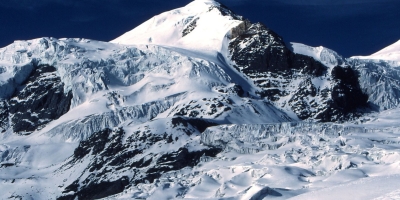
Paldor Peak with a Height of 5860m is one of the famous trekking peaks in the Ganesh Himal Range this Himalayan trekking is dominated by the providence god Ganesha. The trail is not very steep and it is quite easy to climb, and one does not need to have any experience of mountaineering at all. It begins in Kathmandu and takes tourists through the villages of Tangjet of the Tamang cultural richness and Gatlang and across suspension bridges over the melting glacier from the Tibetan border. The trail now turns northwards along the ridge into more of the dense forests of Mailing Khola which is a tributary of the Trishuli River.The main climbing route after crossing the glacier is either to start up the steep icy exactly at the top of the ridge which requires ropes or continue around the ridge on the crevassed side, and then up an easy 45-degree ridge. Climbers establish a base camp at Paldor Base Camp and spend one day at 4280 m for acclimatization before moving to the high camp at a high altitude suggested by a climbing specialist before the final assault on the summit.The Paldor Peak has clear views of several other mountains of the Himalayas including the Ganesh Himal, Langtang Lirung, Manaslu, Pabil, La, Lobsang Karpo, Ganesh I and Ganesh V, and the range of mountains of Tibet including the Shishapangma. The one from Kathmandu to Sya-Bru-Bensi is the nearest trekking route from the North West.Paldor Peak Itinerary:Asiana Trek and Tour has a perfect itinerary for Paldor Peak. A Paldor Peak expedition usually takes about 10-12 days in all.Starting from Kathmandu, there is a drive to Syabrubesi, and then the trek through villages and terrains to reach the base camp. Carrying a spare day before heading for the high camp is important for acclimatization. The actual climbing of the mountain takes place in the early morning and is followed by a return to the base camp for rest. The final part of the trek includes the return to Syabrubesi, which includes visits from local people and hot springs.Paldor Peak Climbing Distance:Climbing an expedition to Paldor Peak also depends on the route and approach that has been chosen for the trekking, but the trekking area is approximately 19 km in distance. The actual stalk to the top may not be long compared to that of other mountains, but other aspects including the approaches, movements and descents, acclimatization walks and the back-off can take several days. The actual climbing distance can therefore be more described by vertical meters than by horizontal kilometers since climbers cover steep and tough terrains.Paldor peak climbing route:The most common trail to approach Paldord Peak is to cross over the glaciers and up and over a series of steep ridges. As with most treks, there are several ways the most conventional is through Syabrubesi. The ascent consists of steep ground with crevasses and some steep ground, particularly during the first part of the climb. Climbers often encounter two main options after reaching a particular point: climbing a ridge face directly or employing a crack to perform a tilting ridge. It presents splendid vistas of ultramodern peaks in the Great Himalayan Range across the valley.Paldor peak climbing cost:The charges for the Paldor Peak trek depend on the time of the year, the number of people participating, or the services that are to be included. In most cases, one has to be prepared to part with at least $1400 to $2700 for a single individual. This includes permits, guides, porter, equipment, accommodation, and meals. However, personal expenses such as climbing equipment, travel insurance, and pocket money, cannot be included in the budget. Thus, the tourists should embark on the expedition through a recommended travel agency that would guarantee safety as well as coordination of the exercise.Paldor Peak Climbing Difficulty:Paldor Peak Fall is among the moderate-rated mountain peaks climbing in Nepal. It can be said that it offers difficulties not present in summiting higher mountains but is not as technically difficult as the latter. A set of glaciers, steep slopes, and sometimes rather open rises have to be passed through while moving along the route. A few points about the climbing experience: Necessary is previous mountain climbing and a good physical shape. This way, it will be possible to acclimatize to that altitude and the next days weather conditions may be quite different. Though not a technical summit, Paldor deserves to be a must for those who are looking for some hardcore expedition out in the Himalayas.Paldor Peak Height:Paldor Peak has a height of 5,903 meters (19,367 feet) vertically perceived from sea level. This mountain is found in the Ganesh Himal area and as a result, it provides climbers with stunning vistas of other Himalayan giants. Its height is instrumental to the climbing process and the climbing experience and has particular requirements in terms of acclimatization and the actual use of climbing tools and skills.About Paldor Peak High Camp:Paldor Peak High Camp is ideal for making a bid for the summit of the mountain. Located at a higher level than the base camp, this is the place where climbers prepare themselves for the worst at the expense of the low oxygen concentration in the environment. The camp is very exposed and very barren and gives a good feel of the mountains with good views of other mountains. In general, conditions at high camp vary but are usually cold with wind at times. It is required and useful to have good camping equipment and clothing if the weather is expected to be bad.Paldor Peaks safety:There is so much fun and satisfaction that comes with climbing during Paldor Peak but it deserves a word on safety. These risks consist of; Sickness: Due to the high altitude slopes Slides: These are avalanches Crevasses: Large gaps in the snow base that one may be trapped Weather: This is relative to conditions that change frequently in those regions. Accommodation to the wilderness, experienced wilderness guides, and good quality equipment are crucial to any success. Like every other adventure activity, climbers should be in good physique and minimum climbing competency must be required. Asiana Trek and Tour offers professional guides on safety as well as the most experienced porters and detailed emergency plans. Determinations towards the welfare of the clients provide security for all the individuals who venture on the Paldor peak trip.Major villages of Paldor Peak Climbing:The notable villages that trekkers are likely to pass by while attempting the Paldor Peak are Gatlang, Yuri Kharka, Somdang, and Jastapani. Such settlements give a glimpse into the local people way of life and facilities are available for trekking expeditions of the Tamang people. Gatlang is sometimes used as a starting point, and Yuri Kharka and Somdang are used as stopover points to acclimatize before beginning the ascend to the base camp at Jastapani. All these villages are easily accessible by foot and are immersed in natural beauty and that too largely adds to it.Best Viewpoints on the Way to Paldor Peak Climbing:Paldor Peak is one of the trekking peaks in the Ganesh Himal, a region in the Nepalese Himalayas. Here are some of the best viewpoints on the way to Paldor Peak:Tamang Villages: The route also goes through some of the remotest Tamang villages such as Gatlang and Somdang. These villages give a picturesque view of the hills, forests, and sometimes peaks of the neighboring areas; these tours are cultural as well.Somdang Valley:Somdang Valley is relatively a calm and peaceful place with a panoramic view of the Ganesh Himal and the greenery around it. There are also several scenes of landscape painting and mountain villages.Pangsang La Pass (3,842 meters):This pass is one of the most important vantage sites on the trek, where one gets to view the Ganesh Himal, Langtang Lirung, Manaslu, and other ranges. Prayer flags are also hung on the pass signifying the divine nature of the place.Jasta Khani:In the route to Paldor Peak, Jasta Khani also serves as a high camp area. It affords a magnificent sight of the mountains as well as the glacier at the bottom of the ravine. Being an excellent place to acclimatize and live in the comparatively calm atmosphere of the high Himalayas.Base Camp (4,300 meters):Despite what the name might suggest, the Paldor Peak Base Camp provides a side-on view of not only the Paldor Peak itself but a host of other mountains forming the Ganesh Himal. Due to the presence of glaciers and firm snow fields, it has largely and undoubtedly a stunning view.Paldor Peak Summit (5,896 meters):The last viewpoint gives the distant top view of Ganesh Himal ranges, Langtang Lirung, Manaslu, and Shishapangma if seen from Tibet. Many people feel the joy of achievement when they reach the top of the mountain or a tall building and in addition, the wonderful vistas capped by the views on the horizon give this experience an unforgettable touch.These viewpoints not only give very beautiful views of the area but also contribute positively to the entire trekking experience, giving a sneak preview of the race, customs, wildlife, and topography of the Ganesh Himal.View and Experience on Top of Paldor Peak:As described about this trek at the top of the Paldor Peak one can feel sheer ecstasy. This part provides an amazing view of the Himalayan range including Langtang Lirung, Manaslu, and Ganesh Himal is viewed in its sweep. It is fulfilling and breathtaking to feel on top of the mountain world while taking a look at the immensity of the climbers. The clear atmosphere of the high and the terrific silence of the lonely emerald make the top of Paldor Peak one of the truly memorable experiences of the trip in the Himalayas.Flora and Fauna In Paldor Peak Climbing:Flora and fauna in Paldor Peak have a variety while opting for the climbing route of the Paldor Peak. The terrain at lower slopes is covered by Rhododendrons while the higher slopes are occupied by vast meadows. Some of the colorful flowers you may glimpse are primulas and gentians. Himalayan black bears, red pandas, and birds like the Impeyan, Kalij, and Cheer are some of the animals that wildlife enthusiasts are likely to come across. The longer you go on the trek the tougher it gets; the vegetation decreases and the rocks and glaciers take over.Festivals and Culture of Paldor Peak Climbing:The Saribung Peak climbing region influences Tibetan Buddhism. As the trekkise is set in the high mountains and has many days devoted to ascension, it is rather difficult to get a lot of experience with the color of the local festivals During the trek though, it is possible to get a glimpse of life in the Upper Mustang region. Picturesque features include ancient monasteries, fluttering prayer flags, mani walls and so on which make the physical climbing task a real spiritual. The culture of the region with a mixing of both Tibetan and Nepalese flavors enhances the cultural values and heritage of the country.Advantage book with Asiana Treks and Tours with Himchuli Peak climbing: * Private transport for airport transfers to/from your hotel.* Trip briefing on Facebook and online if you love to connect.* Last minute booking at your hotel at a suitable time after your arrival.* Easy booking and reservation system.* Multi-channel communication via Email, WhatsApp, Facebook, Viber, Skyp 24/7 phone communication at +977-9851076270* Free excess luggage storage during the Trek* Oximeters are provided to examine blood oxygen saturation at high altitudes to detect altitude sickness early* Medical kits along the Trek and hot airbags are available in winter* Arrange sleeping bags, duffel bags, down jackets, and walking pools if you don't have your own.Paldor Peak Climbing Start:A Paldor Peak climbing expedition can be initiated through a spectacular drive from Kathmandu to Syabrubesi. It is spread out on a hilltop and is known for its beauty and as the first checkpoint for the Langtang treks. After this, it passes through scenic regions throughout Tamang settlements with rice terracing along with forests. As the climbers progress up the trail, the country becomes rocky and alpine, allowing climbers to have a feeling of the real deal ahead of them.Currency Exchange:The Nepalese rupee is Nepali currency, and 1 USD is approximately 130 NPR. Only NPR is accepted in Nepal, so it's best to bring cash to facilitate transactions. Banks and ATMs in Kathmandu provide currency exchange services but note that most banks prefer new, crisp notes.Our Team:The Asiana Treks and Tours team is professional, reliable, and responsible. They are well-trained, friendly, radiant, and fluent in English. You can feel comfortable sharing anything with them. They are experts in local culture, history, vegetation, food, accommodation, weather conditions, and first aid medication. They are also environmentally conscious and respect the rights of animals.However, please do not provoke them for personal gain during the Trip. While you can enjoy your holiday with them, we kindly request that you do not try to change their customs, beliefs, religion, culture, or traditions.We and our staff are committed to making your adventure trip unforgettable memories of a lifetime journey in Nepal. Sherpa, Guide, and Porter Arrangement:Our company, Asiana Treks and Tours, focuses on responsible tourism in Nepal. We ensure our guides and porters are well-trained in Trekking, Peak climbing, and mountaineering. They know a lot about the areas we go to, including geography, history, customs, and culture. We train them regularly in safety, first aid, and environmental conservation. We follow guidelines to treat our porters fairly, providing them with good pay, accommodation, and meals during treks. Our guides and porters are essential team members, and we appreciate their hard work. When you trek with us, you support ethical tourism in Nepal, making your Trip meaningful and memorable.Asiana Treks and Tours prioritizes your safety and enjoyment. Our knowledgeable guides, reliable equipment, and safety measures ensure a great trekking experience in Nepal.Porter, Luggage, and Extra Luggage Storage: We cover the cost of porters for your Luggage, but the maximum weight limit is 12 kg per person. Each porter carries Luggage for two trekkers; please share a duffle bag with another. Our porters will carry up to 25 kg each. If you need a porter for yourself, we can arrange that. We also recommend carrying a small backpack for your valuables and important documents. You can leave extra Luggage at our office for free and at a hotel in Pokhara, Namche, etc.Accommodation Paldor Peak Climbing:Food and shelter on a Paldor Peak ascent depend on the phase of climbing involved as will be illustrated below. In the lowland regions, small and lovely teahouses are availed for resting and feeding on local meals. As altitude increases these choices are limited and hence the common practice of camping is practiced. High camp and the base camp are usually camps where the climbers have installed a temporary shelter in the form of tents which can be found in the alpine zone. Camping equipment should be chosen properly – a durable tent, a good sleeping bag, and an insulated sleeping pad are necessary. However, it has to be admitted that conditions may be rather strict and the experience of the night spent in tents among Himalayan mountains is indelible.Meals during the Paldor peak climbing Trip:Food during the expedition at Paldor Peak is a combination of what local people in the region eat and the high-altitude diets. As reached in several lower villages, teahouses serve different Nepali foods including Dal Bhat, Momos, and Thukpa. And as you go up the menu you find that it’s all the straightforward foods that give you energy. At the base camp and high camp, you are served by a team of cooks as part of the support team, and mainly rice, lentils, potatoes, and meat are available. One must hydrate themselves and ensure they are putting as many calories in their body to sustain the vigorous act of climbing.Drinking water during Paldor Peak Climbing:Water is very important when it comes to Peak climbing, therefore keeping the body hydrated is important. As they move from one village to another, they are afforded boiled water to drink from teahouses. However, if you go higher, the availability of clean water is very limited or can barely be accessed. One should always have with them water purification tablets or a small portable water filter to purify water from natural sources. Consumption of sufficient amounts of water enables the prevention of altitude sickness and good health during the physically demanding climb. The availability of rehydration salts is also recommended to help in the replenishing of the electrolytes that may have been washed out through the sweat.Extra Personal Expenses for Paldor Peak Climbing:Your Trip covers most expenses during the peak climbing; you'll need to spend money on extra accommodations and meals in Kathmandu, souvenirs, and beverages. The package does not include expenses incurred for personal items and services such as trekking and climbing equipment, laundry, tips, landlines, mobile phones, walkie-talkies, satellite phones, and internet services. You will need to cover these costs yourself as you use them. While most expenses during the Trek are covered, you must budget additional accommodations and meals in Kathmandu, souvenirs, and beverages. We estimate miscellaneous expenses to be around USD 15-25 per trekking day. However, personal expenses will vary depending on your income, habits, and lifestyle.Toilet Facilities in Paldor Peak Climbing:Sanitation on the elevation of Saribung Peak is still relatively primitive; They have toilets on the way up the route of climbing the Paldor Peak. As you travel a little higher, many of the villages and teahouses offer the more basic, flush-down toilets as are seen in the Western world. You will find that there are more squat toilets and the higher up you go the fewer flush toilets are available. Sanitary wipes are less likely to be found in public places, such as washrooms, and therefore one should always possess his or her toilet paper. Disposal of wastes is very important especially in areas of high altitude since sanitation and hygiene are very important. When climbing to the BC or higher camps, pit toilet or outdoor toilets is most often cited.Internet Connectivity:Any form of connectivity to the Internet is usually very scarce while on a Tent Peak climb. However, only a few teahouses which are along the trekking route provide Wi-Fi facilities and that too normally it is slow Wi-Fi. The beauty of this is that as you go higher, the internet connection diminishes severely. As much as internet connections can be compromised throughout a climb, especially in base camps, one must be ready not to have access to it at all. Another factor that needs to be managed and reconstructed is attending to the presence of the trek and the climb, by avoiding the distractions of technology and digital connectivity.Electricity voltage and plugs:However, 95 % of Nepali people have access to electricity as of May 29, 2023. almost popular trekking and climbing routes, teahouses, and lodges have electricity. However, some isolated and solo trekking tea houses in the jungle don't have electricity; most tea houses let travelers charge for their devices for a small fee. The average electrical voltage in Nepal is 230 volts, with plug types like Type C, Type D, and Type M. Travellers should bring a suitable adapter and, if needed, a voltage converter for their electronic devices.Communication:The guest houses in the trekking and climbing regions have internet access. You could buy a SIM card at Tribhuvan International Airport Kathmandu and Namche. However, the signal may need to be more assertive at high altitudes. Our office keeps in touch with all trekking teams via the trek guide at least once daily to ensure everything goes as planned. However, services include landlines, mobile phones, walkie-talkies, satellite phones, and internet services. You will need to cover these costs yourself as you use them.Trip Extension:Suppose you have extra days in Nepal after the Trek and Peak climbing. In that case, we can arrange a tour, overnight stay at Nagarkot Balthali or any other place around Kathmandu and Chitwan, jungle safari, paragliding, rafting, canyoning, or other treks. Do not hesitate to Inform us. We will create the best for you.Trip Safety:At Asiana Treks and Tours, we take immense pride in our impeccable safety record, especially concerning the challenging climb of Island Peak. Our main priority is our client's safety first, so there have been no fatalities during Island Peak expeditions; however, High-altitude trekking, peak climbing, and mountaineering are inherently risky and adventurous activities in remote areas.We take the utmost care and use the right gear and safety protocol to minimize risks, ensuring our clients' safe and successful climbs. This comprehensive approach to safety will make you feel secure and protected throughout your adventure.Our climbing guides are experienced mountain submitters and well-versed in first aid and high-altitude medicine. Their extensive training and local knowledge ensure that they can handle any situation that might arise during the climb, providing you with a sense of security and confidence in their abilities. Asiana Treks and Tours is committed to your safety and success. Our proven track record and experienced guides ensure that your Island Peak adventure will be thrilling and secure.Group & Private Treks:We organize many group and private treks and Peak climbing simultaneously, with discounts available for larger groups. Every group will have a trekking guide and porters. Regarding larger groups, we provide an assistant guide. Our team ensures a safe and enjoyable trekking experience for all participants.About solo traveler:If you're a solo traveler, please get in touch with us to confirm departure dates before booking. You can tell us via call, WhatsApp, or email. We have listed upcoming departure dates for your convenience. Feel free to share the trip details with friends and family.Notes: Please be aware that the itinerary may change due to weather or other factors, and we'll adjust it accordingly for the group's safety and enjoyment. We look forward to guiding you through the stunning landscapes of the Annapurna region and ensuring a memorable climbing experience.Responsible Travel:We prioritize responsible travel to minimize environmental impact and support local communities. We collaborate with organizations like the Kathmandu Environmental Education Project (KEEP) to promote eco-friendly practices in trekking regions.Gratitude:Gratuities are appreciated in Nepali culture and reflect the quality of service provided. While the amount you tip is up to you, we recommend tipping as a group at the end of the Trip. Our staff involved in your trekking and mountaineering experience will be hoping for tips, gifts, or tokens of appreciation. This is a meaningful way to express your satisfaction with their service and to show your gratitude.End of Climbing trip:Paldor's climbing is a joyful accomplishment after several tests. Descent is awaited because it is the joy of getting to the end, resting, and achieving the outcome of an epic quest. It is time to return to Kathmandu and have a rest, celebrating the received accomplishment and exchanging the most thrilling stories with the other members of the team.Departure:On the day of your departure flight, we'll come to pick you up from your hotel and transfer you to Tribhuvan International Airport. We hope you enjoyed the Nepal trek and will consider returning for more adventures in Nepal.Feedback:After you complete the Lobuche peak climbing, we'll organize a farewell dinner in Kathmandu and present you with a trekking achievement certificate. After the dinner, you can provide feedback about the Trek on travel portals.Last-Minute Booking:If you can't book in advance, we offer last-minute bookings. Last-minute booking offers are available but may cost slightly more than regular departure dates. Those opting for last-minute bookings must pay an additional 7% of the total trip cost on our website. While we strive to make last-minute requests, we try our best to accommodate according to your last-minute booking holiday.Special Note: Please remember that unforeseen circumstances, such as inclement weather or unavailable lodging, may necessitate changes to the schedule. In such cases, your guide will create a new itinerary based on the group's interests. Any additional expenses arising from unforeseen situations like natural disasters, landslides, political disturbances, strikes, or Updates of government rules are not covered by the package price and will need to be covered separately.
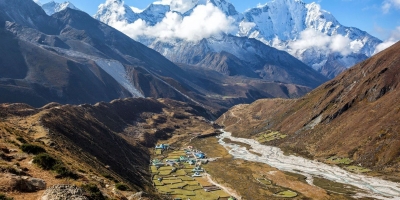
The Everest Base Camp Tour from Tibet offered by Asiana Treks and Tours is a spectacular journey to the world’s highest peak from the northern side, providing a unique blend of cultural immersion and breathtaking Himalayan landscapes. Unlike the traditional Nepal trekking route, this tour involves mostly overland travel by jeep and bus, making it accessible for travelers who prefer a less physically demanding way to reach the base of Everest while still experiencing the grandeur of the Himalayas. Starting in Kathmandu, the tour quickly transitions to Tibet’s capital, Lhasa, where guests acclimatize and explore iconic Tibetan landmarks such as the Potala Palace and Jokhang Temple. From Lhasa, the journey continues by road through picturesque Tibetan towns like Gyantse and Xigatse, crossing high mountain passes and passing through remote villages steeped in Tibetan culture. The highlight is the visit to Everest Base Camp itself, located at an elevation of nearly 5,200 meters, where visitors can marvel at the towering north face of Everest and take in unforgettable panoramic views. This tour is ideal for those seeking an adventurous Himalayan experience with cultural richness, minimal trekking, and comfort in accommodation and logistics, all expertly managed by Asiana Treks and Tours. The journey also provides valuable insights into Tibetan life, Buddhist traditions, and the natural environment of the world’s highest plateau. Key highlights of the Everest Base Camp Tour from Tibet: Unique overland route to Everest Base Camp via Tibet Acclimatization and cultural exploration in Lhasa Scenic drives across high mountain passes and remote villages Opportunity to see Everest’s majestic north face up close Comfortable accommodations from city hotels to mountain guesthouses Expert guidance and logistics support by Asiana Treks and Tours This tour combines adventure, culture, and natural beauty into an unforgettable Himalayan expedition. Everest Base Camp Tour From Tibet Package The Everest Base Camp Tour from Tibet by Asiana Treks and Tours offers an extraordinary journey to the heart of the Himalayas, blending cultural exploration with awe-inspiring natural beauty. Unlike the traditional Nepalese trekking route, this tour provides a comfortable and scenic drive to Everest Base Camp, making it accessible to travelers who prefer less strenuous adventure but still want to witness the grandeur of the world’s highest peak. This package includes visits to key Tibetan cities such as Lhasa, Gyantse, and Xigatse, allowing travelers to immerse themselves in Tibetan culture, architecture, and history before heading to the remote high-altitude landscapes around Everest. Along the way, you will traverse pristine mountain passes, encounter unique Tibetan Buddhist monasteries, and experience the charm of traditional Tibetan life. Highlights of the package: Comfortable travel by road with breathtaking mountain views Cultural tours in Lhasa and historic Tibetan towns Exploration of iconic Tibetan monasteries and heritage sites Arrival at Everest Base Camp with spectacular Himalayan panoramas Support from experienced guides specialized in high-altitude travel Everest Base Camp Tour From Tibet Itinerary Day 1: Arrival in Kathmandu – 1300 mYour journey begins in Kathmandu, the vibrant capital of Nepal, where you will be warmly welcomed by Asiana Treks and Tours staff. After settling into your hotel, take time to relax or explore the bustling streets, markets, and ancient temples that surround the city. Kathmandu is a perfect introduction to South Asian culture and spirituality. Arrival and airport transfer Overnight stay in Kathmandu Day 2: Heritage Tour of KathmanduExplore Kathmandu’s rich cultural heritage with a guided tour of iconic sites such as Durbar Square, Pashupatinath Temple, Boudhanath Stupa, and Swayambhunath (Monkey Temple). This immersive day offers insights into Nepal’s religious traditions, ancient architecture, and vibrant street life. Guided sightseeing of UNESCO World Heritage Sites Opportunity to shop local crafts and sample Nepali cuisine Day 3: Kathmandu – Lhasa – 3650 mFly from Kathmandu to Lhasa, the capital of Tibet, surrounded by snow-capped peaks and mystical monasteries. Upon arrival, rest and acclimatize to the higher altitude. Lhasa’s unique blend of Tibetan culture and spiritual significance makes it a captivating destination. Flight to Lhasa Acclimatization and light exploration Day 4 & 5: Lhasa ExplorationSpend two days touring Lhasa’s most revered sites: the majestic Potala Palace, Jokhang Temple, and Barkhor Street market. These days are designed to help your body adjust to altitude while enjoying the profound cultural experiences Tibetan Buddhism offers. Visits to Potala Palace and Jokhang Temple Exploration of local markets and cultural landmarks Day 6: Lhasa – Gyantse – 3950 mDrive to Gyantse, a charming town famous for its historic Gyantse Kumbum and Palcho Monastery. The scenic route passes Yamdrok Lake, one of Tibet’s most stunning high-altitude lakes, surrounded by snow-capped mountains. Scenic drive along Yamdrok Lake Visit Gyantse Kumbum Stupa Day 7: Gyantse – Xigatse – 3900 mTravel onward to Xigatse, Tibet’s second-largest city. Here, you will visit the impressive Tashilhunpo Monastery, the traditional seat of the Panchen Lama, and learn about Tibetan religious traditions. Tashilhunpo Monastery visit Explore Xigatse town and surroundings Day 8: Xigatse – Tingri – 4100 mThe journey continues toward Tingri, a gateway town near Everest, with spectacular views of Mt. Shishapangma and other Himalayan giants. Tingri provides a glimpse into rural Tibetan life and high-altitude landscapes. Drive to Tingri with mountain vistas Explore local Tibetan culture Day 9: Tingri – Ronbuk – 4980 mDrive to Ronbuk, the last village before Everest Base Camp, nestled in a remote valley surrounded by towering peaks. This area is home to the Ronbuk Monastery, known as the highest monastery in the world. Visit Ronbuk Monastery Acclimatize at high altitude Day 10: Ronbuk – Everest Base Camp – NyalamToday’s highlight: a thrilling drive to Everest Base Camp in Tibet, offering unparalleled views of Mt. Everest’s north face. After soaking in the majestic scenery and capturing unforgettable photographs, descend to Nyalam for overnight rest. Drive to Everest Base Camp Spectacular Himalayan panoramas Return to Nyalam Day 11: Nyalam – KathmanduFly back to Kathmandu, reflecting on your incredible journey. This day is perfect for rest or exploring any missed attractions in Kathmandu city. Flight to Kathmandu Relax and souvenir shopping Day 12: Departure DayYour unforgettable Everest Base Camp Tour from Tibet concludes with your transfer to the airport for your onward journey home or next adventure. Airport transfer and departure Everest Base Camp Tour From Tibet Distance The entire tour covers approximately 1,000 to 1,200 kilometers by road, with flights connecting Kathmandu to Lhasa. Driving distances vary daily but include significant stretches through some of the most remote and scenic high-altitude roads in the world. The highest elevations reached exceed 4,900 meters, requiring good acclimatization. Everest Base Camp Tour From Tibet Cost 2026/2027 Asiana Treks and Tours offers competitive pricing for this exclusive journey. Costs typically include: International and domestic flights (Kathmandu-Lhasa-Kathmandu) Accommodation in 3-star hotels and guesthouses All transportation by private vehicle Guided tours and entrance fees Experienced English-speaking guides and support staff Necessary permits and paperwork Prices can vary based on group size, season, and specific requests but generally range from USD 3,000 to 4,500 per person. Early booking and group discounts may apply. Everest Base Camp Tour From Tibet Breakdown The Everest Base Camp Tour from Tibet with Asiana Treks and Tours is a well-structured journey that offers a unique way to experience the world’s highest peak without the extreme trekking often associated with Nepal’s southern route. This tour blends cultural immersion with scenic high-altitude driving, giving travelers a comprehensive adventure that highlights both the rich Tibetan heritage and the majestic Himalayan landscapes. Starting in Kathmandu, the itinerary quickly shifts to Tibet’s cultural heart—Lhasa—where visitors explore iconic sites such as the Potala Palace and Jokhang Temple. The journey continues through historic towns like Gyantse and Xigatse, visiting ancient monasteries and stunning natural sites such as Yamdrok Lake. The road trip ascends progressively to Tingri and Ronbuk, preparing travelers for the breathtaking arrival at Everest Base Camp on the Tibetan side. Throughout the trip, you’ll enjoy panoramic mountain views, Tibetan Buddhist culture, and the thrill of reaching a legendary mountaineering destination—all in a comfortable, guided setting. Key tour highlights include: Cultural tours in Kathmandu and Lhasa Scenic drives through high mountain passes Visits to important monasteries and heritage sites Reaching Everest Base Camp by vehicle Support from experienced guides and porters This breakdown helps you understand the balance of culture, adventure, and comfort that defines this exceptional tour. Everest Base Camp Tour From Tibet Altitude Guide One of the most important considerations for travelers on the Everest Base Camp Tour from Tibet is acclimatization to the high altitudes. The tour gradually ascends from Kathmandu’s relatively low elevation (1300 meters) to the Everest Base Camp area (approximately 5200 meters on the Tibetan side), giving your body time to adjust and reducing the risk of altitude sickness. Key altitude points on the itinerary include: Kathmandu (1300 m) – Start at a comfortable, low altitude city. Lhasa (3650 m) – The first major stop, allowing time to acclimate. Gyantse (3950 m) and Xigatse (3900 m) – Moderate altitudes where further adjustment occurs. Tingri (4100 m) – Gateway to Everest, higher but still manageable with proper care. Ronbuk (4980 m) – The highest overnight stop, near Everest Base Camp. Everest Base Camp (5200+ m) – The pinnacle destination, reached by vehicle and brief walking. The gradual ascent profile is designed by Asiana Treks and Tours to ensure your body can adapt naturally. Staying hydrated, eating light meals, and resting during the initial days are emphasized. Guides monitor everyone for symptoms of altitude sickness and recommend slow movement and rest days if needed. Important altitude tips: Avoid alcohol and smoking at high altitudes Drink plenty of fluids and eat carbohydrates Inform guides immediately if symptoms occur Use altitude medication if prescribed Understanding this altitude progression helps travelers prepare mentally and physically for a safe and rewarding journey. Why Choose Everest Base Camp Tour From Tibet? Choosing the Everest Base Camp Tour from Tibet with Asiana Treks and Tours offers several unique advantages compared to other Everest adventures. First, this tour makes the Everest Base Camp experience accessible without requiring the weeks of rigorous trekking that Nepal’s southern route demands. Instead, you travel by well-maintained roads and comfortable vehicles, making it ideal for travelers who want to experience Everest’s majesty without extreme physical strain. Another compelling reason is the cultural richness of Tibet. This tour offers a rare opportunity to explore some of Tibet’s most important spiritual sites and ancient towns—like Lhasa, Gyantse, and Xigatse—places not always included in traditional Everest itineraries. The blend of breathtaking natural landscapes with deep spiritual and cultural experiences sets this tour apart. Additional reasons to choose this tour include: Experienced local guides fluent in English and knowledgeable about Tibetan culture Comprehensive package including flights, accommodation, permits, and transport Well-planned itinerary that balances adventure with rest and acclimatization Smaller group sizes for personalized service and safety Opportunity to see the less crowded north face of Everest and Tibetan plateau By selecting Asiana Treks and Tours, travelers are assured a well-organized, enriching, and safe adventure to one of the world’s most iconic destinations. Preparing for Everest Base Camp Tour From Tibet Proper preparation is essential for making the most of your Everest Base Camp Tour from Tibet. Physically, while the tour requires less trekking, it does involve spending time at high altitudes, so cardiovascular fitness and overall good health are important. You don’t need to be an athlete, but regular walking, light hiking, and aerobic exercises in the weeks before the trip will help your body adjust more easily. Packing the right gear is also crucial. Essentials include warm, layered clothing suitable for cold mountain climates, sturdy walking shoes or boots, a good-quality sleeping bag (some accommodations may be basic at higher altitudes), sunglasses, sunscreen, and a hat. Trekking poles can help with balance on uneven terrain, especially near Everest Base Camp. Other preparation tips: Consult your doctor about altitude sickness medication and any health concerns Arrange travel insurance with high-altitude coverage Bring a good camera or smartphone to capture stunning landscapes Prepare mentally for variable weather and the remoteness of high-altitude regions Familiarize yourself with Tibetan customs and etiquette to enhance cultural experiences Asiana Treks and Tours provides pre-trip briefings and detailed packing lists to ensure travelers are fully prepared and confident for the adventure ahead. What to Expect on the 11–13-Day Everest Base Camp Tour From Tibet Adventure The 11 to 13-day Everest Base Camp Tour from Tibet is a blend of cultural exploration, breathtaking mountain scenery, and moderate high-altitude travel that leaves a lasting impression. You can expect a carefully paced itinerary balancing sightseeing, driving, and acclimatization. Each day offers a new experience: from exploring Kathmandu’s ancient temples to wandering Lhasa’s spiritual landmarks and traveling over pristine Tibetan roads with panoramic views of snow-capped peaks. The journey steadily ascends, preparing you for the highlight—arrival at Everest Base Camp itself. The camp provides incredible views of Everest’s towering north face, along with other Himalayan giants like Lhotse and Cho Oyu. Travel with Asiana Treks and Tours means you will have: Comfortable hotels and guesthouses in major towns Knowledgeable guides explaining cultural and historical context All logistical arrangements handled, including permits and transportation Opportunities to meet locals and understand Tibetan traditions Flexibility to accommodate acclimatization needs Expect some physical challenges due to altitude but also rewarding moments of tranquility, stunning vistas, and spiritual insights. This tour is ideal for those who want a comprehensive Everest experience without extensive trekking, combining adventure, culture, and natural beauty into one unforgettable journey. Oxygen Levels on Everest Base Camp Tour From Tibet Traveling to Everest Base Camp from Tibet means ascending to very high altitudes, where the oxygen levels are significantly lower than at sea level. At Everest Base Camp on the Tibetan side, which lies at approximately 5,200 meters (17,060 feet), oxygen levels are roughly about 50% of what you breathe at sea level. This reduction can cause altitude sickness if travelers do not acclimatize properly. Asiana Treks and Tours carefully plans the itinerary to allow gradual ascent and proper acclimatization at intermediate stops like Lhasa (3650 m), Gyantse (3950 m), and Tingri (4100 m). This gradual approach helps your body adapt to thinner air and reduces the risk of altitude-related illnesses. Oxygen supplementation is not usually necessary but is available in emergencies. Important facts about oxygen levels on the tour: Oxygen at 5,200 m is about half of sea level oxygen Reduced oxygen affects breathing, physical performance, and energy Proper acclimatization is crucial for a safe journey Symptoms of altitude sickness include headache, dizziness, and nausea Guides monitor health and can arrange supplemental oxygen if needed Understanding oxygen levels and how your body will respond is key to preparing physically and mentally for this adventure. With expert guidance from Asiana Treks and Tours, travelers can safely enjoy this once-in-a-lifetime experience. Major Villages and Scenic Viewpoints on Everest Base Camp Tour From Tibet Route The route from Lhasa to Everest Base Camp takes you through several historic villages and offers spectacular viewpoints, making the journey a visual and cultural feast. Starting from the Tibetan capital, you pass through charming towns like Gyantse and Xigatse, both known for their ancient monasteries and rich Tibetan culture. Gyantse is home to the famous Gyantse Kumbum, an intricately decorated stupa, while Xigatse features the sprawling Tashilhunpo Monastery, the seat of the Panchen Lama. Beyond these towns, Tingri provides breathtaking views of the Himalayas, including Shishapangma, Tibet’s highest peak entirely within the country. Approaching Ronbuk, the last inhabited village before Everest Base Camp, you experience a dramatic landscape of glaciers and soaring peaks. Key villages and viewpoints include: Lhasa: Cultural hub and starting point Gyantse: Historic town with Kumbum Stupa Xigatse: Monastery and Tibetan city life Tingri: Panoramic Himalayan views Ronbuk: Gateway village with closest monastery to Everest Base Camp Everest Base Camp: Unmatched views of Mt. Everest north face Each stop offers a chance to learn about local lifestyles and enjoy the magnificent Himalayan panorama, all arranged by the expert team at Asiana Treks and Tours. Flora and Fauna of Everest Base Camp Tour From Tibet The flora and fauna along the Everest Base Camp route in Tibet are as unique and fascinating as the dramatic landscapes. Due to the high altitude and harsh climate, vegetation is sparse near the summit, but lower elevations support a variety of hardy plants and wildlife specially adapted to survive here. At lower altitudes near Lhasa and Gyantse, you will find alpine shrubs, juniper trees, and colorful wildflowers during warmer months. As you ascend, the landscape becomes more tundra-like, with grasses and mosses dominating. Animal sightings include Tibetan antelope (chiru), wild yaks, blue sheep (bharal), Himalayan marmots, and occasionally elusive snow leopards in protected areas. Highlights of flora and fauna on this route: Juniper and rhododendron forests at lower altitudes Alpine meadows with seasonal wildflowers Tibetan antelope, wild yaks, blue sheep Himalayan marmots and mountain birds like Tibetan snowcock Sparse vegetation near Everest Base Camp due to extreme conditions Asiana Treks and Tours offers informative guides who explain the ecological significance of these species and promote responsible travel to protect this fragile environment. Festivals and Local Culture Along Everest Base Camp Tour From Tibet Route Traveling through Tibet to Everest Base Camp offers rich cultural experiences, particularly through local festivals and religious practices that reflect centuries-old traditions. Tibetan Buddhism is central to life here, and many festivals celebrate the spiritual calendar with colorful rituals, music, and dance. Key festivals you might encounter include Losar (Tibetan New Year), celebrated with lively ceremonies and family gatherings, and Saga Dawa, a sacred month honoring Buddha’s birth, enlightenment, and passing. In smaller villages like Gyantse and Tingri, monks perform cham dances wearing elaborate costumes, believed to ward off evil spirits. Cultural highlights along the route: Losar Festival: Tibetan New Year with prayers and feasts Saga Dawa: Month-long religious observance Monastic cham dances and ritual ceremonies Traditional Tibetan music, crafts, and local markets Warm hospitality and spiritual insights from local people The team at Asiana Treks and Tours ensures your itinerary includes opportunities to witness these traditions respectfully and learn about Tibetan culture beyond the surface. Why Book with Asiana Treks and Tours for Everest Base Camp Tour From Tibet Booking your Everest Base Camp Tour from Tibet with Asiana Treks and Tours guarantees a safe, authentic, and well-organized adventure. With years of experience in Himalayan tourism, the company specializes in Tibetan travel, ensuring smooth logistics, local expertise, and cultural sensitivity throughout your journey. Asiana Treks and Tours provides experienced guides who speak fluent English and understand the challenges of high-altitude travel. Their focus on small group sizes allows personalized attention and flexibility to accommodate individual needs such as acclimatization pace or dietary preferences. The company handles all permits, transportation, and accommodations, so you can relax and enjoy the journey. Reasons to book with Asiana Treks and Tours: Expert guides with deep knowledge of Tibet and Everest region All-inclusive packages covering permits, flights, transport, and lodging Personalized service with focus on safety and comfort Commitment to responsible tourism and community support 24/7 customer support before, during, and after your trip Choosing Asiana Treks and Tours means you are in trusted hands for one of the world’s most extraordinary journeys. How to Book the Everest Base Camp Tour From Tibet Booking your Everest Base Camp Tour from Tibet with Asiana Treks and Tours is straightforward and designed to provide peace of mind from the start. You can begin by visiting their official website or contacting their friendly customer service team via email or phone to discuss your preferred travel dates, group size, and any special requirements. Once you decide on the tour dates, Asiana Treks and Tours will provide a detailed itinerary, cost estimate, and payment schedule. A deposit secures your booking, with the balance payable closer to departure. The company also assists with visa applications, travel insurance recommendations, and pre-trip preparation advice. Steps to book your tour: Contact Asiana Treks and Tours via website or email Discuss itinerary, dates, and group preferences Receive detailed itinerary and price quotation Pay deposit to confirm booking Complete visa and travel documentation with support Prepare for your adventure with pre-trip guidance With clear communication and professional service, Asiana Treks and Tours makes booking your Everest Base Camp adventure simple and reassuring.

Nepal, the land of towering Himalayas, rich culture, and warm hospitality, offers an enchanting setting for honeymooners seeking a blend of adventure, romance, and cultural immersion. Asiana Treks and Tours specializes in crafting memorable honeymoon experiences designed for couples to explore Nepal’s most beautiful destinations at a relaxed and intimate pace. Whether you want to stroll through ancient heritage sites, trek picturesque mountain villages, or unwind with a jungle safari, Nepal provides a magical backdrop for new beginnings.This honeymoon package blends cultural tours, light trekking, wildlife adventure, and leisure days for exploration and relaxation. The itinerary balances active and restful days, allowing couples to connect deeply with each other while soaking in Nepal’s diverse beauty. From the UNESCO World Heritage Sites of Kathmandu Valley to the tranquil lakeside city of Pokhara and the wildlife-rich Chitwan National Park, every stop is curated to inspire awe and romance.Highlights of the Honeymoon Package:Cultural heritage tours in Kathmandu and BhaktapurHimalayan mountain vistas and village trekkingLakeside leisure and exploration in PokharaWildlife safari and cultural program in ChitwanPlenty of leisure time for couples to relax and connectIntroduction to the Honeymoon Tour in NepalAsiana Treks and Tours invites couples to experience Nepal as a honeymoon destination unlike any other. This tour has been thoughtfully designed to offer a perfect mix of natural beauty, rich traditions, and gentle adventure tailored for couples. Nepal’s unique combination of ancient cultures and breathtaking landscapes provides a soul-stirring setting for romance and discovery.Your journey begins in Kathmandu, where centuries-old temples and bustling bazaars await. You then move on to scenic hilltop villages and sparkling mountain lakes, each offering quiet moments away from the crowds. The trek through the Annapurna foothills introduces you to authentic rural life with comfortable lodge accommodations and stunning Himalayan views. The adventure culminates in a thrilling safari at Chitwan National Park, where you can spot rare wildlife and enjoy traditional cultural performances. Every element is designed to help you create cherished memories with your beloved partner.Romantic Highlights and ExperiencesThis honeymoon tour emphasizes moments of romance and intimacy, enhanced by Nepal’s natural and cultural wonders. Imagine watching the sun rise over the snow-capped peaks from a cozy lodge, or sharing a candlelit dinner by Phewa Lake’s shimmering waters in Pokhara. Each day offers opportunities for peaceful walks, heartfelt conversations, and new shared experiences.Special highlights include panoramic sunset views from Nagarkot, exploring the medieval charm of Bhaktapur, and bonding on gentle treks through quaint villages like Ghandruk and Tolkha. The jungle safari in Chitwan adds an exciting dimension, with private wildlife tours and cultural programs that reveal the rich heritage of the Tharu people. Throughout the tour, you’ll enjoy moments of calm and privacy alongside thrilling adventures, making it a balanced and unforgettable romantic escape.Duration and Trip StyleThis honeymoon tour spans 12 days, providing a well-paced itinerary that combines sightseeing, trekking, nature, and leisure. It is designed for couples who want an intimate yet active experience, suitable for those with moderate fitness and a love for cultural discovery and nature.The trip style blends comfortable lodge stays and boutique hotels, with private transfers and expert guides ensuring smooth travel and personalized attention. Trekking portions are gentle and mostly at lower elevations, making them accessible and enjoyable without rushing. This relaxed pace allows plenty of time to savor each destination’s beauty and your partner’s company.Best Time for a Honeymoon in NepalNepal’s most favorable seasons for honeymoon travel are spring (March to May) and autumn (September to November). These months offer clear skies, pleasant temperatures, and ideal trekking conditions. Spring brings blooming rhododendrons and fresh greenery, while autumn boasts crisp air and spectacular mountain vistas.Winter (December to February) is cooler but still viable if you prefer fewer tourists and don’t mind chillier mornings and evenings. Summer (June to August) is monsoon season and generally not recommended due to heavy rains and slippery trails, but some lowland and cultural tours remain feasible.Asiana Treks and Tours can help you select the best time and customize the itinerary to match your preferred weather and interests, ensuring your honeymoon is as comfortable and memorable as possible.Detailed Day-by-Day ItineraryDay 1: Arrival in KathmanduWelcome to Kathmandu, the vibrant capital of Nepal and the gateway to your honeymoon adventure. Upon arrival at Tribhuvan International Airport, you will be greeted by a friendly Asiana Treks and Tours representative who will assist you with your transfer to a carefully selected boutique hotel. After settling in, take some time to relax and acclimate to the city’s enchanting atmosphere.The evening is perfect for a romantic dinner at a rooftop restaurant overlooking the twinkling city lights and distant Himalayan peaks. Enjoy Nepali delicacies and toast to the start of your memorable journey together.Day 1 Highlights:Airport pickup and transfer to hotelLeisure time to relax or explore nearbyOptional romantic dinner with panoramic viewsDay 2: Heritage Tour of Kathmandu – NagarkotToday, embark on a guided heritage tour of Kathmandu’s UNESCO World Heritage Sites. Visit the ancient Durbar Square, admire the artistry of the Kumari Ghar, and explore sacred temples like Pashupatinath and Boudhanath Stupa. These sites offer deep insights into Nepal’s rich religious and architectural heritage.In the afternoon, drive to Nagarkot, a hill station famed for its panoramic Himalayan views. Relax with your partner as you watch the sunset paint the mountains in golden hues. This serene setting provides a perfect romantic backdrop to end the day.Day 2 Highlights:Kathmandu Durbar Square and temple toursVisit to Pashupatinath and BoudhanathScenic drive and sunset at NagarkotDay 3: Nagarkot – Bhaktapur – PokharaAfter enjoying sunrise views in Nagarkot, depart for Bhaktapur, one of Nepal’s best-preserved medieval cities. Stroll through its cobblestone streets and admire centuries-old palaces, temples, and artisan workshops.Later, embark on a scenic drive to Pokhara, known as the city of lakes and gateway to the Annapurna region. Arrive in the afternoon and enjoy lakeside views and a peaceful evening together.Day 3 Highlights:Sunrise over Himalayas in NagarkotBhaktapur’s medieval architecture and cultureDrive and arrival in tranquil PokharaDay 4: Pokhara – GhandrukBegin your light trek from Pokhara to the charming Gurung village of Ghandruk. The trail offers stunning views of the Annapurna and Machhapuchhre (Fishtail) mountains. Ghandruk is rich in culture, and you can explore traditional stone houses, local markets, and quaint tea shops.Enjoy the cozy ambiance of your mountain lodge with your partner while absorbing the serene Himalayan environment.Day 4 Highlights:Scenic trekking with mountain viewsCultural immersion in Gurung villageComfortable mountain lodge stayDay 5: Ghandruk – TolkhaContinue your trek to the nearby village of Tolkha, another beautiful settlement nestled among terraced fields and pine forests. This shorter trekking day allows for relaxation and more cultural exploration.Interact with local villagers, enjoy traditional hospitality, and spend an intimate evening amidst nature.Day 5 Highlights:Leisurely trekking to TolkhaVillage life and cultural experiencesPeaceful lodge stay in natureDay 6: Tolkha – PokharaDescend back to Pokhara after your mountain trek. Spend the day at leisure in this lakeside city, enjoying romantic walks along Phewa Lake, boat rides, or visiting local cafes and markets.Take the opportunity to relax, shop for souvenirs, or enjoy spa treatments before the next phase of your journey.Day 6 Highlights:Trekking descent to PokharaLeisure time for relaxation or explorationOptional boating and spa experiencesDay 7: Pokhara ExplorationSpend a full day exploring Pokhara’s many charms. Visit Devi’s Fall, the Tibetan Refugee Camp, and the International Mountain Museum. For panoramic views, hike to the World Peace Pagoda.End the day with a romantic sunset cruise on Phewa Lake, complete with a candlelight dinner on the boat for an unforgettable evening.Day 7 Highlights:Sightseeing around PokharaWorld Peace Pagoda hikeRomantic sunset dinner cruiseDay 8: Pokhara – BandipurTravel to Bandipur, a preserved hilltop town known for its preserved cultural heritage and stunning mountain views. Stroll through its charming streets filled with traditional architecture and cozy cafes.Bandipur’s peaceful atmosphere is perfect for couples to enjoy quiet moments and local hospitality.Day 8 Highlights:Scenic drive to BandipurExploration of traditional hill townRelaxing and cultural experiencesDay 9: Bandipur – ChitwanDepart Bandipur for Chitwan National Park, Nepal’s premier wildlife sanctuary. Upon arrival, settle into your jungle lodge and prepare for exciting safari activities.In the evening, enjoy a cultural Tharu dance program and dinner that introduces you to the rich traditions of the indigenous community.Day 9 Highlights:Transfer to Chitwan National ParkJungle lodge accommodationEvening cultural performanceDay 10: Jungle Safari Activities DaySpend a full day immersed in jungle adventures. Activities may include elephant rides, jeep safaris, canoe rides, and bird watching. Spot rare wildlife such as the one-horned rhinoceros, royal Bengal tiger, and exotic birds.This day offers thrilling experiences balanced with peaceful moments in nature — perfect for adventurous couples.Day 10 Highlights:Elephant and jeep safarisCanoeing and bird watchingWildlife spotting and nature immersionDay 11: Chitwan – KathmanduAfter a morning at leisure or optional jungle activities, drive back to Kathmandu. Spend your last full day in Nepal shopping for souvenirs or visiting any sites you may have missed.Celebrate your last night with a special farewell dinner, reminiscing about your unforgettable honeymoon.Day 11 Highlights:Return drive to KathmanduLeisure and last-minute sightseeing/shoppingRomantic farewell dinnerDay 12: DepartureAfter a leisurely breakfast, you will be transferred to the airport for your flight home. Take with you beautiful memories of Nepal’s mountains, culture, and wildlife — and a strengthened bond with your beloved partner.Asiana Treks and Tours thanks you for choosing us to be part of your special journey.Day 12 Highlights:Airport transferFond farewells and memoriesEnd of honeymoon tour
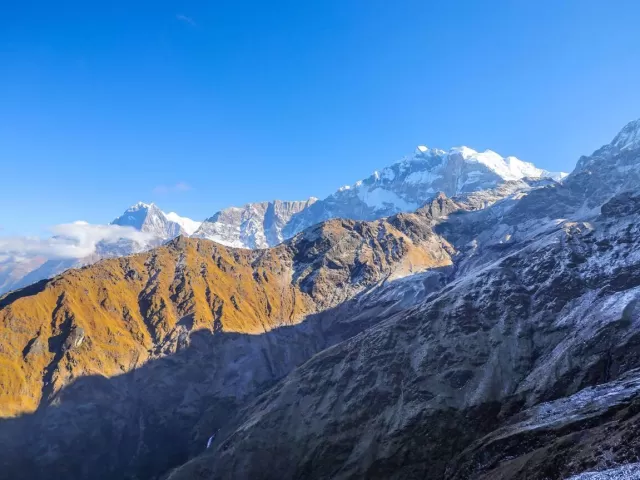
The Khopra Danda with Annapurna Base Camp Trek is one of Nepal’s most rewarding and scenic trekking experiences, combining two iconic routes — Khopra Danda (Khair Lake) and Annapurna Base Camp. This 12-day adventure through the Annapurna region offers breathtaking mountain views, rich cultural encounters, and diverse landscapes. The trail passes through traditional Gurung and Magar villages, lush rhododendron forests, and peaceful terraced hillsides before reaching the stunning Khopra Ridge and the sacred Khair Lake (4,500m).The Annapurna Base Camp Trek via Khopra Ridge is a newer and less-crowded route, perfect for trekkers seeking authentic mountain experiences, warm hospitality, and community-run lodges. This trek rewards you with three of the best sunrise and sunset viewpoints in the Annapurna region — Poon Hill, Khopra Danda, and Annapurna Base Camp — where you can admire majestic peaks like Annapurna I, Dhaulagiri, Machhapuchhre (Fishtail), Tukuche, Nilgiri, and Hiunchuli. Known as the hidden gem of the Annapurna Sanctuary Trek, the Khopra Danda and Khair Lake Trek combo beautifully blends serenity, adventure, and spirituality. Whether you’re an experienced hiker or a first-time trekker, this route is one of the best treks in the Annapurna region, offering a perfect balance of natural beauty, cultural immersion, and unforgettable Himalayan panoramas — all within a well-planned 12-day itinerary from Pokhara created by Asiana Treks and Tours.Why Choose Khopra Danda (Khair Lake) with Annapurna Base Camp Trek? Experience the best of the Annapurna region with Asiana Treks and Tours. Our Khopra Danda (Khair Lake) with Annapurna Base Camp trek combines offbeat serenity with classic Himalayan beauty. Enjoy expert-guided trails, local hospitality, comfortable lodges, and breathtaking sunrise views—crafted for safety, comfort, and authentic Nepalese adventure.Highlight of reason to choose Khopra Danda and Annapurna Base Camp Trek:Expert local guides with 25+ years of experienceSafe, well-paced itinerary with altitude careA combination of the peaceful Khopra Ridge and the iconic Annapurna Base CampAuthentic cultural encounters in Gurung and Magar villagesCosy tea houses on the Annapurna side and community lodges for comfort at the Khopra danda site.Personalised service and flexible trekking optionsExperience Ghorepani Magar Community and Chhomrong Gurung Community.Preparing for Khopra Danda (Khair Lake) with Annapurna Base Camp TrekPrepare smartly for the Khopra Danda (Khair Lake) and Annapurna Base Camp trek:Prepare smartly for the Khopra Danda (Khair Lake) and Annapurna Base Camp trek with Asiana Treks and Tours. Ensure fitness, pack essential gear, and get travel insurance. Our expert guides help you adapt to altitude, enjoy balanced meals, and experience a safe, scenic, and unforgettable journey through the heart of the Annapurna region. Highlights of preparing for the Khopra Danda (Khair Lake) with Annapurna Base Camp trek:Pre-trek fitness and altitude preparationExpert trekking guidance and safety support Proper packing and equipment checklist Travel insurance and health precautions Balanced meals and hydration advice Eco-friendly and culturally respectful travel Khopra Danda (Khair Lake) with Annapurna Base Camp Trek – 12 Days Itinerary, Altitude in meters and fit, Elevation gain and lossDay and PlaceAltitude (m/ft) Altitude Gain and Loss (m/ft Day 1: Pokhara → Banthati 2,230 m / 7,316 ft +780 m / +2,559 ft Day 2: Banthati → Ghorepani 2,860 m / 9,383 ft +630 m / +2,067 ft Day 3: Ghorepani → Swanta 2,270 m / 7,447 ft -590 m / -1,936 ft Day 4: Swanta → Khopra Danda 3,660 m / 12,008 ft +1,390 m / +4,560 ft Day 5: Khopra Danda → Khair Lake → Return 4,500 m / 14,763 ft +840 m / +2,755 ft Day 6: Khopra Danda → Bayeli Kharka 3,460 m / 11,352 ft -200 m / -656 ft Day 7: Bayeli Kharka → Tadapani 2,630 m / 8,628 ft -830 m / -2,723 ft Day 8: Tadapani → Chhomrong 2,170 m / 7,120 ft -460 m / -1,509 ft Day 9: Chhomrong → Himalaya 2,920 m / 9,580 ft +750 m / +2,460 ft Day 10: Himalaya → Annapurna Base Camp 4,130 m / 13,550 ft +1,210 m / +3,970 ft Day 11: Annapurna Base Camp → Bamboo 2,350 m / 7,710 ft -1,780 m / -5,839 ft Day 12: Bamboo → Pokhara (via Jhinu Danda) 822 m / 2,697 ft -1,528 m / -5,013 ft Annapurna Region Trekking: Guides, Tips & Himalayan AdventuresDiscover the beauty of Nepal’s Annapurna region with Asiana Treks & Tours. Explore breathtaking mountain landscapes, authentic local culture, popular trekking routes, and practical tips to help you plan an unforgettable Himalayan adventure.Annapurna Base Camp vs Everest Base Camp: The Best TrekTrekking Equipment List for Asiana Treks & ToursTrekking Permit Requirements for Different Regions in NepalBest Sunrise and Sunset Destinations in NepalTop Successful Trek for Beginners – Annapurna Base CampMost Popular Trek with High Success Rate – Annapurna Base Camp Trek (ABC) TrekHow to Prepare for the Annapurna Base Camp Trek (Gear, Fitness & Tips)Ghorepani Poon Hill Trek GatewayTop 26 Annapurna Region Trekking Packages in Nepal – The Ultimate GuideTadapani Diaries: One Magical Night in the MountainsDiscovering Ghandruk: A Peaceful Village in the Heart of NepalTrekking the Best of Annapurna: Poon Hill to Mardi HimalWhy Chhomrong is the Heart of the Annapurna Base Camp TrekAnnapurna Base Camp (ABC) & Machhapuchhre Base Camp (MBC) Trek: Two Base Camps, One Incredible JourneyExploring Sinuwa on the Annapurna TrailDeurali: A Peaceful Mountain Village on the ABC TrailBamboo: A Hidden Gem of the ABC TrekDovan Nepal: Peaceful Stopover on the Annapurna Base Camp TrailHimalaya Village: A Quiet Haven on the Way to Annapurna Base CampDhampus Village – Annapurna Classical Alternative GatewayPothana: The Alternative Gateway to Annapurna Base Camp and Mardi HimalBest Camping and Overnight Stays: Australian Camp & Mardi Himal TrekList of Hotel in Mardi Himal Base Camp TrekTrekking to Low Camp: A Peaceful Path to Mardi HimalForest Camp Adventures: Exploring the Mardi Himal Trek in NepalHigh Camp on the Mardi Himal Trek | Views, Altitude & Trekking GuideDiscovering the Magic of Mardi Himal ViewpointTop Highlights of the Mardi Himal Trek in NepalBest Time to Trek Mardi Himal: Tips for Perfect ViewsA Beginner’s Guide to the Mardi Himal Trek in NepalSurprising Facts About the Mardi Himal TrekEssential Guide to Mardi Himal Trekking Permits in NepalMardi Himal Trek Info: Elevation, Altitude, Height and WeatherMardi Himal Trek Accommodation and Food TipsBest Time to Trek Annapurna Base Camp in NepalTop Highlights of the Annapurna Base Camp TrekFood and Accommodation on the ABC Trek: What It’s Really LikeAltitude Tips for a Safe Annapurna Base Camp TrekAnnapurna Base Camp Permits: Costs, Process, and RequirementsTop Tips and Facts for Trekking to Annapurna Base CampAnnapurna Base Camp Trek: Elevation, Height & Temperature GuideDobato Stopover: Experiencing the Heart of the Khopra Danda RouteUpper Chistibung: What to Expect on the Way to Khopra DandaExploring Khopra Danda Ridge and Khayar LakeDiscover Swanta’s Beauty on the Khopra Danda TrailAmazing Facts About Khayar Lake in the Annapurna RegionBayeli Kharka Adventure: From Khopra Danda with Stunning ViewsKhopra Danda Trekking Guide: Cost, Permits, Meals, Lodging and Best SeasonExploring Mardi Himal, ABC, and Khopra Ridge in One Epic JourneyKhopra Khair Lake with Annapurna Base Camp Trek: A Complete JourneyKhopra Khair Lake with ABC Trek: Nature, Culture, and MountainsComplete Guide to Mohare Danda Trekking in NepalSunrise Views from Mohare Danda: What to ExpectTop Highlights of Poon Hill and Mardi Himal TrekExploring Poon Hill and Mardi Himal: A Beginner’s GuideExploring the Ghorepani Dhampus Circuit Trek in NepalAn Amazing Hike from Galeshwor to Nangi via Bans Kharka : Mohare Danda TrekkingLandruk: Gateway to the Stunning Mardi Himal ViewsMardi Himal Adventure: Exploring Badal Danda on the Siding TrekSunrise Views from Poon Hill and Mulde ViewpointsDhaulagiri Annapurna Trail: A New Alternative Trek in NepalBest Nepal Tour Packages: Adventure, Honeymoon, Senior Tours, Himalayan Highlights, Triangle & Sunrise Hill Station ToursIs It Possible to Cycle the Annapurna Circuit in Nepal?Besisahar – The Heart of Lamjung District: Gateway to the HimalayasExploring Jagat During the Annapurna Circuit TrekDharapani Village in Nepal: Where the Manaslu Circuit and Annapurna Circuit Trails Meet PointChame Village: A Peaceful Stop on the Annapurna Circuit TrekDiscover Upper Pisang: A Hidden Gem on the Annapurna CircuitExploring Lower Pisang: A Gateway on the Annapurna CircuitManang: The Heart of the Annapurna Circuit TrekYak Kharka (4,020m): A Must-Stop Village on the Annapurna CircuitThorong Phedi: Final Preparation Before Thorong La PassCrossing Thorong La Pass (5,416 m): The Highest Point of the Annapurna CircuitMuktinath in Mustang: A High-Altitude Spiritual Journey on the Annapurna CircuitJomsom (2,743 m): The Windy Valley That Connects Annapurna and Upper Mustang
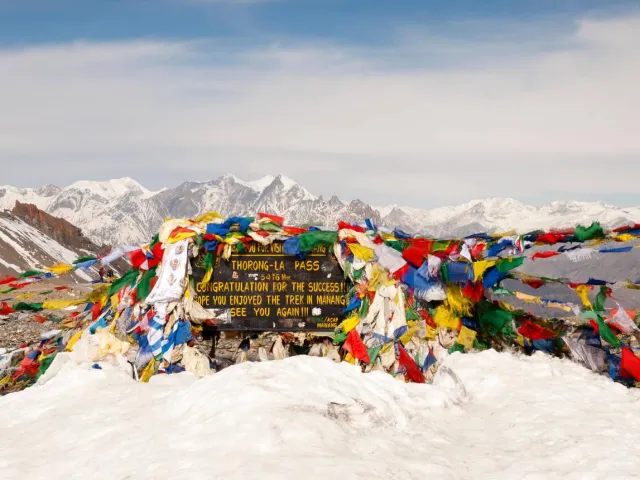
Luxury Annapurna Circuit Trek is a premium adventure that blends the iconic Annapurna Circuit route with the comfort of high-end lodges and personalised service. This journey takes you deep into the heart of the Annapurna region, one of the most scenic and culturally rich trekking areas in Nepal, while ensuring maximum comfort and minimal compromise. From lush green valleys to arid high-altitude deserts, this trek offers dramatic contrasts in landscape, weather, and culture.The trek begins with a scenic drive from Kathmandu to Besishahar and continues toward the charming mountain town of Chame. From there, the trail passes through picturesque villages like Upper Pisang and Manang, offering stunning views of Annapurna II, III, IV, Gangapurna, and Tilicho Peak. A well-timed rest day in Manang helps with acclimatisation before ascending to Thorong Phedi or High Camp. The highlight of the trek is the challenging yet rewarding crossing of the Thorong La Pass (5,416 meters), one of the world's highest trekking passes. The descent takes you to the sacred pilgrimage site of Muktinath and then to the windy town of Jomsom, ending with a scenic flight to Pokhara. Unlike traditional teahouse treks, Annapurna Round Luxury Trekking includes stays at selected premium lodges and hotels in places like Manang, Muktinath, and Jomsom, ensuring hot showers, clean rooms, delicious meals, and personalised attention. This trek is ideal for trekkers seeking the thrill of high-altitude adventure with the added comfort of luxury accommodations, safe guiding, and seamless logistics. Whether you're a seasoned trekker or someone seeking an unforgettable Himalayan experience with added comfort, the Annapurna Round Luxury Trek offers the perfect balance of adventure and indulgence. Luxury Annapurna Circuit Trek Itinerary – Day-by-Day Guide:The Luxury Annapurna circuit Trek offers a majestic Himalayan journey enhanced by first-class service, deluxe accommodations, and a thoughtfully crafted route. This premium version of the classic Annapurna Circuit follows a scenic path through culturally rich villages, alpine valleys, and high mountain passes. The trek begins in Kathmandu and progresses through Besishar, Chame, Upper Pisang, Manang, and across the famous Thorong La Pass (5,416 m), one of the world’s highest trekking passes. Along the way, trekkers enjoy personalised service, comfortable lodges, and diverse landscapes, ranging from lush forests to arid high-altitude deserts. This day-by-day itinerary ensures a perfect balance of adventure, acclimatisation, and relaxation. Luxury Annapurna Circuit Trek – Day-by-Day Itinerary in Table with Distance, Altitude, and % oxygen level (% of Sea Level): Day & PlaceDistance (Km / Miles)Altitude (m / ft)Oxygen LevelDay 1: Arrival in Kathmandu-1,400 m / 4,593 ft~85%Day 2: Kathmandu (Preparation Day)-1,400 m / 4,593 ft~85%Day 3: Drive to Besishar185 km / 115 mi760 m / 2,493 ft~90%Day 4: Drive to Chame66 km / 41 mi2,710 m / 8,891 ft~72%Day 5: Trek to Upper Pisang15 km / 9.3 mi3,300 m / 10,827 ft~66%Day 6: Trek to Manang18 km / 11.2 mi3,540 m / 11,614 ft~64%Day 7: Acclimatisation in ManangOptional Hike3,540 m / 11,614 ft~64%Day 8: Trek to Yak Kharka10 km / 6.2 mi4,050 m / 13,287 ft~60%Day 9: Trek to Thorong Phedi4 km / 2.5 mi4,540 m / 14,895 ft~58%Day 10: Thorong La top16 km / 10 mi5,416 m / 17,769 ft (Pass)~50%Muktinath16km/ 10 miles3,760 m / 12,335 ft (Muktinath)~66%Day 11: Drive or Trek to Jomsom20 km / 12.4 mi2,720 m / 8,923 ft~73%Day 12: Fly to Pokhara20 min (Flight)822 m / 2,697 ft~92%Day 13: Fly to Kathmandu25 min (Flight)1,400 m / 4,593 ft~85%What to Expect on the Luxury Annapurna Circuit Trek:The Luxury Annapurna circuit Trek offers a unique blend of rugged adventure and refined comfort, taking you through one of Nepal’s most iconic trekking routes, without compromising on quality. Here’s what you can expect: Diverse LandscapesYou’ll journey through subtropical forests, river valleys, alpine meadows, and barren high-altitude deserts. Each day brings changing scenery—from lush greenery in Besishar to windswept plateaus beyond Manang and snowy trails near Thorong La Pass (5,416m). Premium AccommodationsUnlike traditional teahouse treks, you’ll stay in handpicked luxury lodges and boutique hotels in places like Upper Pisang, Manang, Muktinath, Jomsom, Pokhara, and Kathmandu. Expect en-suite bathrooms, clean rooms, hot showers, warm hospitality, and gourmet meals. Expert Support TeamYour trek will be guided by experienced, government-licensed guides and a well-trained support crew. They ensure your safety, comfort, and cultural immersion throughout the journey. Cultural EncountersYou’ll pass through charming Gurung and Tibetan-influenced villages, explore ancient monasteries, and engage with local people, enriching your understanding of Himalayan mountain life. Moderate to Challenging AdventureThe trek includes gradual ascents with ample acclimatisation time. Crossing the Thorong La Pass is physically demanding but highly rewarding. Daily trekking ranges from 4 to 7 hours. Smooth LogisticsLuxury transportation, pre-arranged permits, flights (Jomsom–Pokhara–Kathmandu), and baggage handling are all managed for a hassle-free experience.Best SeasonsSpring (March–May) and Autumn (September–November) offer the clearest views and most comfortable trekking weather.Whether you're seeking personal achievement or a scenic journey with elegance, the Annapurna Round Luxury Trek delivers an unforgettable, elevated trekking experience in Nepal.Luxury Annapurna Circuit Trek Highlights: The Annapurna Round Luxury Trek is a world-class Himalayan journey that blends breathtaking mountain scenery with high-end comfort and personalised service. Key highlights include crossing the iconic Thorong La Pass (5,416m), staying in handpicked luxury lodges in places like Manang, Upper Pisang, and Jomsom, and exploring diverse landscapes ranging from lush valleys to high-altitude deserts. Trekkers are treated to panoramic views of Annapurna I-IV, Dhaulagiri, Gangapurna, and Tilicho Peak, as well as cultural immersion in ancient Buddhist monasteries, traditional Gurung and Thakali villages, and the sacred site of Muktinath Temple. Enjoy scenic drives, helicopter or domestic flights for convenience, and rest in premium accommodations offering hot showers, organic meals, and mountain-view suites. Ideal for those seeking both adventure and luxury, this trek delivers unforgettable experiences with the perfect balance of nature, culture, and comfort. Scenic views of Annapurna I–IV, Dhaulagiri, Tilicho Peak, and GangapurnaTrek across Thorong La Pass (5,416m) — the highest point of the Annapurna CircuitStay in handpicked luxury lodges with hot showers, heated rooms, and gourmet mealsVisit the sacred Muktinath Temple, a major pilgrimage site for Hindus and BuddhistsExplore diverse terrain — from lush forests to alpine meadows and high mountain desertsImmerse in local culture with visits to ancient Buddhist monasteries and ethnic villagesCapture dramatic Himalayan landscapes at sunrise and sunset viewpointsComfortable private transportation for overland drives to trailheadsOptional scenic flights or helicopter exits for added ease and time-saving Expert guides and porters ensure a safe and personalised trekking experience Nutritious and hygienic meals throughout the journeyEco-conscious and sustainable travel supporting local communitiesPerfect for trekkers who want adventure without compromising on comfortTotal Trekking Distance of the Luxury Annapurna Circuit Route:The total trekking distance of the Luxury Annapurna Circuit Trek typically ranges between 160 to 230 kilometres (99 to 143 miles), depending on the starting and ending points, detours, and mode of transportation used between segments (such as drives or optional flights). Starting from Chame or Dharapani and ending at Jomsom or Muktinath, the route winds through a variety of terrains—lush forests, alpine meadows, deep gorges, and high-altitude mountain passes. With daily hikes averaging 10–20 km (6–12 miles), trekkers enjoy a well-paced journey through stunning Himalayan landscapes while resting in luxurious accommodations each night. The option to drive certain sections or use flights can reduce the physical trekking distance while preserving all scenic highlights.Key Distance Highlights:Total trekking distance: 160–230 km (99–143 miles), based on route choicesChame to Thorong La Pass: ~65–75 km (40–46 miles)Thorong La to Muktinath: ~13–15 km (8–9 miles)Muktinath to Jomsom: ~18 km (11 miles) if trekked, or shorter via vehicleOptional drives (e.g., Besisahar to Chame, Jomsom to Pokhara) help reduce the walking distanceTrek duration: Typically 10–14 days, including acclimatisation and rest daysAverage daily trek: 10–20 km (6–12 miles)Day and Place, Altitude, and Oxygen Levels on the Luxury Annapurna Circuit Trek:The Luxury Annapurna Circuit Trek covers a wide range of altitudes, starting from the lower valleys around 800 meters (2,625 ft) and climbing up to the high mountain pass of Thorong La at 5,416 meters (17,769 ft). As the elevation increases, the oxygen levels decrease, making it essential to acclimatise properly. At sea level, oxygen saturation is 100%, but it can drop to nearly 50% at the highest points of the trek. Luxury trekking ensures gradual ascents, strategic rest days, and experienced guides to manage altitude-related risks. Most trekkers acclimate well with slow pacing, proper hydration, and rest. Understanding oxygen levels at various points helps trekkers prepare mentally and physically for this unforgettable high-altitude adventure.Altitude and Oxygen Levels – Luxury Annapurna Circuit Trek:Day & PlaceAltitude (m/ft)Oxygen Level (%)Day 1: Besisahar760 m / 2,493 ft~92%Day 2: Chame2,650 m / 8,694 ft~73%Day 3: Upper Pisang3,300 m / 10,827 ft~66%Day 4: Manang3,540 m / 11,614 ft~64%Day 5: Acclimatisation Day3,540 m / 11,614 ft~64%Day 6: Yak Kharka / Phedi4,000 m / 13,123 ft~60%Day 7: Thorong High Camp4,925 m / 16,158 ft~52%Day 8: Thorong La Pass5,416 m / 17,769 ft~50%Day 8: Muktinath3,800 m / 12,467 ft~65%Day 9: Jomsom2,720 m / 8,924 ft~73%Day 10: Pokhara822 m / 2,697 ft~92%Altitude and Oxygen Levels on the Luxury Annapurna Circuit Trek:The trek starts at low altitudes around 760 meters (2,493 ft) in Besisahar and ascends gradually to Thorong La Pass at 5,416 meters (17,769 ft) highest point of the trek.Oxygen levels decrease with altitude, from around 92% at the starting point to nearly 50% at the pass.Proper acclimatisation days in places like Manang help trekkers adjust to the thin air.The oxygen level at 3,500 meters (11,482 ft) is about 64%, which can cause altitude-related symptoms if not careful.At the Thorong High Camp (4,925 m / 16,158 ft), oxygen drops to approximately 52%.Slow ascents, luxury accommodations, healthy meals, and experienced guides enhance safety and comfort in high-altitude zones.Oxygen levels begin to rise again after crossing the pass and descending to Muktinath and Jomsom.Understanding these changes helps trekkers mentally prepare and physically pace themselves.What to Expect on the Luxury Annapurna Circuit Trekking ExperienceBreathtaking Mountain Views: Panoramic vistas of Annapurna, Dhaulagiri, Machhapuchhre, Manaslu, and Tilicho Peak throughout the journey.Comfortable Trekking Pace: Well-paced itinerary with ample time for rest, acclimatisation, and exploration.Luxury Accommodations: Stay in premium lodges, boutique mountain hotels, and luxury eco-resorts with modern comforts.High-Quality Meals: Enjoy organic, hygienic meals with a variety of Nepali, Tibetan, and continental cuisine.Scenic Landscapes: Experience lush green valleys, alpine meadows, deep gorges, and arid highlands all in one trek.Cultural Immersion: Visit traditional Gurung, Thakali, and Manangi villages, Buddhist monasteries, and Hindu temples.Wellness & Safety: Hot showers, clean water, attached bathrooms in most places, and attentive service for your well-being.Experienced Guides & Porters: A Friendly, knowledgeable trekking crew ensures safety, comfort, and cultural insight.Thorong La Pass Challenge: Cross one of the highest trekking passes in the world (5,416m) with support and preparation.Smooth Transfers: Private vehicles, scenic drives, and optional domestic flights make travel efficient and luxurious.Photo Opportunities: Iconic sunrise/sunset views from viewpoints like Upper Pisang and Muktinath.Eco-Tourism Approach: Trek responsibly while supporting local communities and preserving nature.Popular Villages and Viewpoints on the Annapurna Circuit Luxury Trek:The Luxury Annapurna Circuit Trek takes you through some of Nepal’s most scenic and culturally rich mountain villages. Each settlement offers stunning views, warm hospitality, and unique local traditions. From charming stone-built villages to sacred pilgrimage sites, trekkers experience a diverse landscape of nature and culture. Popular viewpoints offer jaw-dropping panoramas of snowcapped giants like Annapurna II, Gangapurna, Dhaulagiri, and Tilicho Peak. These highlights make the journey unforgettable.Highlights in Points:Traditional villages with Tibetan and Gurung cultureMajestic Himalayan viewpoints and sunrise/sunset viewsTemples, monasteries, and ancient trade routesBeautiful valleys and glacial riversTable: Popular Villages, Viewpoints & Attractions:Popular VillageViewpointsAttractionChameAnnapurna II ViewHot springs, Buddhist stupaUpper PisangGhyaru RidgePanoramic views, traditional stone housesManangGangapurna GlacierMonastery, acclimatisation hikesYak KharkaHigh Meadow ViewsAlpine pastures, yak herdingThorong PhediMountain Base ViewsBase camp for Thorong La PassMuktinathSacred Temple AreaHindu-Buddhist pilgrimage siteJomsomDhaulagiri RangeKali Gandaki River, Thakali culturePreparing for the Luxury Annapurna Circuit Trek Consult a Doctor: Get a health check-up before travelling to high-altitude regions, especially if you have any medical conditions.Build Physical Fitness: Start cardio, hiking, and leg-strengthening exercises 4–6 weeks before the trek.Pack the Right Gear: Bring layered clothing, quality trekking boots, down jacket, gloves, UV sunglasses, and a good daypack.Carry Essential Medication: Include altitude sickness pills (Diamox), pain relievers, and basic first aid supplies.Choose the Best Season: Spring (Mar–May) and Autumn (Sep–Nov) offer clear skies and stable weather.Travel Insurance: Buy comprehensive insurance that covers high-altitude trekking and emergency evacuation.Carry Cash: ATMs are limited; bring enough Nepali rupees for the trek.Stay Connected: Get a local SIM card and power bank for remote area communication.Plan for Acclimatisation: Allow enough days in the itinerary to adapt to altitude gradually.Book with a Trusted Company: Choose a professional trekking agency like Asiana Treks and Tours for comfort, logistics, and expert guidance.Mental Preparation: Be ready for long days of walking, varying weather, and simple yet meaningful mountain experiences.Use Porter & Guide Support: Lighten your load and enjoy the trek with professional local support.Luxury Annapurna Circuit Trek Cost Breakdown:The cost of the Annapurna Round Luxury Trek typically ranges from $1,800 to $3,500+ per person, depending on various factors. This price includes permits, transportation, guides, porters, meals, and luxury accommodations. Costs vary primarily due to the level of service, group size, season, and accommodation standards. Luxury treks include premium hotels, hot showers, attached bathrooms, and better meals. International and domestic flights, travel insurance, and personal expenses are usually extra. Booking through a reputable company ensures safety, comfort, and reliability.Reasons for Price Variation:Level of luxury lodges and servicesGroup size (private vs. group)Trekking season (peak vs. off-season)Optional flights or extra transfersGuide and porter experienceCustomisation and add-onsWhy the Luxury Annapurna Circuit Trek is a Must-Do in Nepal:The Annapurna Round Luxury Trek is a premier Himalayan adventure combining breathtaking natural beauty with exceptional comfort. Trekkers experience diverse landscapes—from lush forests and terraced valleys to alpine meadows and arid high mountain deserts—while enjoying panoramic views of Annapurna, Dhaulagiri, and Tilicho peaks. The trek crosses the iconic Thorong La Pass (5,416m), offering a thrilling challenge with stunning rewards. Luxury accommodations along the route provide warm hospitality, hot showers, and gourmet meals, elevating the trekking experience. Cultural immersion in traditional Gurung, Thakali, and Tibetan villages enriches the journey with authentic local traditions and spiritual sites like Muktinath Temple. With well-organised itineraries, private transfers, and eco-friendly practices, this trek perfectly blends adventure, culture, and comfort, making it a must-do for discerning travellers in Nepal.Why the Luxury Annapurna Circuit Trek is a Must-Do in Nepal Quick Guide Stunning Himalayan Views: Experience breathtaking panoramas of Annapurna, Dhaulagiri, and other towering peaks.Diverse Landscapes: Trek through lush forests, alpine meadows, high mountain deserts, and deep gorges.Luxury Comforts: Enjoy premium accommodations with hot showers, gourmet meals, and warm hospitality.Rich Cultural Experience: Visit traditional Gurung, Thakali, and Tibetan-influenced villages, monasteries, and sacred temples.Iconic Thorong La Pass: Cross one of the highest trekking passes in the world at 5,416 meters (17,769 ft).Convenient Transfers: Private vehicles and optional flights make travel easier and more comfortable.Well-Organised Itinerary: Balanced trekking days with acclimatisation and rest for safety and enjoyment.Eco-Friendly Travel: Supports local communities and sustainable tourism practices.Unforgettable Photography: Capture stunning sunrises, sunsets, and mountain vistas.Top Benefits of Booking the Luxury Annapurna Circuit Trek with Experts: Safety First: Expert guides monitor altitude sickness and ensure safe trekking practices.Professional Support: Experienced porters and guides carry your gear and provide cultural insights.Well-Planned Itinerary: Optimised routes with proper acclimatisation and rest days.Quality Accommodation: Access to the best lodges and tea houses for comfort after long treks.Reliable Meals: Hygienic and nutritious food tailored to high-altitude trekking needs.Emergency Assistance: Immediate support and evacuation arrangements if needed.Permits and Paperwork: Hassle-free processing of trekking permits and TIMS cards.Efficient Logistics: Organised transport, domestic flights, and transfers included.Local Economy Support: Directly benefits local communities by employing local guides and staff.Eco-Friendly Practices: Experts promote responsible tourism and environmental conservation.Flora and Fauna (Biodiversity) of the Annapurna Region:Luxury Annapurna Circuit Trek with Asiana Treks and Tours offers a rare opportunity to experience the rich biodiversity of the Annapurna Conservation Area, one of the most ecologically diverse regions in Nepal. This region spans various altitudinal zones, from lush subtropical forests at lower elevations to alpine meadows and barren high mountain landscapes. As trekkers ascend, the vegetation and wildlife change dramatically, offering a vivid portrayal of nature’s adaptability. The lower regions are dense with rhododendron, oak, and bamboo forests, especially vibrant during the spring when the rhododendrons bloom in shades of red, pink, and white. Higher up, conifers and juniper shrubs dominate, eventually giving way to stark, windswept terrain above the tree line.This region is also a haven for wildlife enthusiasts. The Annapurna Conservation Area is home to over 100 species of mammals, 478 species of birds, and more than 1,200 species of flowering plants. Lucky trekkers might spot elusive species like the snow leopard, Himalayan tahr, or blue sheep in the higher altitudes. Bird watchers will be delighted by sightings of the colourful Himalayan monal (Nepal’s national bird), blood pheasants, and lammergeiers soaring overhead. Guided by the knowledgeable team from Asiana Treks and Tours, trekkers can better understand the interconnectedness of these species with the local ecosystem. Moreover, luxury trekking ensures minimal environmental impact through sustainable practices while offering educational insights into conservation efforts supported by local communities. For nature lovers, every step through the Annapurna trail becomes a lesson in biodiversity and ecological harmony. Festivals and Local Culture in the Annapurna Region:The Luxury Annapurna Circuit Trekking route isn’t just about mountains and landscapes—it's also a deep dive into the cultural richness of the Himalayan communities. With Asiana Treks and Tours, travellers have the privilege of engaging directly with the diverse ethnic groups that inhabit the region, including Gurung, Thakali, Manangi, and Tibetan-descended communities. These groups have preserved their unique customs, rituals, and lifestyles for generations, making the Annapurna region a living cultural mosaic. Trekking through picturesque villages such as Manang, Pisang, Marpha, and Kagbeni provides a firsthand look at traditional stone houses, prayer flags fluttering in the wind, and intricately carved monasteries. Luxurious lodges and curated cultural experiences provided by Asiana ensure travellers enjoy both comfort and authenticity.Festivals play a central role in the social and spiritual life of the people in the Annapurna region. Depending on the season, trekkers might witness grand celebrations like the Yartung Festival in Muktinath, where locals engage in horse racing, dancing, and communal feasts to mark the end of the summer harvest. Another key event is Lhosar, the Tibetan New Year, celebrated with vibrant dances, music, and religious rituals in Buddhist communities. These events are not just spectacles—they are windows into the spiritual beliefs and communal ties that sustain mountain life. Asiana Treks and Tours takes special care to align treks with local festivals when possible, enhancing the cultural immersion for guests. Whether it's sharing a cup of butter tea in a Thakali home or observing monks chant in a high-altitude monastery, trekkers leave with a profound appreciation for the cultural soul of the Himalayas.Annapurna Region Trekking: Guides, Tips & Himalayan AdventuresDiscover the beauty of Nepal’s Annapurna region with Asiana Treks & Tours. Explore breathtaking mountain landscapes, authentic local culture, popular trekking routes, and practical tips to help you plan an unforgettable Himalayan adventure.Annapurna Base Camp vs Everest Base Camp: The Best TrekTrekking Equipment List for Asiana Treks & ToursTrekking Permit Requirements for Different Regions in NepalBest Sunrise and Sunset Destinations in NepalTop Successful Trek for Beginners – Annapurna Base CampMost Popular Trek with High Success Rate – Annapurna Base Camp Trek (ABC) TrekHow to Prepare for the Annapurna Base Camp Trek (Gear, Fitness & Tips)Ghorepani Poon Hill Trek GatewayTop 26 Annapurna Region Trekking Packages in Nepal – The Ultimate GuideTadapani Diaries: One Magical Night in the MountainsDiscovering Ghandruk: A Peaceful Village in the Heart of NepalTrekking the Best of Annapurna: Poon Hill to Mardi HimalWhy Chhomrong is the Heart of the Annapurna Base Camp TrekAnnapurna Base Camp (ABC) & Machhapuchhre Base Camp (MBC) Trek: Two Base Camps, One Incredible JourneyExploring Sinuwa on the Annapurna TrailDeurali: A Peaceful Mountain Village on the ABC TrailBamboo: A Hidden Gem of the ABC TrekDovan Nepal: Peaceful Stopover on the Annapurna Base Camp TrailHimalaya Village: A Quiet Haven on the Way to Annapurna Base CampDhampus Village – Annapurna Classical Alternative GatewayPothana: The Alternative Gateway to Annapurna Base Camp and Mardi HimalBest Camping and Overnight Stays: Australian Camp & Mardi Himal TrekList of Hotel in Mardi Himal Base Camp TrekTrekking to Low Camp: A Peaceful Path to Mardi HimalForest Camp Adventures: Exploring the Mardi Himal Trek in NepalHigh Camp on the Mardi Himal Trek | Views, Altitude & Trekking GuideDiscovering the Magic of Mardi Himal ViewpointTop Highlights of the Mardi Himal Trek in NepalBest Time to Trek Mardi Himal: Tips for Perfect ViewsA Beginner’s Guide to the Mardi Himal Trek in NepalSurprising Facts About the Mardi Himal TrekEssential Guide to Mardi Himal Trekking Permits in NepalMardi Himal Trek Info: Elevation, Altitude, Height and WeatherMardi Himal Trek Accommodation and Food TipsBest Time to Trek Annapurna Base Camp in NepalTop Highlights of the Annapurna Base Camp TrekFood and Accommodation on the ABC Trek: What It’s Really LikeAltitude Tips for a Safe Annapurna Base Camp TrekAnnapurna Base Camp Permits: Costs, Process, and RequirementsTop Tips and Facts for Trekking to Annapurna Base CampAnnapurna Base Camp Trek: Elevation, Height & Temperature GuideDobato Stopover: Experiencing the Heart of the Khopra Danda RouteUpper Chistibung: What to Expect on the Way to Khopra DandaExploring Khopra Danda Ridge and Khayar LakeDiscover Swanta’s Beauty on the Khopra Danda TrailAmazing Facts About Khayar Lake in the Annapurna RegionBayeli Kharka Adventure: From Khopra Danda with Stunning ViewsKhopra Danda Trekking Guide: Cost, Permits, Meals, Lodging and Best SeasonExploring Mardi Himal, ABC, and Khopra Ridge in One Epic JourneyKhopra Khair Lake with Annapurna Base Camp Trek: A Complete JourneyKhopra Khair Lake with ABC Trek: Nature, Culture, and MountainsComplete Guide to Mohare Danda Trekking in NepalSunrise Views from Mohare Danda: What to ExpectTop Highlights of Poon Hill and Mardi Himal TrekExploring Poon Hill and Mardi Himal: A Beginner’s GuideExploring the Ghorepani Dhampus Circuit Trek in NepalAn Amazing Hike from Galeshwor to Nangi via Bans Kharka : Mohare Danda TrekkingLandruk: Gateway to the Stunning Mardi Himal ViewsMardi Himal Adventure: Exploring Badal Danda on the Siding TrekSunrise Views from Poon Hill and Mulde ViewpointsDhaulagiri Annapurna Trail: A New Alternative Trek in NepalBest Nepal Tour Packages: Adventure, Honeymoon, Senior Tours, Himalayan Highlights, Triangle & Sunrise Hill Station ToursIs It Possible to Cycle the Annapurna Circuit in Nepal?Besisahar – The Heart of Lamjung District: Gateway to the HimalayasExploring Jagat During the Annapurna Circuit TrekDharapani Village in Nepal: Where the Manaslu Circuit and Annapurna Circuit Trails Meet PointChame Village: A Peaceful Stop on the Annapurna Circuit TrekDiscover Upper Pisang: A Hidden Gem on the Annapurna CircuitExploring Lower Pisang: A Gateway on the Annapurna CircuitManang: The Heart of the Annapurna Circuit TrekYak Kharka (4,020m): A Must-Stop Village on the Annapurna CircuitThorong Phedi: Final Preparation Before Thorong La PassCrossing Thorong La Pass (5,416 m): The Highest Point of the Annapurna CircuitMuktinath in Mustang: A High-Altitude Spiritual Journey on the Annapurna CircuitJomsom (2,743 m): The Windy Valley That Connects Annapurna and Upper Mustang
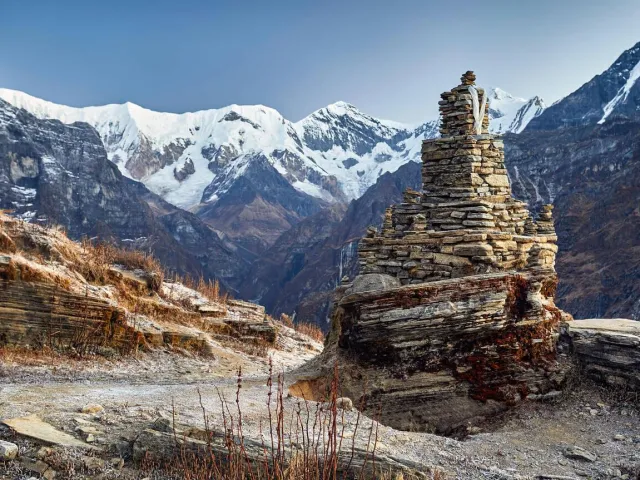
The 12-day Poon Hill and Mardi Himal Trek offered by Asiana Treks and Tours is an extraordinary journey blending vibrant cultural experiences, breathtaking Himalayan panoramas, and invigorating trekking challenges. This trek is designed for adventurers looking to immerse themselves in the Annapurna region’s natural beauty and rich cultural heritage while trekking moderate yet rewarding routes.Your adventure begins with your arrival in Kathmandu, Nepal’s bustling capital, where you are transferred to the popular tourist hub of Thamel. Here, you will have time to rest and prepare for the trek, including a guided tour of Kathmandu’s UNESCO World Heritage sites, such as the famous Durbar Squares, Swayambhunath (Monkey Temple), and Pashupatinath Temple.On Day 2, you travel from Kathmandu to Pokhara by scenic road, entering the gateway to the Annapurna region. The trek officially begins from Ulleri, taking you through rhododendron forests and traditional villages, leading to Ghorepani. The highlight here is the early morning hike to Poon Hill, where you witness an unforgettable sunrise over the majestic peaks of Dhaulagiri, Annapurna, and Machhapuchhre (Fishtail).Following Poon Hill, the trek proceeds through Tadapani and Landruk, quaint villages showcasing local Gurung culture. The route then transitions toward the serene Mardi Himal trail, ascending gradually to High Camp and the Mardi Himal Base Camp at 4500 meters, revealing spectacular close-up views of Annapurna South and Machhapuchhre. The return journey descends through forested ridges and traditional villages before heading back to Pokhara and finally Kathmandu for departure.Key Highlights:Explore Kathmandu’s cultural landmarksScenic drive from Kathmandu to PokharaSunrise at Poon Hill with panoramic Himalayan viewsTrek through charming Gurung villagesAscend Mardi Himal Base Camp for close mountain viewsMix of nature, culture, and mountain adventure2. Poon Hill with Mardi Himal Trekking PackageThe Asiana Treks and Tours Poon Hill with Mardi Himal package is thoughtfully crafted to provide a balance of trekking, sightseeing, and cultural immersion. This all-inclusive package includes airport pickups, comfortable accommodations in Kathmandu and Pokhara, quality teahouse stays during the trek, and professional trekking support.Included are experienced, certified guides and friendly porters who carry your heavy gear, ensuring a safe and enjoyable trek. Meals during trekking days include nutritious breakfasts, lunches, and dinners, with dietary options available upon request. Transportation is provided throughout, including Kathmandu to Pokhara by private vehicle and transfers between trekking trailheads.Asiana Treks and Tours focuses on sustainable tourism, working closely with local communities to support responsible trekking and eco-friendly practices. The package also includes trekking permits and insurance for guides and porters.Package Inclusions:Airport pick-up and drop-offPrivate transportation (Kathmandu-Pokhara-Kathmandu)Accommodations in hotels and teahousesProfessional trekking guide and portersAll meals during trekkingTrekking permits and entrance feesSupport for sustainable tourism3. Poon Hill with Mardi Himal Trek ItineraryDay 1: Arrival in Kathmandu; transfer to ThamelDay 2: Drive Kathmandu to Pokhara (5-6 hours)Day 3: Drive Pokhara to Birethanti; trek to Ulleri (5 hours)Day 4: Trek Ulleri to Ghorepani (5-6 hours)Day 5: Early morning hike to Poon Hill; trek Ghorepani to Tadapani (5-6 hours)Day 6: Trek Tadapani to Landruk (5-6 hours)Day 7: Trek Landruk to Low Camp (5-6 hours uphill)Day 8: Trek Low Camp to High Camp (4-5 hours)Day 9: Trek High Camp to Mardi Himal Base Camp (4500 m) and back to Badal Danda (8-10 hours)Day 10: Trek Badal Danda to Sidding; drive Sidding to Pokhara (alternative trekking route available)Day 11: Drive Pokhara to Kathmandu (5-6 hours)Day 12: Departure from NepalThis itinerary provides a gradual acclimatization profile, allowing trekkers to enjoy stunning landscapes, cultural encounters, and challenging yet manageable trekking days.4. Poon Hill with Mardi Himal Trek DistanceThe total trekking distance covered during this 12-day adventure is approximately 85 to 100 kilometers, depending on the chosen descent route from Badal Danda to Pokhara.Kathmandu to Pokhara road trip: ~200 kilometersTrek Pokhara to Ulleri: ~12 kmUlleri to Ghorepani: ~14 kmGhorepani to Tadapani: ~12 kmTadapani to Landruk: ~10 kmLandruk to Low Camp: ~8 kmLow Camp to High Camp: ~6 kmHigh Camp to Mardi Himal Base Camp and back: ~18 km (round trip)Badal Danda to Sidding to Pokhara (alternative): ~10-12 kmTrekking days vary from 4 to 10 hours, with elevation ranging from 1,000 meters in Pokhara to 4,500 meters at Mardi Himal Base Camp.5. Poon Hill with Mardi Himal Trekking Cost 2026/2027The cost for the Poon Hill with Mardi Himal Trek in 2026/2027 with Asiana Treks and Tours typically ranges between $1,100 to $1,400 USD per person. The price depends on the group size, customization, and additional services requested.What’s included in the cost:Airport transfers and transport Kathmandu-Pokhara-KathmanduAccommodation in hotels and teahousesProfessional guide and porter servicesAll meals during trekkingTrekking permits and government feesNecessary equipment and supportOptional extras like private rooms, additional sightseeing tours, or special dietary meals may affect the final price.Booking early with Asiana Treks and Tours ensures the best price, personalized service, and smooth planning for your Himalayan adventure.Poon Hill with Mardi Himal Trek Price BreakdownThe Poon Hill with Mardi Himal Trek with Asiana Treks and Tours offers excellent value for a premium Himalayan experience. The cost generally ranges from $1,100 to $1,400 USD, depending on group size, season, and any personalized options you choose.The price includes essential services to ensure a comfortable and safe trek:Airport pick-up and drop-off in KathmanduPrivate transport between Kathmandu and PokharaAccommodation in Kathmandu, Pokhara, and teahouses during trekkingLicensed trekking guide and porter supportThree meals a day while trekkingTrekking permits and national park feesSustainable tourism and community support feesOptional extras might include private rooms, extra sightseeing, or special dietary meals, which could affect the total price.Choosing this package means you avoid hidden costs and logistical headaches, as Asiana Treks and Tours handles all permits, bookings, and arrangements professionally.Price Highlights:All-inclusive trekking packageProfessional guide and porter servicesComfortable accommodation and mealsTrekking permits and park fees includedOptional add-ons availableWith transparent pricing and no compromise on quality, this trek package delivers a seamless Himalayan adventure.Poon Hill with Mardi Himal Trek Altitude GuideAltitude plays a crucial role in your trekking experience on the Poon Hill with Mardi Himal route. The trek starts at lower elevations in Pokhara (~1,000 m) and ascends gradually to Mardi Himal Base Camp at around 4,500 meters.Here is a quick altitude progression guide:Pokhara: 1,000 m (start point)Ulleri: ~2,070 mGhorepani/Poon Hill: ~2,850 m / 3,210 m (sunrise viewpoint)Tadapani: ~2,630 mLandruk: ~1,600 mLow Camp: ~2,800 mHigh Camp: ~3,600 mMardi Himal Base Camp: ~4,500 mAs you ascend, oxygen levels decrease, which may cause altitude sickness if proper acclimatization is not followed. The itinerary by Asiana Treks and Tours is designed with gradual ascent and rest days to minimize risks.Altitude Tips:Hydrate well throughout the trekAscend slowly and avoid rushingListen to your body and report any symptomsRest days included for acclimatizationUnderstanding altitude effects helps ensure a safe, enjoyable trek with stunning high-altitude Himalayan views.Why Choose Poon Hill with Mardi Himal Trek?The Poon Hill with Mardi Himal Trek stands out as one of the best treks in Nepal due to its unique blend of stunning mountain vistas, cultural richness, and moderate trekking difficulty.Reasons to choose this trek with Asiana Treks and Tours:Spectacular panoramic views of Annapurna, Dhaulagiri, Machhapuchhre, and beyondA sunrise experience at Poon Hill, one of Nepal’s most iconic viewpointsLess crowded and quieter trails compared to other Annapurna treksRich cultural encounters with Gurung and Magar villages along the routeCombination of classic Poon Hill trek and the adventurous Mardi Himal trailExperienced local guides and professional support from Asiana Treks and ToursWell-planned itinerary balancing trekking effort and rest for acclimatizationThis trek suits those who want a fulfilling Himalayan adventure that mixes nature, culture, and moderate physical challenge in one itinerary.Preparing for Poon Hill with Mardi Himal TrekPreparation is key for a successful Poon Hill with Mardi Himal trek. Asiana Treks and Tours recommends several important steps to get ready physically and mentally.Physical preparation:Regular cardio workouts like running, hiking, or cyclingStrength training focusing on legs, core, and backPractice trekking with a loaded backpackMaintain good overall fitness and flexibilityPacking essentials:Warm layered clothing and waterproof jacketTrekking boots with good ankle supportSleeping bag suitable for cold mountain nightsSun protection (hat, sunglasses, sunscreen)Trekking poles, first aid kit, and reusable water bottleHealth precautions:Get travel insurance with trekking coverageAcclimatize properly and follow guide’s adviceStay hydrated and eat nutritious foodAsiana Treks and Tours provides a pre-trek briefing to ensure all participants are well-prepared for the adventure ahead.What to Expect on the 12–14-Day Poon Hill with Mardi Himal Trek AdventureExpect a thrilling blend of cultural immersion, physical challenge, and breathtaking mountain scenery on this trek.Starting with the vibrant cities of Kathmandu and Pokhara, you will quickly transition to remote mountain villages surrounded by rhododendron forests and terraced fields. The highlight includes the spectacular sunrise at Poon Hill, with views of towering peaks like Annapurna South and Dhaulagiri.The Mardi Himal trail offers quieter, less crowded trekking paths, gradually climbing through dense forests to alpine meadows and the high base camp. The views of Machhapuchhre’s sheer face and surrounding peaks from the base camp are unforgettable.Days vary in trekking duration, generally between 4 to 10 hours, with gradual altitude gains allowing for acclimatization. Evenings are spent in cozy teahouses enjoying local hospitality and nutritious meals.What you’ll experience:Diverse landscapes from forests to high alpine terrainTraditional Gurung and Magar villagesMagnificent Himalayan sunrises and sunsetsModerate physical challenge with rewarding vistasProfessional support by guides and portersThis trek perfectly balances adventure and cultural discovery for an unforgettable Himalayan journey.Oxygen Levels on Poon Hill with Mardi Himal TrekAs you ascend to higher altitudes on the Poon Hill with Mardi Himal trek, oxygen levels decrease, which can impact physical performance and wellbeing.At sea level, oxygen concentration is about 21%. At Mardi Himal Base Camp (4,500 m), oxygen availability drops to roughly 60% of sea level levels. This reduced oxygen makes breathing more difficult and increases fatigue.To mitigate altitude sickness risks, the trek follows a gradual ascent profile with rest days and plenty of hydration. Your guide from Asiana Treks and Tours will monitor health signs and adjust pace accordingly.Key points on oxygen and altitude:Oxygen decreases with altitude—less oxygen in each breathSymptoms of altitude sickness include headache, dizziness, nauseaAscend slowly, rest, and hydrate to acclimatize properlyMedication (like Diamox) can be considered after medical consultationUnderstanding oxygen effects helps trekkers prepare mentally and physically, ensuring a safer, more enjoyable trek.Major Villages and Scenic Viewpoints on Poon Hill with Mardi Himal Trek RouteThe Poon Hill with Mardi Himal Trek offers trekkers the chance to visit some of the most charming villages and breathtaking viewpoints in the Annapurna region. Starting from Ulleri, you traverse lush rhododendron forests to reach Ghorepani, a picturesque village famous for its panoramic Himalayan views. Ghorepani serves as the gateway to the iconic Poon Hill, an early morning hike destination where trekkers witness a spectacular sunrise over Annapurna, Dhaulagiri, and Machhapuchhre.Other significant villages include Tadapani, known for its serene environment and rich flora, and Landruk, a traditional Gurung settlement where trekkers can experience local culture and hospitality firsthand. Further along the trail, you reach Low Camp and High Camp, offering stunning views of the Mardi Himal range with lush forests transitioning to alpine meadows.Finally, Mardi Himal Base Camp at 4,500 meters provides close-up views of majestic peaks like Machhapuchhre (Fishtail), Annapurna South, and Hiunchuli. Each village and viewpoint along this trek provides unique cultural insights and natural beauty.Key Highlights:Ghorepani and Poon Hill sunrise viewpointsTraditional Gurung villages: Landruk and TadapaniForest and alpine meadows transition from Low Camp to High CampClose-up views of Machhapuchhre and Annapurna peaks at Mardi Himal Base CampThis route perfectly balances cultural immersion with breathtaking natural landscapes.Flora and Fauna of Poon Hill with Mardi Himal TrekThe Poon Hill with Mardi Himal trek offers a diverse range of flora and fauna, making it a delight for nature enthusiasts. The trek passes through various ecological zones, from subtropical forests at lower elevations to alpine meadows near the base camp.In the lower regions around Ulleri and Ghorepani, trekkers encounter dense rhododendron forests—Nepal's national flower—especially vibrant in spring when these trees bloom in brilliant reds and pinks. Other trees include oak, pine, and maple, providing rich habitat for birds and animals.The trek is home to various wildlife species, including Himalayan monal pheasants, the colorful national bird of Nepal, and elusive mammals such as barking deer, Himalayan black bears, and langur monkeys. Bird watchers can spot a variety of species like the redstart, laughing thrush, and woodpeckers.At higher altitudes near Mardi Himal Base Camp, the flora shifts to hardy alpine plants, mosses, and wildflowers adapted to colder temperatures and thinner air.Nature Highlights:Rhododendron and oak forestsHimalayan monal and diverse birdlifeMammals: barking deer, Himalayan black bear, langur monkeysAlpine flora near base camp with wildflowers and mossesThis rich biodiversity adds an exciting natural dimension to the trekking experience.Festivals and Local Culture Along Poon Hill with Mardi Himal Trek RouteThe Poon Hill with Mardi Himal trek provides an excellent opportunity to explore the vibrant local culture and traditional festivals of Nepal’s ethnic communities, especially the Gurung and Magar peoples.Villages like Landruk and Tadapani are predominantly inhabited by the Gurung community, known for their warm hospitality and unique customs. Trekkers may witness traditional music, dance, and festivals, especially if trekking during important cultural events like Tihar (Festival of Lights) or Dashain, Nepal’s biggest festival celebrating the victory of good over evil.During these festivals, villagers dress in colorful traditional attire, perform ritual dances, and share local delicacies. The region is also known for its rich oral traditions, including storytelling and folk songs that narrate local legends and Himalayan life.Participating or observing these cultural events enriches the trek, offering deeper insight into the everyday lives, beliefs, and traditions of Nepal’s mountain communities.Cultural Highlights:Gurung and Magar traditional villagesFestivals: Tihar, Dashain, and local celebrationsTraditional music, dance, and attireLocal hospitality and culinary experiencesThis cultural immersion complements the stunning natural beauty of the trek.Why Book with Asiana Treks and Tours for Poon Hill with Mardi Himal TrekBooking your Poon Hill with Mardi Himal Trek with Asiana Treks and Tours guarantees a well-organized, safe, and memorable Himalayan adventure. Asiana is renowned for its personalized service, experienced guides, and commitment to sustainable and responsible tourism.They provide licensed and knowledgeable local guides who ensure your safety and enrich the experience with insights into local culture, geography, and ecology. Porters are hired to ease your load, allowing you to enjoy the trek without unnecessary strain.Asiana Treks and Tours emphasizes comfort by arranging quality accommodations and nutritious meals in teahouses throughout the trek. They also handle all logistics, permits, and transportation, removing the stress of planning.Moreover, Asiana actively supports local communities and eco-friendly trekking practices, helping to preserve the natural and cultural heritage of the Annapurna region.Why Choose Asiana Treks:Experienced and licensed local guidesSupport for porters and sustainable tourismQuality accommodations and mealsAll permits and logistics managedPersonalized and attentive serviceWith Asiana Treks, you embark on a seamless, rewarding Himalayan adventure.How to Book Poon Hill with Mardi Himal TrekBooking your Poon Hill with Mardi Himal Trek with Asiana Treks and Tours is straightforward and convenient. You can start by visiting their official website or contacting their customer service via email or phone to inquire about availability, customized itineraries, and pricing.Once you decide, Asiana will provide a detailed itinerary, booking confirmation, and payment instructions. A deposit is usually required to secure your place, with the balance payable before the trek begins.Asiana Treks offers flexibility in booking dates and group sizes, catering to solo trekkers, couples, and groups. They also provide pre-trek support, including gear advice and travel tips, ensuring you are well-prepared.Booking Steps:Contact Asiana Treks and Tours via website or emailDiscuss itinerary, dates, and special requestsConfirm booking with a deposit paymentReceive detailed pre-trek information and supportArrive in Nepal ready for your adventure!Booking early is advised, especially for peak trekking seasons, to ensure availability and the best rates.Annapurna Region Trekking: Guides, Tips & Himalayan AdventuresDiscover the beauty of Nepal’s Annapurna region with Asiana Treks & Tours. Explore breathtaking mountain landscapes, authentic local culture, popular trekking routes, and practical tips to help you plan an unforgettable Himalayan adventure.Annapurna Base Camp vs Everest Base Camp: The Best TrekTrekking Equipment List for Asiana Treks & ToursTrekking Permit Requirements for Different Regions in NepalBest Sunrise and Sunset Destinations in NepalTop Successful Trek for Beginners – Annapurna Base CampMost Popular Trek with High Success Rate – Annapurna Base Camp Trek (ABC) TrekHow to Prepare for the Annapurna Base Camp Trek (Gear, Fitness & Tips)Ghorepani Poon Hill Trek GatewayTop 26 Annapurna Region Trekking Packages in Nepal – The Ultimate GuideTadapani Diaries: One Magical Night in the MountainsDiscovering Ghandruk: A Peaceful Village in the Heart of NepalTrekking the Best of Annapurna: Poon Hill to Mardi HimalWhy Chhomrong is the Heart of the Annapurna Base Camp TrekAnnapurna Base Camp (ABC) & Machhapuchhre Base Camp (MBC) Trek: Two Base Camps, One Incredible JourneyExploring Sinuwa on the Annapurna TrailDeurali: A Peaceful Mountain Village on the ABC TrailBamboo: A Hidden Gem of the ABC TrekDovan Nepal: Peaceful Stopover on the Annapurna Base Camp TrailHimalaya Village: A Quiet Haven on the Way to Annapurna Base CampDhampus Village – Annapurna Classical Alternative GatewayPothana: The Alternative Gateway to Annapurna Base Camp and Mardi HimalBest Camping and Overnight Stays: Australian Camp & Mardi Himal TrekList of Hotel in Mardi Himal Base Camp TrekTrekking to Low Camp: A Peaceful Path to Mardi HimalForest Camp Adventures: Exploring the Mardi Himal Trek in NepalHigh Camp on the Mardi Himal Trek | Views, Altitude & Trekking GuideDiscovering the Magic of Mardi Himal ViewpointTop Highlights of the Mardi Himal Trek in NepalBest Time to Trek Mardi Himal: Tips for Perfect ViewsA Beginner’s Guide to the Mardi Himal Trek in NepalSurprising Facts About the Mardi Himal TrekEssential Guide to Mardi Himal Trekking Permits in NepalMardi Himal Trek Info: Elevation, Altitude, Height and WeatherMardi Himal Trek Accommodation and Food TipsBest Time to Trek Annapurna Base Camp in NepalTop Highlights of the Annapurna Base Camp TrekFood and Accommodation on the ABC Trek: What It’s Really LikeAltitude Tips for a Safe Annapurna Base Camp TrekAnnapurna Base Camp Permits: Costs, Process, and RequirementsTop Tips and Facts for Trekking to Annapurna Base CampAnnapurna Base Camp Trek: Elevation, Height & Temperature GuideDobato Stopover: Experiencing the Heart of the Khopra Danda RouteUpper Chistibung: What to Expect on the Way to Khopra DandaExploring Khopra Danda Ridge and Khayar LakeDiscover Swanta’s Beauty on the Khopra Danda TrailAmazing Facts About Khayar Lake in the Annapurna RegionBayeli Kharka Adventure: From Khopra Danda with Stunning ViewsKhopra Danda Trekking Guide: Cost, Permits, Meals, Lodging and Best SeasonExploring Mardi Himal, ABC, and Khopra Ridge in One Epic JourneyKhopra Khair Lake with Annapurna Base Camp Trek: A Complete JourneyKhopra Khair Lake with ABC Trek: Nature, Culture, and MountainsComplete Guide to Mohare Danda Trekking in NepalSunrise Views from Mohare Danda: What to ExpectTop Highlights of Poon Hill and Mardi Himal TrekExploring Poon Hill and Mardi Himal: A Beginner’s GuideExploring the Ghorepani Dhampus Circuit Trek in NepalAn Amazing Hike from Galeshwor to Nangi via Bans Kharka : Mohare Danda TrekkingLandruk: Gateway to the Stunning Mardi Himal ViewsMardi Himal Adventure: Exploring Badal Danda on the Siding TrekSunrise Views from Poon Hill and Mulde ViewpointsDhaulagiri Annapurna Trail: A New Alternative Trek in NepalBest Nepal Tour Packages: Adventure, Honeymoon, Senior Tours, Himalayan Highlights, Triangle & Sunrise Hill Station ToursIs It Possible to Cycle the Annapurna Circuit in Nepal?Besisahar – The Heart of Lamjung District: Gateway to the HimalayasExploring Jagat During the Annapurna Circuit TrekDharapani Village in Nepal: Where the Manaslu Circuit and Annapurna Circuit Trails Meet PointChame Village: A Peaceful Stop on the Annapurna Circuit TrekDiscover Upper Pisang: A Hidden Gem on the Annapurna CircuitExploring Lower Pisang: A Gateway on the Annapurna CircuitManang: The Heart of the Annapurna Circuit TrekYak Kharka (4,020m): A Must-Stop Village on the Annapurna CircuitThorong Phedi: Final Preparation Before Thorong La PassCrossing Thorong La Pass (5,416 m): The Highest Point of the Annapurna CircuitMuktinath in Mustang: A High-Altitude Spiritual Journey on the Annapurna CircuitJomsom (2,743 m): The Windy Valley That Connects Annapurna and Upper Mustang


 (2)
(2)  100% recommend (0)
 (0)
(0)