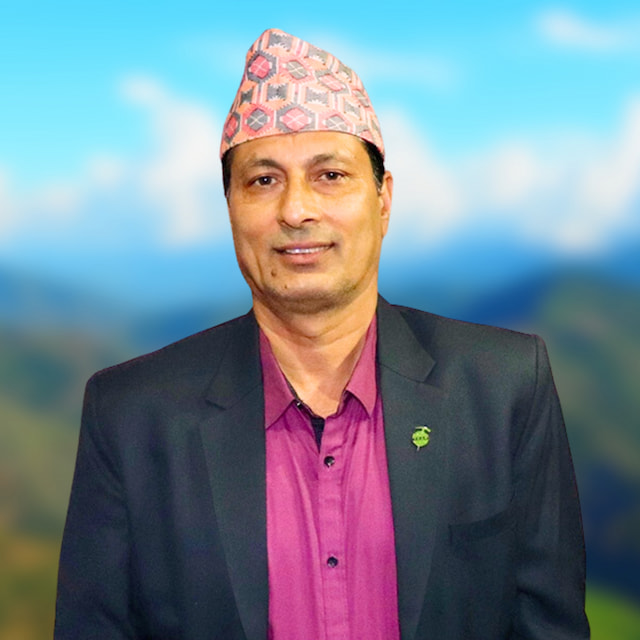

Nirmal Purja, widely known as Nims or Nimsdai, was a Nepali-born British mountaineer and former British special forces soldier. Born on 25 July 1983 in Dana, Myagdi, Nepal, he rose from a modest rural background to become one of the most prominent high-altitude climbers of his generation. His mountaineering career became internationally recognized for extraordinary speed, endurance, and his repeated ascents of the world's 8,000-metre peaks.
Purja became particularly famous for Project Possible 14/7, his ambitious attempt to climb all 14 eight-thousanders in seven months. He completed the challenge in six months and six days in 2019, using supplementary oxygen, and subsequently established further records for climbing the world's highest mountains without supplemental oxygen.
His achievements included the first successful winter ascent of K2 with a Nepali team in 2021 and numerous speed records involving Everest, Lhotse, Makalu, and other Himalayan and Karakoram giants. His life and Project Possible were also documented in the Netflix film 14 Peaks: Nothing Is Impossible.
Purja died on 30 July 2026 in an avalanche on Broad Peak in Pakistan's Karakoram range. His death brought an end to the life of a mountaineer whose achievements had already become an important part of modern Himalayan climbing history.
Nirmal Purja became internationally famous for changing perceptions of what was possible in high-altitude mountaineering. His combination of military experience, physical conditioning, technical climbing ability, and an unusually aggressive approach to expedition scheduling allowed him to complete climbs that traditionally required many years.
The name Nimsdai became closely associated with determination and high-altitude speed. His career was not limited to climbing the 14 highest mountains on Earth. He repeatedly returned to these peaks, established speed records, climbed without supplemental oxygen, and participated in historic expeditions such as the first winter ascent of K2.
Purja's story also attracted attention beyond mountaineering because of his difficult financial journey. Before Project Possible, he left a secure military career and struggled to obtain sponsorship. He ultimately took substantial personal financial risks to pursue his objective.
Therefore, his legacy combines athletic achievement, military discipline, expedition leadership, charitable work, environmental initiatives, and controversy. His achievements also contributed to the international visibility of Nepal's adventure-tourism and mountaineering industry, inspiring greater interest in Himalayan trekking, climbing, and high-altitude expeditions.
Nirmal Purja was born in Dana, a small village in Nepal's Myagdi District, on 25 July 1983. The village lies in the Dhaulagiri region, an area surrounded by some of Nepal's most dramatic mountain landscapes. He grew up as one of five children in a financially poor family.
His father, Nanda Bahadur Purja, served as a Gurkha soldier in the Indian Army, while his mother came from a farming background. Purja later recalled that his childhood was marked by poverty. His family's circumstances nevertheless did not prevent him from developing ambitious goals.
Three of his older brothers became Gurkha soldiers, and their careers strongly influenced Purja's own ambitions. His family helped support his education at an English-speaking boarding school, where he also developed skills in kick-boxing.
Later, Purja moved to the United Kingdom and studied at Loughborough University, where he obtained a postgraduate diploma in security management. His education, military service, physical training, and Himalayan upbringing eventually combined to create the foundation for his mountaineering career.
Purja joined the Brigade of Gurkhas in 2003, following the family tradition of military service. His career later took him into the United Kingdom's elite special forces community. In 2009, he became the first Gurkha to join the Royal Navy's Special Boat Service (SBS).
His military career provided experience in demanding environments, including cold-weather operations. Purja later described his special forces service as an important preparation for the physical and psychological challenges of extreme-altitude mountaineering.
Military service also taught him discipline, teamwork, planning, risk management, and the ability to operate under extreme pressure. These qualities became particularly important when he began attempting multiple eight-thousanders within exceptionally short periods.
In 2018, Purja made the major decision to leave the SBS and pursue mountaineering full-time. The decision involved significant financial risk because he was giving up a secure military career and future pension. Nevertheless, he believed that his ambitions in the mountains justified the sacrifice.
Unlike many famous Himalayan climbers, Purja did not spend decades gradually building a climbing career before attempting the highest peaks. His major Himalayan career developed rapidly. In 2012, he completed his first major Himalayan climb by reaching the summit of Lobuche East, despite having relatively little previous mountaineering experience.
His first eight-thousander came in 2014, when he climbed Dhaulagiri, one of the world's highest and most technically demanding mountains. He subsequently climbed Mount Everest in 2016 and continued accumulating experience on the world's highest peaks.
In 2017, he led the G200E Gurkha Expedition, which brought 13 Gurkhas to the summit of Everest to commemorate 200 years of Gurkha service in the British Army. This expedition demonstrated that Purja was developing not only as a climber but also as an expedition leader.
His transition into full-time professional mountaineering came in 2018 after leaving the SBS. He then developed his most ambitious project: climbing all 14 eight-thousanders in less than seven months.
The project required enormous financial and logistical preparation. When conventional sponsorship proved difficult to obtain, Purja reportedly remortgaged his home to help finance the expedition. He then began Project Possible 14/7, which ultimately transformed him into an internationally recognized mountaineering figure.
Nirmal Purja's most famous mountaineering undertaking began in 2019 with an extraordinarily ambitious goal: to climb all 14 of the world's eight-thousanders in less than seven months. He called the project Project Possible 14/7, reflecting his belief that an achievement that appeared impossible could be accomplished through determination, preparation, teamwork, and disciplined execution. At the time, climbing all 14 peaks was normally regarded as a challenge requiring many years.
The project also represented a major personal gamble. Purja had left the British military in 2018 to pursue mountaineering professionally and had to overcome significant difficulties in securing sponsorship. He ultimately used substantial personal financial resources to help fund the expedition. His previous experience with the Brigade of Gurkhas and the Special Boat Service gave him valuable skills in leadership, endurance, logistics, and operating under extreme conditions.
Project Possible 14/7 was Purja's campaign to climb all 14 mountains higher than 8,000 metres within seven months. The challenge covered mountains across Nepal, Pakistan, and Tibet/China, requiring him and his team to move rapidly between different climbing regions and coordinate permits, transportation, weather windows, equipment, Sherpa support, and high-altitude logistics.
Purja began the challenge with Annapurna in April 2019 and completed the final summit, Shishapangma, on 29 October 2019. He completed the entire sequence in six months and six days, finishing within his original seven-month target. During the project, his team also achieved a remarkable sequence on Everest, Lhotse, and Makalu, with the final five summits of the first phase completed in only 12 days.
Project Possible became more than a climbing record. It became the central story of Purja's public career and was later presented to an international audience through the Netflix documentary 14 Peaks: Nothing Is Impossible. The project demonstrated how military-style planning, rapid decision-making, experienced high-altitude teams, and an intense commitment to a single objective could reshape conventional expectations in Himalayan mountaineering.
The world's 14 eight-thousanders are the only mountains on Earth whose summits rise above 8,000 metres. They include Mount Everest, K2, Kangchenjunga, Lhotse, Makalu, Cho Oyu, Dhaulagiri, Manaslu, Nanga Parbat, Annapurna, Gasherbrum I, Broad Peak, Gasherbrum II, and Shishapangma. Purja's Project Possible placed all 14 at the centre of his mountaineering career.
His achievement was particularly remarkable because the mountains are spread across the Himalaya and Karakoram and differ greatly in terrain, weather, technical difficulty, and climbing conditions. Purja did not simply complete the collection over many years; he attempted to compress the entire journey into a remarkably short period.
After completing Project Possible with supplementary oxygen, Purja continued returning to the eight-thousanders. He later established additional records for ascents without supplemental oxygen and accumulated numerous repeat summits. His repeated climbs of Everest, K2, Kangchenjunga, Lhotse, and other peaks made the 14 mountains a continuing part of his career rather than a single completed challenge.
Purja's 14-peaks journey began with Annapurna on 23 April 2019, followed by Dhaulagiri, Kangchenjunga, Everest, Lhotse, and Makalu during the first phase. The rapid succession of these summits demonstrated the strategy behind Project Possible: instead of spending months on one mountain, Purja and his team moved between peaks whenever weather, permits, and climbing conditions allowed.
The second phase shifted to Pakistan, where Purja climbed Nanga Parbat, Gasherbrum I, Gasherbrum II, K2, and Broad Peak. He then completed the final phase with Cho Oyu, Manaslu, and Shishapangma. His summit of Shishapangma on 29 October 2019 brought the six-month-and-six-day project to its historic conclusion.
Purja subsequently returned to many of these mountains. His later ascents included additional climbs of K2, Kangchenjunga, Everest, Lhotse, Makalu, Cho Oyu, Dhaulagiri, Manaslu, Nanga Parbat, Annapurna, the Gasherbrums, Broad Peak, and Shishapangma. These repeated ascents contributed to his reputation as one of the most prolific high-altitude climbers of his generation.
Broad Peak, rising above 8,000 metres in Pakistan's Karakoram range, became an important mountain in Purja's career. During Project Possible, he reached its summit on 26 July 2019, just two days after climbing K2 and shortly after completing the Gasherbrum peaks. The achievement illustrated the extraordinary pace of his Pakistan expedition.
Purja returned to Broad Peak several times after Project Possible. The mountain was therefore both part of his historic 14/7 journey and part of his later high-altitude career. His repeated expeditions to the Karakoram reflected his willingness to return to demanding peaks even after achieving his original objectives.
Broad Peak ultimately became tragically significant in the final chapter of Purja's life. On 30 July 2026, an avalanche struck his team at approximately 6,600 metres between Camps 2 and 3 on the mountain's west ridge. Purja and the other climbers on the team died in the disaster. His death occurred on a mountain that had previously been one of the defining peaks of his record-breaking career.
K2, Everest, and Lhotse were among the defining mountains of Nirmal Purja's Project Possible journey. During the first phase of the 2019 challenge, Purja climbed Everest and Lhotse in exceptionally rapid succession. He then completed Makalu shortly afterward, establishing a remarkable sequence across three of the world's highest mountains.
The Pakistan portion of the project later brought Purja to K2, the world's second-highest mountain. He reached the summit of K2 on 24 July 2019 and Broad Peak two days later. The ability to move quickly between these demanding peaks became one of the defining characteristics of his climbing strategy.
Project Possible 14/7 was designed around an extremely ambitious seven-month deadline. Purja began the challenge with Annapurna on 23 April 2019 and moved through the world's 14 eight-thousanders in three major phases. His strategy depended on careful logistics, favorable weather windows, experienced climbing partners, and the ability to recover quickly between major ascents.
On 29 October 2019, Purja reached the summit of Shishapangma in Tibet, completing the project in six months and six days. The result was substantially faster than his original seven-month target. During the campaign, his team traveled between the Himalaya and Karakoram while coordinating permits, transportation, equipment, support personnel, and changing mountain conditions.
The achievement made Purja an international mountaineering celebrity and established Project Possible as one of the most extraordinary high-altitude campaigns of the modern era. His record for completing all 14 eight-thousanders with supplementary oxygen stood until 2023, when Kristin Harila and Tenjen Sherpa completed the collection faster.
Purja's reputation extended well beyond the original 14/7 record. He became particularly known for climbing major peaks at exceptional speed and for returning to the world's highest mountains multiple times. Among his best-known achievements was becoming the first person to summit Everest, Lhotse, and Makalu within 48 hours.
He also participated in the historic first winter ascent of K2 in January 2021. Purja was the only member of the successful Nepali team to reach the K2 summit without supplementary oxygen, adding another significant achievement to his career.
In later years, Purja continued to establish records involving oxygen-free ascents and rapid traverses. In 2024, he recorded a new fastest time for climbing all 14 eight-thousanders without supplementary oxygen, while his later Everest-Lhotse achievements further demonstrated his extraordinary speed at altitude.
Nimsdai's expeditions involved significant physical, financial, logistical, and environmental challenges. Climbing above 8,000 metres exposes mountaineers to extreme cold, low oxygen levels, high winds, avalanches, unstable terrain, and rapidly changing weather. Completing several such climbs in succession increased the physical and organizational pressure on Purja and his teams.
His Project Possible campaign also faced serious financial difficulties. After leaving the Special Boat Service, Purja had to find sponsorship for an expedition that required extensive travel, equipment, permits, support staff, and high-altitude logistics. He eventually used personal financial resources to help finance the project, making the challenge a substantial personal gamble.
Purja's public career was also affected by controversy. In 2024, allegations of sexual misconduct were reported by The New York Times involving Finnish mountaineer Lotta Hintsa and physician April Leonardo. Purja denied the allegations through his lawyer and characterized the accounts as false and defamatory. The controversy led some commercial sponsors to withdraw or suspend promotional activities involving him.
His expedition achievements have also generated wider discussion about modern high-altitude mountaineering, including the use of supplementary oxygen, commercial expedition support, speed climbing, environmental impact, and the distinction between reaching a mountain's recognized summit and stopping short of its highest geographical point. Research published in 2022 examined questions surrounding Purja's 2019 ascents of Dhaulagiri and Manaslu; subsequent climbs were made to the true summits of those mountains.
Purja documented his experiences and philosophy of achievement in his autobiography Beyond Possible, published by Hodder & Stoughton in November 2020. The book describes his journey from rural Nepal and military service to the world of elite mountaineering and explains the mindset behind his attempt to climb all 14 eight-thousanders in record time.
The book helped introduce readers to the personal and practical challenges behind Project Possible. It explores themes of discipline, resilience, ambition, financial risk, teamwork, and overcoming seemingly impossible objectives. The title reflects the central idea of Purja's career: that accepted limitations can sometimes be challenged through preparation and determination.
His story reached an even larger global audience through the Netflix documentary 14 Peaks: Nothing Is Impossible, released in November 2021. The film follows the Project Possible campaign and combines climbing footage with Purja's personal story, family circumstances, fundraising difficulties, and the demanding process of moving from one eight-thousander to another.
The documentary became an important part of Purja's international legacy because it presented high-altitude mountaineering to viewers who might never have followed individual Himalayan expeditions. It also showed the human cost of pursuing an extraordinary objective, including the risks faced by Purja, his teammates, and his family.
Nirmal Purja, widely known as Nimsdai, had a major influence on modern high-altitude mountaineering through his emphasis on speed, preparation, teamwork, and ambitious expedition planning. His Project Possible 14/7 demonstrated that the world's 14 eight-thousanders could be approached as a single, carefully coordinated project rather than as separate climbs spread across decades.
His background in the Brigade of Gurkhas and the Special Boat Service contributed to a distinctive approach to expedition leadership. Military discipline, physical conditioning, logistics, and decision-making under pressure became important elements of his climbing strategy. His achievements also helped bring greater international attention to Nepalese climbers and the critical role of Nepali mountaineering teams in Himalayan expeditions.
In Nepal, Purja became a powerful symbol of ambition, resilience, and Himalayan achievement. His journey from a rural village in Myagdi to international recognition demonstrated how a person from a modest background could reach the highest levels of global mountaineering. His Gurkha background also connected his story with a long tradition of Nepalese military service overseas.
His influence extended beyond climbing through environmental and community initiatives associated with his work. The Nimsdai Foundation supported projects intended to assist mountain communities, while initiatives such as the Big Mountain Clean Up sought to address waste left behind on high-altitude expeditions. His wider expedition and tourism activities also contributed to Nepal’s growing adventure-tourism industry, helping increase international interest in Himalayan trekking, mountaineering, and high-altitude expeditions.
Internationally, his story was amplified through his book Beyond Possible and the Netflix documentary 14 Peaks: Nothing Is Impossible. These projects introduced his achievements, personal sacrifices, and expedition challenges to audiences far beyond the traditional mountaineering community.
One of the strongest lessons from Purja's career is the importance of setting ambitious goals while developing a practical plan to achieve them. Project Possible was not accomplished through motivation alone. It required extensive preparation, careful logistics, physical conditioning, experienced teammates, weather assessment, and rapid decisions at extremely high altitude.
His transition from a military career to professional mountaineering also demonstrates the importance of accepting calculated risks when pursuing a long-term ambition. Purja gave up the security of a military career and faced significant financial uncertainty while attempting to finance Project Possible. His experience shows how determination can help people continue pursuing difficult objectives even when the path is uncertain.
At the same time, his career demonstrates that courage in extreme environments must be balanced with preparation and respect for risk. High-altitude climbing remains inherently dangerous, and Purja's achievements should not be interpreted as evidence that mountains can be conquered without consequences.
Who was Nirmal Purja?
Nirmal Purja was a Nepali-born British mountaineer and former British special forces soldier. He became famous for climbing all 14 of the world's eight-thousanders in six months and six days during Project Possible in 2019.
What was Nimsdai's real name?
His full name was Nirmal Purja. He was widely known by the nickname Nims, while Nimsdai became another popular name for him. In Nepali usage, "dai" can mean elder brother.
What was Project Possible 14/7?
Project Possible 14/7 was Purja's 2019 challenge to climb all 14 mountains higher than 8,000 metres in less than seven months. He completed the challenge in six months and six days.
Which mountain was the last of the 14 peaks?
The final mountain of Project Possible was Shishapangma in Tibet. Purja reached its summit on 29 October 2019, completing the 14-peaks challenge.
Did Nirmal Purja climb K2 in winter?
Yes. Purja was part of the Nepali team that achieved the first successful winter ascent of K2 on 16 January 2021. He was the only member of the successful team to reach the summit without supplementary oxygen.
What happened to Nirmal Purja?
Purja died on 30 July 2026 after an avalanche struck his climbing team on Broad Peak in Pakistan's Karakoram range. The disaster also killed other members of the expedition.
What book did Nirmal Purja write?
Purja wrote Beyond Possible, published by Hodder & Stoughton in November 2020. The book describes his life, military career, mountaineering experiences, and Project Possible.
What documentary features Nirmal Purja?
His 14-peaks campaign was featured in the Netflix documentary 14 Peaks: Nothing Is Impossible, released in 2021.
Nirmal Purja's life became one of the most remarkable stories in modern mountaineering. From his childhood in Myagdi and his service with the Gurkhas and Special Boat Service to his extraordinary high-altitude career, he repeatedly challenged conventional ideas about what could be achieved in the mountains.
Project Possible remains the defining achievement of his career. Completing all 14 eight-thousanders in six months and six days transformed Purja into an internationally recognized mountaineer and established a new benchmark for speed and expedition logistics. His later achievements, including the first winter ascent of K2, oxygen-free records, and numerous repeat ascents, further expanded his reputation.
His legacy is also broader than records. Through his public work, environmental initiatives, mountain-community projects, books, documentary appearances, and involvement in Nepal's adventure-tourism sector, Purja helped bring global attention to Nepal's mountaineering culture and the abilities of Nepali climbers.
Although his life ended tragically on Broad Peak in 2026, his achievements remain an important part of contemporary Himalayan history. For many people, Nimsdai's story represents a combination of courage, discipline, teamwork, ambition, and an enduring determination to pursue goals that initially appear impossible.
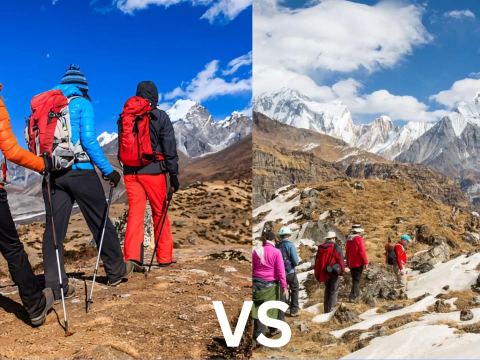
When deciding between the Annapurna Base Camp and Everest Base Camp treks, the choice largely depends on the trekkers' preferences and physical readiness.
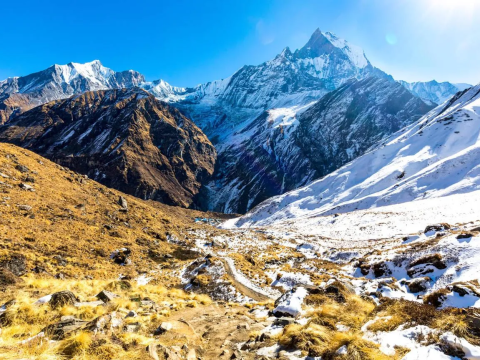
Nepal is a small, landlocked country nestled between India and China, famous worldwide for its towering Himalayan peaks, including Mount Everest—the highest point on Earth. Despite its modest size, Nepal offers an extraordinary diversity of landscapes, cultures, and experiences
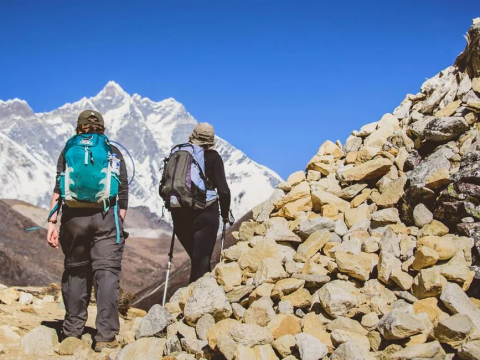
Absolutely! Trekking to Everest Base Camp is not only possible for women—it is an empowering, life-changing experience that many women from all walks of life have successfully completed. Over the years, an increasing number of solo female travelers and women-only groups


 (2)
(2)  100% recommend (0)
 (0)
(0)