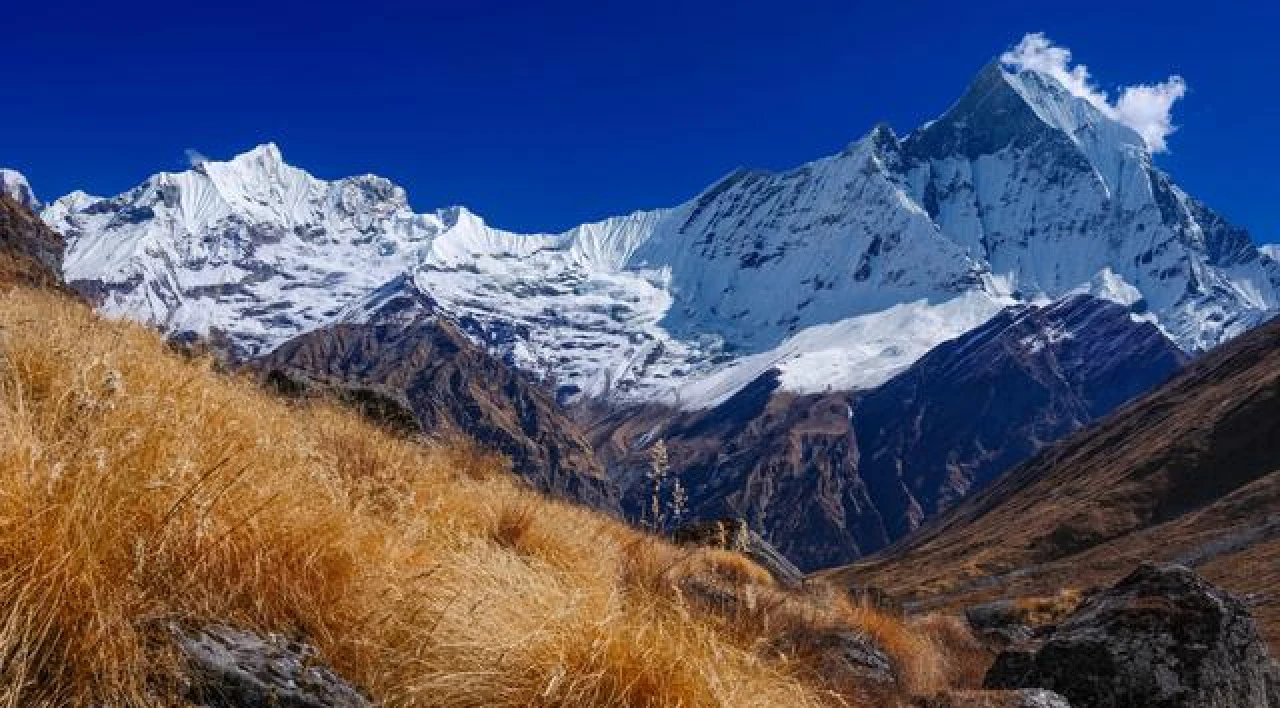
Experience the unforgettable Annapurna Base Camp Trek with Helicopter Return with Asiana Treks and Tours. Explore beautiful mountain villages, enjoy Poon Hill sunrise, reach Annapurna Base Camp (4,130m), and fly spectacularly over the Himalayas back to Pokhara.
The Annapurna Base Camp Trek with Helicopter Return is one of the most exciting and rewarding Himalayan adventures in Nepal, combining traditional trekking experiences with the convenience of a spectacular helicopter flight. Organized by Asiana Treks and Tours, this carefully designed 9-day journey takes you through beautiful mountain villages, lush forests, traditional Gurung settlements, breathtaking viewpoints, and the magnificent Annapurna Sanctuary. The adventure begins with a scenic drive from Kathmandu to Pokhara, followed by a journey towards Nayapul and a memorable trek through Ulleri, Ghorepani, Tadapani, Sinuwa, and Deurali before reaching Annapurna Base Camp at an elevation of 4,130 meters.
One of the most special experiences of this journey is visiting Poon Hill (3,210m), a famous Himalayan viewpoint offering spectacular sunrise views over the Annapurna and Dhaulagiri mountain ranges. As you continue towards Annapurna Base Camp, the landscape gradually changes from green hills and rhododendron forests to dramatic alpine scenery surrounded by towering snow-covered mountains. Reaching Annapurna Base Camp is an unforgettable achievement, where you can admire the incredible mountain amphitheater featuring Annapurna I, Machhapuchhre, Hiunchuli, and other Himalayan giants.
Instead of trekking all the way back to Pokhara, you will enjoy an extraordinary helicopter flight from Annapurna Base Camp, providing a completely different perspective of the Himalayas.
Major highlights include:
Scenic Kathmandu–Pokhara road journey.
Traditional Gurung and Magar villages.
Sunrise experience at Poon Hill.
Beautiful rhododendron forests and mountain landscapes.
Trekking through Machhapuchhre Base Camp.
Reaching Annapurna Base Camp at 4,130 meters.
Spectacular helicopter return to Pokhara.
With professional guides, comfortable arrangements, and personalized services, Asiana Treks and Tours makes this journey a memorable Himalayan experience.
2. Why Choose the Annapurna Base Camp Trek with Helicopter Return with Asiana Treks and Tours?
Choosing the right trekking company is essential for enjoying a safe, comfortable, and memorable Himalayan adventure. Asiana Treks and Tours offers the Annapurna Base Camp Trek with Helicopter Return for travelers who want to experience the natural beauty of the Annapurna region while saving valuable time on the return journey. Our carefully planned itinerary combines cultural exploration, mountain trekking, beautiful Himalayan viewpoints, and an unforgettable helicopter adventure.
With our experienced local trekking guides and knowledgeable support team, travelers can explore the Annapurna region with greater confidence and comfort. Our guides understand the mountain trails, local traditions, weather conditions, and altitude-related challenges. They provide useful information about the surrounding mountains, villages, landscapes, and cultural heritage throughout the journey. We also assist with accommodation arrangements, transportation, trekking permits, meals according to the package, and helicopter coordination.
Another important reason to choose Asiana Treks and Tours is our commitment to personalized travel experiences. Whether you are a couple, family, group of friends, solo traveler, or adventure enthusiast, we can help organize the journey according to your interests, available time, and comfort requirements. Our helicopter return option is especially suitable for travelers who want to avoid several additional days of downhill trekking.
Why travel with Asiana Treks and Tours?
Experienced and friendly local trekking guides.
Carefully organized 9-day trekking itinerary.
Professional transportation arrangements.
Assistance with necessary trekking permits.
Comfortable teahouse accommodation.
Helicopter flight coordination from Annapurna Base Camp.
Personalized services for private and group travelers.
Support with trekking preparation and altitude awareness.
Our priority is to provide a rewarding trekking experience while maintaining responsible tourism practices. From your arrival in Kathmandu to your final departure, Asiana Treks and Tours aims to make every part of your Annapurna adventure enjoyable, organized, and memorable.
3. Annapurna Base Camp Trek with Helicopter Return: Highlights and Experiences
The Annapurna Base Camp Trek with Helicopter Return offers an incredible combination of natural beauty, cultural experiences, mountain adventure, and scenic aerial exploration. During this journey, trekkers experience several different landscapes, beginning with the lively streets of Kathmandu and the beautiful lakeside atmosphere of Pokhara before entering the peaceful mountain villages of the Annapurna Conservation Area. Every trekking day introduces a new perspective of Nepal's Himalayan environment.
One of the major attractions is the early morning hike to Poon Hill, where visitors can enjoy a magnificent sunrise over the Annapurna and Dhaulagiri ranges. The golden sunlight gradually illuminates the snow-covered mountain peaks, creating one of the most memorable photographic opportunities in Nepal. Continuing through Ghorepani and Tadapani, the trail passes beautiful rhododendron forests, traditional villages, terraced farmland, and natural mountain viewpoints.
As the journey progresses, trekkers enter the spectacular Modi Khola valley and gradually approach the Annapurna Sanctuary. Machhapuchhre Base Camp provides an impressive introduction to the high Himalayan environment, with magnificent views of Machhapuchhre, Annapurna South, and surrounding peaks. The final approach to Annapurna Base Camp is particularly rewarding because the mountains surround the sanctuary in an extraordinary natural amphitheater.
Top highlights and experiences:
Exploring Pokhara and the Annapurna foothills.
Walking through traditional mountain settlements.
Enjoying sunrise at Poon Hill.
Discovering beautiful rhododendron and oak forests.
Experiencing Gurung and Magar culture.
Visiting Machhapuchhre Base Camp.
Reaching Annapurna Base Camp at 4,130 meters.
Enjoying panoramic Himalayan views from a helicopter.
Experiencing a memorable aerial journey back to Pokhara.
The helicopter return adds a luxurious and adventurous element to the trek. Instead of repeating the same walking route, you can enjoy magnificent aerial views of glaciers, deep valleys, mountain ridges, and snow-covered landscapes. Asiana Treks and Tours combines these experiences into one exceptional Himalayan holiday.
4. What to Expect on the Annapurna Base Camp Trek with Helicopter Return?
The Annapurna Base Camp Trek with Helicopter Return is a moderately challenging Himalayan trekking adventure that requires reasonable physical fitness, preparation, and a positive attitude. The journey lasts nine days and includes a combination of road transportation, mountain trekking, sunrise hiking, high-altitude exploration, and a helicopter flight. Organized by Asiana Treks and Tours, the itinerary is designed to provide an exciting mountain experience while reducing the time required for the return journey.
Your adventure begins with a drive from Kathmandu to Pokhara, followed by transportation to Nayapul or Birethanti. From there, the trekking route gradually climbs towards Ulleri, Ghorepani, and Tadapani. You can expect stone staircases, forest trails, traditional villages, suspension bridges, and spectacular mountain scenery. The early morning excursion to Poon Hill is another important part of the adventure, offering incredible views of the Annapurna and Dhaulagiri mountain ranges.
After Poon Hill, the trail continues through Tadapani, Sinuwa, and Deurali before reaching Machhapuchhre Base Camp and Annapurna Base Camp. As the elevation increases, the vegetation becomes thinner, the landscape becomes more alpine, and the mountain environment becomes increasingly dramatic. Overnight accommodation is generally provided in local teahouses and mountain lodges.
What you should expect during the trek:
Approximately 4–7 hours of walking on many trekking days, depending on the section and conditions.
Uphill and downhill stone staircases.
Basic but comfortable mountain teahouse accommodation.
Traditional Nepali meals and other available food options.
Changing weather and temperature conditions.
Increasing altitude and thinner air.
Spectacular Himalayan mountain views.
An exciting helicopter flight from Annapurna Base Camp to Pokhara.
Trekkers should prepare for cold temperatures at higher elevations and understand the importance of gradual acclimatization. Altitude sickness can affect anyone, regardless of fitness level, so it is essential to communicate symptoms to your guide and never ignore warning signs. Helicopter operations also depend on weather, visibility, and operational conditions.
With proper preparation and guidance from Asiana Treks and Tours, this journey offers a rewarding combination of adventure, comfort, and unforgettable Himalayan scenery.
5. Why Is Annapurna Base Camp One of Nepal's Most Famous Trekking Destinations?
Annapurna Base Camp is one of Nepal's most famous trekking destinations because of its extraordinary mountain scenery, accessible trekking routes, cultural diversity, and unique geographical setting. Located at approximately 4,130 meters within the Annapurna Sanctuary, the base camp provides an incredible opportunity to experience the Himalayan mountains from close range. Unlike some viewpoints that offer distant mountain panoramas, Annapurna Base Camp places visitors directly inside a spectacular natural amphitheater surrounded by enormous snow-covered peaks.
The sanctuary is home to some of the most impressive mountains in the Annapurna region, including Annapurna I (8,091m), Annapurna South, Hiunchuli, and Machhapuchhre. The surrounding landscape changes dramatically throughout the trekking journey, from subtropical forests and terraced farmland to alpine valleys, rocky mountain trails, and glacial landscapes. These geographical variations make the trek especially attractive to nature lovers, photographers, and adventure enthusiasts.
Another reason for its popularity is the opportunity to experience local Himalayan culture. The route passes through traditional Gurung and Magar communities, where visitors can observe local architecture, farming practices, traditional lifestyles, and warm mountain hospitality. The journey also offers opportunities to enjoy beautiful forests, rivers, waterfalls, and seasonal rhododendron blossoms.
Reasons Annapurna Base Camp is so famous:
Spectacular views of Annapurna I and surrounding Himalayan peaks.
A unique mountain amphitheater within the Annapurna Sanctuary.
Beautiful landscapes and diverse natural environments.
Traditional Gurung and Magar villages.
Famous mountain viewpoints, including Poon Hill.
Opportunities for photography and nature exploration.
A rewarding trekking experience suitable for prepared beginners and experienced trekkers.
Annapurna Base Camp is also an important destination for understanding Nepal's mountain tourism and conservation efforts. The region lies within the Annapurna Conservation Area, which supports biodiversity protection and community-based tourism.
With Asiana Treks and Tours, visitors can explore this famous Himalayan destination through a carefully organized itinerary and complete their adventure with a scenic helicopter flight to Pokhara.
6. What Makes the Poon Hill and Annapurna Base Camp Trek Special?
The combination of Poon Hill and Annapurna Base Camp makes this trekking adventure particularly special because it brings together two of the most beautiful experiences in the Annapurna region. Poon Hill is famous for its breathtaking sunrise panorama, while Annapurna Base Camp offers an extraordinary opportunity to stand among some of the world's highest mountains. Combining these destinations in one journey allows trekkers to experience both wide Himalayan viewpoints and the dramatic atmosphere of a high-altitude mountain sanctuary.
Poon Hill, situated at approximately 3,210 meters, is one of the most popular sunrise viewpoints in Nepal. The early morning hike from Ghorepani rewards visitors with spectacular views of the Annapurna and Dhaulagiri mountain ranges. As the first sunlight reaches the snow-covered peaks, the mountains gradually turn golden, creating an unforgettable Himalayan sunrise. The viewpoint is especially attractive to photographers and travelers who want to experience Nepal's mountain scenery without undertaking an extremely high-altitude climb.
After visiting Poon Hill, the trek continues through Tadapani, Sinuwa, and Deurali towards Annapurna Base Camp. This section introduces a different mountain environment, with deep valleys, dense forests, rivers, waterfalls, rocky trails, and impressive alpine scenery. The journey eventually reaches Machhapuchhre Base Camp and Annapurna Base Camp, where the surrounding mountain peaks create an incredible natural amphitheater.
Special experiences along the combined route:
Sunrise views from Poon Hill.
Panoramic views of Annapurna and Dhaulagiri.
Beautiful rhododendron forests around Ghorepani and Tadapani.
Exploration of traditional mountain villages.
Spectacular landscapes along the Modi Khola valley.
Views of Machhapuchhre and Annapurna South.
Reaching Annapurna Base Camp at 4,130 meters.
A scenic helicopter return to Pokhara.
The combination of these two destinations makes the itinerary more diverse and rewarding than visiting only one location. Asiana Treks and Tours brings these experiences together in a single adventure, offering travelers an excellent opportunity to discover the cultural, natural, and geographical beauty of the Annapurna Himalayas.
7. Experience the Heart of the Annapurna Himalayas with a Scenic Helicopter Return
The Annapurna Himalayas are among the most beautiful mountain regions in the world, offering dramatic landscapes, towering snow-covered peaks, traditional villages, and incredible natural diversity. The Annapurna Base Camp Trek with Helicopter Return allows travelers to experience the heart of this spectacular region through an exciting combination of trekking and aerial exploration. After several days of walking through the mountain trails, reaching Annapurna Base Camp at 4,130 meters becomes the highlight of the journey.
The trekking experience introduces visitors to the natural and cultural diversity of the Annapurna region. You will walk through lush forests, cross mountain streams, visit traditional settlements, and enjoy impressive views of the surrounding Himalayan peaks. The route through Ghorepani and Poon Hill provides outstanding panoramic scenery, while the journey towards Deurali and Machhapuchhre Base Camp reveals the dramatic landscapes of the Annapurna Sanctuary.
The helicopter return adds a completely different dimension to the adventure. After enjoying the mountain environment at Annapurna Base Camp, you can board a helicopter for a scenic flight towards Pokhara, subject to suitable weather and operational conditions. From the air, the landscapes appear even more impressive, revealing deep valleys, winding rivers, rugged mountain ridges, glaciers, and snow-covered peaks.
Highlights of the Himalayan helicopter experience:
Aerial views of the Annapurna mountain range.
Spectacular perspectives of Machhapuchhre.
Views of glaciers and rugged Himalayan terrain.
Beautiful landscapes of the Modi Khola valley.
A unique perspective of the Annapurna Sanctuary.
Convenient return to Pokhara.
Opportunities for extraordinary aerial photography, subject to flight conditions.
The helicopter journey is not simply a transportation option; it is another unforgettable part of the overall Himalayan experience. It allows visitors to appreciate the scale and beauty of the Annapurna region from a completely different perspective.
With Asiana Treks and Tours, travelers can enjoy a carefully coordinated trekking and helicopter adventure that combines natural exploration, cultural discovery, and convenient mountain transportation.
8. What Is It Like to Return from Annapurna Base Camp by Helicopter?
Returning from Annapurna Base Camp by helicopter is one of the most exciting and memorable parts of this adventure. After spending several days trekking through beautiful Himalayan landscapes, reaching the base camp at 4,130 meters is a remarkable achievement. Instead of walking back through the same mountain trails, the helicopter return offers an opportunity to experience the Annapurna region from the sky while significantly reducing the time and physical effort required for the return journey.
The helicopter experience usually begins after completing the Annapurna Base Camp visit and coordinating the flight with the local aviation team. Once the aircraft is ready and weather conditions are suitable, passengers board the helicopter for the flight towards Pokhara. The takeoff provides a magnificent view of the surrounding mountain peaks, glaciers, rocky landscapes, and the impressive Annapurna Sanctuary. From above, the natural amphitheater appears even more dramatic, with towering Himalayan mountains surrounding the valley.
During the flight, passengers may enjoy aerial views of Machhapuchhre, Annapurna South, Hiunchuli, and other surrounding peaks, depending on the flight route, visibility, and operational conditions. The landscape gradually changes from high alpine terrain to green hills, valleys, and the beautiful Pokhara region.
What makes the helicopter return special?
Saves several days of downhill trekking.
Offers spectacular aerial mountain views.
Provides a memorable end to the trekking adventure.
Reduces the physical demands of the return journey.
Allows travelers to experience the Himalayas from above.
Provides convenient transportation towards Pokhara.
It is important to understand that helicopter flights in the Himalayas are weather-dependent. Cloud cover, wind, visibility, and aviation safety requirements can affect departure schedules. Flight arrangements should always prioritize passenger safety over convenience.
Asiana Treks and Tours coordinates the helicopter return as part of the overall itinerary, helping travelers enjoy a comfortable and unforgettable conclusion to their Annapurna Base Camp adventure.
9. Who Are the Local People of the Annapurna Himalayas?
The Annapurna Himalayas are home to diverse ethnic communities whose traditions, cultures, languages, and lifestyles contribute greatly to the region's identity. During the Annapurna Base Camp Trek with Helicopter Return, travelers have opportunities to interact with local people, visit traditional settlements, and learn about the mountain communities that have lived in this beautiful region for generations. The Gurung and Magar communities are particularly prominent along sections of the trekking route.
The Gurung people are well known for their rich cultural traditions, hospitality, traditional architecture, and strong connections with the Himalayan environment. Many Gurung settlements can be found throughout the Annapurna region, where visitors can observe traditional stone houses, terraced agricultural fields, and community lifestyles. The Magar people are another important ethnic community in the region, with their own cultural traditions, languages, festivals, and historical heritage.
Tourism has become an important source of income for many families living along the Annapurna trekking routes. Local people operate teahouses, guesthouses, restaurants, shops, and transportation services. Some work as trekking guides, porters, cooks, and mountain support staff. Their hospitality and knowledge of the surrounding environment make a significant contribution to the trekking experience.
Local cultural experiences include:
Meeting Gurung and Magar families.
Exploring traditional mountain villages.
Learning about local customs and festivals.
Enjoying traditional Nepali food.
Observing local farming and daily lifestyles.
Discovering traditional houses and village architecture.
Supporting locally operated teahouses and small businesses.
The Annapurna region also reflects a close relationship between local communities and nature. Many residents depend on agriculture, livestock, tourism, and natural resources for their livelihoods. Community-based tourism and responsible travel help support local economies while encouraging cultural preservation and environmental protection.
Asiana Treks and Tours encourages travelers to respect local traditions, ask permission before photographing people, support local businesses, and maintain responsible trekking practices. Interacting respectfully with local communities makes the Annapurna Base Camp adventure more meaningful and culturally enriching.
10. Is the Annapurna Base Camp Trek Suitable for Wildlife Enthusiasts?
Yes, the Annapurna Base Camp Trek with Helicopter Return can be an interesting adventure for wildlife enthusiasts, nature lovers, birdwatchers, and photographers. The trekking route passes through different ecological zones within the Annapurna Conservation Area, which is known for its rich biodiversity, diverse vegetation, and impressive Himalayan landscapes. As trekkers gradually move from lower elevations towards the alpine environment, they experience significant changes in the natural habitat.
The lower sections of the trekking route feature lush forests, rivers, agricultural landscapes, and subtropical vegetation. As the trail climbs towards Ghorepani and Tadapani, travelers encounter beautiful rhododendron, oak, and other forest environments. These forests provide habitats for various bird species and small mammals. The Annapurna region is particularly attractive to birdwatchers because of its varied elevations and diverse forest ecosystems.
Wildlife sightings are never guaranteed, especially along a busy trekking route, but nature enthusiasts may have opportunities to observe Himalayan birds, butterflies, and signs of local wildlife. Depending on the area, season, and luck, animals such as Himalayan langurs, Himalayan tahr, and other mountain species may be encountered. The wider Annapurna Conservation Area also supports elusive wildlife, including snow leopards, although seeing such animals during a regular trek is extremely unlikely.
Nature and wildlife experiences include:
Exploring diverse Himalayan forest ecosystems.
Observing native bird species.
Discovering rhododendron and oak forests.
Photographing butterflies and mountain vegetation.
Enjoying rivers, waterfalls, and natural landscapes.
Learning about biodiversity conservation.
Experiencing changing ecological zones from lower hills to alpine terrain.
The Annapurna Conservation Area plays an important role in protecting Nepal's natural heritage through conservation programs and sustainable tourism initiatives. Trekkers can contribute by avoiding littering, staying on established trails, respecting wildlife, and minimizing disturbance to natural habitats.
Asiana Treks and Tours encourages responsible nature-based travel throughout the journey. For wildlife enthusiasts, the trek offers an excellent opportunity to appreciate the biodiversity and ecological beauty of the Annapurna Himalayas while enjoying one of Nepal's most spectacular mountain adventures.
11. Luxury Annapurna Base Camp Trek with Helicopter Return: An Exclusive Himalayan Experience
The Luxury Annapurna Base Camp Trek with Helicopter Return is an excellent option for travelers who want to experience the beauty of the Himalayas while enjoying additional comfort, personalized services, and convenient transportation arrangements. Organized by Asiana Treks and Tours, this adventure combines the excitement of traditional mountain trekking with selected comfort-oriented services and a spectacular helicopter return from Annapurna Base Camp to Pokhara.
The journey follows a carefully planned 9-day itinerary, beginning with a scenic drive from Kathmandu to Pokhara. From Pokhara, travelers continue towards Nayapul or Birethanti and begin trekking through Ulleri, Ghorepani, Tadapani, Sinuwa, and Deurali. Along the way, visitors enjoy beautiful mountain scenery, traditional villages, forest trails, and the famous sunrise experience at Poon Hill. The final trekking section passes through Machhapuchhre Base Camp before reaching Annapurna Base Camp at 4,130 meters.
The luxury element of this adventure focuses on improving comfort and convenience wherever facilities are available. Travelers may enjoy upgraded hotel accommodation in Kathmandu and Pokhara, private transportation, personalized guide services, carefully selected mountain lodges, and flexible arrangements according to their preferences. However, accommodation at higher elevations is generally provided in local teahouses, where facilities are more basic because of the remote mountain environment.
The helicopter return is the major exclusive feature of this package. After exploring Annapurna Base Camp, travelers can enjoy a scenic helicopter flight to Pokhara, avoiding the need to retrace the entire trekking route on foot.
Luxury trekking experiences may include:
Quality hotel accommodation in Kathmandu and Pokhara.
Private ground transportation.
Experienced and dedicated trekking guides.
Personalized trekking arrangements.
Carefully selected teahouse accommodation.
Assistance with meals and logistics.
Helicopter return from Annapurna Base Camp.
Flexible services for private groups and couples.
This journey is particularly attractive to travelers with limited vacation time, couples seeking a memorable Himalayan experience, and adventure lovers who appreciate additional comfort. Nevertheless, the trek still involves physical exertion, high-altitude walking, and changing mountain weather conditions.
With Asiana Treks and Tours, the Luxury Annapurna Base Camp Trek with Helicopter Return offers an exceptional combination of Himalayan adventure, cultural exploration, personalized hospitality, and scenic aerial travel. It is a wonderful way to discover the Annapurna Himalayas while making the most of your time in Nepal.
The Annapurna Base Camp Trek with Helicopter Return is an exciting high-altitude adventure that requires proper preparation, physical fitness, and awareness of mountain conditions. Organized by Asiana Treks and Tours, this 9-day journey combines beautiful Himalayan trekking, cultural exploration, the famous Poon Hill sunrise, and a scenic helicopter flight from Annapurna Base Camp (4,130m) to Pokhara. Although the helicopter return saves several days of downhill walking, the trekking portion still involves challenging uphill and downhill trails, changing weather, and high-altitude conditions.
Travelers should understand that helicopter flights in the Annapurna region depend on weather, visibility, wind conditions, and aviation safety requirements. Sometimes flights may be delayed, rescheduled, or canceled because of unfavorable conditions. It is therefore advisable to keep some flexibility in your travel schedule and avoid arranging international flights too close to the planned helicopter departure.
Important things to remember:
Carry a valid passport and necessary travel documents.
Obtain the required trekking permits.
Follow your guide's instructions throughout the journey.
Prepare suitable clothing for changing mountain temperatures.
Drink sufficient water and maintain a comfortable walking pace.
Inform your guide about any altitude-related symptoms.
Carry comprehensive travel and helicopter evacuation insurance.
Allow flexibility for possible helicopter delays.
Respect local cultures, traditions, and natural environments.
Asiana Treks and Tours provides pre-trek information and assistance to help travelers understand the itinerary, safety requirements, accommodation, transportation, and helicopter arrangements. Proper preparation will make your Annapurna adventure safer, more comfortable, and more enjoyable.
2. Best Time to Do the Annapurna Base Camp Trek with Helicopter Return
Choosing the right season is important for enjoying the Annapurna Base Camp Trek with Helicopter Return. Nepal has four main seasons, but spring and autumn are generally considered the best periods for trekking in the Annapurna region. During these seasons, weather conditions are often more favorable, mountain views are clearer, and temperatures are relatively comfortable for walking. The helicopter return also benefits from good visibility and suitable flying conditions, although flights are never guaranteed in advance.
Spring, from March to May, is particularly beautiful because the hills and forests become colorful with blooming rhododendrons and other Himalayan flowers. The temperatures are generally pleasant at lower elevations, while the higher mountain areas remain cold. Autumn, from September to November, is another excellent season, offering clear skies, fresh mountain air, and magnificent views of Annapurna, Dhaulagiri, and Machhapuchhre.
Winter and monsoon trekking are also possible, but they require additional preparation. Winter can bring snow, freezing temperatures, and icy trails at higher elevations. The monsoon season often brings heavy rainfall, clouds, slippery paths, and reduced mountain visibility.
Best trekking seasons:
Spring (March–May): Beautiful rhododendron forests, pleasant temperatures, and impressive mountain scenery.
Autumn (September–November): Generally clear skies, excellent mountain visibility, and comfortable trekking conditions.
Winter (December–February): Quieter trails, beautiful snowy landscapes, and colder high-altitude conditions.
Summer/Monsoon (June–August): Lush green landscapes, frequent rainfall, cloudy skies, and possible flight disruptions.
For the best overall experience, Asiana Treks and Tours generally recommends spring and autumn for this adventure. However, the final decision should consider weather forecasts, trail conditions, personal preferences, and helicopter operating conditions.
3. How Difficult Is the Annapurna Base Camp Trek with Helicopter Return?
The Annapurna Base Camp Trek with Helicopter Return is considered a moderate to challenging trekking adventure. It is suitable for travelers with reasonable physical fitness, good walking ability, and a willingness to walk several hours daily in mountain terrain. Although the helicopter return reduces the physical effort required for the return journey, reaching Annapurna Base Camp at 4,130 meters still requires several days of uphill trekking and adjustment to increasing altitude.
The journey begins with lower-elevation trails around Nayapul and Birethanti before climbing towards Ulleri, Ghorepani, and Tadapani. Some sections include long stone staircases, steep uphill climbs, narrow mountain paths, and downhill descents. The trek from Tadapani towards Sinuwa and Deurali involves different terrain, including forests, suspension bridges, river valleys, and rocky mountain trails. As you approach Machhapuchhre Base Camp and Annapurna Base Camp, the air becomes thinner, and walking may feel more physically demanding.
The most important challenge is altitude. At Annapurna Base Camp, oxygen availability is lower than at sea level, and some trekkers may experience altitude-related symptoms.
Main difficulty factors include:
Daily walking for approximately 4–7 hours, depending on the route and conditions.
Steep stone staircases around Ulleri.
Long uphill and downhill sections.
Reaching elevations above 4,000 meters.
Cold temperatures at higher elevations.
Changing weather and trail conditions.
Possible altitude sickness.
Physical fatigue during consecutive trekking days.
Asiana Treks and Tours recommends regular walking, hiking, stair climbing, and cardiovascular exercise before departure. Your guide will help maintain a comfortable pace and monitor your condition throughout the journey. The helicopter return makes the itinerary more convenient, but it does not eliminate the need for proper fitness and altitude awareness.
4. How to Prepare for the Annapurna Base Camp Trek
Proper preparation is essential for enjoying a successful Annapurna Base Camp Trek with Helicopter Return. Although the trek does not require technical climbing skills, travelers should be physically prepared for several consecutive days of walking through mountain terrain. The route includes uphill sections, stone steps, forest trails, suspension bridges, and high-altitude landscapes. Good preparation helps reduce fatigue, improves walking confidence, and makes the overall journey more enjoyable.
Ideally, begin preparing at least six to eight weeks before your departure. Regular walking, hiking, jogging, cycling, swimming, and stair climbing can improve cardiovascular fitness and leg strength. If possible, practice walking on uneven trails while carrying a small daypack. This helps your body become familiar with the physical demands of trekking.
Mental preparation is equally important. Mountain trekking requires patience, flexibility, and a positive attitude. Weather conditions, accommodation availability, and helicopter schedules can sometimes change. Travelers should be prepared to follow their guide's recommendations and adjust their expectations when necessary.
Recommended preparation activities:
Walk for 45–90 minutes regularly.
Practice uphill and downhill hiking.
Include stair climbing in your exercise routine.
Improve leg strength through squats and lunges.
Practice carrying a lightweight backpack.
Wear and test your trekking boots before departure.
Learn basic information about altitude sickness.
Prepare suitable clothing and personal equipment.
Maintain good hydration and balanced nutrition.
Asiana Treks and Tours provides pre-departure guidance to help travelers prepare for the journey. We recommend arriving in Nepal with enough time to organize your equipment, understand the itinerary, and discuss any personal concerns with your trekking guide.
Remember that excellent fitness does not completely prevent altitude sickness. Walking slowly, allowing adequate rest, and communicating symptoms early are essential parts of a safe Himalayan adventure.
5. What to Pack for the Annapurna Base Camp Trek?
Packing the right equipment is important for a comfortable and successful Annapurna Base Camp Trek with Helicopter Return. The temperature changes significantly between the lower trekking villages and Annapurna Base Camp, so travelers should bring clothing suitable for warm daytime conditions, cold evenings, and possible snowfall. Since the trek passes through different elevations and weather zones, wearing several lightweight layers is generally more practical than carrying a few heavy garments.
A good pair of comfortable, waterproof trekking boots is one of the most important items. The trails include stone steps, rocky paths, muddy sections, and uneven mountain terrain. A warm sleeping bag is also useful, especially during colder seasons, although accommodation is generally provided in local teahouses. Other essential equipment includes a backpack, water bottle, headlamp, sunglasses, sunscreen, and personal toiletries.
You should also pack necessary documents, medications, and electronic accessories. Keep important items protected from rain and moisture by using waterproof bags or backpack covers.
Recommended packing checklist:
Clothing: Thermal base layers, trekking shirts, trousers, fleece jacket, down jacket, waterproof jacket, gloves, warm hat, and trekking socks.
Footwear: Comfortable trekking boots, lightweight camp shoes, and sandals.
Backpack: Daypack, rain cover, waterproof storage bags, and packing cubes.
Accessories: Sunglasses, sun hat, trekking poles, headlamp, and power bank.
Personal items: Toothbrush, toothpaste, toiletries, quick-drying towel, and personal medications.
Health and safety: Basic first-aid supplies, blister treatment, sunscreen, and personal hygiene products.
Documents: Passport, permits, insurance details, and emergency contact information.
Electronics: Mobile phone, charging cables, camera, and suitable power adapters.
Asiana Treks and Tours recommends packing lightly while prioritizing essential items. Avoid carrying unnecessary equipment because your backpack can become uncomfortable during long trekking days. Before departure, check your equipment and make sure everything is suitable for the expected season and mountain conditions.
6. Are Guides and Porters Necessary for the Annapurna Base Camp Trek?
Hiring a licensed trekking guide is strongly recommended for the Annapurna Base Camp Trek with Helicopter Return. A professional guide provides valuable assistance with navigation, local information, accommodation arrangements, cultural understanding, and safety throughout the journey. The Annapurna trekking trails pass through forests, mountain villages, river valleys, and high-altitude areas, where weather and trail conditions can change unexpectedly. Having an experienced local guide makes the journey more organized and comfortable.
A guide also helps travelers understand the local culture and natural environment. Along the route, you will encounter Gurung and Magar communities, traditional villages, Buddhist and Hindu cultural influences, and beautiful mountain landscapes. Your guide can explain local customs, mountain geography, wildlife, and the history of the Annapurna region. Most importantly, a knowledgeable guide can recognize potential altitude-related problems and help arrange appropriate assistance when necessary.
Porters are also useful, especially for travelers who prefer walking with a lightweight daypack. They can carry the main luggage, allowing trekkers to enjoy the mountain scenery without carrying excessive weight. However, porters should always be treated fairly, provided with suitable equipment, and assigned reasonable loads.
Benefits of hiring guides and porters:
Professional assistance with trekking routes and navigation.
Local knowledge of mountain villages and cultures.
Support with teahouse and accommodation arrangements.
Assistance in understanding altitude-related risks.
Help during unexpected trail or weather conditions.
Reduced physical burden when hiring a porter.
Contribution to local employment and community livelihoods.
A more informative and enjoyable trekking experience.
Asiana Treks and Tours arranges experienced local trekking guides and can organize porter services according to the package and traveler requirements. We encourage responsible trekking practices that prioritize the safety, fair treatment, and well-being of guides and porters.
7. Why Are Trekking Permits Required for the Annapurna Base Camp Trek?
Trekking permits are important for the Annapurna Base Camp Trek because the route passes through the Annapurna Conservation Area, a protected region established to preserve Nepal's natural environment, wildlife, forests, and cultural heritage. These permits help authorities monitor trekking activities, support conservation programs, and manage tourism within the region. They also contribute to the sustainable development of mountain communities and the protection of natural resources.
For the Annapurna Base Camp Trek with Helicopter Return, travelers generally require an Annapurna Conservation Area Permit (ACAP). Depending on current government regulations and trekking arrangements, additional documentation or requirements may apply. Foreign travelers should check the latest rules before departure because permit procedures and fees can change.
Permits are generally checked at designated checkpoints along the trekking route. Travelers should carry their original passport and permit documents and follow instructions from local authorities. Trekking with an authorized guide and a registered trekking agency helps make the documentation process easier.
Important permit information:
Annapurna Conservation Area Permit (ACAP).
Valid passport details.
Passport-sized photographs, if required.
Necessary trekking registration information.
Compliance with current Nepal tourism regulations.
Carrying permit documents during the trek.
Following conservation area rules and guidelines.
Asiana Treks and Tours assists travelers with the necessary trekking permit arrangements as included in the agreed package. Our team helps explain the documentation requirements and provides guidance before the trek begins.
Please note that permit fees and procedures may change. We recommend confirming the latest requirements with Asiana Treks and Tours before your arrival in Nepal to avoid unnecessary delays.
8. What Travel Insurance Do You Need for the Annapurna Base Camp Trek?
Travel insurance is highly recommended for the Annapurna Base Camp Trek with Helicopter Return because the journey involves high-altitude trekking, remote mountain locations, and changing weather conditions. Although the Annapurna region is a popular trekking destination, unexpected medical problems, injuries, altitude sickness, and transportation disruptions can occur. A comprehensive insurance policy provides financial protection and assistance when unforeseen situations affect your travel plans.
The most important insurance feature is high-altitude trekking coverage. Your policy should specifically cover trekking up to at least 4,500 meters because Annapurna Base Camp is located at 4,130 meters. Some standard travel insurance policies exclude high-altitude activities, so travelers should carefully read the policy wording before purchasing insurance.
Another essential feature is emergency helicopter evacuation coverage. In remote mountain locations, helicopter evacuation may be necessary if a traveler experiences serious altitude sickness, injury, or another medical emergency. However, insurance providers may have specific requirements for approving evacuation, and not every helicopter flight is automatically covered.
Recommended travel insurance coverage:
High-altitude trekking up to at least 4,500 meters.
Emergency medical expenses.
Helicopter rescue and evacuation.
Hospital treatment and medical transportation.
Trip cancellation and interruption.
Travel delays and missed connections.
Baggage loss, theft, or damage.
Personal accident coverage.
Emergency assistance services.
Asiana Treks and Tours strongly recommends purchasing suitable travel insurance before arriving in Nepal. Travelers should carry a digital or printed copy of their insurance policy and emergency contact information.
Remember that ordinary travel insurance may not cover helicopter evacuation or high-altitude trekking automatically. Always confirm the exact coverage, exclusions, approval procedures, and emergency contact requirements with your insurance provider.
9. Helicopter Rescue and Emergency Evacuation During the Annapurna Trek
Helicopter rescue and emergency evacuation are important safety considerations during the Annapurna Base Camp Trek with Helicopter Return. Although the Annapurna trekking region has established trails and popular mountain lodges, some sections are located far from major medical facilities. In the event of serious illness, injury, or altitude-related emergencies, helicopter evacuation may be required to transport a traveler to a suitable medical facility.
Altitude sickness is one of the main health concerns at higher elevations. Symptoms may include headache, nausea, dizziness, fatigue, loss of appetite, and difficulty sleeping. More serious altitude-related conditions can become life-threatening if not recognized and treated promptly. Travelers should never continue ascending when experiencing concerning symptoms. Immediate medical assessment, descent, and emergency assistance may be necessary.
Helicopter rescue operations depend on several factors, including weather, visibility, landing conditions, aircraft availability, and aviation safety regulations. During unfavorable conditions, rescue flights may be delayed until it is safe to operate. Travelers should understand that helicopter evacuation is not guaranteed to happen immediately.
Important emergency evacuation considerations:
Purchase insurance covering high-altitude helicopter evacuation.
Share your medical history with your guide when relevant.
Inform your guide immediately about unusual symptoms.
Avoid ascending when experiencing altitude sickness symptoms.
Follow professional medical advice.
Keep insurance and emergency contact details accessible.
Understand that rescue flights depend on weather and safety.
Carry essential personal medications.
Asiana Treks and Tours emphasizes responsible trekking and emergency preparedness throughout the journey. Our guides can help communicate with relevant local support services and coordinate assistance when necessary.
It is important to distinguish between the planned helicopter return from Annapurna Base Camp and an emergency rescue flight. The planned flight is part of the trekking package, while emergency evacuation is a separate operation subject to medical necessity, insurance approval where applicable, availability, and weather conditions.
10. Guide Safety and Responsibilities During the Annapurna Base Camp Trek
A professional trekking guide plays an important role in maintaining safety and organizing the Annapurna Base Camp Trek with Helicopter Return. The guide is responsible for supporting travelers throughout the trekking journey, helping them understand the route, monitoring general well-being, and providing information about the local environment. Their experience and knowledge are especially valuable when walking through unfamiliar mountain trails and higher elevations.
One of the most important responsibilities of a guide is monitoring altitude-related symptoms. As the trekking route climbs towards Deurali, Machhapuchhre Base Camp, and Annapurna Base Camp, the risk of altitude sickness increases. Guides should encourage a gradual walking pace, adequate hydration, regular rest, and open communication about any health concerns. If a traveler develops concerning symptoms, the guide should recommend stopping the ascent and seeking appropriate medical advice.
Guides also help coordinate daily trekking arrangements, including accommodation, meals, trail information, and communication with local teahouses. They provide useful information about weather changes, trail conditions, and cultural practices. During the helicopter return, they assist with coordination and explain the necessary safety procedures.
Main responsibilities of trekking guides:
Lead and support trekkers along the designated route.
Explain daily walking distances and trail conditions.
Monitor general health and altitude-related symptoms.
Encourage safe walking speeds and appropriate rest.
Assist with teahouse and meal arrangements.
Provide information about local culture and nature.
Communicate with relevant emergency support services.
Help coordinate planned helicopter arrangements.
Promote responsible trekking and environmental protection.
At Asiana Treks and Tours, we value experienced local guides who understand the Annapurna region and prioritize traveler safety. We believe that a knowledgeable, friendly, and responsible guide makes the Himalayan trekking experience more enjoyable and informative.
Travelers should also cooperate with their guides, follow safety instructions, and communicate openly throughout the journey. Trekking safety is a shared responsibility between the guide, trekking company, and participants.
11. Tipping Guidelines for Trekking Guides, Porters, and Crew Members
Tipping is a common practice in Nepal's trekking and tourism industry, and it is a meaningful way to appreciate the hard work and dedication of trekking guides, porters, drivers, and other support staff. During the Annapurna Base Camp Trek with Helicopter Return, local crew members play an important role in making the journey comfortable, organized, and memorable. Their assistance includes carrying luggage, guiding travelers through mountain trails, arranging accommodation, and providing valuable local knowledge.
Although tipping is not compulsory, it is generally appreciated when travelers are satisfied with the services provided. The amount depends on the length of the trek, the quality of service, group size, personal budget, and individual preference. Some travelers prefer to contribute collectively as a group, while others provide tips individually at the end of the journey.
It is advisable to prepare small Nepalese rupee notes for tipping because cash payment is more convenient in mountain villages. Travelers should also consider the physical demands of the work performed by porters, who often carry essential trekking equipment and luggage across challenging mountain terrain.
Tipping guidelines to consider:
Tips are voluntary and based on service satisfaction.
Prepare small denominations of Nepalese rupees.
Consider the duration and difficulty of the trek.
Recognize the hard work of trekking guides and porters.
Distribute group tips fairly among crew members.
Give tips directly and respectfully.
Consider the service provided by drivers and other support staff.
Avoid treating tips as a replacement for fair wages.
Asiana Treks and Tours encourages fair treatment and appreciation of all trekking staff. We support responsible tourism practices that recognize the important contributions of local workers to Nepal's mountain tourism industry.
At the end of the trek, travelers can personally thank their guide and porters and provide a tip according to their satisfaction and budget. A sincere expression of appreciation is always meaningful.
12. Child Policy for the Annapurna Base Camp Trek
The Annapurna Base Camp Trek with Helicopter Return can be a memorable family adventure for children who are physically prepared, comfortable with mountain walking, and able to manage the challenges of high-altitude travel. However, this is not an easy family sightseeing tour. The itinerary includes several consecutive days of trekking, steep stone staircases, cold temperatures, and an overnight stay at elevations above 4,000 meters. Therefore, families should carefully consider their children's age, fitness, health, and previous hiking experience before booking.
There is no single age that guarantees a child is ready for this trek. Younger children may find the long walking days and high-altitude environment difficult, while older children with regular hiking experience may enjoy the adventure. Parents should consult a qualified healthcare professional familiar with high-altitude travel before making arrangements, particularly when traveling with young children.
The helicopter return may reduce the physical demands of descending through the trekking route, but it does not remove the risks associated with altitude. Children can also experience altitude sickness, and their symptoms may be more difficult to identify or communicate.
Important family trekking considerations:
Assess the child's fitness and hiking experience.
Consult a healthcare professional before departure.
Choose appropriate clothing and trekking footwear.
Carry necessary personal medications and supplies.
Maintain a slow and comfortable walking pace.
Monitor children carefully for altitude-related symptoms.
Provide adequate food, water, and rest.
Avoid pushing children beyond their physical limits.
Check helicopter passenger and operational requirements.
Asiana Treks and Tours can help families discuss itinerary suitability, accommodation arrangements, and private trekking options. We recommend making family travel arrangements according to each child's individual needs rather than following a fixed age assumption.
The safety and well-being of children should always be the highest priority. If a child develops altitude-related symptoms, the trekking plan must be adjusted according to appropriate medical advice.
13. Electricity and Charging Facilities Along the Annapurna Base Camp Trail
Electricity and charging facilities are generally available in many teahouses along the Annapurna Base Camp trekking route, although availability and reliability vary depending on the village, altitude, weather, and accommodation facilities. During the lower sections of the trek, charging electronic devices is usually easier. However, as you move towards Deurali, Machhapuchhre Base Camp, and Annapurna Base Camp, electricity facilities may become more limited and charging services may involve additional costs.
Many mountain lodges use a combination of local electricity, solar power, and other available energy sources. Because the trekking region is remote, electricity supply may sometimes be interrupted by weather conditions or technical problems. Travelers should therefore avoid relying entirely on teahouse charging facilities for their mobile phones, cameras, and other electronic equipment.
A power bank is one of the most useful accessories to carry during the trek. It allows you to recharge essential devices when electricity is unavailable. You should also carry suitable charging cables and keep electronic equipment protected from cold temperatures and moisture.
Electricity and charging tips:
Charging facilities are available in many teahouses.
Higher-altitude lodges may have limited electricity.
Some teahouses charge additional fees for charging.
Carry a fully charged power bank.
Bring suitable charging cables and adapters.
Keep electronic equipment protected from rain and cold.
Use airplane mode to conserve mobile battery.
Charge essential devices whenever electricity is available.
Asiana Treks and Tours recommends carrying a reliable power bank and managing battery consumption throughout the journey. Photographers should bring additional batteries because cold mountain temperatures can reduce battery performance.
Although charging facilities are available along much of the route, travelers should prepare for occasional limitations and enjoy the opportunity to spend more time experiencing the natural beauty of the Annapurna Himalayas.
14. SIM Cards and Wi-Fi Availability During the Annapurna Base Camp Trek
Mobile network coverage and Wi-Fi availability along the Annapurna Base Camp trekking route vary according to location, weather, terrain, and service provider. In Kathmandu and Pokhara, travelers can generally enjoy reliable mobile connectivity and internet services. As you enter the trekking region, mobile coverage may become weaker, particularly in deep valleys and remote mountain areas.
Nepal has several mobile network providers, including Nepal Telecom (NTC) and Ncell. Travelers can purchase a local SIM card in Kathmandu or Pokhara using the required identification documents. Local SIM cards can be useful for making calls, sending messages, checking weather updates, and maintaining communication with family members.
Wi-Fi is available in many teahouses along popular sections of the Annapurna trekking route, but the connection quality may vary. Some lodges provide Wi-Fi for an additional fee. At higher elevations, internet access may be slower or temporarily unavailable due to weather and network limitations.
Communication tips for trekkers:
Purchase a local SIM card before starting the trek.
Check mobile coverage with your preferred provider.
Do not expect continuous internet access.
Wi-Fi may be available at selected teahouses.
Additional charges may apply for internet services.
Download offline maps and important travel information.
Keep emergency contact numbers accessible.
Inform family members about possible communication gaps.
Asiana Treks and Tours recommends preparing for limited connectivity during the mountain journey. Travelers should download important documents, maps, and entertainment before leaving Pokhara.
Although staying connected can be useful, the Annapurna Base Camp Trek is also an opportunity to disconnect from daily digital distractions and enjoy the peaceful Himalayan environment. Always prioritize communication with your guide and follow local safety instructions.
15. Can You Do the Annapurna Base Camp Helicopter Return Trek in Winter and Summer?
Yes, the Annapurna Base Camp Trek with Helicopter Return can be organized during winter and summer, but both seasons have different challenges compared with the popular spring and autumn trekking periods. Travelers should understand the seasonal weather patterns, trail conditions, temperature changes, and helicopter operating limitations before choosing their departure date. Asiana Treks and Tours can help assess seasonal conditions and recommend suitable travel arrangements.
Winter (December–February)
Winter offers beautiful mountain scenery, quieter trekking trails, and the possibility of seeing snow-covered forests and Himalayan landscapes. The weather can be clear on many winter days, providing spectacular mountain views. However, temperatures become extremely cold at higher elevations, especially during early mornings and nights. Snowfall and icy trails may also make some sections more challenging.
The helicopter return can be particularly attractive in winter because it reduces the need for additional downhill trekking. Nevertheless, helicopter flights remain dependent on visibility, wind, landing conditions, and aviation safety.
Summer/Monsoon (June–August)
Summer coincides with Nepal's monsoon season, bringing frequent rainfall, cloudy skies, and humid conditions at lower elevations. The forests and hills become beautifully green, waterfalls become more impressive, and the landscapes look especially vibrant. However, trails can become muddy and slippery, while leeches may be present in forested areas. Heavy clouds and rainfall can also affect helicopter operations.
Seasonal considerations:
Winter offers snowy scenery and colder temperatures.
Summer provides lush green landscapes and flowing waterfalls.
Monsoon trails can become slippery and muddy.
Winter snowfall may affect high-altitude trail conditions.
Helicopter flights depend on suitable weather and visibility.
Flexible travel schedules are recommended.
Proper seasonal clothing and equipment are essential.
For most travelers, spring and autumn remain the preferred seasons because they generally offer more favorable trekking and flying conditions. However, winter and summer can also provide unique experiences when properly planned with professional guidance.
16. What Makes the Poon Hill and Annapurna Base Camp Trek Challenging?
The combination of Poon Hill and Annapurna Base Camp creates an exciting but physically demanding Himalayan adventure. Although Poon Hill is a popular trekking destination, combining it with Annapurna Base Camp requires several additional days of walking through changing terrain and increasingly high elevations. The Annapurna Base Camp Trek with Helicopter Return follows a route that includes steep ascents, long descents, stone staircases, forest trails, rocky mountain paths, and high-altitude environments.
One of the early challenges is the steep climb from Nayapul or Birethanti towards Ulleri. The route includes numerous stone steps that can be demanding, particularly for travelers who are not accustomed to regular uphill walking. The following trek towards Ghorepani involves continuous climbing through beautiful forests and mountain settlements. The early morning hike to Poon Hill adds another uphill section, but the spectacular sunrise views make the effort worthwhile.
After Poon Hill, the trail continues through Tadapani, Sinuwa, and Deurali. Some sections include steep descents and ascents, suspension bridges, and uneven paths. As the route approaches Machhapuchhre Base Camp and Annapurna Base Camp, altitude becomes a major challenge. At 4,130 meters, the reduced oxygen availability can make even ordinary walking feel more difficult.
Main challenges of this combined trek:
Steep stone staircases between lower mountain villages.
Continuous uphill walking towards Ghorepani.
Early morning ascent to Poon Hill.
Long walking days across varied mountain terrain.
Repeated ascents and descents between villages.
Cold temperatures at higher elevations.
Increasing altitude towards Annapurna Base Camp.
Possible altitude sickness and fatigue.
Unpredictable mountain weather.
Limited facilities in remote mountain lodges.
The helicopter return makes this itinerary more convenient by avoiding the long downhill return trek. However, travelers must still complete the challenging uphill journey to Annapurna Base Camp.
With proper preparation, a gradual walking pace, and experienced guidance from Asiana Treks and Tours, this combination of Poon Hill and Annapurna Base Camp offers an unforgettable Himalayan adventure. The challenges are part of what makes reaching the Annapurna Sanctuary so rewarding.
Content note: Before publishing, confirm current permit rules, insurance requirements, seasonal helicopter operations, and any child or passenger restrictions with the relevant Nepalese authorities and service providers. These details can change.
The Annapurna Base Camp Trek with Helicopter Return is a spectacular 9-day Himalayan adventure organized by Asiana Treks and Tours, combining scenic road journeys, beautiful mountain villages, diverse landscapes, and breathtaking Himalayan views. The journey begins in Kathmandu and continues to Pokhara before trekking through traditional Gurung and Magar villages, lush rhododendron forests, and picturesque mountain trails. Along the way, you will experience the famous Poon Hill sunrise and explore the stunning Annapurna Sanctuary, surrounded by magnificent snow-capped peaks.
The highlight of this adventure is reaching Annapurna Base Camp (4,130m), where you can admire panoramic views of Annapurna I, Machhapuchhre, Hiunchuli, and surrounding mountains. After enjoying this unforgettable Himalayan experience, you will take a scenic helicopter flight back to Pokhara, saving several days of downhill trekking before returning to Kathmandu.
Your Annapurna Base Camp adventure begins with a scenic drive from Kathmandu to Pokhara, a beautiful lakeside city surrounded by the magnificent Himalayan mountains. After breakfast, you will leave Kathmandu and travel along the Prithvi Highway, following winding mountain roads, green hills, terraced farmlands, and the beautiful Trishuli River. Along the journey, you can enjoy picturesque countryside scenery, traditional settlements, and views of Nepal's natural landscapes. After approximately 6–7 hours, you will arrive in Pokhara, where you can relax at your hotel, explore the peaceful lakeside area, and enjoy views of Phewa Lake and the surrounding mountains. Your trekking guide from Asiana Treks and Tours will provide a short briefing about the upcoming adventure.
After breakfast in Pokhara, you will take a scenic drive towards Nayapul or Birethanti, the starting point of your trekking adventure in the Annapurna region. The drive takes you through beautiful countryside, small villages, terraced fields, and river valleys, offering an introduction to rural life in Nepal. Upon reaching the trailhead, you will begin trekking along the Modi Khola, passing through Birethanti and several traditional settlements surrounded by green hills and cultivated farmland. The trail gradually ascends through beautiful landscapes towards Tikhedhunga before reaching the famous stone staircase leading to Ulleri. This challenging uphill section provides a rewarding trekking experience, with beautiful views of the surrounding hills and mountains. After approximately six hours of walking, you will arrive at Ulleri, a charming Magar village where you can rest and enjoy the peaceful mountain atmosphere.
Today, you will continue your journey from Ulleri towards Ghorepani, one of the most popular destinations along the Annapurna trekking route. After breakfast, the trail gradually climbs through beautiful rhododendron and oak forests, offering refreshing natural scenery and peaceful surroundings. You will pass through Banthanti and Nangethanti, small mountain settlements where you can take short breaks and enjoy the spectacular landscapes. During spring, the rhododendron forests become especially beautiful, with colorful flowers decorating the trekking trail. As you gain altitude, you may catch glimpses of magnificent Himalayan peaks, including Annapurna South and Hiunchuli. After approximately four to five hours of trekking, you will reach Ghorepani, a picturesque mountain village situated along the famous Annapurna trekking circuit. Upon arrival, you can relax at your teahouse and prepare for the early morning hike to Poon Hill the following day.
You will wake up early in the morning for an unforgettable hike to Poon Hill (3,210m), one of the finest sunrise viewpoints in Nepal. After approximately 45 minutes to one hour of uphill walking from Ghorepani, you will reach the viewpoint, where you can witness the spectacular sunrise illuminating the snow-covered peaks of the Annapurna and Dhaulagiri mountain ranges. The panoramic views include Annapurna South, Machhapuchhre, Dhaulagiri, Nilgiri, and several other Himalayan giants. After enjoying the breathtaking scenery and taking photographs, you will return to Ghorepani for breakfast. Later, you will continue trekking towards Tadapani, following a beautiful trail through rhododendron forests, stone steps, and scenic ridgelines. The route passes through Deurali and offers wonderful mountain views along the way. After approximately six to seven hours of combined walking, including the Poon Hill excursion, you will arrive at Tadapani, where you can enjoy a peaceful evening surrounded by the Himalayan landscape.
After breakfast in Tadapani, you will begin trekking towards Sinuwa, entering the beautiful Modi Khola valley and gradually approaching the Annapurna Sanctuary region. The trail initially descends through dense rhododendron and oak forests, passing peaceful natural surroundings and traditional mountain settlements. Along the way, you will enjoy spectacular views of Annapurna South, Hiunchuli, and Machhapuchhre whenever the landscape opens up. The route continues towards Kimrong Khola before ascending to the charming village of Chhomrong, one of the largest Gurung settlements in the Annapurna region. Here, you can take a break, enjoy lunch, and experience the traditional mountain village atmosphere. After Chhomrong, you will descend a long series of stone steps towards Chhomrong Khola and cross a suspension bridge before climbing towards Lower Sinuwa and Upper Sinuwa. After approximately five to six hours of trekking, you will reach Sinuwa, where you can relax and enjoy the beautiful mountain surroundings.
Today, you will trek deeper into the spectacular Annapurna Sanctuary, surrounded by dramatic mountain landscapes and beautiful Himalayan forests. After breakfast, you will leave Sinuwa and follow the trail through lush bamboo and rhododendron forests towards Bamboo, a small settlement situated beside the Modi Khola valley. Continuing your journey, you will pass through Dovan and Himalayan Hotel, where the trail gradually climbs alongside waterfalls, rocky cliffs, and impressive mountain scenery. As you gain altitude, the vegetation becomes thinner, and the landscape gradually changes from dense forests to alpine surroundings. You will also notice the increasing presence of towering mountain walls and impressive rocky landscapes as you approach the higher sections of the Annapurna region. The trail continues through Hinku Cave and several steep uphill sections before reaching Deurali at approximately 3,200 meters. After six to seven hours of trekking, you will arrive at your teahouse, where you can rest, hydrate, and prepare for the exciting journey to Annapurna Base Camp the following day.
This is one of the most exciting and memorable days of your Annapurna Base Camp adventure. After an early breakfast in Deurali, you will begin trekking towards Machhapuchhre Base Camp (MBC), following a spectacular trail through the upper Modi Khola valley. The landscape gradually opens into a magnificent alpine environment surrounded by towering cliffs, glaciers, and snow-covered Himalayan peaks. Along the way, you may witness impressive views of Machhapuchhre, also known as Fishtail Mountain, Annapurna South, and Hiunchuli. After reaching Machhapuchhre Base Camp, you will take a short rest and enjoy the breathtaking mountain scenery before continuing towards Annapurna Base Camp. The final section takes you into the spectacular Annapurna Sanctuary, a natural amphitheater surrounded by some of the highest mountains in the world. Upon reaching Annapurna Base Camp at 4,130 meters, you will be rewarded with magnificent panoramic views of Annapurna I, Annapurna South, Hiunchuli, Machhapuchhre, and surrounding Himalayan peaks. You will spend the night at the base camp, enjoying an unforgettable high-altitude mountain experience.
Wake up early in the morning at Annapurna Base Camp and enjoy the spectacular sunrise over the surrounding Himalayan peaks. After breakfast, prepare for one of the most exciting highlights of your journey: a scenic helicopter flight from Annapurna Base Camp to Pokhara. Depending on weather conditions, flight permissions, and operational arrangements, your helicopter will take off from the base camp and fly over the magnificent Annapurna Himalayan range. During the flight, you will enjoy breathtaking aerial views of glaciers, snow-covered mountains, deep valleys, and beautiful alpine landscapes that are difficult to experience from the trekking trail. The helicopter journey offers a unique opportunity to admire the Annapurna region from above while saving several days of downhill trekking. After approximately 20–30 minutes of flying time, you will land in Pokhara, where you can transfer to your hotel and enjoy the rest of the day relaxing beside Phewa Lake. This scenic helicopter return with Asiana Treks and Tours provides a memorable and comfortable conclusion to your Himalayan trekking adventure.
After breakfast in Pokhara, you will begin your return journey to Kathmandu, marking the final day of your Annapurna Base Camp Trek with Helicopter Return. The drive follows the scenic Prithvi Highway, passing beautiful countryside landscapes, terraced farmlands, traditional villages, and winding mountain roads. Along the way, you can enjoy views of the Trishuli River, green hills, and rural settlements that showcase the natural beauty of Nepal. Depending on traffic and road conditions, the journey generally takes approximately six to seven hours. Upon arriving in Kathmandu, you will be transferred to your hotel, where you can relax after completing your incredible Himalayan adventure. Your trekking journey with Asiana Treks and Tours concludes with wonderful memories of Poon Hill sunrise, traditional mountain villages, Annapurna Base Camp, and the spectacular helicopter flight back to Pokhara.
The Annapurna Base Camp Trek with Helicopter Return, organized by Asiana Treks and Tours, is a 9-day Himalayan adventure requiring basic preparation regarding transportation, accommodation, meals, payments, travel documents, and personal safety. Before departure, travelers should understand the following essential information to ensure a comfortable, safe, and enjoyable trekking experience in Nepal.
Transportation Terms: The package includes road transportation between Kathmandu and Pokhara, local transfers to the trekking starting point, and a helicopter flight from Annapurna Base Camp to Pokhara. Helicopter operations depend on weather and aviation conditions.
Accommodation and Meals: Accommodation is arranged in comfortable hotels in Kathmandu and Pokhara and local teahouses during the trek. Meals generally include breakfast, lunch, and dinner on trekking days, featuring traditional Nepali and international dishes.
Money, Payments and Travel Insurance: Carry sufficient Nepalese cash for personal expenses, snacks, drinks, Wi-Fi, hot showers, and tips. Travel insurance must cover high-altitude trekking up to 4,130m and emergency helicopter evacuation.
Travel Documents and Permits: Bring a valid passport, Nepal visa, travel insurance documents, and necessary trekking permits, including the Annapurna Conservation Area Permit (ACAP) and TIMS requirements where applicable. Asiana Treks and Tours will assist with the required arrangements.
Common Travel Phrases and Sightseeing: Learning simple Nepali greetings such as Namaste (Hello) and Dhanyabad (Thank You) can make interactions with local communities more enjoyable. Popular sightseeing highlights include Poon Hill, traditional Gurung villages, and Annapurna Base Camp.
Off-the-Beaten-Path Experiences: Enjoy authentic mountain culture, peaceful forest trails, traditional settlements, natural waterfalls, and less-crowded Himalayan landscapes along the Annapurna Sanctuary route.
Travel Advisory and Local Regulations: Respect local traditions, follow your trekking guide's instructions, protect the natural environment, and check current weather, trail conditions, and helicopter flight arrangements before departure.
Health and Safety: Maintain proper hydration, walk at a comfortable pace, and allow sufficient time for acclimatization. Carry personal medication, warm clothing, sunscreen, and basic first-aid supplies. Inform your guide immediately if you experience symptoms of altitude sickness.
Your Start Date is the day you land in Nepal, and your End Date is when you fly home.
If the set Annapurna Base Camp Trek with Helicopter Return group dates don’t suit your schedule, we can offer alternative dates upon request.


 (2)
 100% recommend (0)

 (0)